Petra Part 2
As soon as I realised that the incredible facade from Indiana Jones and the Last Crusade actually existed, I have wanted to see it for myself. The next twenty years have done nothing to change that.
Petra is believed to have been settled as early as 9000 BCE and was established as the capital of the Nabatean Kingdom in the 4th century BCE. The Nabateans were nomadic Arabs, who grew steadily wealthy on the spice and incense trade. The city was absorbed into the Roman Empire, suffered from numerous earthquakes and then declined as sea routes overtook the overland trade. It disappeared into obscurity, known only to the Bedouin who camped there. Petra was rediscovered by a Swiss traveller in 1812.
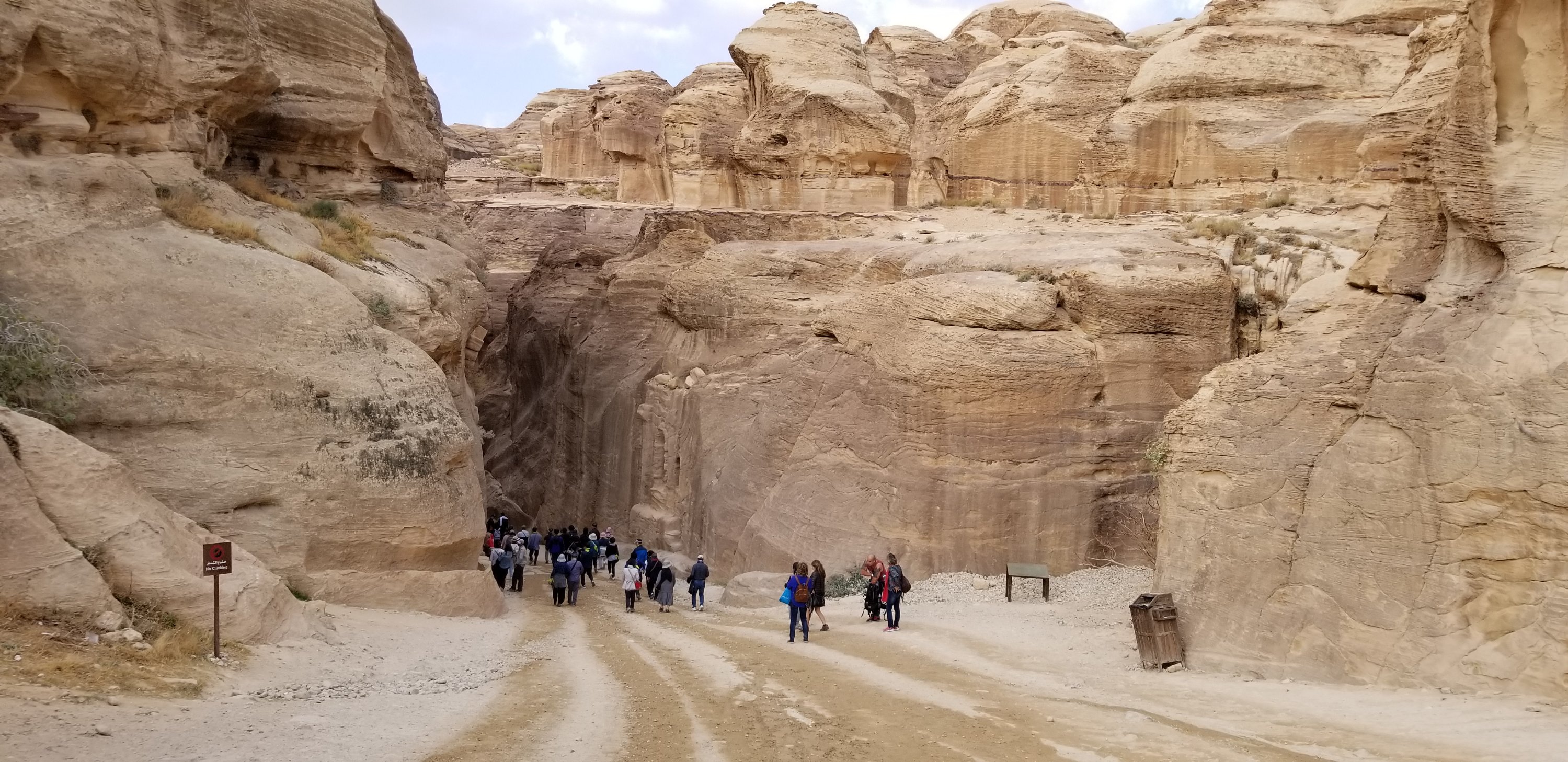
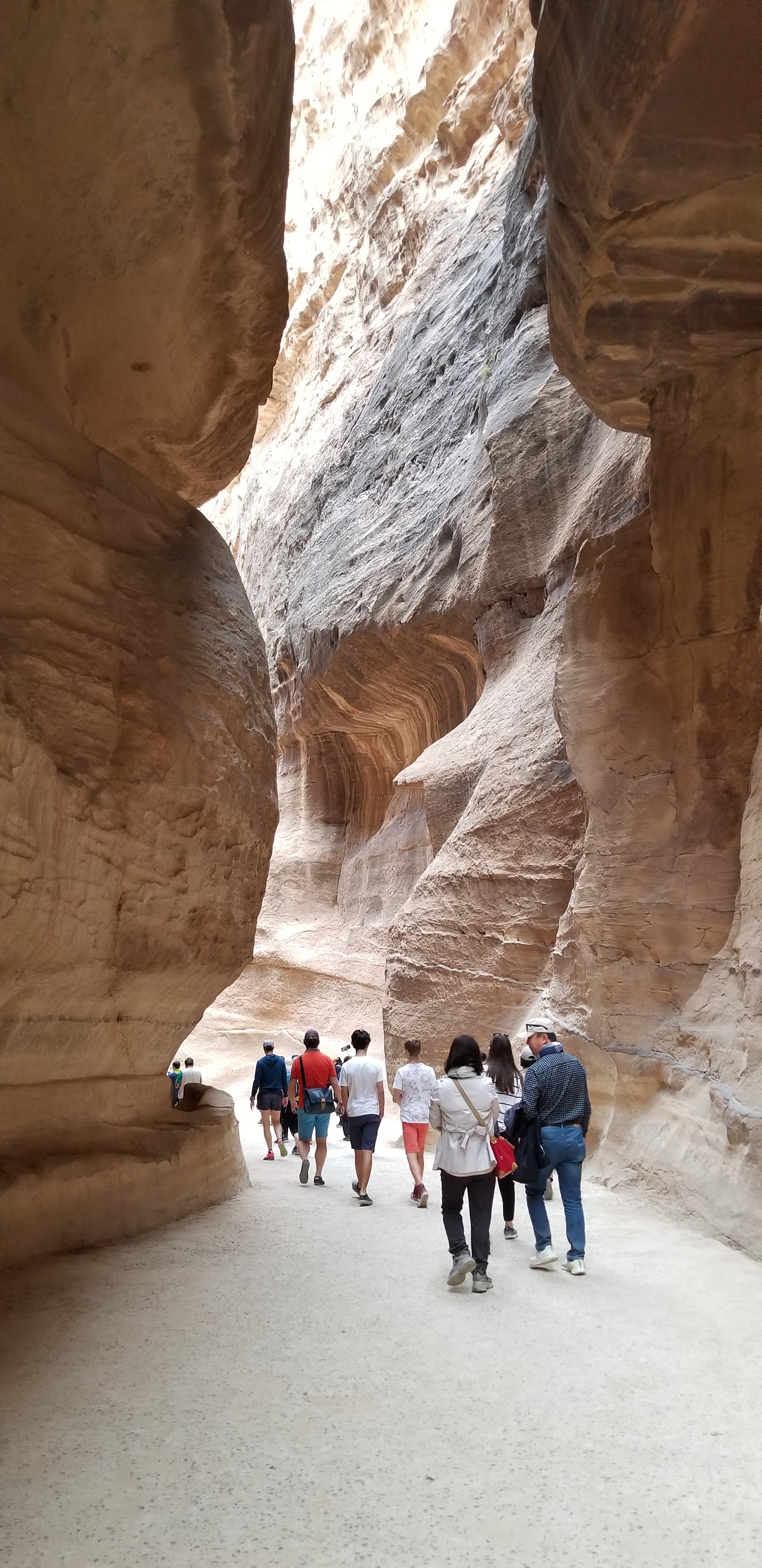
You access the site by a 1.2 KM gorge, complete with water channels , carvings and water fountains for ritual ablutions. At some points the gorge is only three metres wide, making it a tight squeeze for caravans, but perfect for defense.
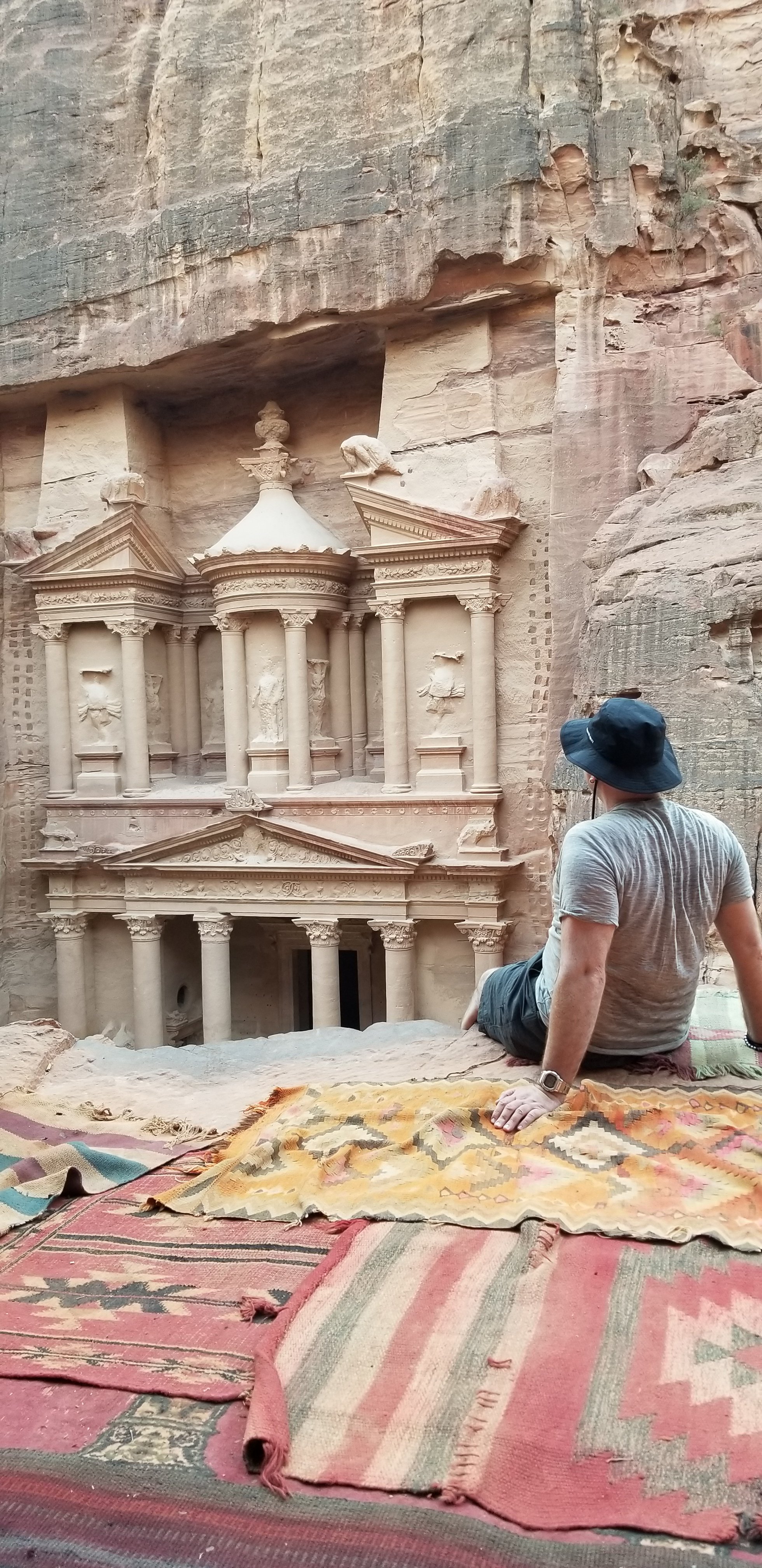
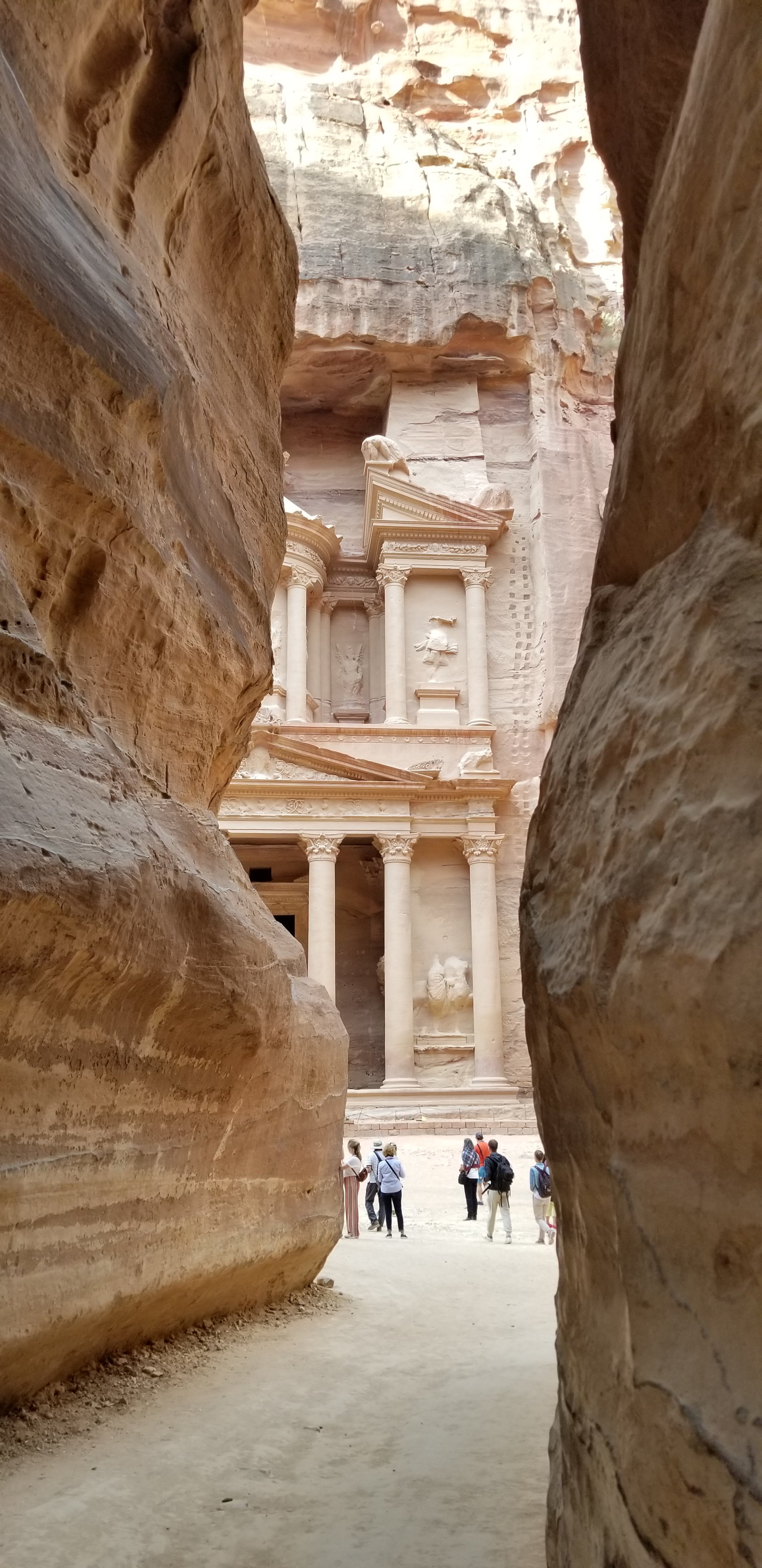
Before you exit the Siq, you get a tease of Al-Khazna, AKA The Treasury
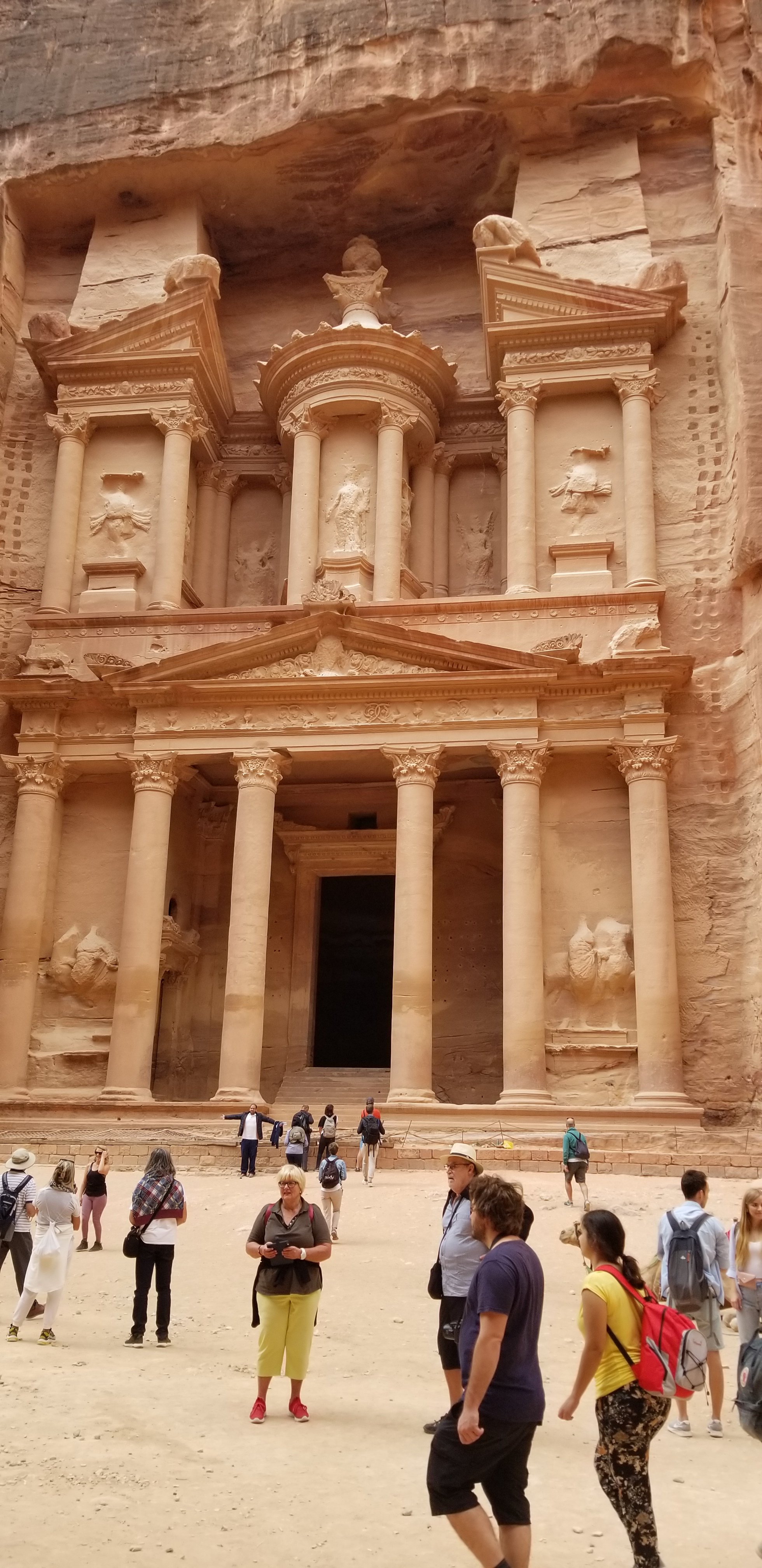
Its as incredible as it looks in the movie. it’s in fact a temple, the treasury monikor results from a legend that a bandit gang hid their loot in a stone urn on the facade, an urn that is now known to be solid sandstone, now complete with bullet holes from treasure seekers.
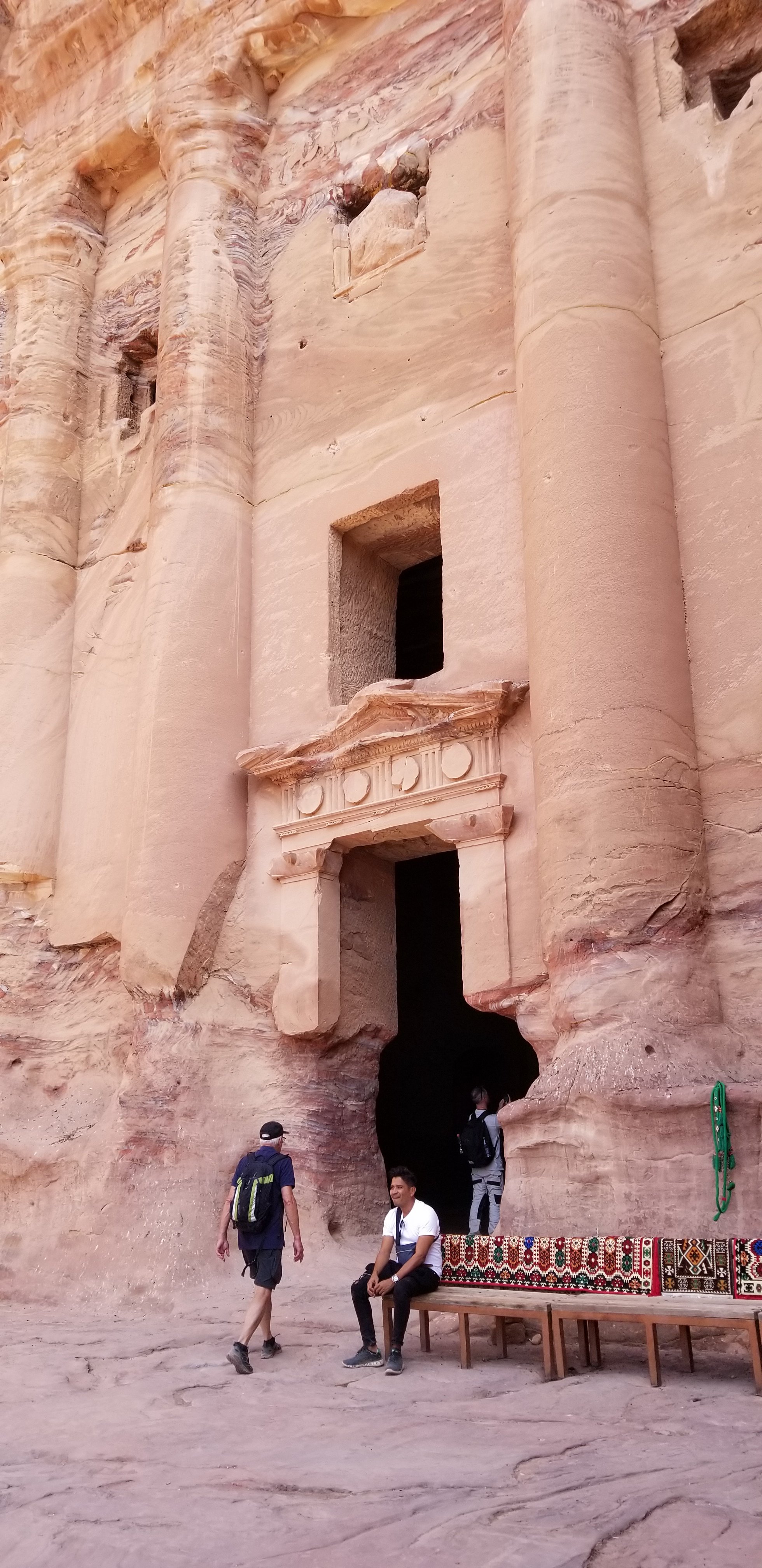
Continuing the main trail takes you through another canyon, which widens, then includes many royal tombs, a recontructed theatre, and the stairs to the High Place of Sacrifice .
To get to the High Place of Sacrifice takes a solid fifteen minutes of climbing, assuming you don’t stop for breaks, or to pat cats. It’s unknown if human sacrifices were ever conducted here, livestook and grain certainly was. However it was not a place I felt like lingering- bad mojo seemed to be evident, no matter how amazing the views.
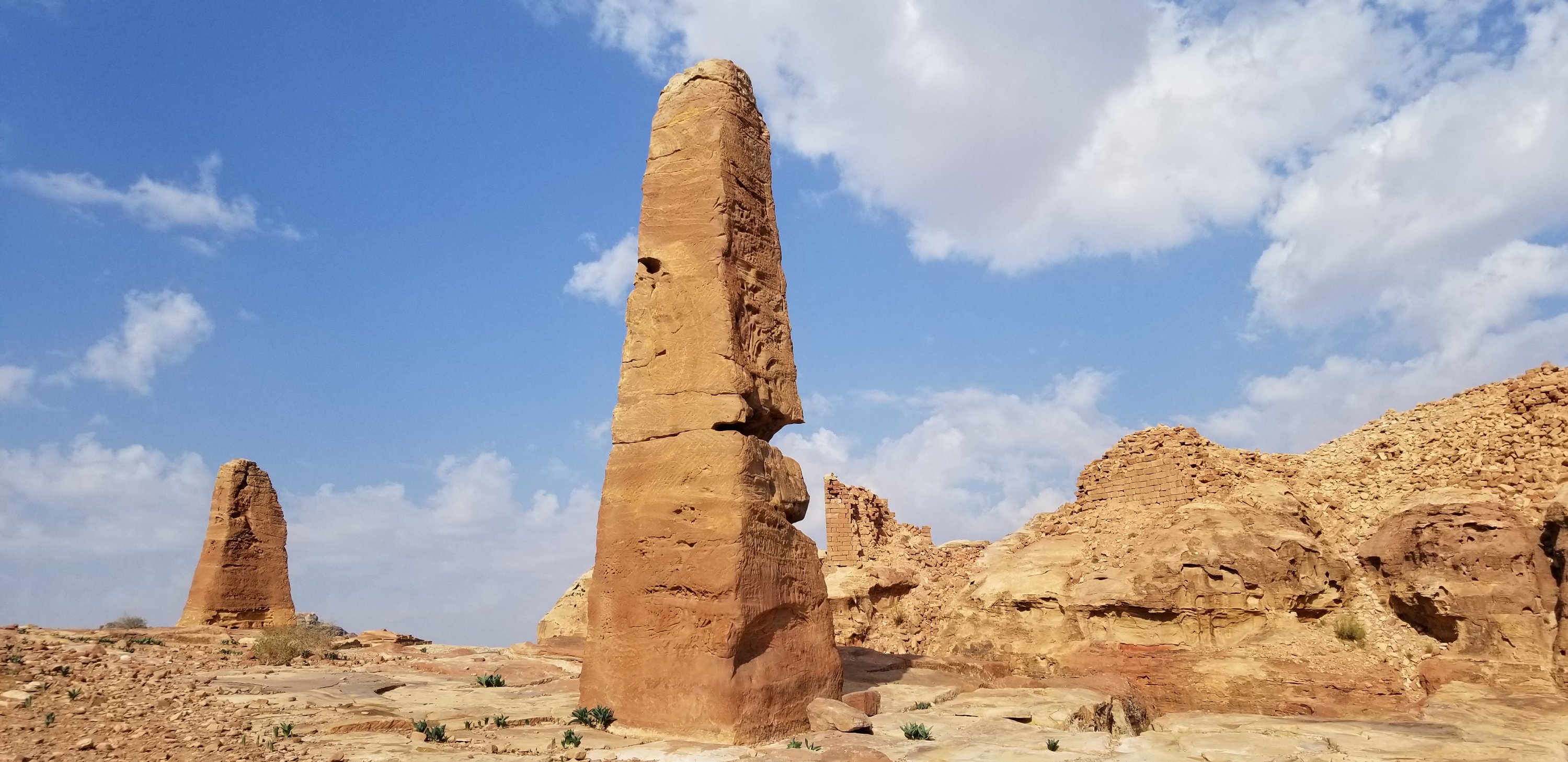
N earby were two obelisks, believed to represent the chief male and female Nabatean deities. They were created by leveling the hill top, leaving only the material that makes up the obelisks.
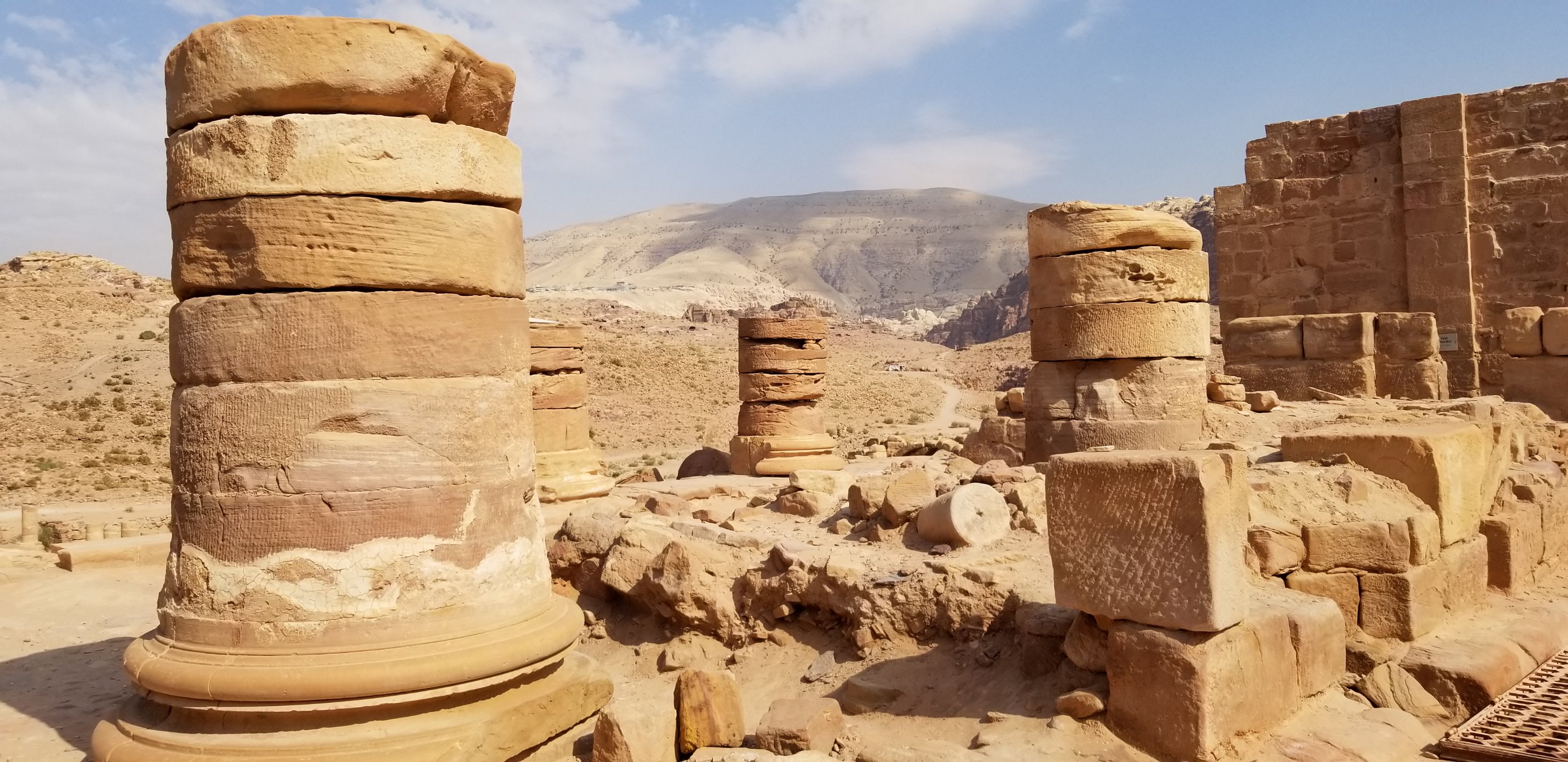
The main trail continues, with the remains of the Nymphaeum, the Trajen Market, then the Great Temple, which was excavated in the nineties and partially reconstructed.
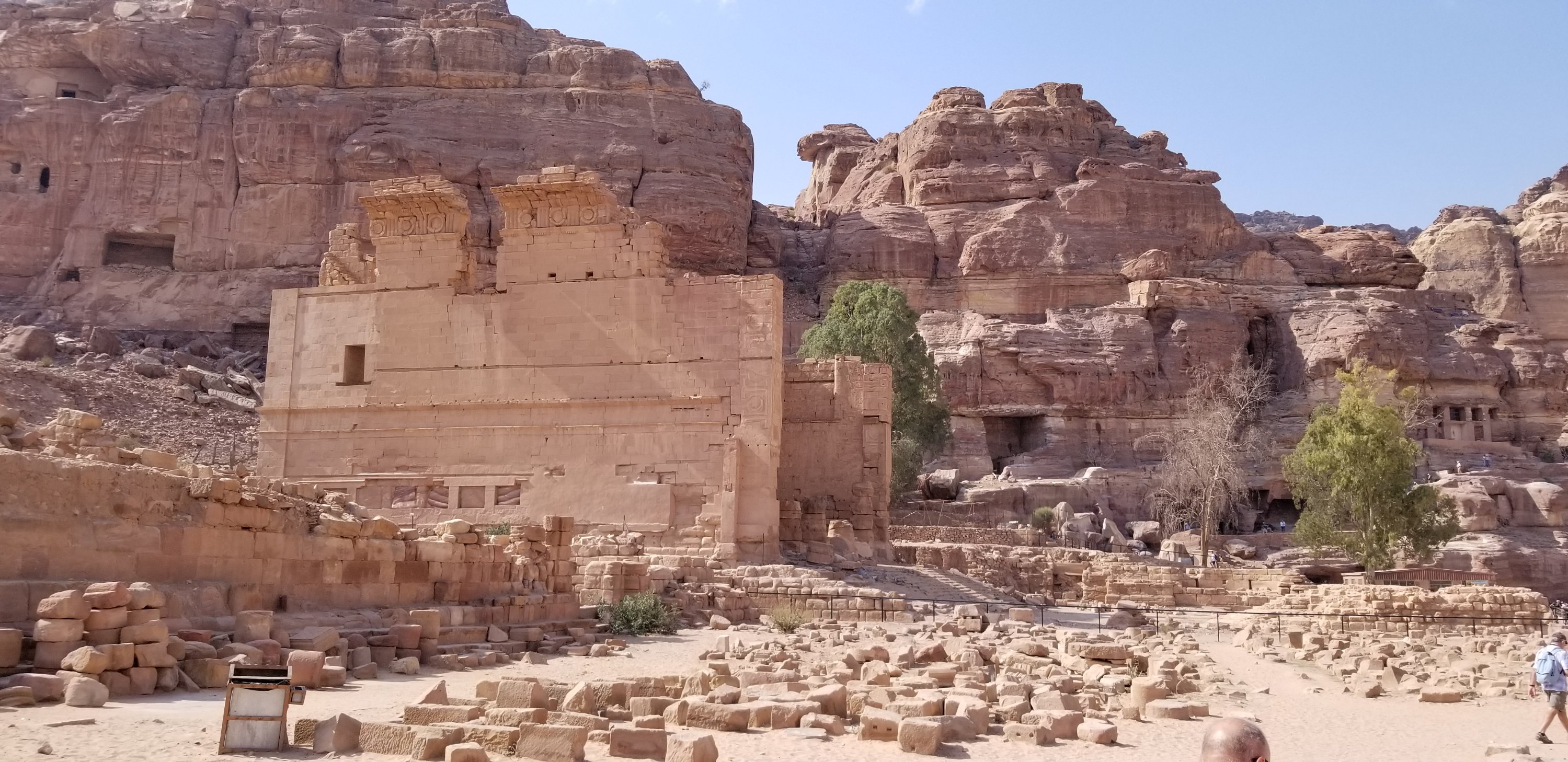
After passing through the Temenos Gate, you can’t help but stare at Qesr Al-Bint, another temple, one of the best preserved structures in Petra.
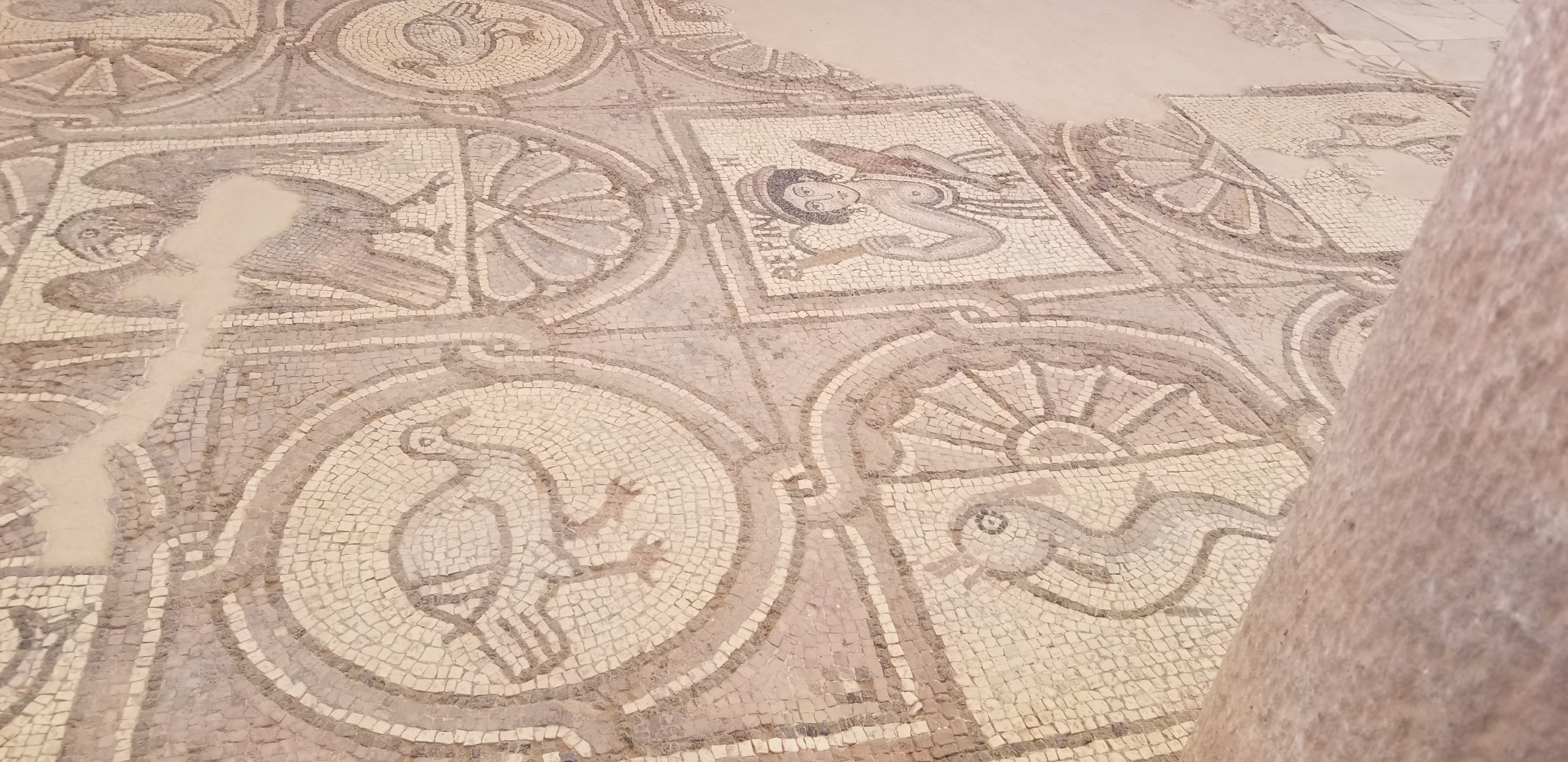
a group of churches up a modest hill round off the remainder of the main trail, the best preserved is the so-called Byzantine Church, whih boasts some incredible mozaics.

 Adrian's Got The Moose