Perhaps because I had trouble navigating the public transport system, I never felt like I was massively successful in visiting Tokyo’s historical sites.
The Meiji Shrine is surrounded by vegetation with minimal undergrowth. The shrine is dedicated to the spirits of Emperor Meiji and his wife, the Empress Shoken, who are most famous for the Meiji Restoration. They were both transformed into gods after their death.
At the time of my visit, the shrine was hosting a festival to honour dolls, which are often considered to have their own spirits. I couldn’t help but think sadly of my old teddy bear, stored away at my parents’ house.

I was definitely missing much context, as I know little about Japanese history and little about Shintoism. But at least I didn’t have to pay for the privilege, something I should have appreciated more at the time. The original complex was, as much of Tokyo, destroyed during Allied raids in World War II. It was rebuilt from publicly raised funds.

Much of the outer features of the shrine were either closed or not readily accessible, and having hiked to the Treasure Room, and finding it closed, I ended up swapping the change in my pocket for an iced tea and some chocolate from a conveniently nearby bank of vending machines, and sat under a tree and read for an hour, which seemed to be a popular choice. I lingered longer than I intended, as a group close to me seemed to be getting ready for some kind of photoshoot, but it took too long to get started, and I moved on.
Making my way back through the shrine grounds, a Canadian lady who gave her name as Mary thought I looked put together enough to ask me for directions. I walked her back to the main building before leaving her to it and making my way back to the train station.
Asakusa Shrine I found to be more interesting, perhaps because it was positioned in one of the older parts of Tokyo.
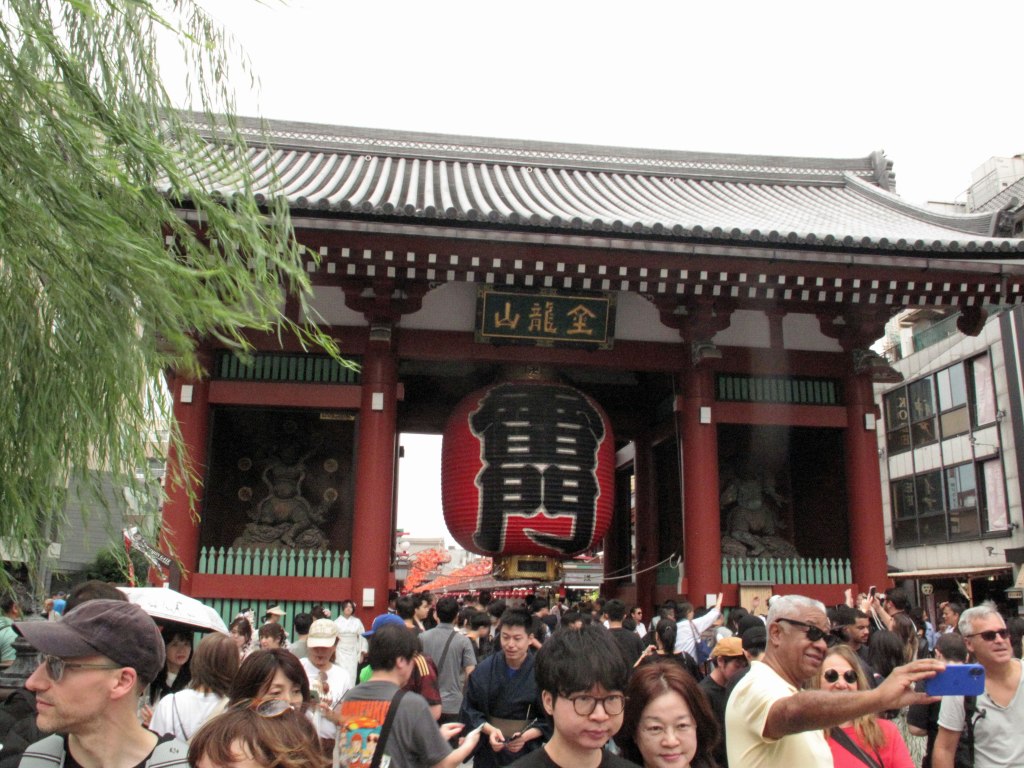
Between the main gate and the main shrine building are hundreds of small shops, selling tourist tat, traditional foods, and handicrafts, including hand-made Buddhist scrolls. I was tempted by a katana letter opener, but it seemed like the kind of thing that Customs back home would have questions about.
The Treasure House Gate is two stories high, with the upper story containing many of the shrine’s treasures. The entire area was packed with people, and I struggled to gain any type of understanding.

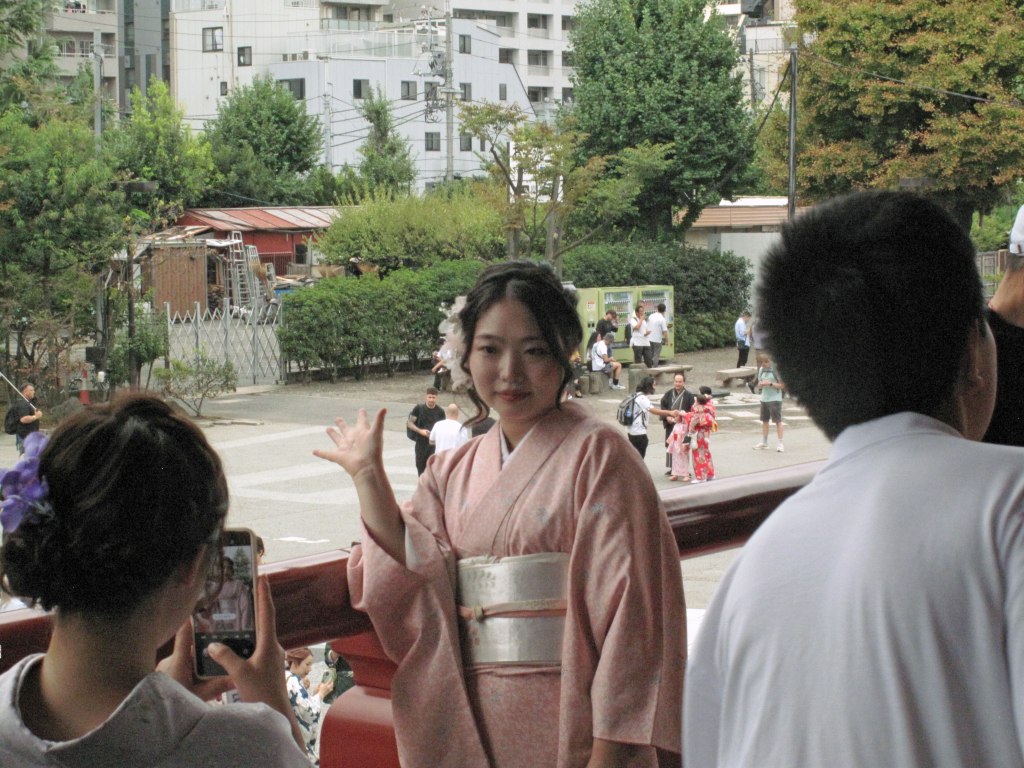
Some women, tourists and Japanese alike, choose this place to have photoshoots in traditional kimonos, accompanied by professional photographers or lucky boyfriends. The Japanese women here put most of the Western women to shame, perfectly poised and made up in their multitudes, like ordinary angels, routine and mobile works of art.
Perhaps it was a desperate attempt to view Tokyo as a whole rather than a bunch of train stations with their surroundings, or perhaps it was some monkey-brain need to find the tallest thing around and claim everything I could see as my own.
Whatever my motivations, I found myself waiting in line for half an hour, passing through a rigorous, but entirely polite security check, and rode in an elevator for fifty-five floors to get to the Southern Observation Deck of the Tokyo Metropolitan Government Building. This proves that while close to a billion US dollars were spent building the skyscraper, they spent five minutes in a committee naming it before heading to an izakaya.

The view was impressive, and the gift shop was lovely. The cafe seemed delightful, but the price for a latte were as high as I was. This may be to compensate for the free entry to the observation deck, the Japanese being oddly principled and pragmatic in that way.
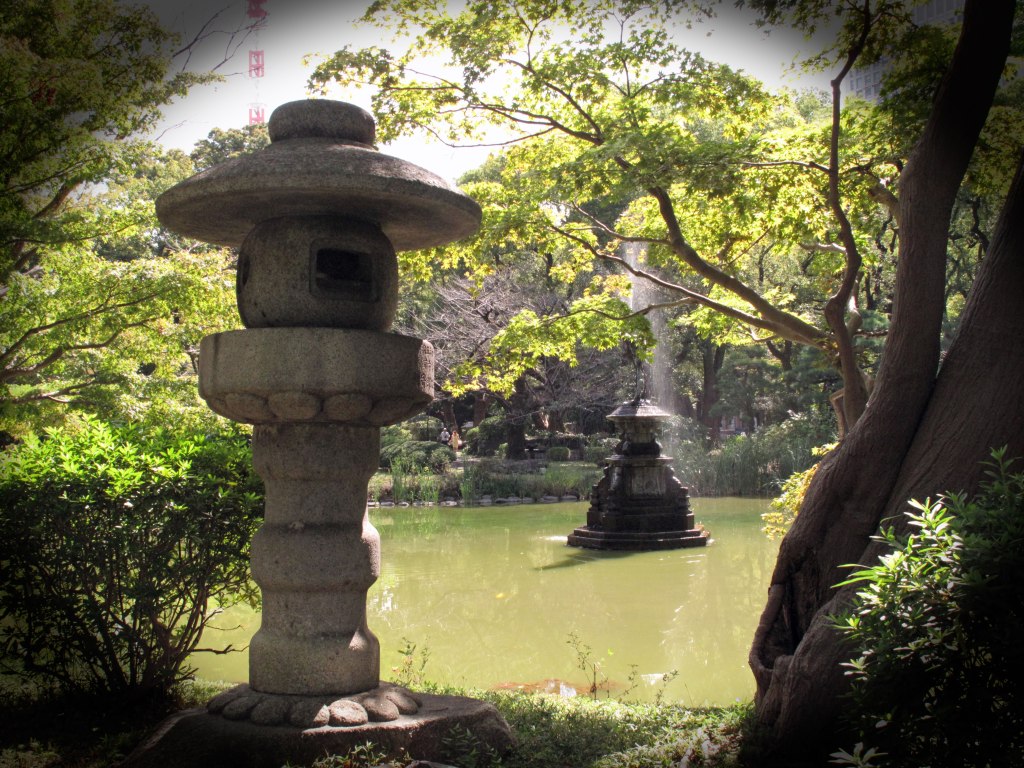
On my last day in Tokyo, I decided I should see the Imperial Palace. Unfortunately, I discovered that it was only open on seemingly random hour-and-a-half blocks, so I never ended up inside the walls. I did, however, take some nice photos in the nearby Hibiya Park, which had lakes, tennis courts, and scattered historical places of interest.

 Adrian's Got The Moose