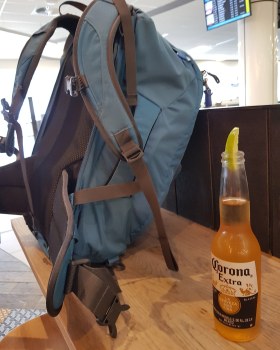

It’s long been my habit to book accommodation close to places I can eat and drink. It doesn’t worry me much if I have to take public transport or a taxi to get to a historical site or a famous market, as long as I can chill at the end of the day without trying to negotiate with a taxi driver while half-cut. For Tokyo, I was staying within the confines of Kabukicho, Japan’s most infamous red-light district. Now that I have typed that, I have to wonder if calling a red-light district infamous is redundant, but I’ll leave that kind of argument for when I am not sober.
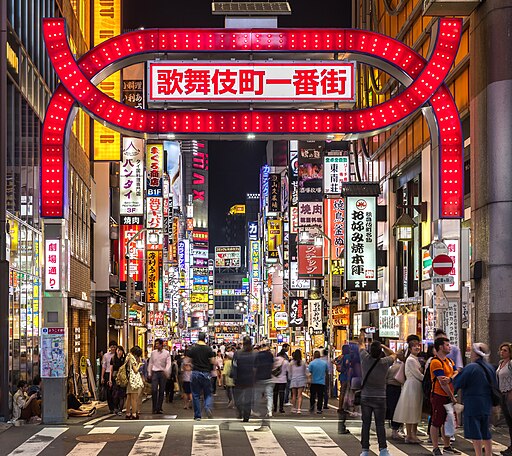
Kabukicho is full of host and hostess clubs, soaplands, love hotels, girl bars, pickacho palours, claw game arcades, plus regular bars and restaurants. Traditionally, the Yakuza held massive influence here, and while the Yakuza have been diminishing in both numbers and influence in the last ten years, their impact here is supposedly still strong in Kabukicho. While I enjoyed wandering around, I didn’t linger, except for a meal at the world’s narrowest KFC while feeling despondent. At street corners in the larger ward of Shinjuku, loudspeakers warn of touts inviting you to bars that overcharge by factors of a hundred. I soon learned that these touts were exclusively Nigerian, well-dressed and friendly, but informed by the loudspeaker warnings and my own research, this was easily ignored. Stereotypically, the touts are working illegally after overstaying their visas, yet operate so openly that I can’t work out why the authorities are not rounding them up.
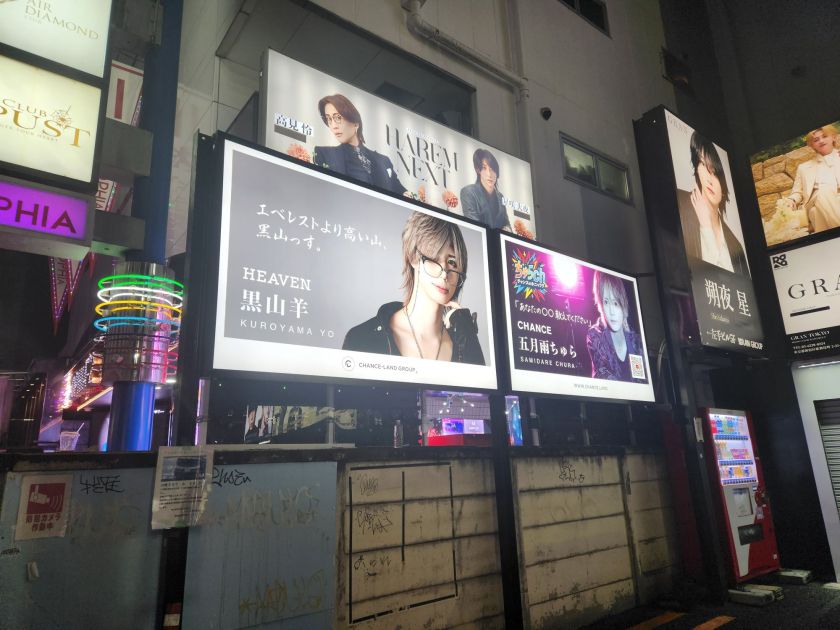
Host and Hostess clubs are nightclubs, where you have your drinks poured and cigarettes lit by incredibly attractive, attentive, and charming members of the opposite sex. While that does sound lovely to a lonely person, and there are many of those in Japan, the price is exorbitant, and the host/hostesses are incentivized to make their guests order more and more. This is not a scam, but one certainly should be very aware of the underlying principles. As much as I would have liked a woman hanging on my every word, I didn’t want to spend my entire Tokyo budget on a few hours. I have been told that it can become very addictive, and in some less reputable host clubs, women can rack up such bills that the Yakuza step in and the women are forced into sex work to settle their bills. Also, some of the hostesses are working illegally, or are victims of exploitation (such as passports being taken from them) and trafficking, so that’s another aspect a guest would need to be aware of.
Brothels in Japan are usually called Soaplands, which used to be called Turkish baths before the son of a Turkish ambassador took offence. From what I read, it’s a very ritualistic way of conducting sex work, similar to the soapy massages one can get in Thailand. Actual sex is negotiated after the bath. If one is not aware of the meaning of Soaplands, a person could walk past them and have no idea what is going on behind the door, which I guess is the way the Japanese like it.

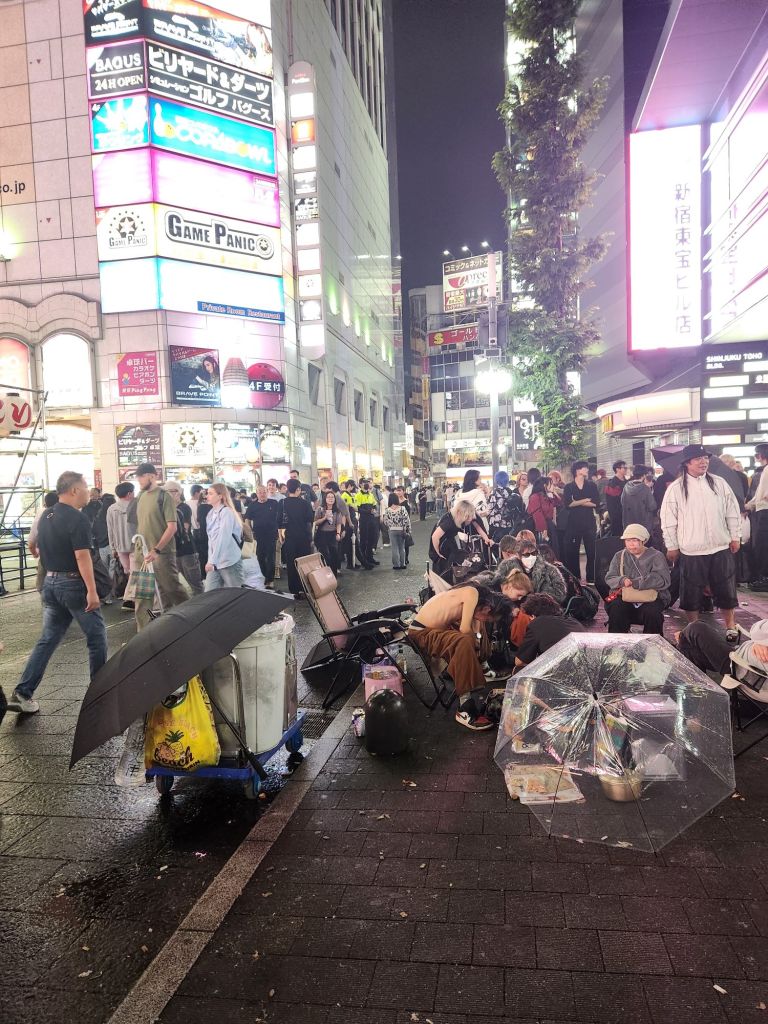
In the heart of Kabukicho, right next to the KFC I previously mentioned and the neon signs of the Toyo Building (Mostly a cinema featuring the famous Godzilla Head, was the messiest sight I saw in my time in Tokyo. Numerous youths, and some older Westerners, sitting on the ground or on folding chairs, surrounded by rubbish and uniformed security staff who were attempting to look nonchalant. These are the Toyoko kids, runaways, marginalized youths and their hangers-on. Homeless and largely ignored by society at large, they have formed their own subculture based on their situation and fashion choices. It’s important as an onlooker not to romanticize their existence, they are mostly homeless and highly susceptible to exploitation by others.
Moving further through Kabukicho, I discovered two lines of young women, many dressed in Cosplay or school uniforms, kept in order by security guards. They were handing out flyers to hostess clubs, girl bars, and similar establishments. Mostly, they appeared bored and disinterested, although I did get a smile back from one of them as I danced around a group of gawking Germans. I suspect they share some membership with the Toyoko kids, and do not get paid more than a few yen an hour unless they walk someone into an establishment, or their flyers have an identifier that is taken into the bar.
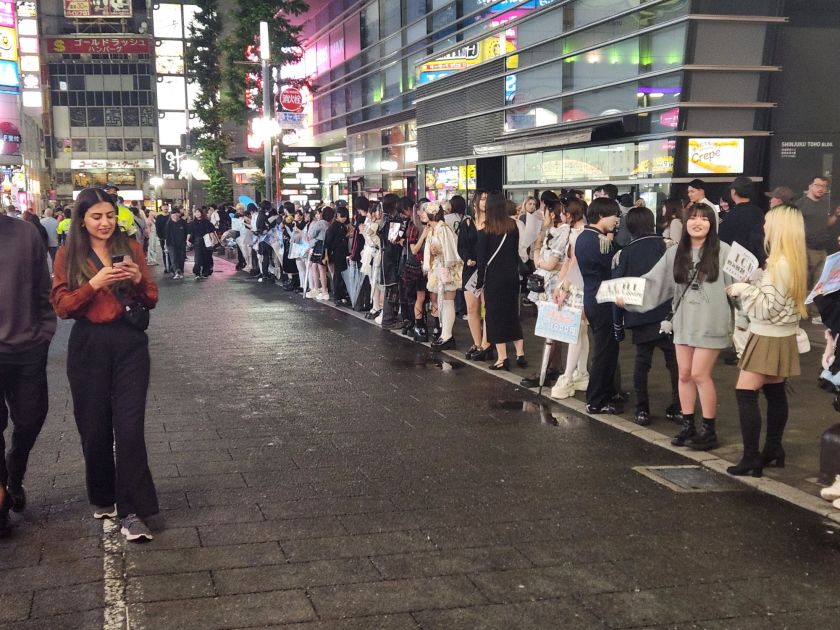
Also in Kabukicho are Pachinko Parlors, which are confusing, pinball-like games that skirt the gambling laws by not having payouts issued from the same building. Love hotels are also common, where couples, Johns and their new lady-friends, can rent a room for a few hours to watch TV and nap. This offers a place for many couples who still live with their parents (paper-thin walls, etc) to get some privacy. There are also bars high in skyscrapers, where, for a modest cash fee, one can receive a much higher invoice for tax or reimbursement purposes.
I suspect that William Gibson’s Night City was directly inspired by Kabukicho, as it also appears to be a barely lawful zone that keeps the rest of Tokyo orderly, safe, and child-friendly. It was also the only place in Tokyo I saw rats. For all that, its probably the most exciting place at night to see in Tokyo, and visually spectacular; on the first night I visited I wished I had a D-SLR and tripod with me, to do super-long exposures.

If you, dear reader, are interested in this aspect of Japan, I suggest you watch this video, which does a more reporting-style take on the scene and other aspects of Tokyo.

 Adrian's Got The Moose