
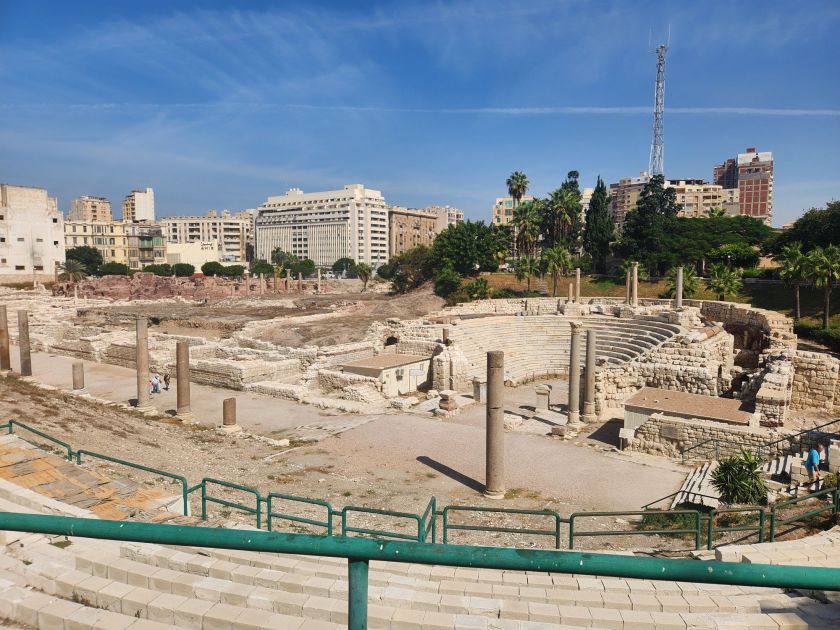
The next day I embarked to visit some of Alexandria’s lesser known sites. The first being Kom El Deka, more commonly called the Ancient Roman Theatre. The area was an upper-class residential area in the first to third century CE, by the fourth to seventh century it was much changed, and featured numerous public facilities, such as the theatre and a bathhouse.
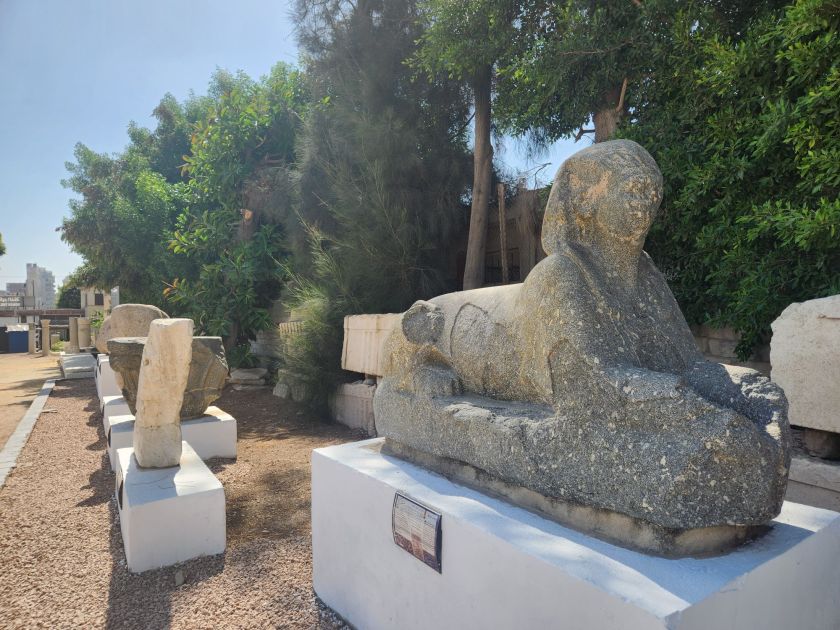
Oddly, I soon discovered statues and blocks of stone that appeared to be have been part of the lighthouse, and transported from the ocean floor to here.
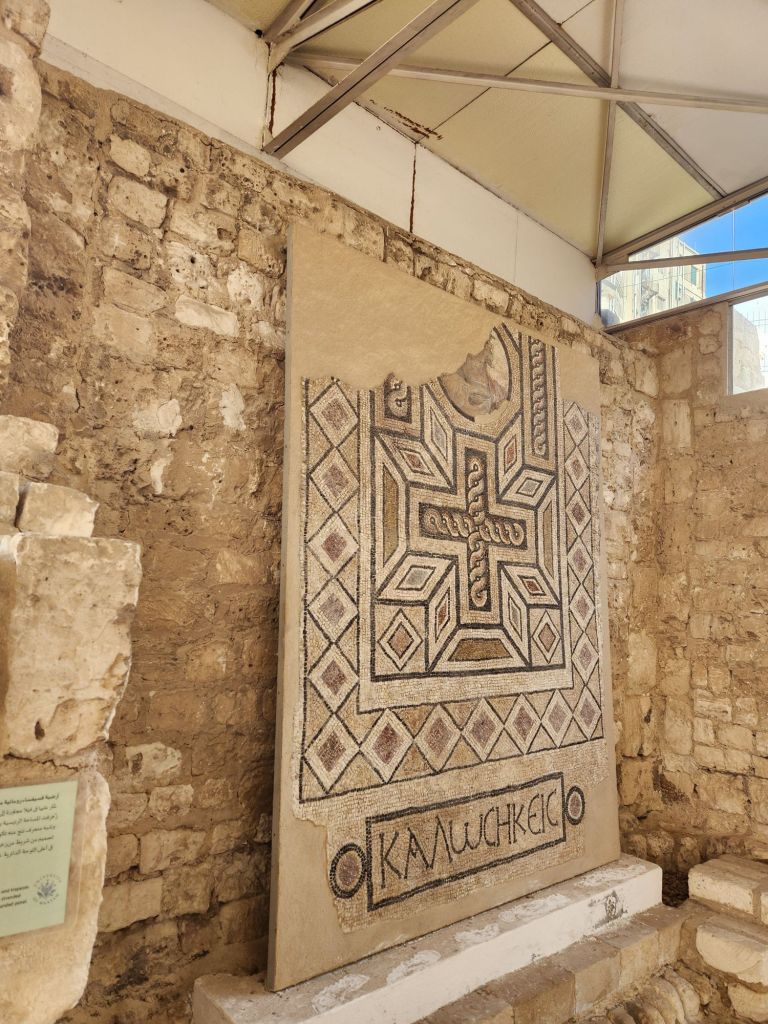
Tucked into the corner of the site was a partially restored villa, which contained several amazing mosaics and decorations.
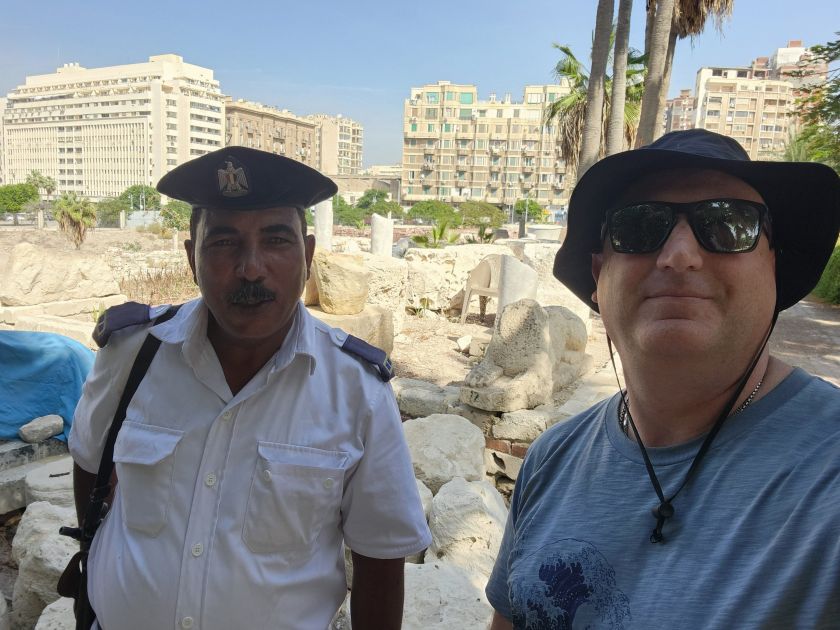
After a lap around, there was nothing further to keep me here, and I was about to leave when a machine-gun-wielding policeman offered me a cup of tea, that I accepted. We had a nice chat, and while he declined payment for the tea, he immediately hit me up to exchange some USD for Egyptian Pounds. Caught, I complied and made a mental note to be more careful about this in the future.
Next I visited the Catacombs of Kom El Shoqufa. Believed to have been created in the second century CE for a single family, it was expanded greatly for unknown reasons. It was rediscovered in 1900 when a donkey fell through a shaft-perhaps considering the way animals are treated, it was a deliberate act of protest. The catacombs consist of three levels, multiple chambers, and two large circular shafts that may have been used to lower the deceased into the catacombs.
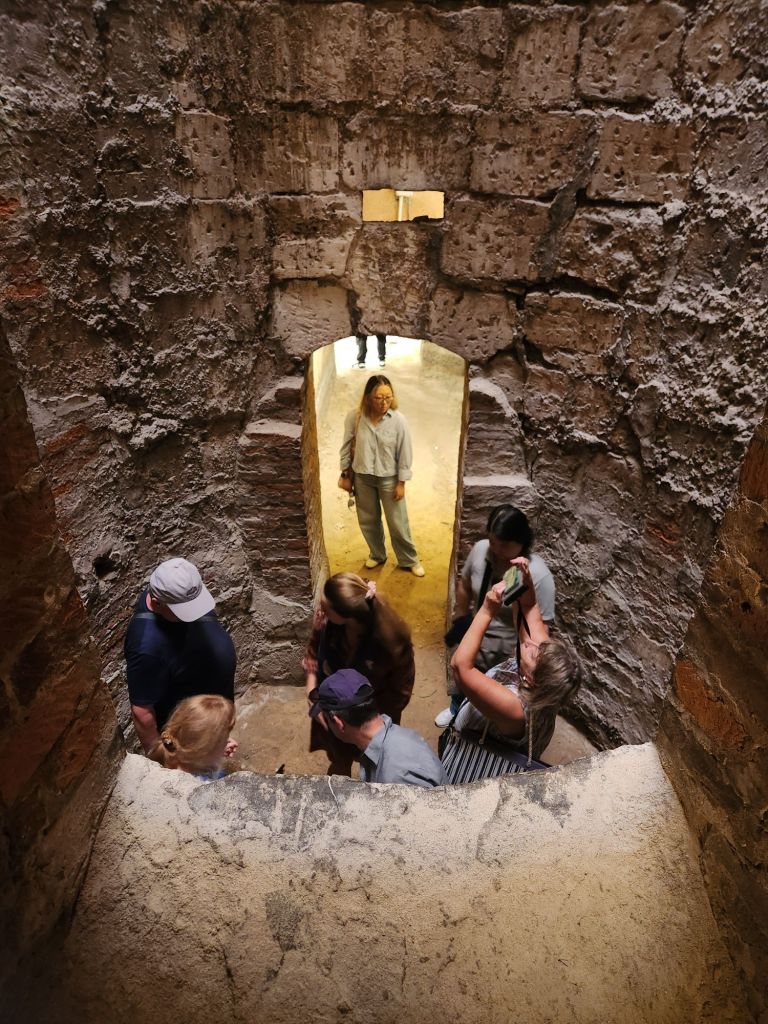
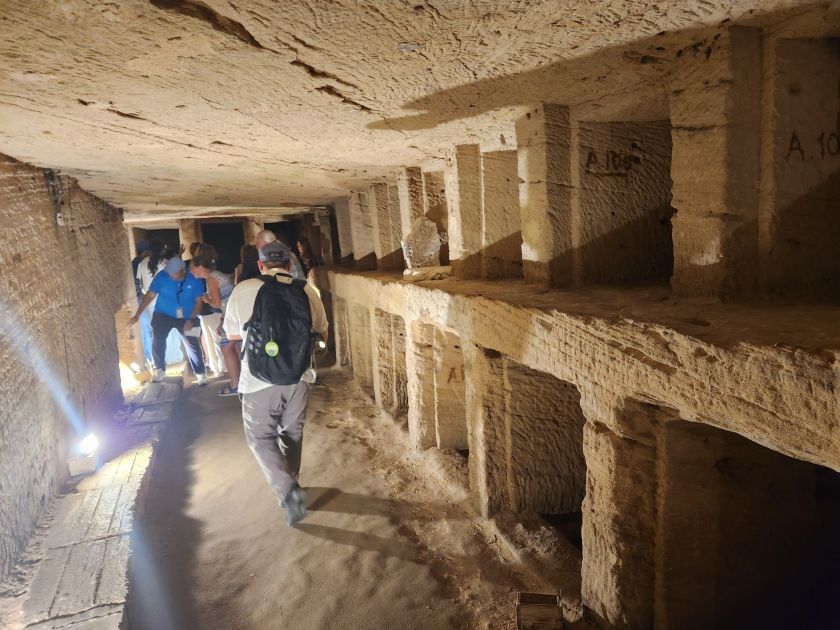
Many of the corridors and chambers feature simple stone ledges for a body to be laid to rest.
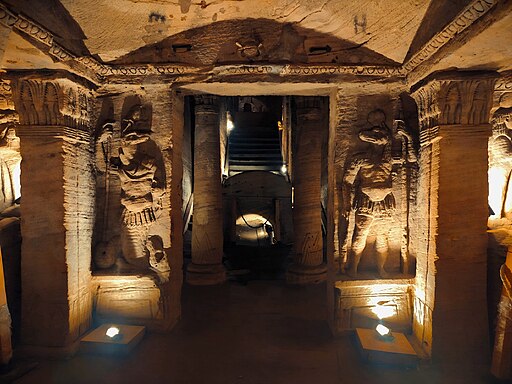
The main drawcard here is an elaborate chamber, perhaps the original families, featuring ornate carvings, and a blend of Roman, Ancient Egyptian and Greek art styles. Between the hordes of tourists and the limited ability of my phone, I struggled to document this chamber, so I will include this one from Wikipedia.
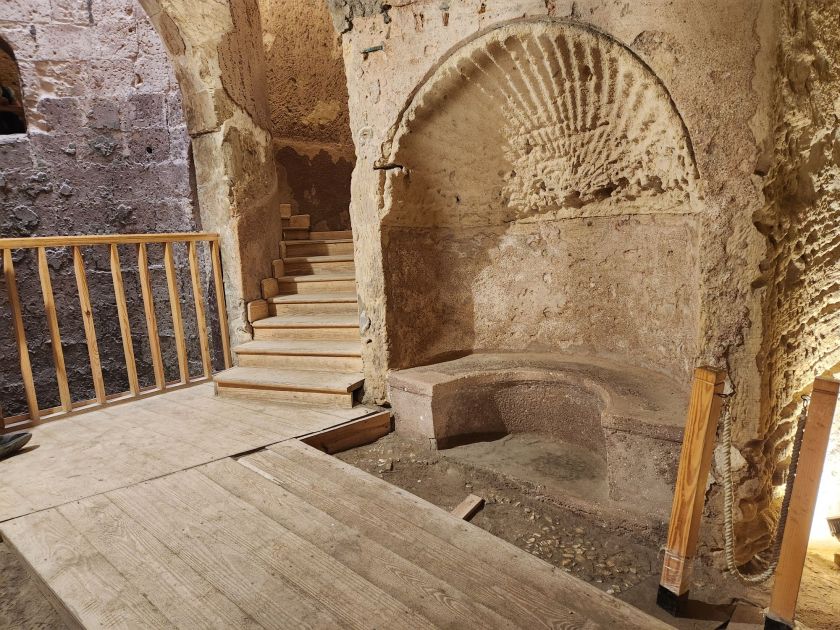
The catacombs also featured benches where mourners could sit and rest, and perhaps even eat meals close to their deceased loved ones, something that would seem very odd to modern Western eyes, but I suspect was very normal in the ancient world.
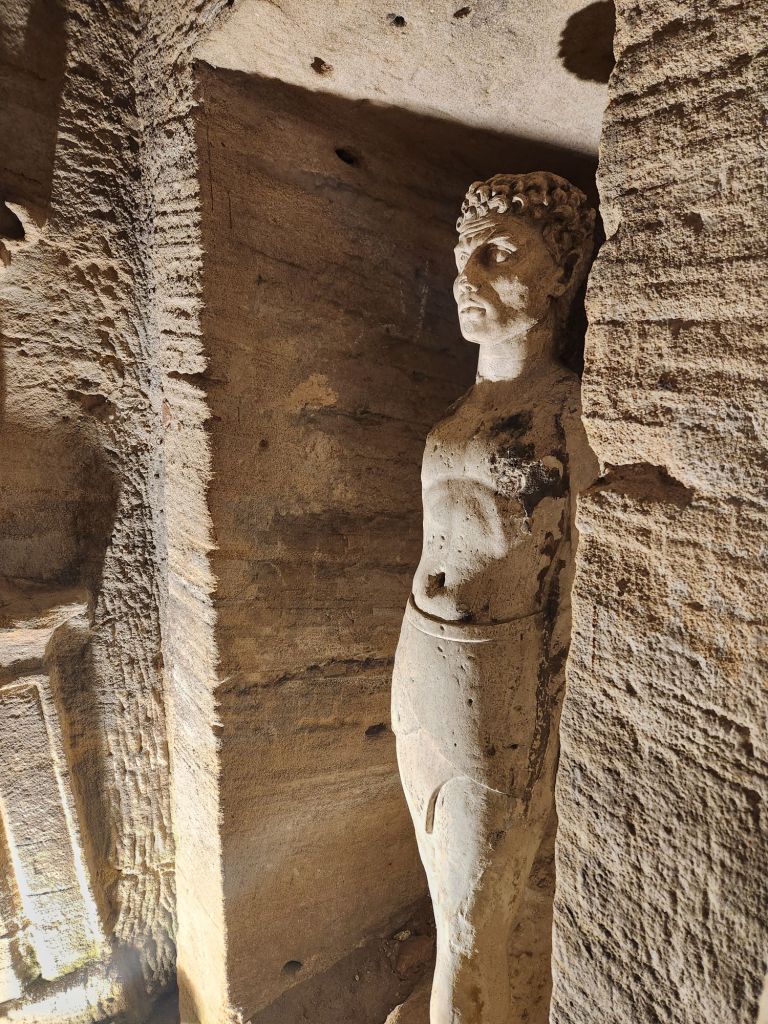
There were many impressive carvings, but I was drawn to this statue, perhaps carved in place, which is considered by some to be the original owner of the catacombs.
Of course, without a guide, many features were not clear to me, which is something I should be used to by now, but is still frustrating.
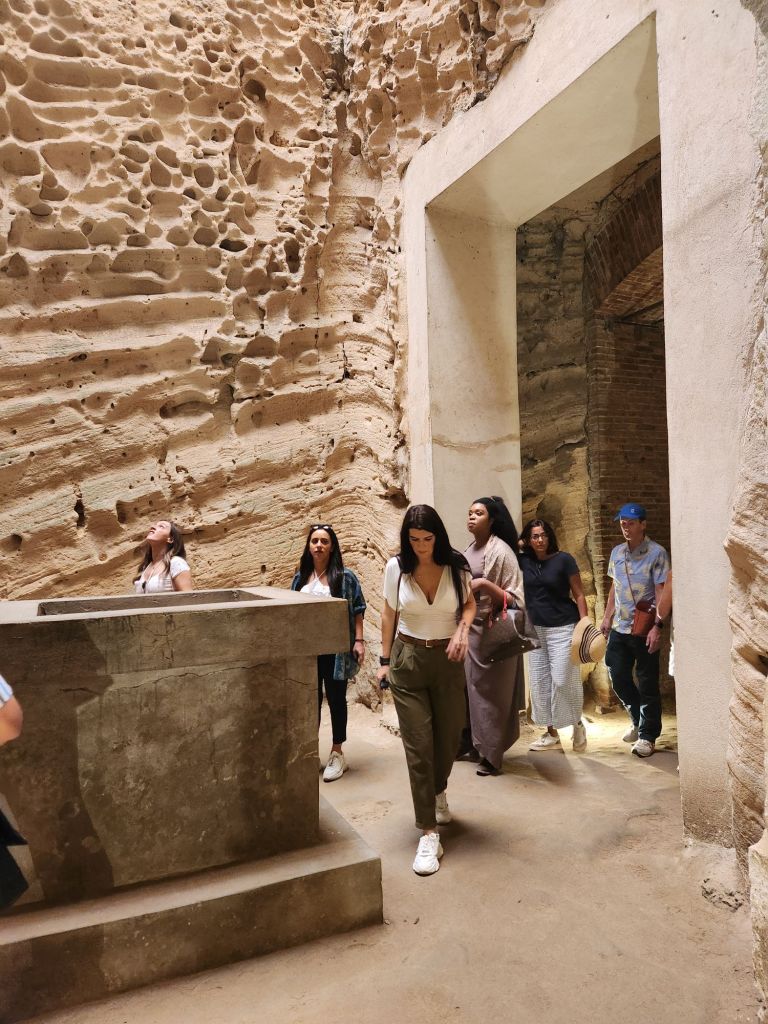
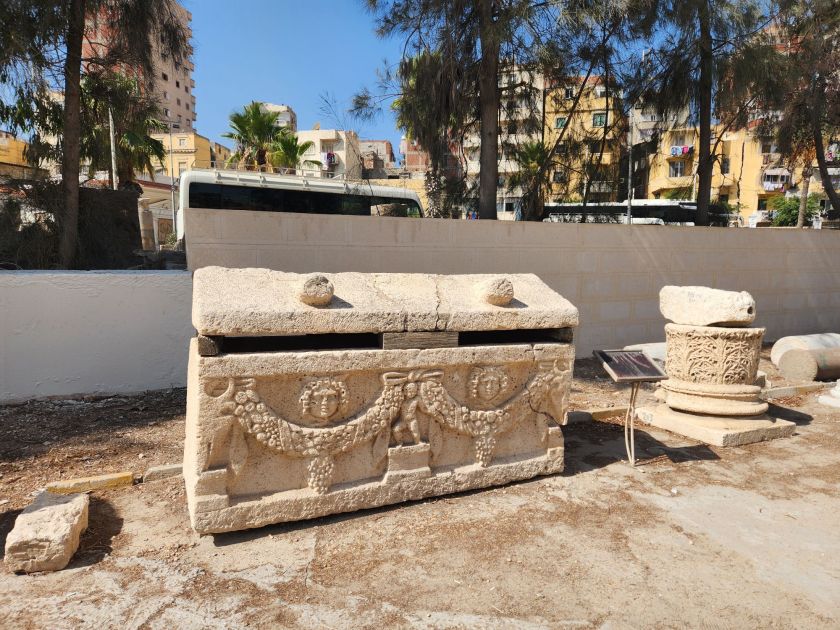
Once I was sick of bumping into my fellow tourists and trying to suppress the urge to hum the Indiana Jones theme, I made my way back to the surface, and took a few pics of the sarcophagi outside, and went for a walk.

 Adrian's Got The Moose