If carving tombs underground instead of building massive pyramids made anyone think the Pharaohs were done with massive building projects, they would have been sorely mistaken.
The Mortuary Temple of Hatshepsut was built into the cliff face on the other side of the Valley of the Kings, and I believe it is every bit as impressive as the Pyramids of Giza.
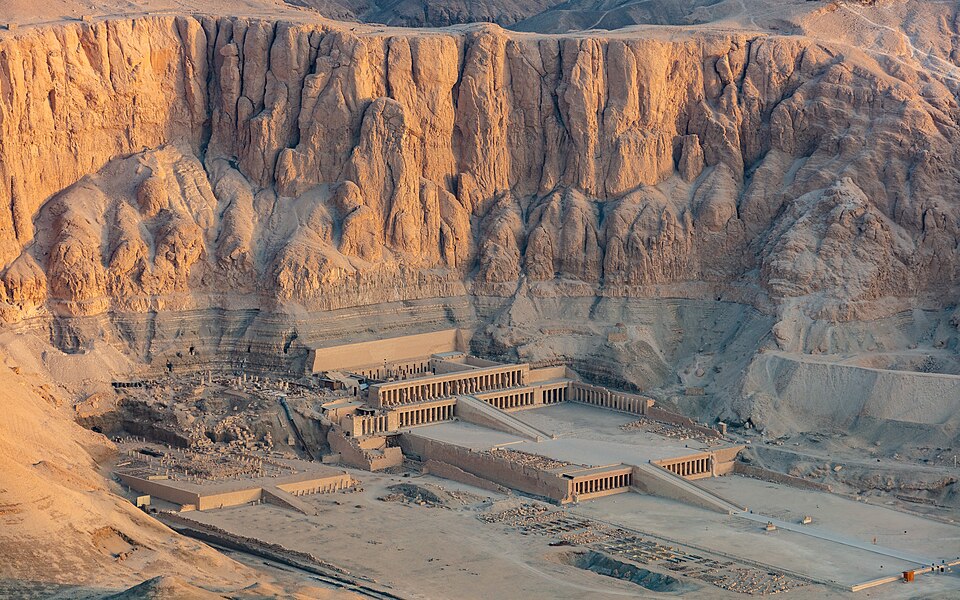
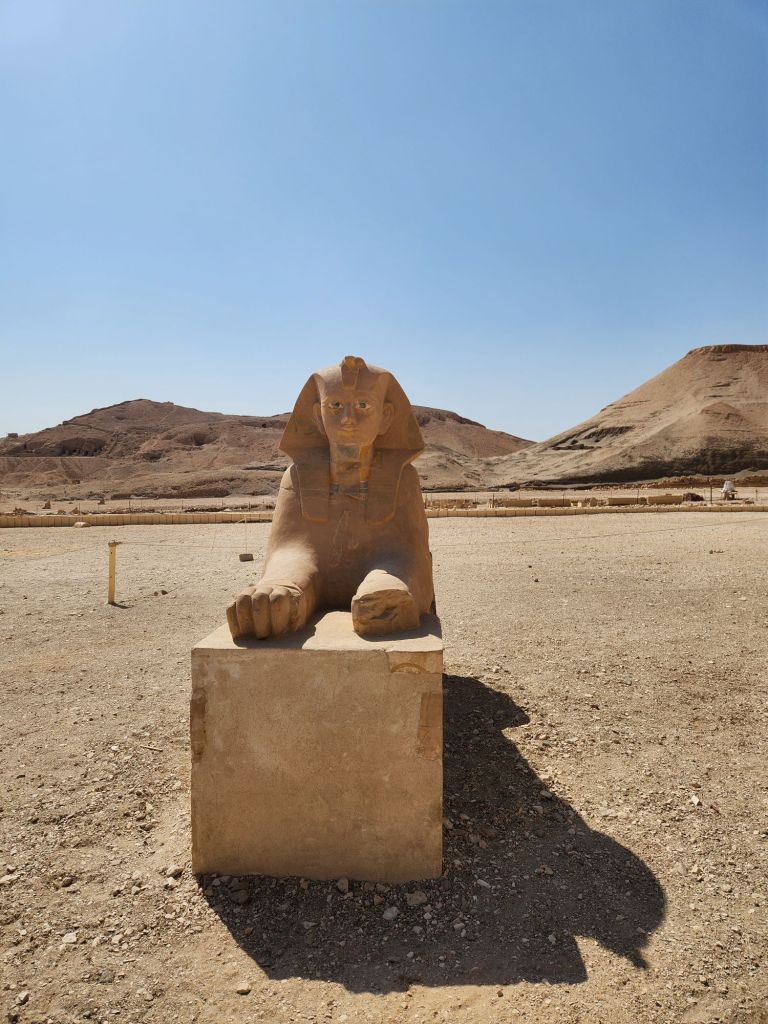
Three terraces lead to the main temple, with a central causeway that is guarded by a Sphinx on either side. One of each has been restored, gazing benevolently at visitors, and the other features the original, half-destroyed head.
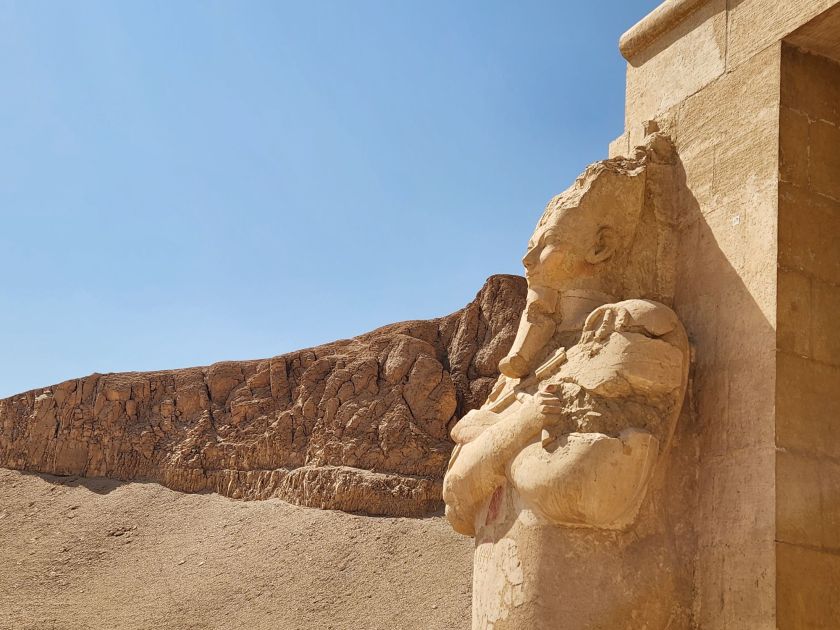
Each of the twenty-six columns of the upper terrace is fronted by a statue of the queen in her Osiris aspect, each over five metres tall.
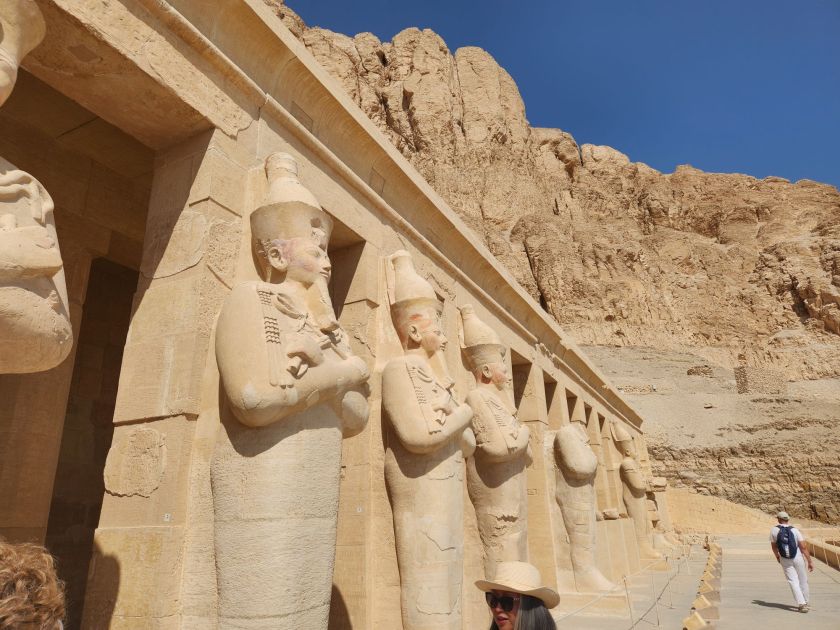
While her successor, Thutmose III, attempted to remove all references and proof of Hatshepsut’s rule, some of the carvings and paintings in this temple have survived.
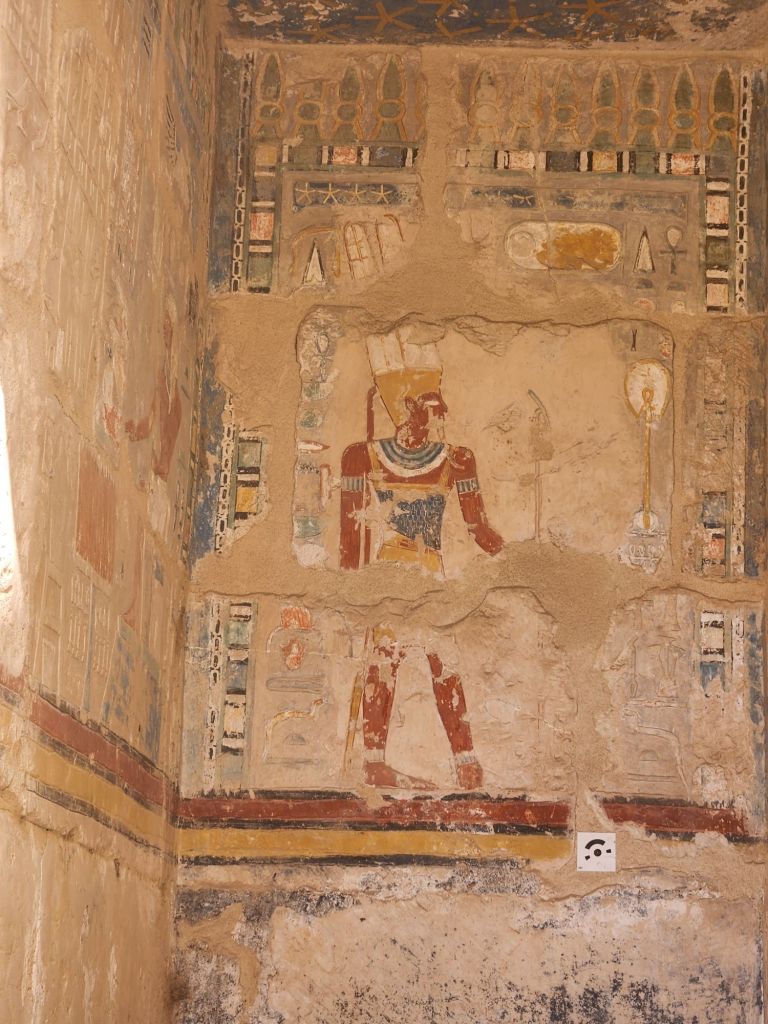
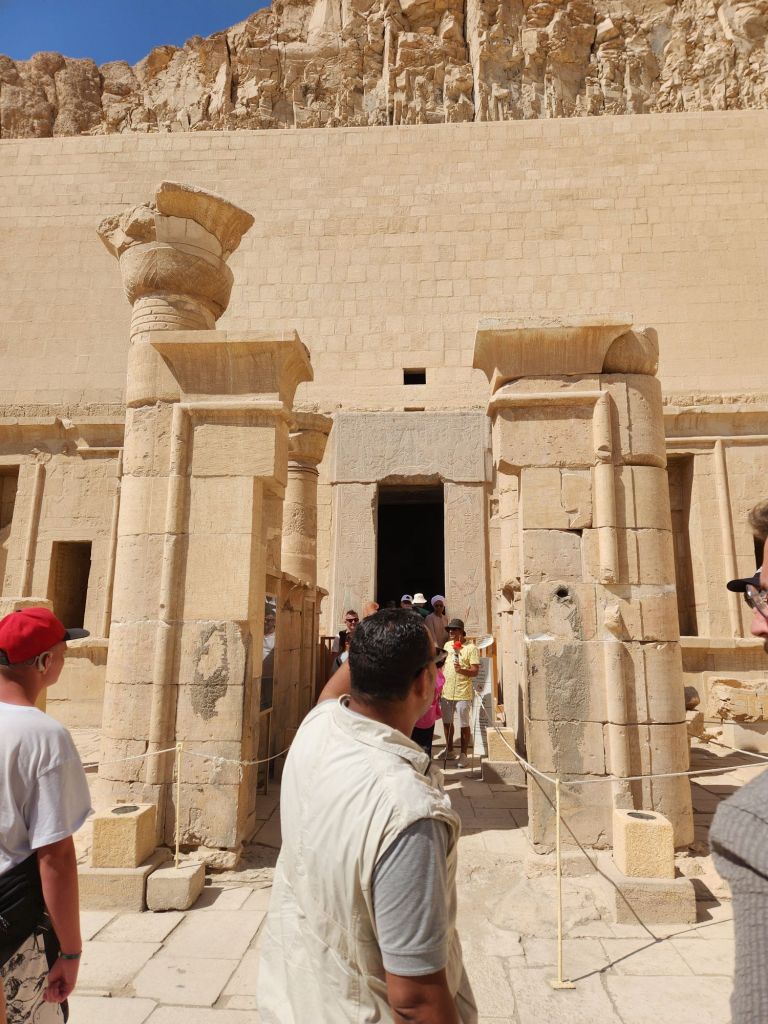
As is typical, the innermost part of the temple is blocked off, leading to the crowd only being able to look into the sanctum.
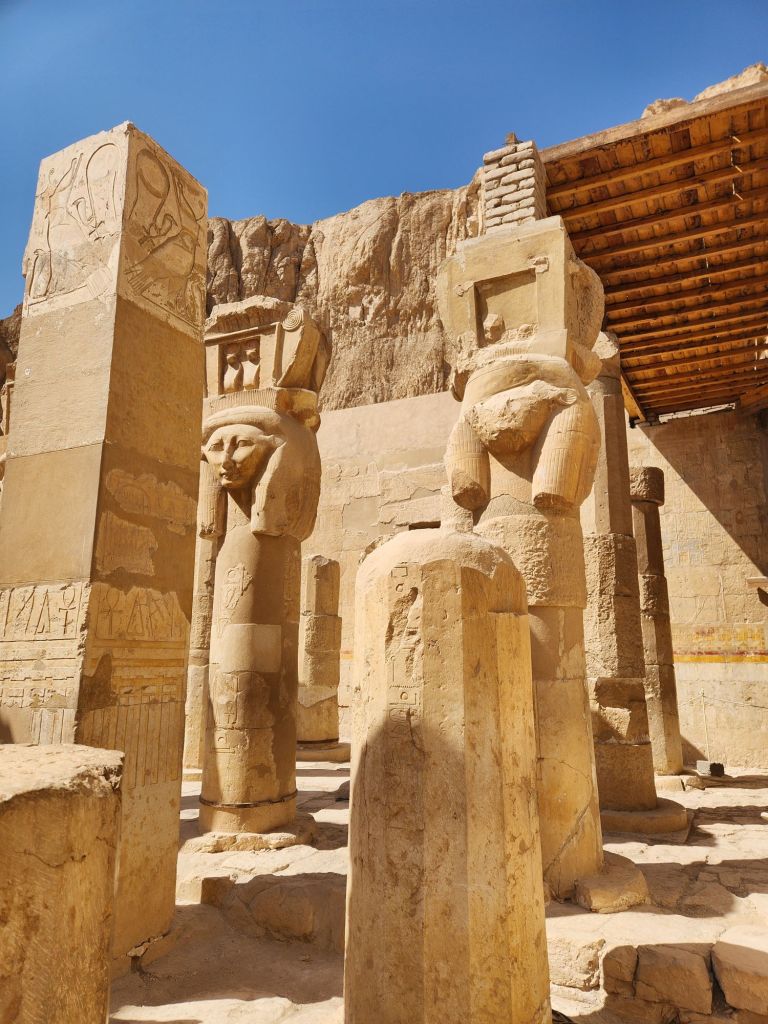
An area to the left of the main temple has a chapel dedicated to Hathor, which I quite liked. Plus, it was comparatively quiet.
To the left was of interest, which included an altar of the solar cult, but much of the more interesting places were blocked off by locals on demand of baksheesh, so I did not linger.
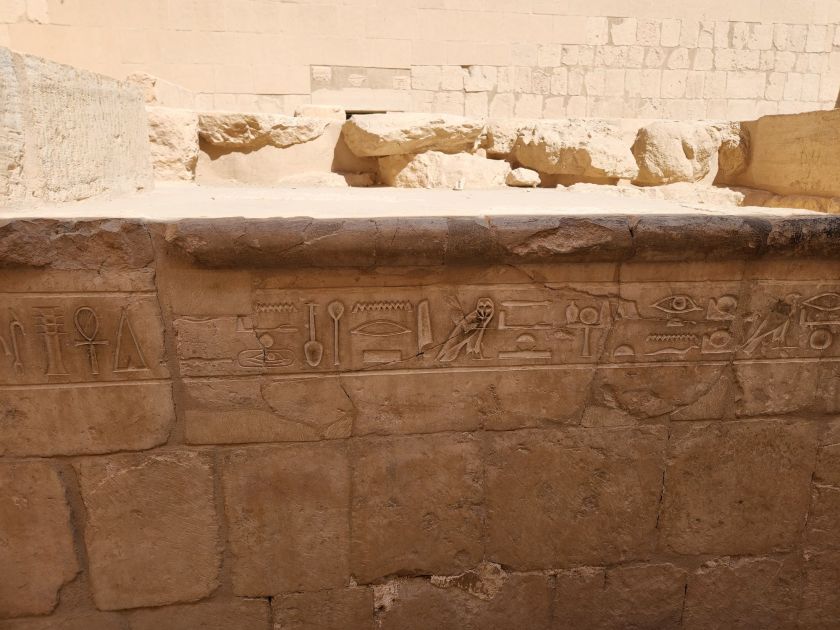
Behind the row of statues, I spotted carvings that document the Queen’s trading expedition to the Land of Punt, believed to be to the south-east of ancient Egypt, bordering the west bank of the Red Sea.
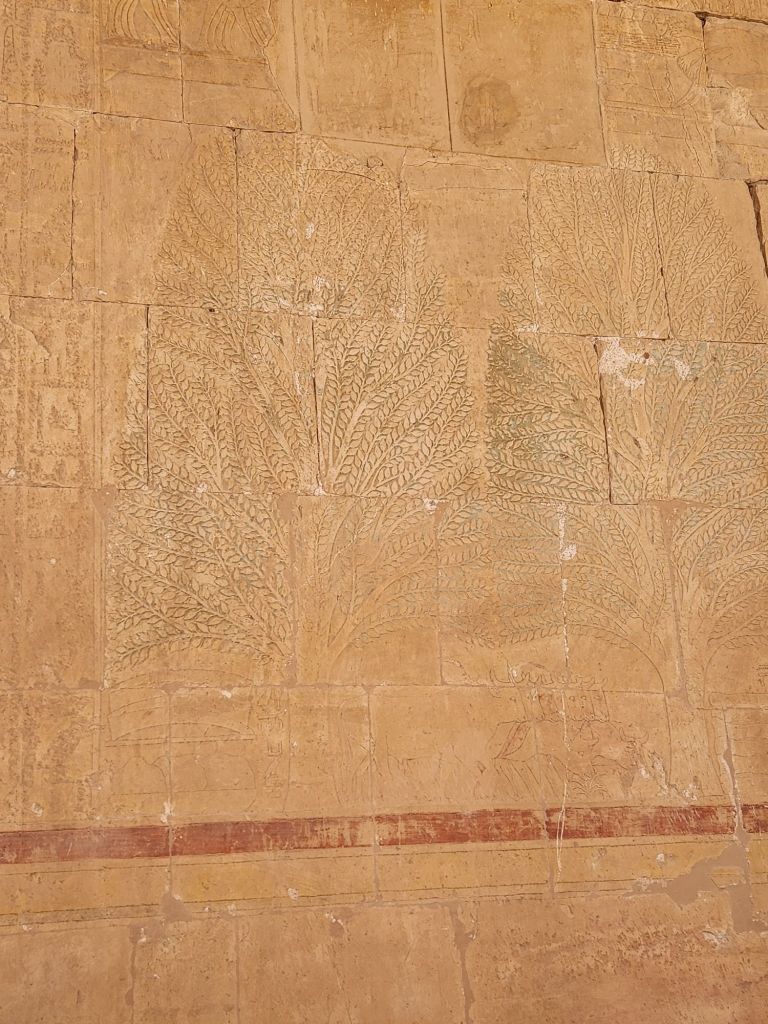
I think what I liked about this temple was the fact that it was designed to complement, rather than just be placed, in the surrounding geography.
Our next step was a nearby factory throwing out alabaster carvings, in the traditional, hand-carved methods. What this had to with ancient Egypt was tenious at best, but had much to do with our guide and driver earning commission. I was also somewhat dubious about how the half dozen guys with small pieces of alabaster and sandpaper outside could produce so much product. While some of the pieces were beautiful, and I would have loved one of the smaller “scribe” figures for my desk back home, I didn’t relish having to haggle over one or lugging it back home. But I did appreciate the offer of a cold drink without being charged ten times the retail price. Eventually, the three of us convinced them that we were not in the market for anything, and we headed back to the bus. Before we left, one of the workers made his way to me and, with a look askance for supervisors, palmed me a “gift” of a half-finished sacarab and some rough alabaster pebbles. I gave him a small note of Egyptian pounds, which was probably less than he hoped.
Our final stop was the Colossi of Memnon, two huge statues that depict Amenhotep III, built to guard his mortuary temple, of which little remains.
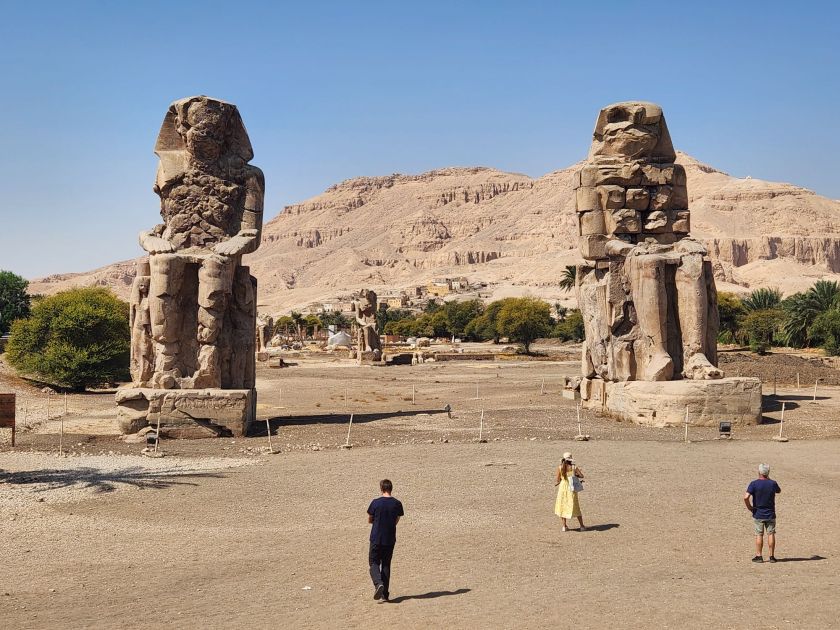
Both statues are eighteen metres tall, and can be seen for fifteen kilometres around, which was most likely a deliberate choice for them to become a landmark. Both statues are quite damaged, despite various restoration efforts. The bases of both statues feature inscriptions in Greek and Latin.
The confusion of the name is an interesting (at least to me) story. At one point in time, the northern statue made a screaming sound when the dawn winds through it. This was due to damage it had sustained, which was later fixed. This screaming led to an association with Mennon, a hero of the Trojan War, who was said to be the son of Eos, the goddess of dawn.
By now, all three of us were tired and in need of air-con and affordable cold drinks, and after ten minutes, we made our way back to our bus. Our guide then offered to take us to a nearby restaurant for lunch, but one of my street-wise fellow guests asked about the cost, and it turned out we had a very different understanding of what affordable was, and so we declined and were driven back to Luxor, where we parted ways.


 Adrian's Got The Moose
One thought on “Valley of the Kings Part III”