Valley of the Kings Part II

Continuing from Part I

The next tomb was KV47, the eternal home of Siptah, who ascended the throne at fourteen. Siptah was perhaps the illegitimate son of King Merneptah and his Syrian concubine. The tomb was never completed, which explains why it was so austere compared to the first tomb I visited, but it was also the victim of damage and pillaging.
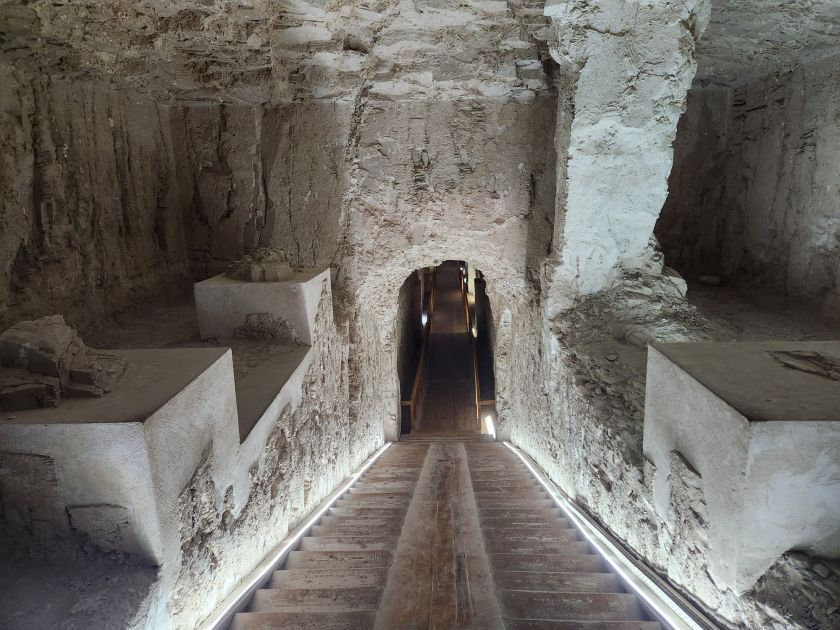
Central passageway

The other obvious difference when I visited was the almost complete absence of tourists. I waited for a couple to exit the burial chamber before stepping into it myself. Into this incredible still space. It took me a while to work out what was so peculiar and disconcerting about this space, then it was obvious; it was silence, something I had not experienced since I had landed in Egypt.
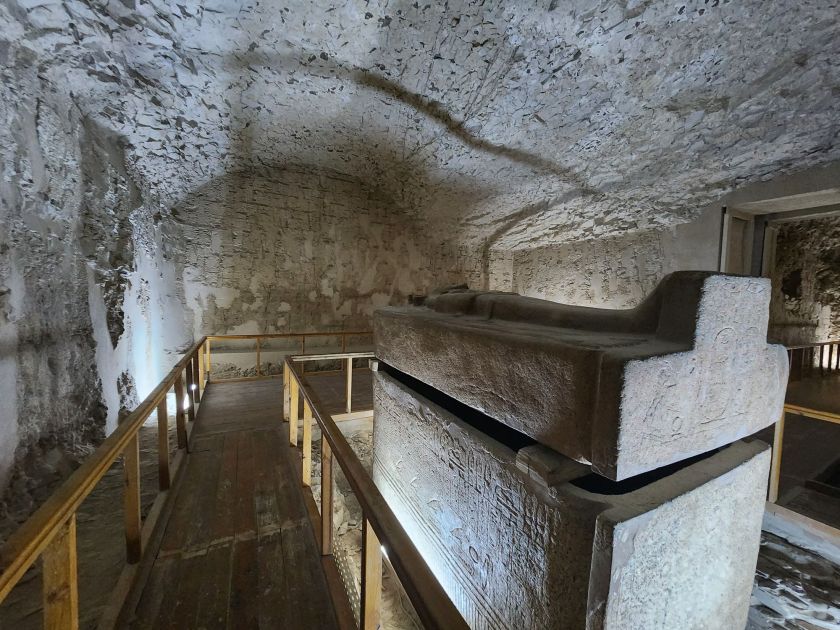
Burial Chamber, KV47

I would have happily curled up on the floor and slept, but five minutes later, I was out, avoiding the ticket seller’s demands for baksheesh. A tomb I had paid extra to see had a long queue, and so I made a vague promise to circle back to it and continued on.

The third tomb I explored was KV14, tomb of Queen Tausert, and then reused and extended by King Setnakht. Tausert was the final Pharaoh of the nineteenth Dynasty. Her claim came from her marriage to Setti II rather than through her bloodline. Hence, her successor was also not of royal blood and usurped her during a time of crisis and political upheaval. Both only resided for a short time. It is thought that Setnakht co-opted the Queen’s tomb out of both pragmatism and as a way to further cement his right to rule. Renocations by Setnakht also made it one of the largest tombs in the valley. What I liked the most was this large painting winged goddess, which is assumed to represent the afterlife.
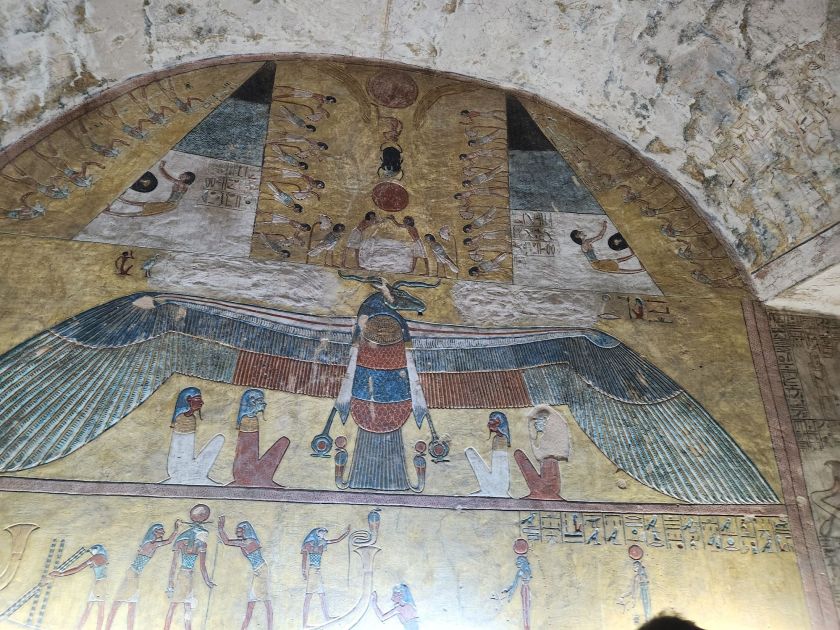
KV14

The tomb was quite busy when I visited, and was well-decorated leading up to the burial chamber.
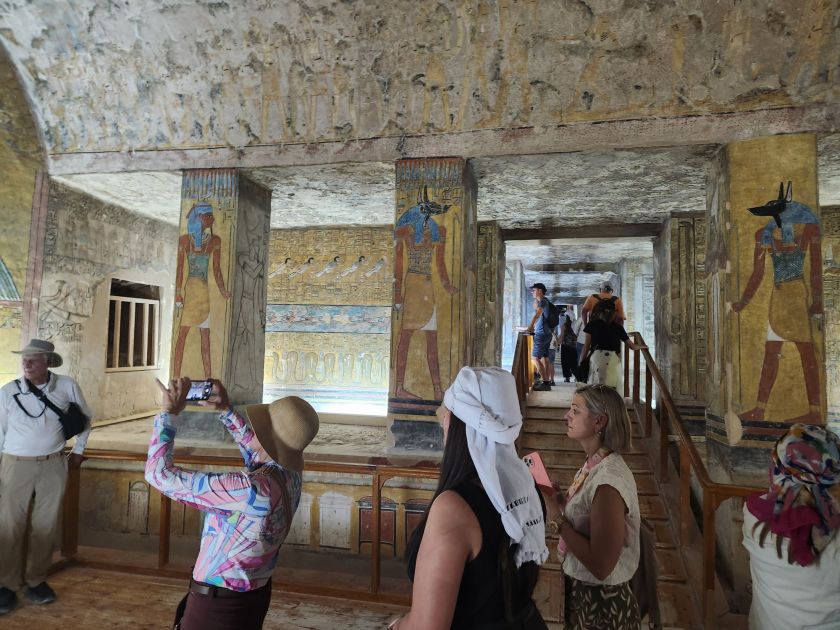
Corridor.

The fourth and final tomb I explored was KV2- the tomb of Ramesses IV. Ramesses IV came to the throne after his father was assassinated, and his first act as Pharaoh was the arrest and execution of the conspirators.
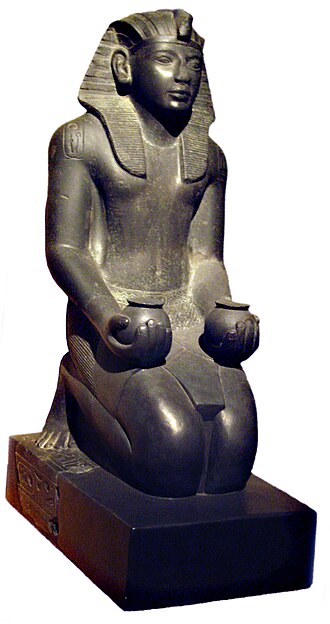
Ramesses IV offering two Nu Vases, stolen from Egypt and placed in the British Museum. https://commons.wikimedia.org/wiki/File:M-Ramses_IV.jpg

The tomb has been open since antiquity, and visitors often vandalised the tomb with their names and other details. At one point, it was believed to house Coptic priests, who also left their mark. Fortunately, enough decoration remains along the corridor, which probably led to it being choked with people, much to my frustration.
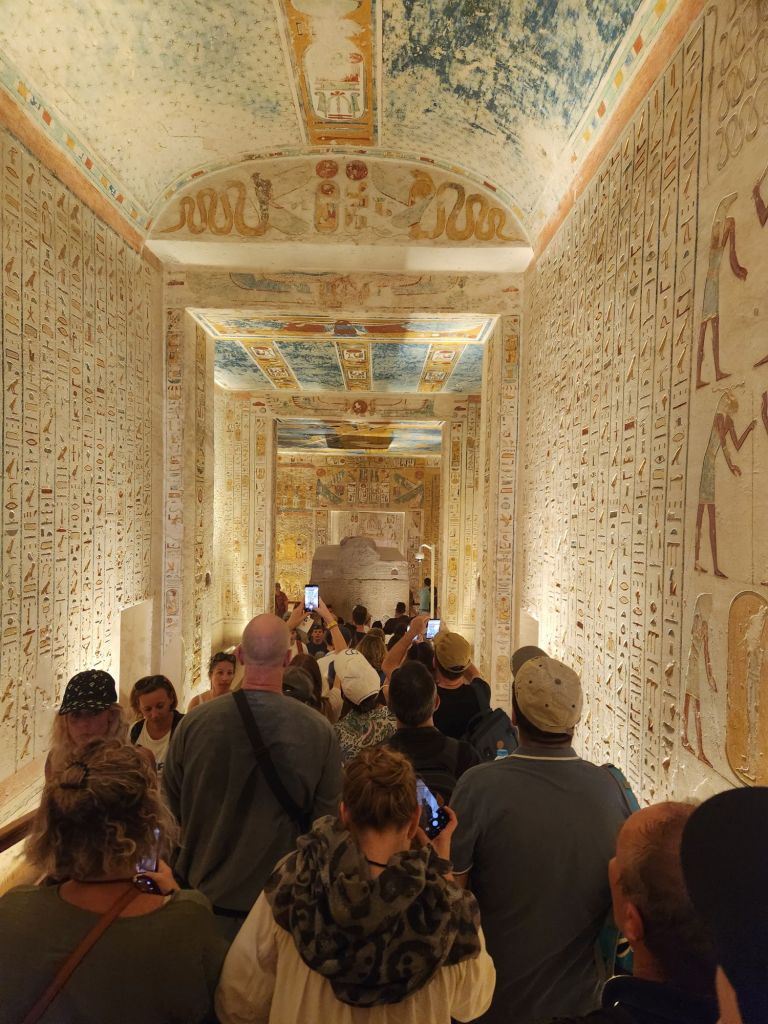
Main Corridor.

The sarcophagus, still present, was of course the focus of much attention, but I did manage to make my way to it, However I struggled to get a proper angle on it.
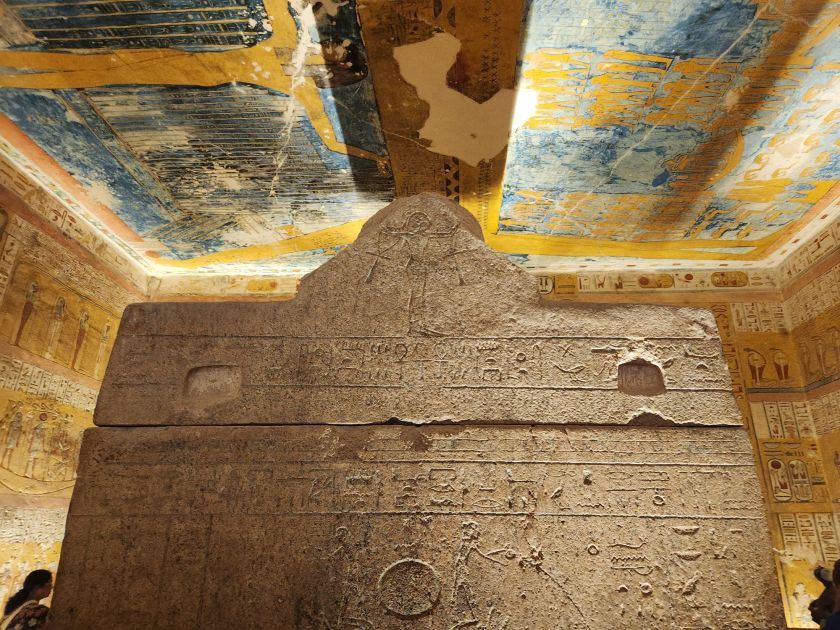
Ugh. Can only assume it was too heavy for the English to cart away.

Feeling equal parts awe and irritation, I made my way back out and to the cafe that was our meeting point, where I discovered that a simple iced coffee would cost me more than the entire tour. Instead, passing through the market on our way back to our bus, I bought a pomegranate juice can for a more mild rip-off.

To be continued…

Pyramids and Poop

There are three things I need you to understand about the Pyramids of Giza.

  1. It doesn’t matter how many photos, videos, blog posts, articles, and documentaries you have consumed about this place; nothing will prepare you for just how impressive they are in person.
  2. Every bit of statue, carving, every sarcophagus, every column, every obelisk that can be dragged away and taken to a museum or private collection has been. This leads to visiting the Pyramids to be a stark experience, devoid of context.
  3. You cannot escape the overwhelming miasma of horse and camel shit.

After managing to avoid my Uber driver’s efforts to have a tour through his brother-in-law’s, fighting my way through the touts, and paying the exorbitant entry fee, I passed through the security as if I was some dubious English lord looking for a nice piece to hang over his mantle, and was let loose inside the Giza Necropolis.

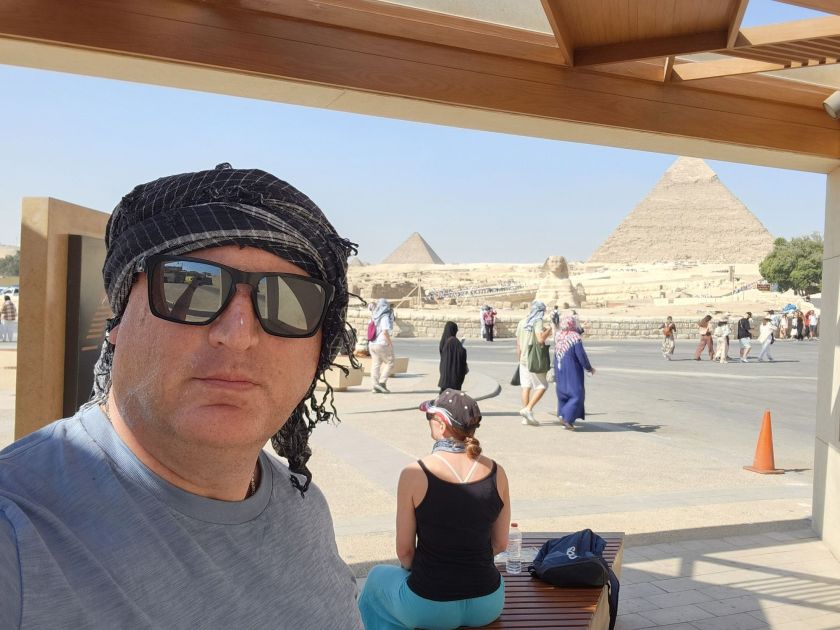
Just past the gate was a modest pavilion, and I stopped there to apply sunscreen to my delicate skin. This is where I saw my first glimpse of the Sphinx.

You kind of have to squint to see it, unlike the sunscreen on my nose.

The way to the Sphinx was unclear, which I suspect was on purpose, so I walked uphill to the tomb of Meresankh III, Queen and wife of Khafre.

Tomb of Maresankh III

It was a comparatively modest structure that I enjoyed exploring despite various touts yelling at me at all times.

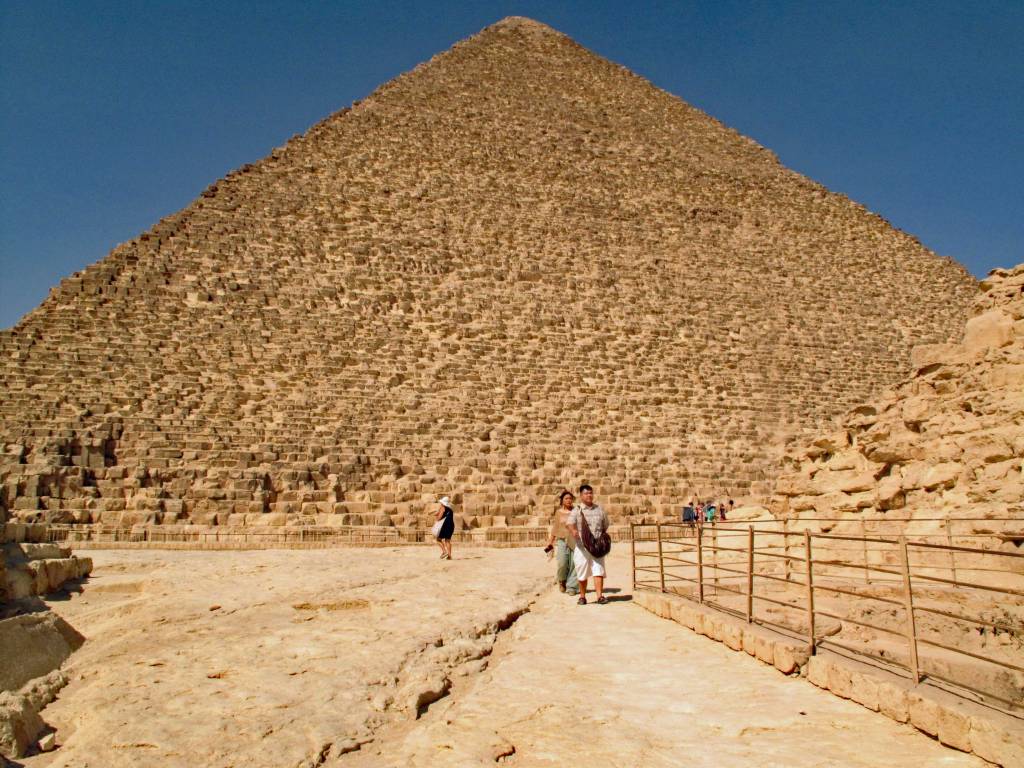
I moved on to the Great Pyramid of Giza.

Great Pyramid of Giza

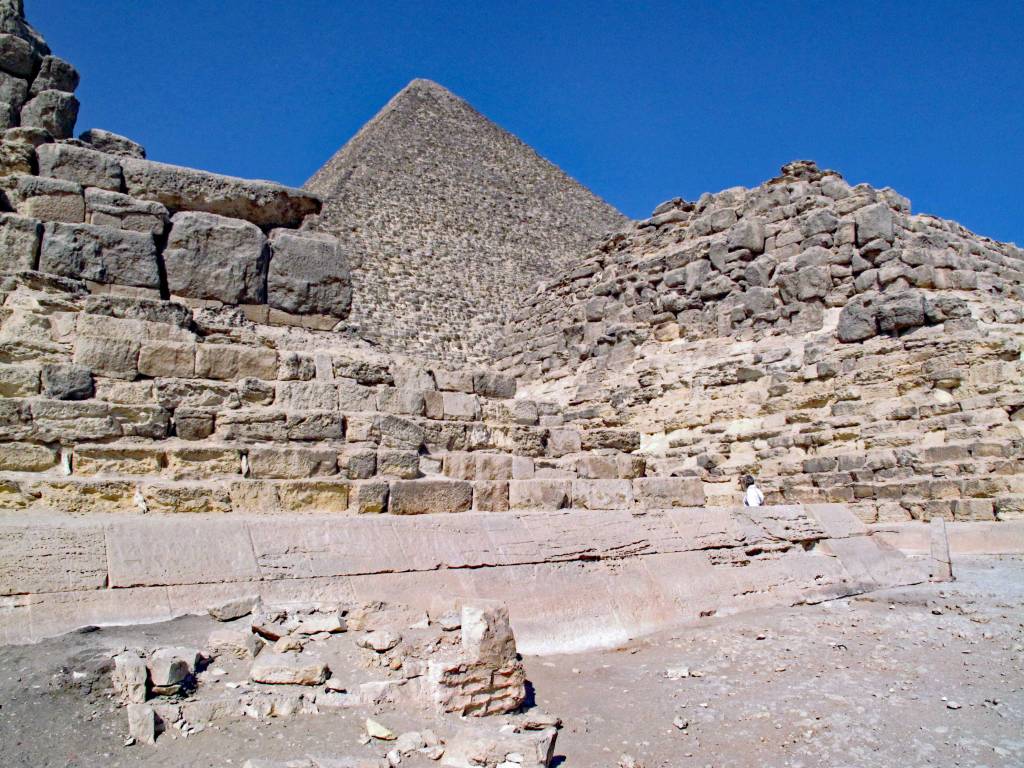
Correctly known as the Pyramid of Khufu, it has lost eight metres of its height due to the pillaging of its limestone shell, but the one hundred and thirty-eight metres left was still enough to leave me dumbfounded. This colossal structure was the largest man-made building for three and a half millennia. Even with access to modern trucks, cranes, loaders, and diamond-tipped saws, the logistics to recreate it today would be staggering. It’s also the only one of the Seven Wonders of the Ancient World still standing to this day. After walking around the pyramid and taking in its majesty, I moved on to the Pyramid of Khafre.

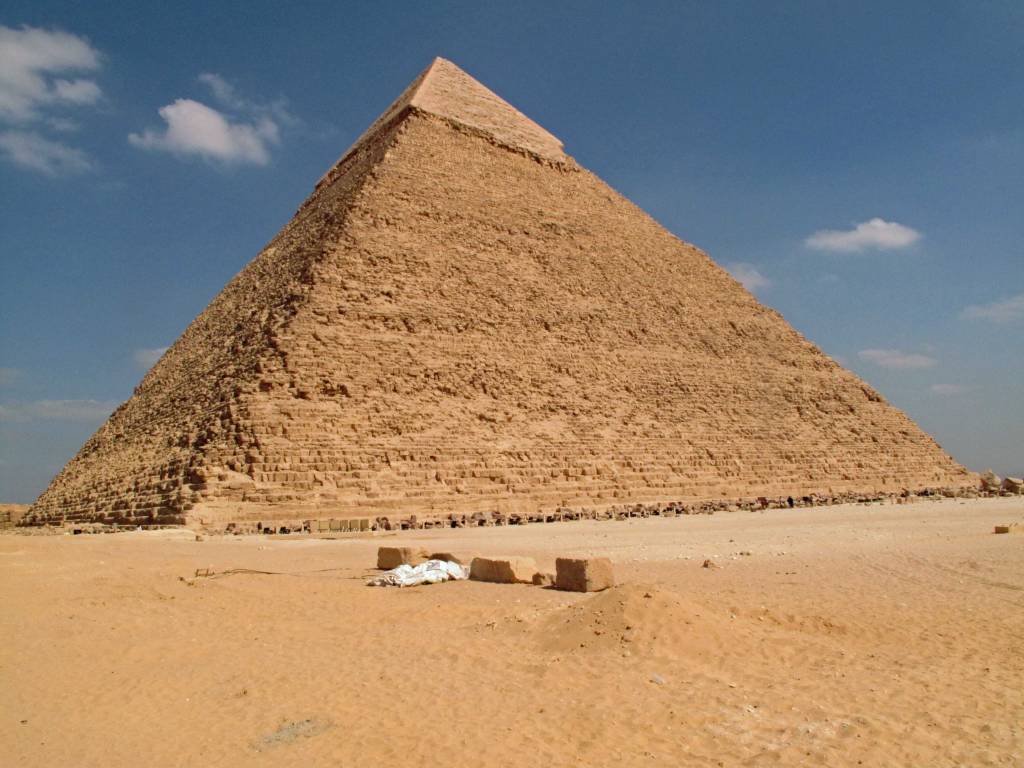
Tried removing that white thing 😦

The middle-sized of the Great Pyramids, it’s perhaps the most striking of the three due to the limestone cap that still remains to this day. Here I could have paid extra to go inside, but my claustrophobia and early-trip cheapness prevented me from taking advantage of this.

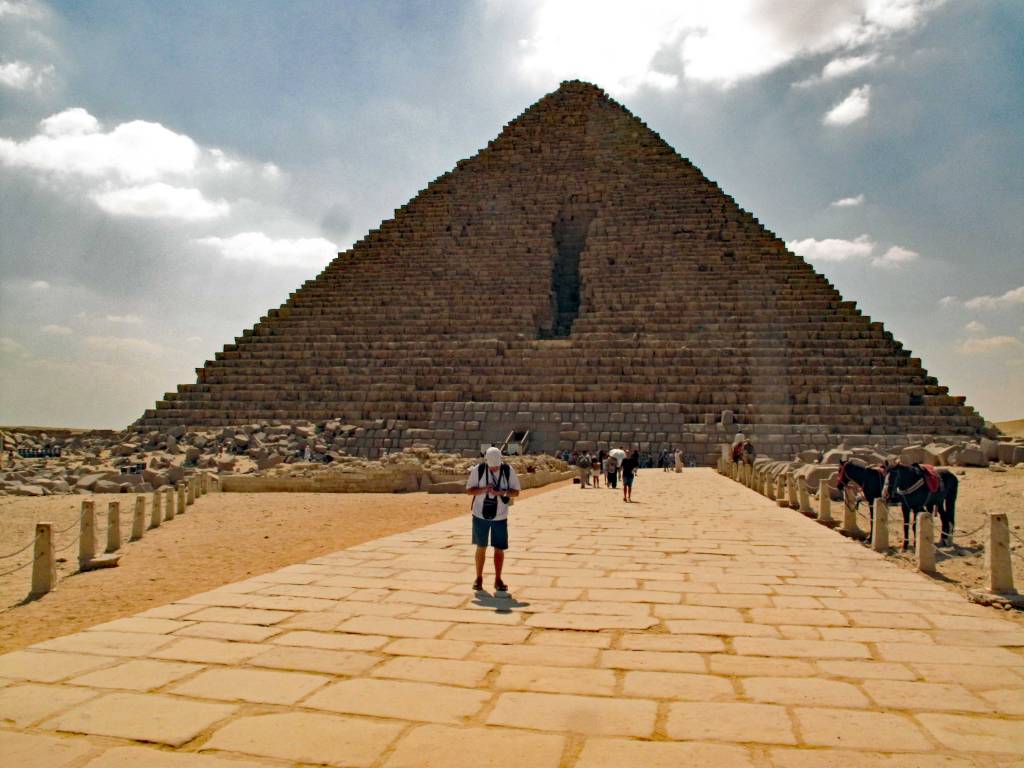
The third of the Great Pyramids is the very much reduced Pyramid of Menkaure.

Pyramid of Menkaure

It stands at sixty-one metres high today. The large vertical gash is the result of the Sultan of Egypt’s efforts to demolish it; luckily, after eight months, this act of vandalism was abandoned.

By now, I was getting worn out and baked in the sun, and I followed a group of tourists who seemed to be walking with confidence, hoping they would lead me to the Sphinx.

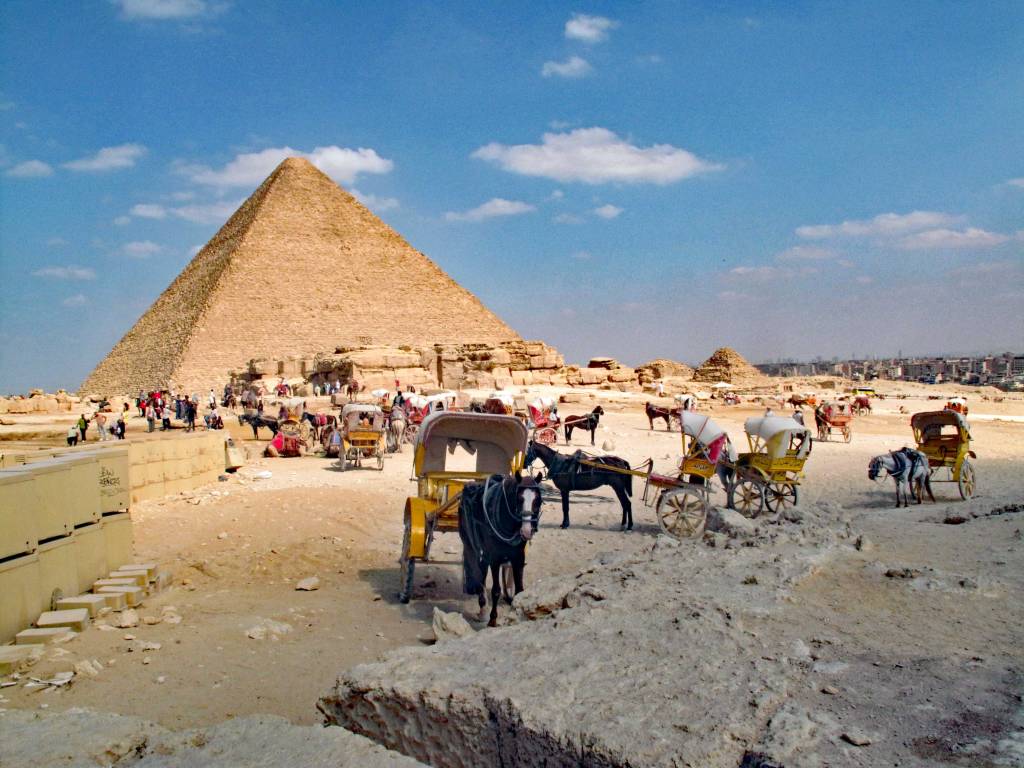
Too many horses, not enough people willing to ignore their condition.

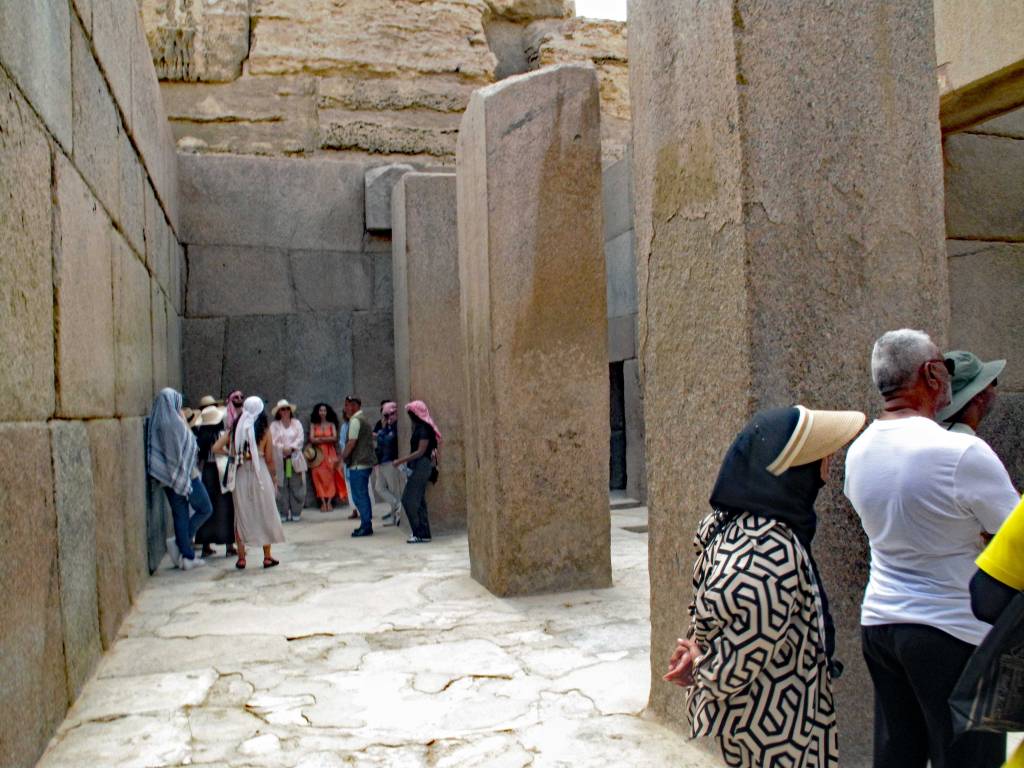
This area seemed to be where the freelance horse carriage operators congregate, away from the Great Pyramid scammer bros. I managed to find the entrance to the Sphinx, which was through the Valley Temple of Khafre, who was also one of the suspected builders of the Sphinx.

Partly restored.

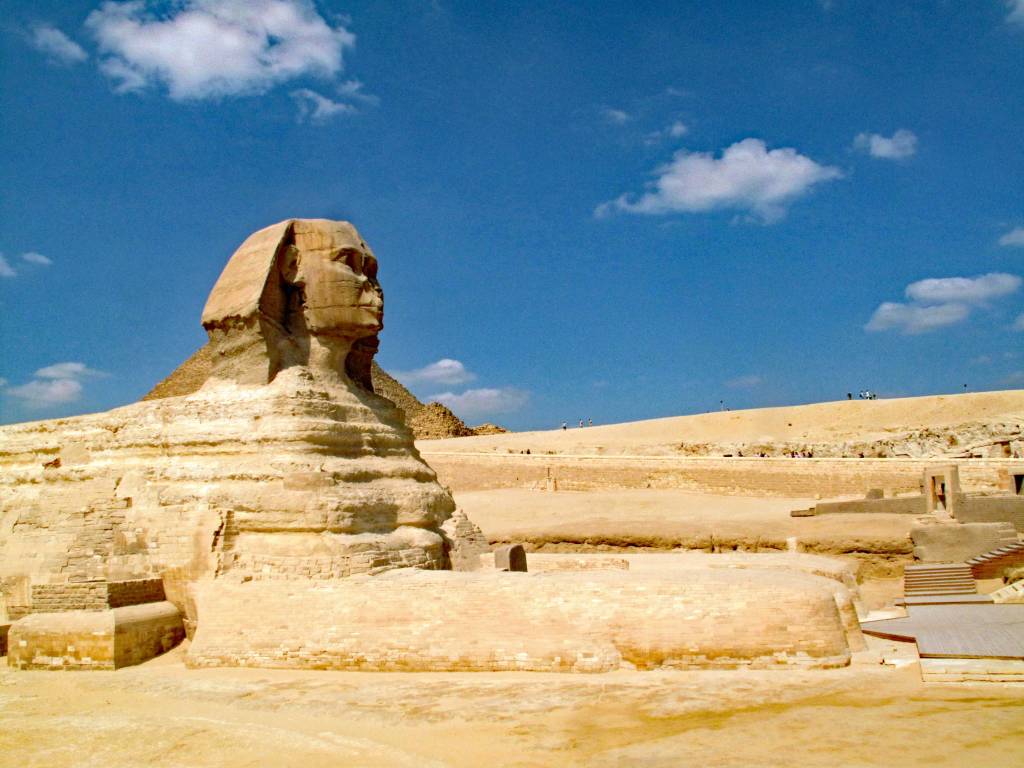
Once I made my way through the temple, I climbed a causeway with a view of the Sphinx, which is the closest one can get without bribing a guard or jumping a fence.

Great Sphinx of Giza.

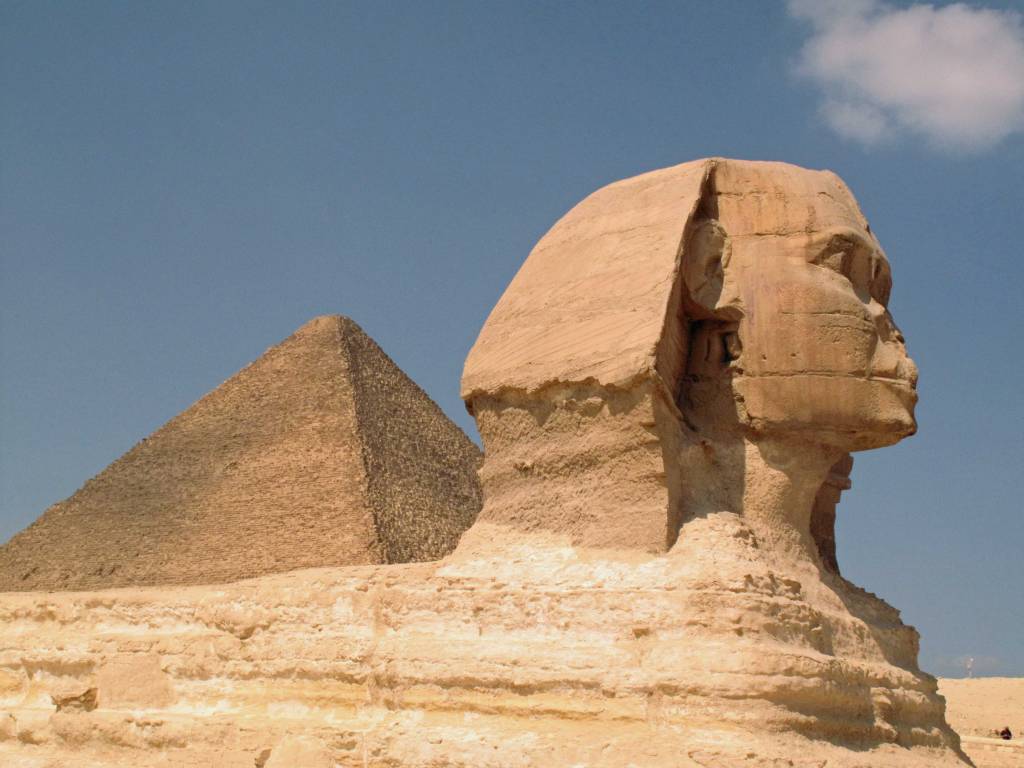
Standing taller than the nearby Pyramid of Menkaure, the Great Sphinx of Giza (It’s certainly not the only one; it’s a common motif) has been the stuff of legends since it was carved from the bedrock over four thousand years ago. I grew up reading fairy tales featuring this enigmatic statue. Including ones where the statue is alive and poses riddles to weary supplicants.

I managed to hold off on taking a selfie snogging this ancient monument, which at least placed me in the minority of the crowd on that day. He or she deserves more respect than that. I sat on the stone wall lining the causeway for a few minutes, simply soaking up the view as much as I could while tourists milled around me, taking photos from every available angle.

Great Spinx of Giza, with the Great Pyramid of Giza in the background.