Things to do in Siwa when you are Sober part II

The next day, I made the mistake of spending ten minutes arguing with a tuk-tuk driver to take me to the actual oasis of Siwa. Note to self, never engage the services of anyone wearing Tommy Hilfiger, they have an excessively high opinion of the value of their services. The driver dropped me off near a closed cafe on a causeway through the oasis, and while the landscape had an undeniable desolate beauty, the oasis is huge, and any plan to walk around it was pointless.
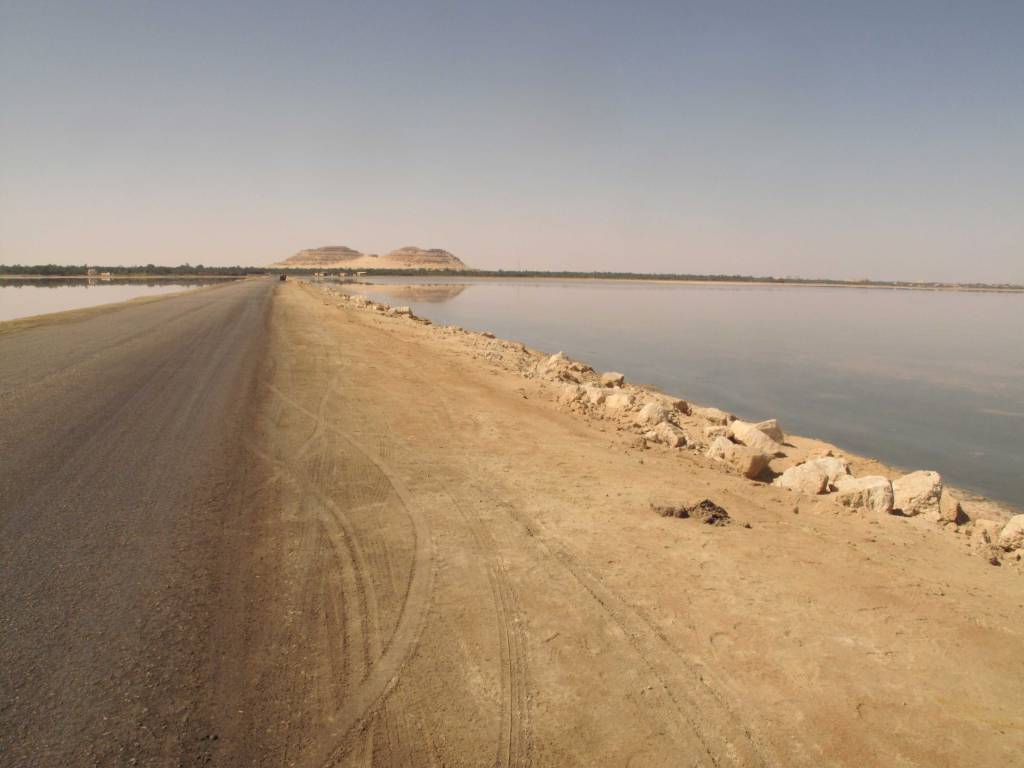
I half expected to see human bones roadside.

There was no vegetation to offer shelter from the sun anywhere in sight, and very little of anything else. I suddenly felt very foolish as I took a few photos and started walking back towards town. Luckily ten minutes later, a couple in a late-model Toyota Land Cruiser pulled up, and I managed to bag a lift. I jumped in the backseat, and while the couple, several social and economic levels above anyone I had interacted with in Egypt so far, chatted to themselves in Arabic that seemed more melodic than the Egyptian dialect, I tried to look non-threatening and not sweat on their leather seats. They dropped me off in town near the mosque, and I didn’t insult them by offering payment, but did thank them profusely and shake hands with them before we went our separate ways.

After a few iced coffees and a light lunch at a nearby cafe, I realised there was only one thing I really needed to see in Siwa before moving on.

Shortly after I arrived at Siwa, I spotted a partially ruined fort on the hill overlooking the mosque, and I was immediately intrigued.

From where I started, Google Maps led me through a rubbish-strewn alley, along a loose wall of bricks, then advice from a traditionally-garbed man led me through an abandoned home and another alley. I squeezed past some parked motorbikes and unceremoniously dumped myself in an alleyway I was in on my first night in Siwa, which I could have simply walked to from where I had dinner the night before. Stairs hewn into the bedrock led me uphill, and to the ancient mosque, the only part of the fort still in official use.
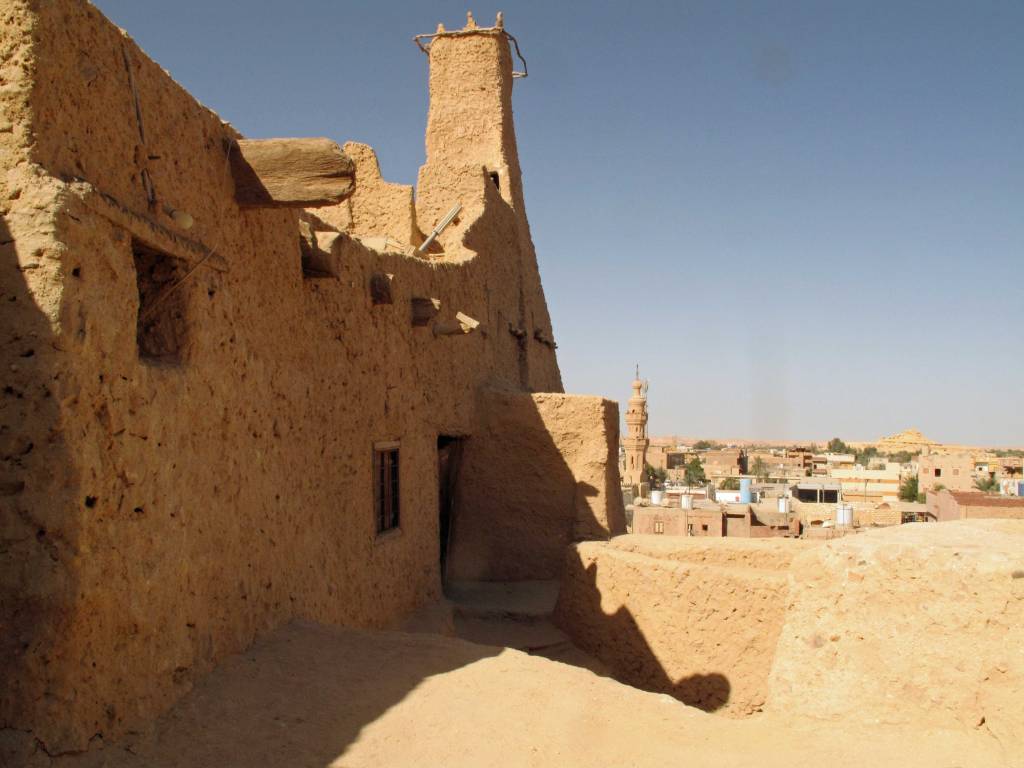
Ancient Mosque

While I didn’t see anyone around, it didn’t seem like the kind of place people would have liked me poking around, especially considering my complete lack of Arabic, so I continued uphill.

Amongst the ruins, I spotted walled sections that seemed to feature either toilets or small wells, along with a small handful of buildings that were either very small homes or storage rooms, which showed signs of use and upkeep.
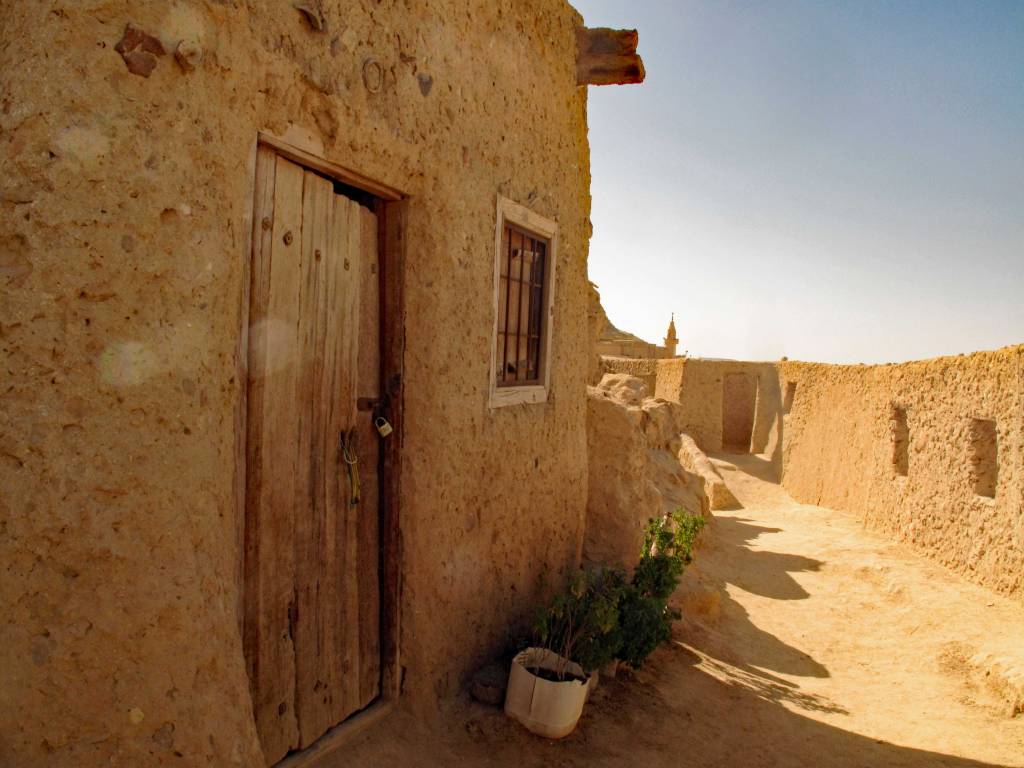
But who would bother with plants in a place they were using for storage?

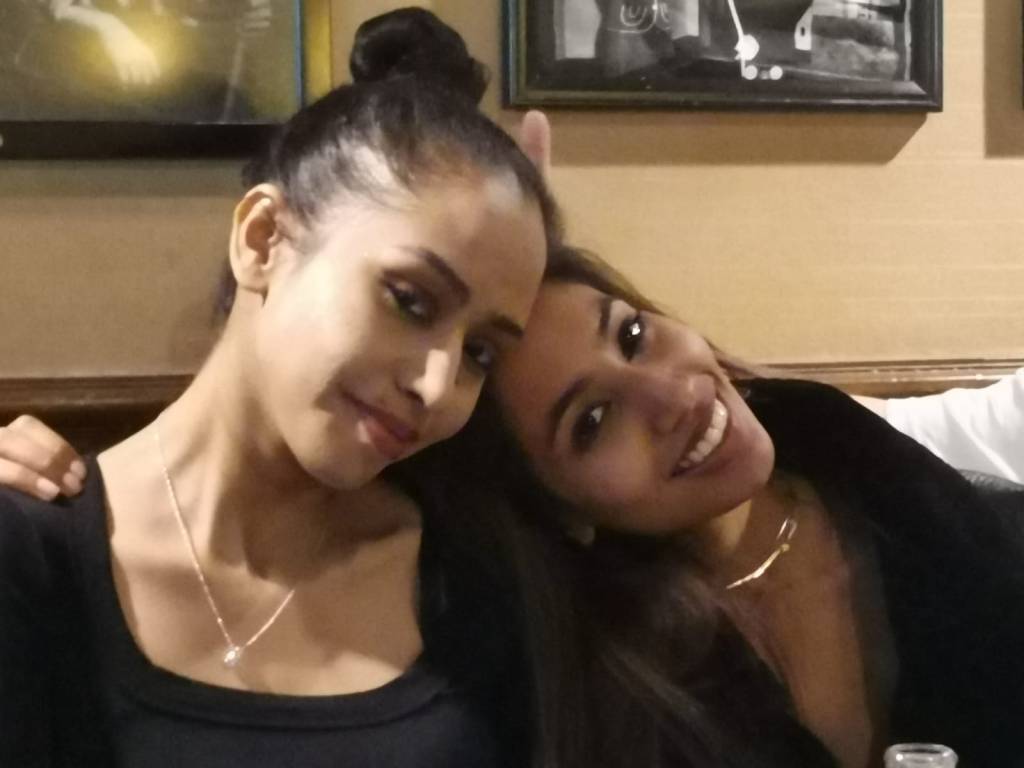
Finally, after scrabbling up worn steps and avoiding an incredibly attractive couple making out while taking selfies, I reached the top.
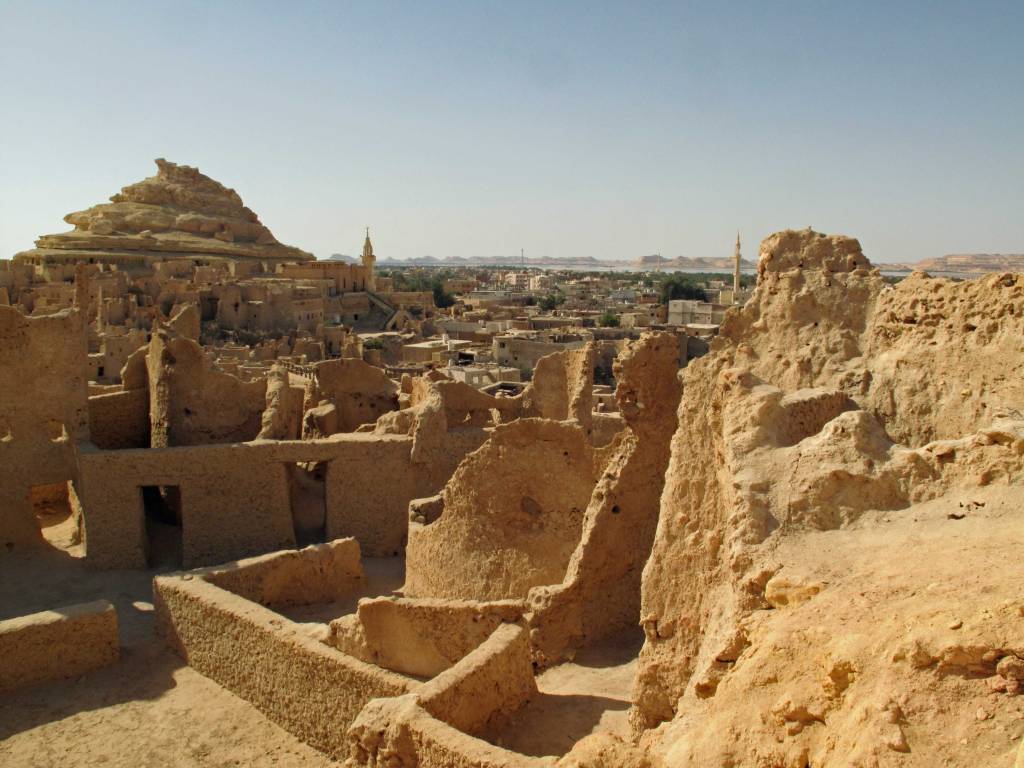
Shali Fortress

Shali Fortress was built in the twelfth century by Siwi Berbers to defend against the Bedouins. It was constructed from kercheif, a mixture of rock salt and clay. The walls survived many attacks and the passage of time until three days of rain in 1926 caused considerable damage. In 2018, locals, many of the descendants of the original Berbers, partially rebuilt the fortress.
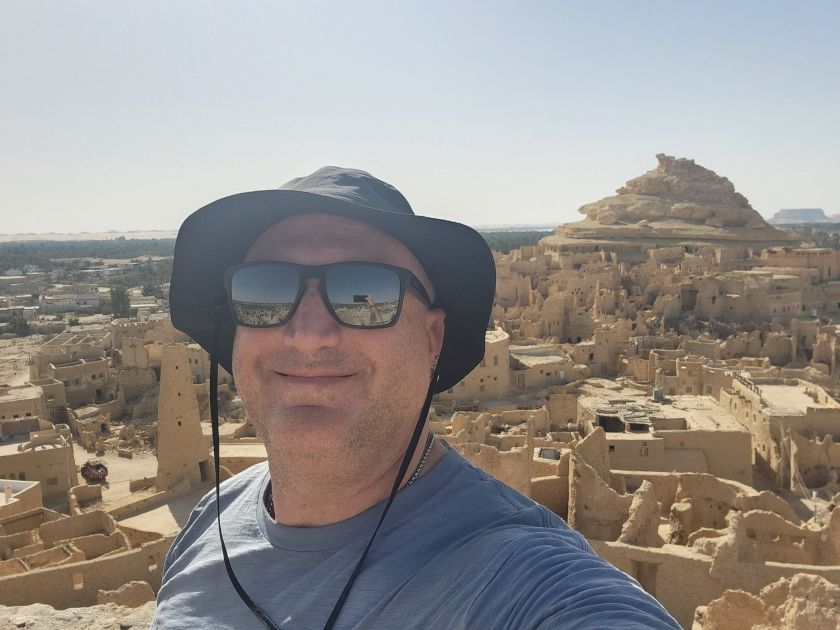
Happy as a pig in shit.

By the time I reached the top, my camera was starting to have issues, so I only have a few phone pics to show for my trouble. I could not help but think about how many people lived and died defending this fort. I suspect I only scratched the surface of the history of this place, and would dearly love to find some books written on the subject. Sadly, I struggled to find a path down to what I thought of as the town square of the fort. I could have done with a guide.
Chaotic Cairo Part I

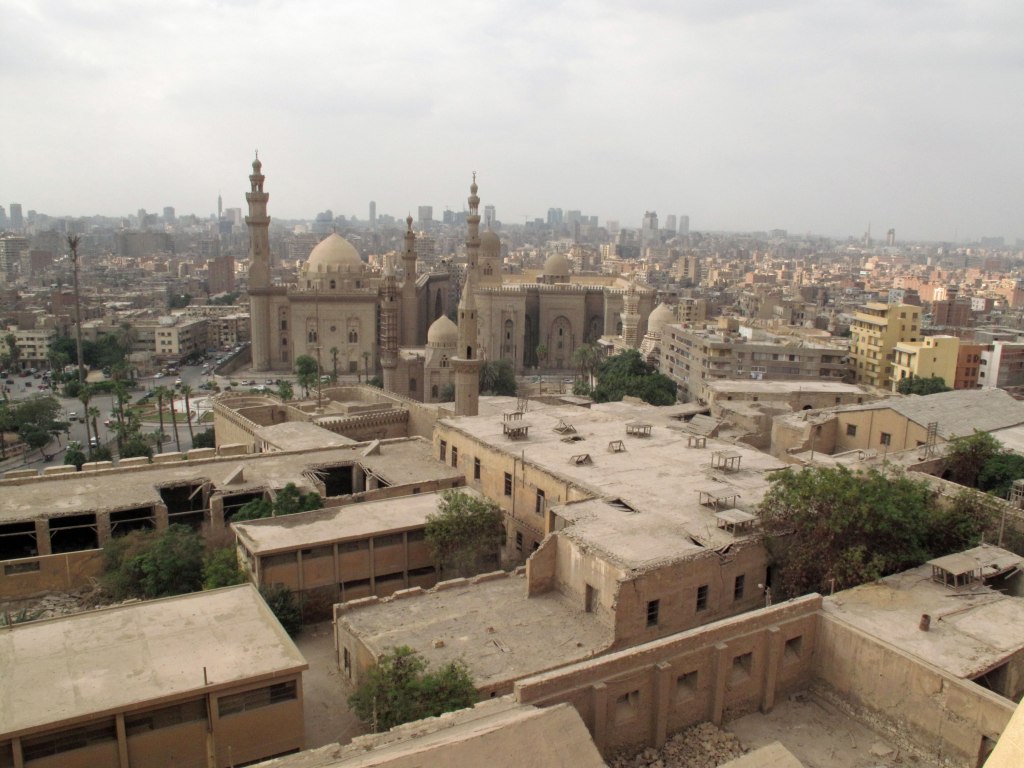
Cairo, the city of a thousand minarets. A city with both feet firmly in the past, trying to sway into the future.

View from The Citadel.

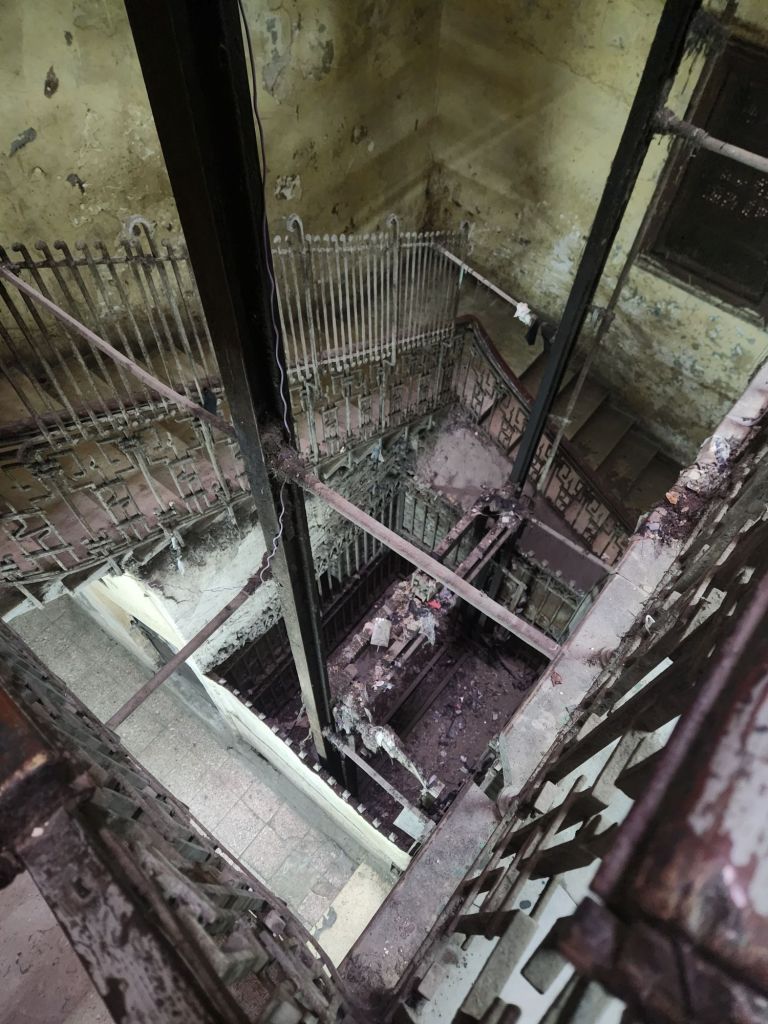
I would love to claim that I booked my hotel in Cairo with deliberate care, with consideration for location, amenities, and reviews. In fact, I booked it after ten seconds of thought, based on price, while frustrated about my lack of progress on planning this part of my trip. My hotel was five stories above an alley dedicated to selling car parts. The staircase wrapped around the old elevator shaft, which had stopped working decades ago.

Would you believe it looks even worse in reality?

The handrails may have once been quite ornate, but any pretense of grandeur had long ago been given up. My room was small, being divided up from a larger suite, two walls made up of unpainted plasterboard, the ceiling peeling paint, and plaster dropping away from the wooden beams. I had to provide my own soap and toilet paper; the shared bathroom did not even feature a bum gun or bucket and jug. It was clean and safe enough, but I took care not to leave anything in my room worth stealing.

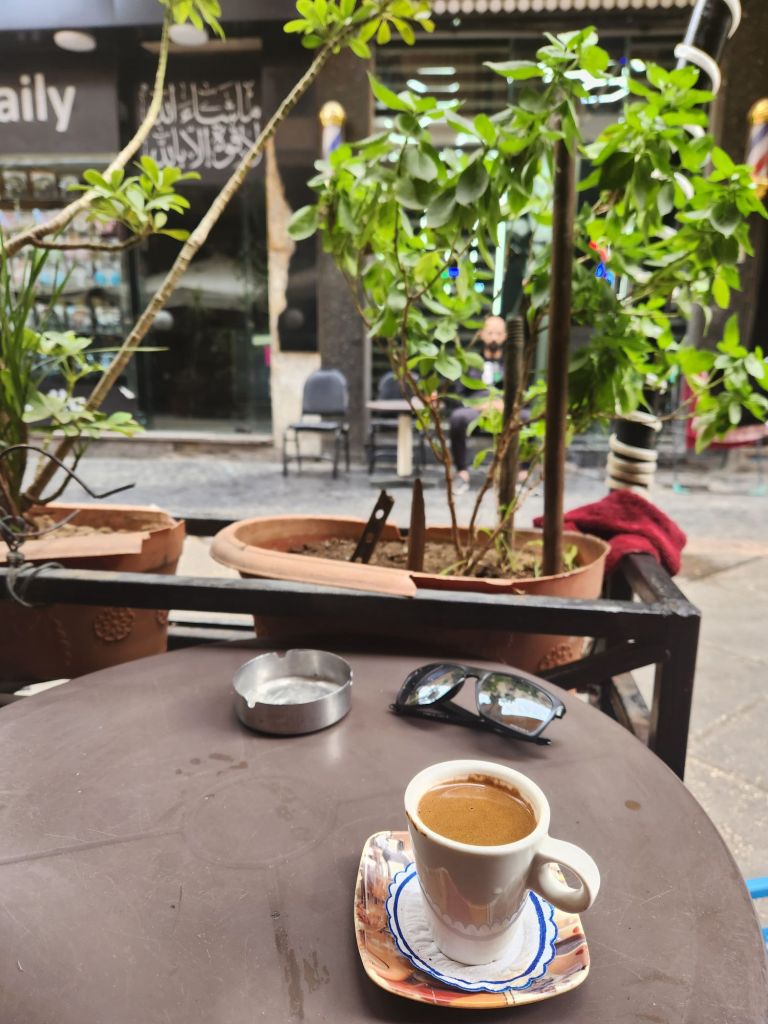
In the morning, I walked a short distance from my hotel and found a traditional cafe in an alleyway. There, I enjoyed my first Arabic coffee since COVID.

Strong, gritty, and without pretension.

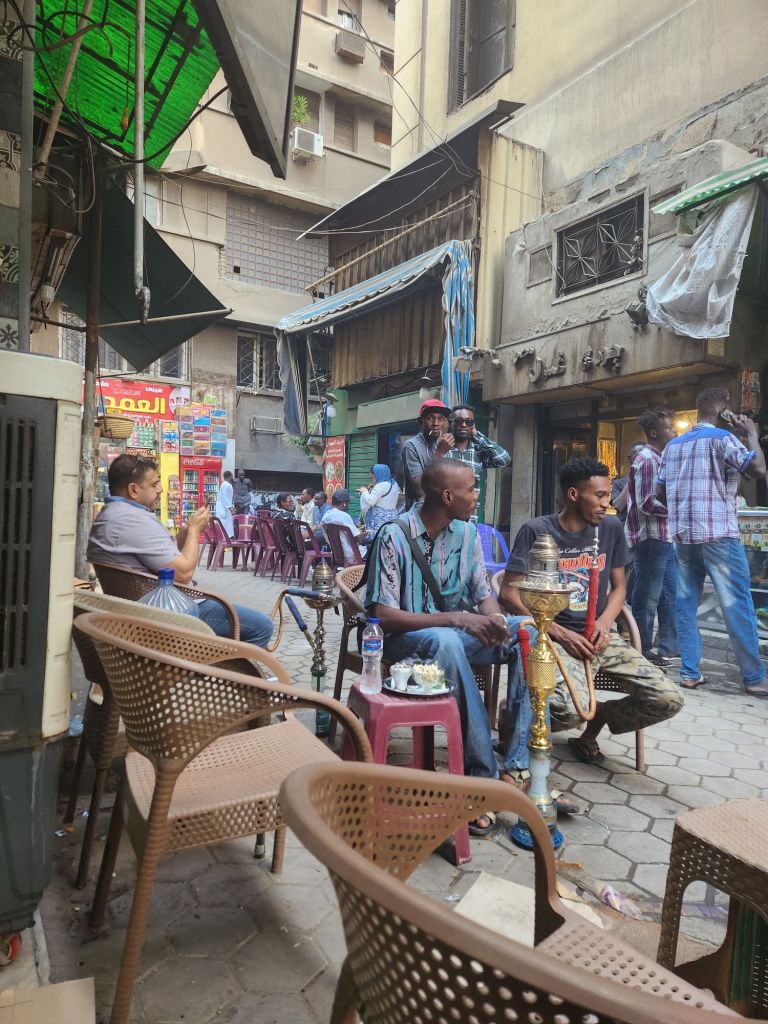
I think what draws me to these sorts of places is that in a world where you are never far away from a Starbucks, these cafes are largely doing business in the same way for the last hundred years. Cash only, coffee brewed by hand above flames, and barely any English spoken. Fully caffeinated, I completed my efforts in returning to full human status by getting a shave and a haircut at a tiny barber shop I passed earlier. I was, however, not feeling up to any serious sightseeing, so I continued walking aimlessly. I got lost in a series of streets lined with shops selling name plaques, name stamps and similar office supplies. When I managed to escape this enclave, I got lost in a series of streets focused on selling lighting fixtures and other electrical parts. Eventually I found myself in an alleyway where the focus was more useful to me; coffee and shisha. I spent a few hours here, drinking coffee, reading, and watching the tide of humanity, which seemed to be darker-skinned than what I expected to see in Egypt, which I assumed to be Nubian.

Tokyo never seemed further away.

There was a lot of traditional dress, traditional three-kisses greetings between men, and, of course, mobile phone use, which was the single sign of modernity, apart from the noise of traffic.

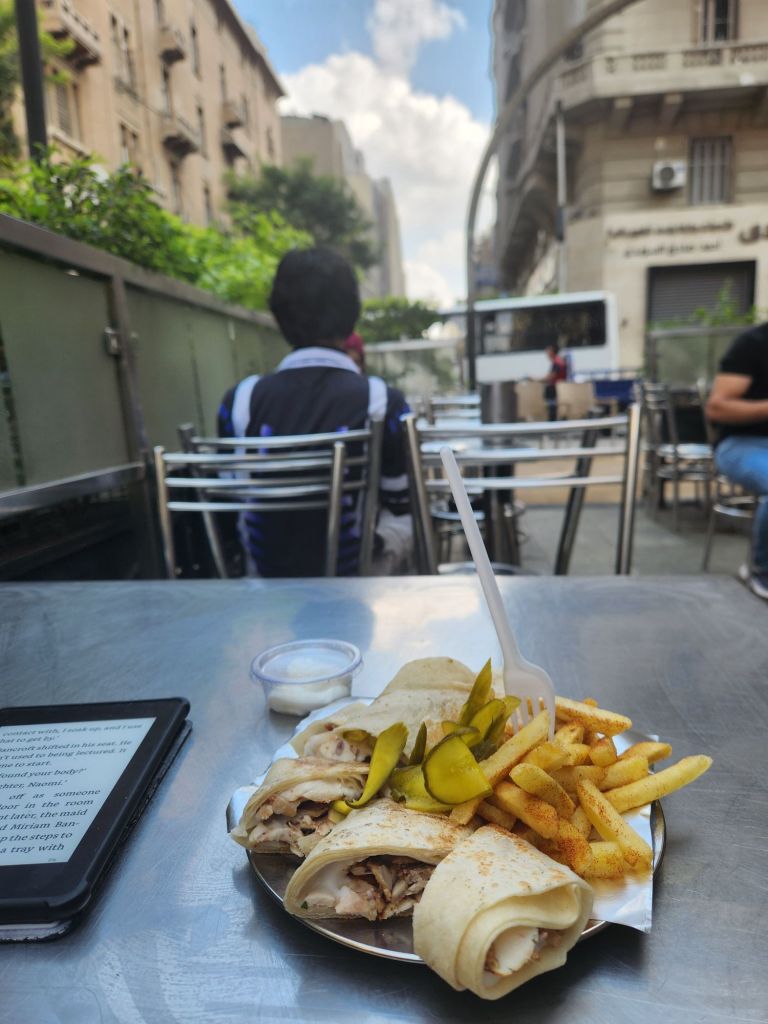
Early evening, I found myself in a pedestrian boulevard, having eaten nothing in Cairo yet, I discovered a no-frills restaurant, which was something of a local favourite.

Cheap and tasty.

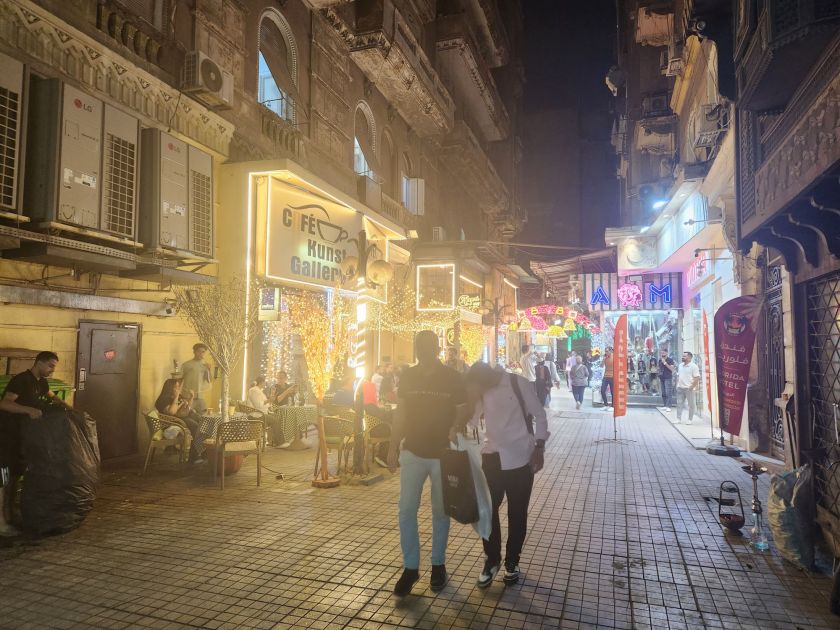
I wandered some more after my early dinner, finding some nice, more modern cafes down alleyways closed off to traffic.

Good mango smoothie.

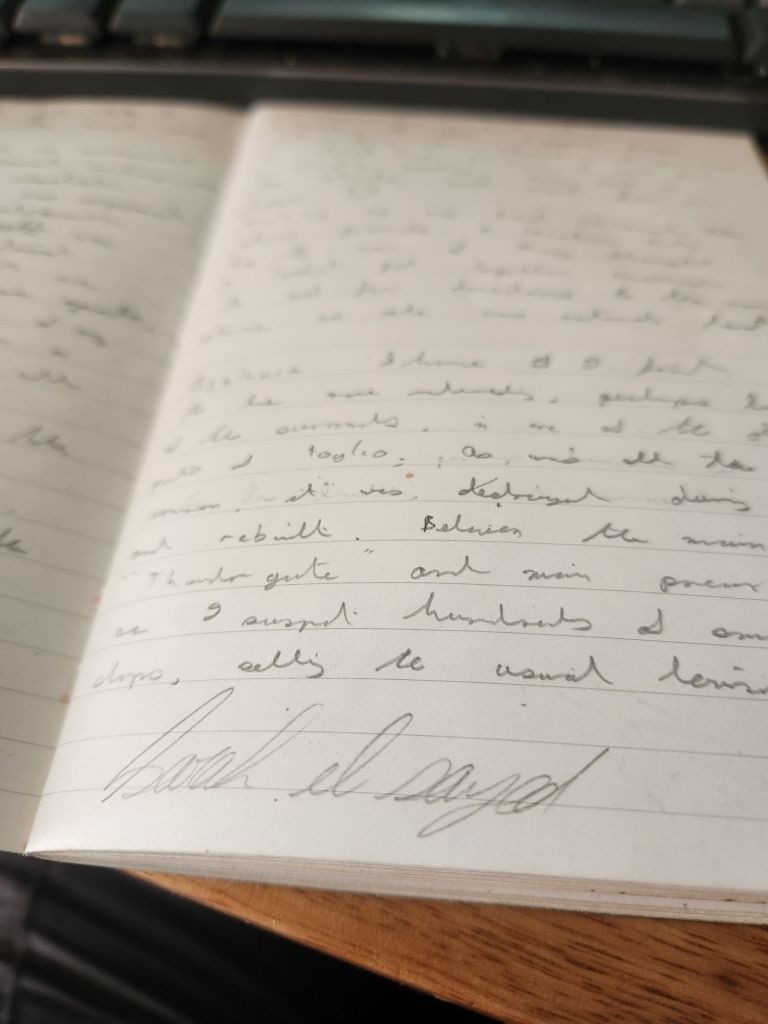
Later, I was craving air-con and a place where I could do some writing unmolested. I walked to a nearby McDonald’s and ordered a tea from the kiosk before heading upstairs. After waiting half an hour, another patron took pity on me and sent a staff member to find out what was going on. Sarah appeared and commented on my handwriting being much like hers, then proved herself wrong by writing her name in my notebook much neater than I could ever manage.

See?

When Sarah returned to me with my tea, I handed her one of my mini business cards, which delighted her, but she seemed to make a point in accepting it as a souvenir rather than any interest in contacting me. My hopes of gaining a beautiful Egyptian girlfriend dashed, I drank my tea and returned to my hotel to climb the stairs, alone and rejected.

Tipsy Tokyo

Drinkers are spoiled for choice in Tokyo, the drinking culture being well established before it ever became a tourist hotspot. My capsule hotel is a two-minute walk from the famous Golden Gai. Golden Gai is a small collection of alleyways, full of tiny bars, some seating no more than five people. Before being mentioned in every travel guide, BuzzFeed article, and blog post about Tokyo, locals flocked to it, often choosing their own favourite bar. Some functioned as private clubs, with entry only permitted for members. It was especially known as a haunt for writers, which, of course, helps my fascination.

Apparently I only took a single photo
Golden Gai

Many of the bars have their own themes and have become famous in their own right, such as Open Book, filled with bookshelves and noted for its excellent lemon sours, and Deathmatch in Hell, a heavy metal-themed bar. Due to the popularity of many of these famous bars, I only ended up drinking in Golden Gai once, at a place whose name I never quite caught, hosted by the vivacious Suki. I drank alone until a group of beautiful Dutch youths showed up. On asking for the bill and finding it less than I expected due to the absence of a cover charge (very common in Tokyo, and sometimes described unfairly as a scam), Suki asked if I could shout her a shot, and of course I could not let her drink alone, and thus I had my first Tequila since the exit of a certain South African from my life.

It was the logical thing to do.
To be fair, I was a little besotted by Suki.

I found my regular drinking hole a little further away from my hotel, past the touts of Kabukicko, the holographic cat, and past a common spot where buskers plied their trade.

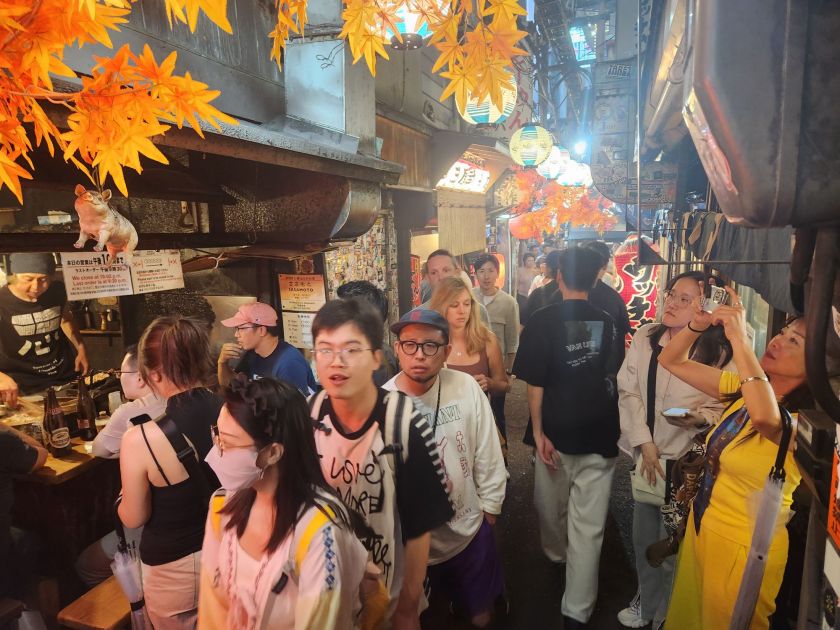
Omoide Yokocho, which translates to Memory Lane, is another collection of small alleyways, better known by its earlier nickname, the less salubrious Piss Alley. When the bars here were not entirely legal post-war, there were no bathroom facilities, and punters would simply relieve themselves on the nearby train tracks. Since then, the alley has been largely gentrified, with very nice toilets hidden in between the bars, but it’s still a lot of fun. The atmosphere is great, with the smoke from the cooking meat, the hanging lanterns, and fake tree decorations; it’s a great, if difficult, place to photograph.

Also, crowded
Apparently, I didn’t take a photo of the entrance.

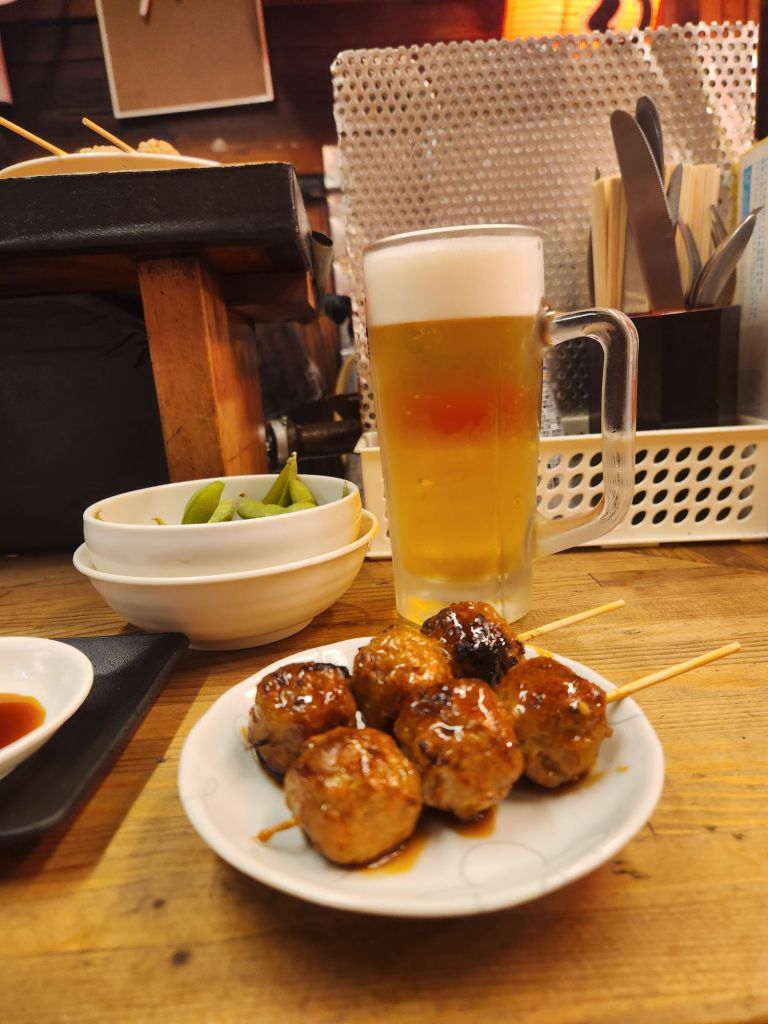
As well as copious draft beer and sake, the main focus here is meat skewers, cooked on a grill on the bar. The first bar I entered here became my regular place, and I became a big fan of their minced chicken skewers.

meat on a stick and beer, what more could I want? Apart from female company, of course.

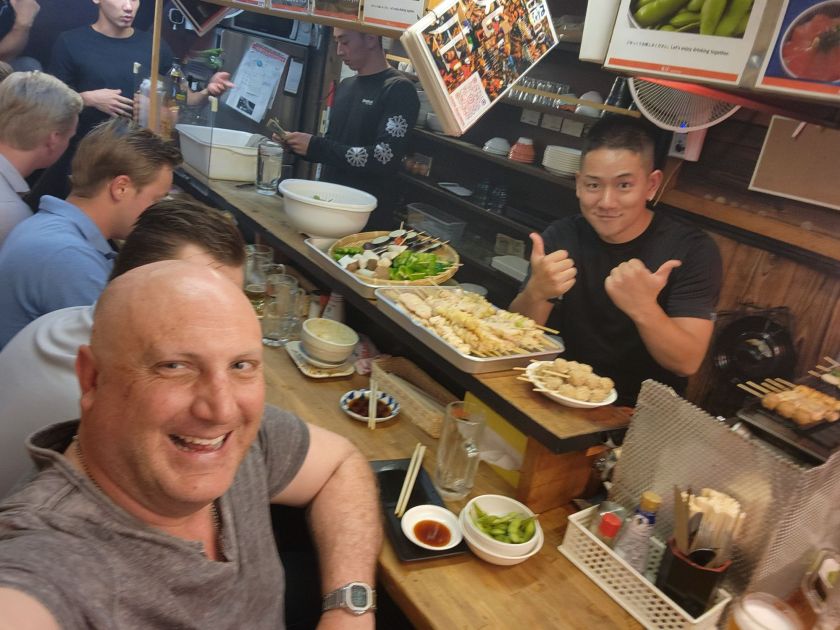
The staff were fantastic and attentive, and took a genuine interest in their customers. And were happy to pose for some photos for customers.

At least I was wearing a different shirt than in my Golden Gai photos
And hamming it up!

I drank there for half an hour on my last night before catching my flight onwards to Cairo, and I felt sad that I wouldn’t see these guys again. Hopefully, I’ll get back to Tokyo sometime soon, as I found it almost as addictive as Istanbul.

A Tourist in Tokyo

Perhaps because I had trouble navigating the public transport system, I never felt like I was massively successful in visiting Tokyo’s historical sites.

The Meiji Shrine is surrounded by vegetation with minimal undergrowth. The shrine is dedicated to the spirits of Emperor Meiji and his wife, the Empress Shoken, who are most famous for the Meiji Restoration. They were both transformed into gods after their death.

At the time of my visit, the shrine was hosting a festival to honour dolls, which are often considered to have their own spirits. I couldn’t help but think sadly of my old teddy bear, stored away at my parents’ house.

I should not be shocked that there is an association.

I was definitely missing much context, as I know little about Japanese history and little about Shintoism. But at least I didn’t have to pay for the privilege, something I should have appreciated more at the time. The original complex was, as much of Tokyo, destroyed during Allied raids in World War II. It was rebuilt from publicly raised funds.

And hard to photograph.

Much of the outer features of the shrine were either closed or not readily accessible, and having hiked to the Treasure Room, and finding it closed, I ended up swapping the change in my pocket for an iced tea and some chocolate from a conveniently nearby bank of vending machines, and sat under a tree and read for an hour, which seemed to be a popular choice. I lingered longer than I intended, as a group close to me seemed to be getting ready for some kind of photoshoot, but it took too long to get started, and I moved on.

Making my way back through the shrine grounds, a Canadian lady who gave her name as Mary thought I looked put together enough to ask me for directions. I walked her back to the main building before leaving her to it and making my way back to the train station.

Asakusa Shrine I found to be more interesting, perhaps because it was positioned in one of the older parts of Tokyo.

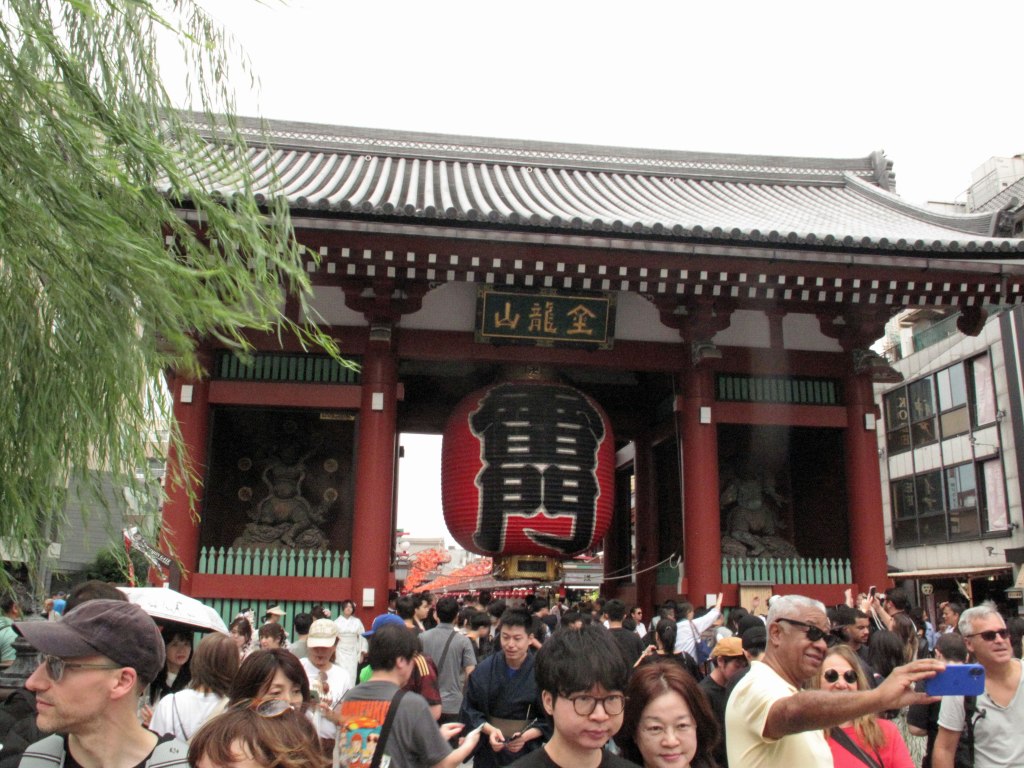
Thunder Gate, yes, it was that busy everywhere. Is that a Willow Tree to the left?

Between the main gate and the main shrine building are hundreds of small shops, selling tourist tat, traditional foods, and handicrafts, including hand-made Buddhist scrolls. I was tempted by a katana letter opener, but it seemed like the kind of thing that Customs back home would have questions about.

The Treasure House Gate is two stories high, with the upper story containing many of the shrine’s treasures. The entire area was packed with people, and I struggled to gain any type of understanding.

Treasure House Gate

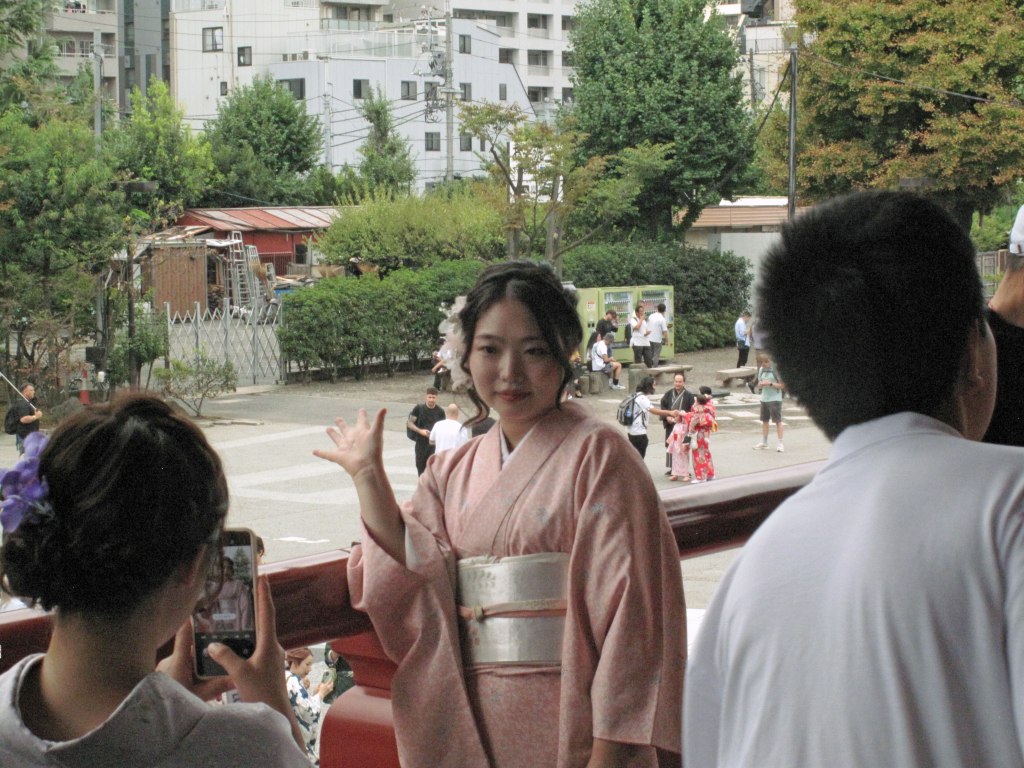
Some women, tourists and Japanese alike, choose this place to have photoshoots in traditional kimonos, accompanied by professional photographers or lucky boyfriends. The Japanese women here put most of the Western women to shame, perfectly poised and made up in their multitudes, like ordinary angels, routine and mobile works of art.

Sigh.

Perhaps it was a desperate attempt to view Tokyo as a whole rather than a bunch of train stations with their surroundings, or perhaps it was some monkey-brain need to find the tallest thing around and claim everything I could see as my own.

Whatever my motivations, I found myself waiting in line for half an hour, passing through a rigorous, but entirely polite security check, and rode in an elevator for fifty-five floors to get to the Southern Observation Deck of the Tokyo Metropolitan Government Building. This proves that while close to a billion US dollars were spent building the skyscraper, they spent five minutes in a committee naming it before heading to an izakaya.

I can see my capsule hotel from here!

The view was impressive, and the gift shop was lovely. The cafe seemed delightful, but the price for a latte were as high as I was. This may be to compensate for the free entry to the observation deck, the Japanese being oddly principled and pragmatic in that way.

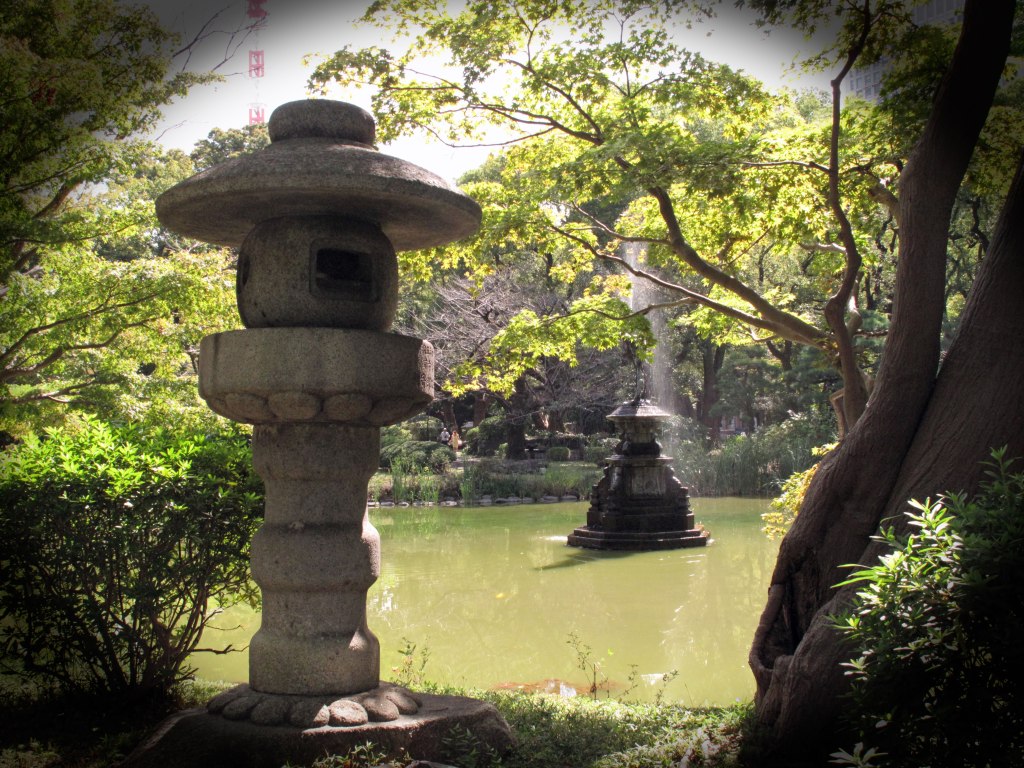
On my last day in Tokyo, I decided I should see the Imperial Palace. Unfortunately, I discovered that it was only open on seemingly random hour-and-a-half blocks, so I never ended up inside the walls. I did, however, take some nice photos in the nearby Hibiya Park, which had lakes, tennis courts, and scattered historical places of interest.

Crane Fountain at Hibiya Park.

The Trouble with Tokyo

Tokyo is vast and filled to capacity with both locals and tourists. The small percentage that is not filled with skyscrapers are roads, historical sites, and small, underfunded parks- That last may be unfair, but the parks I visited were poorly maintained compared to my own fair city.

The size of Tokyo, unrestrained by geography, meant it was hard for me to get a proper understanding of its soul. Wherever I went, hordes of people were moving in every direction. Personal space is mostly academic here, as every shop, elevator ride, and street is jam-packed.

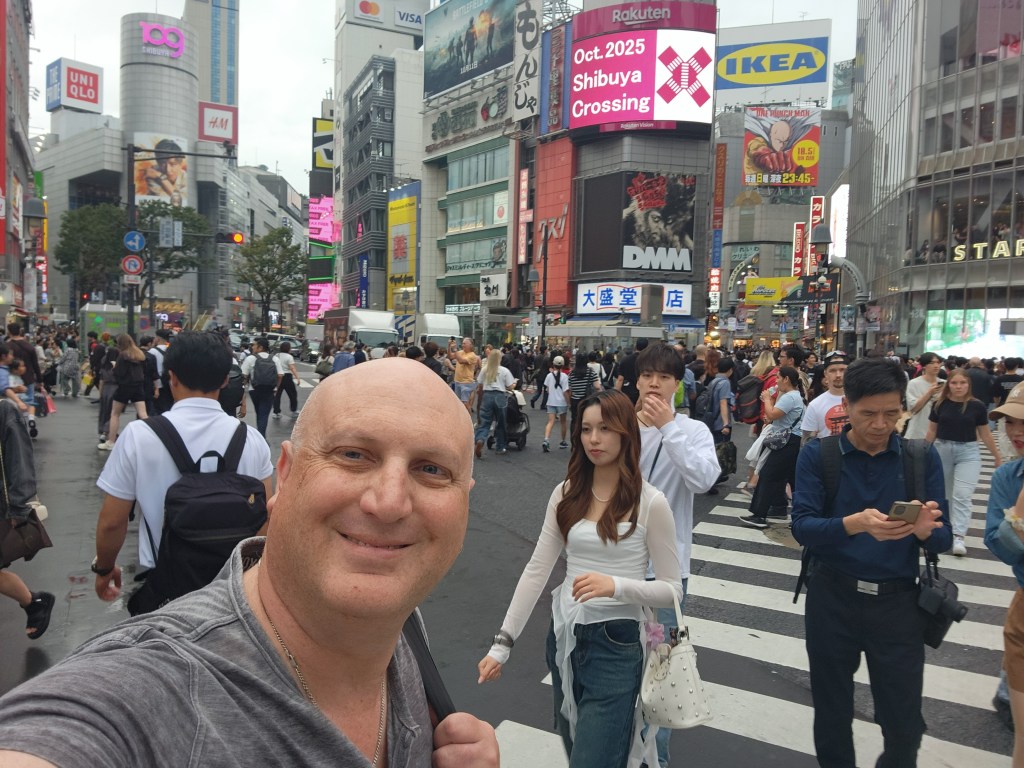
I was not the only person taking selfies at the famous Scramble Crossing that day.

Tokyo’s train stations, which 99% of locals and tourists will use multiple times a day, are a confusing mess, even to the Japanese. A single station will have multiple sections within it, functioning as separate stations in their own right. Google will send you to an entrance, and ten minutes later, you discover that you cannot get to the platform you need, and you have to exit the station, walk to another entrance, and try again. I barely ever sat down in a train in Tokyo, and often struggled to even walk through the corridors without colliding with people. Perhaps because of how extensive the public transport system is, or because of my own bloody-mindedness, I managed to not resort to Uber, but I did walk a great deal, resulting in sore feet, the purchase of a cheap pair of sneakers from an amused elderly man running a hole in the wall shop in Asakusa, and the abandoning of an expensive pair of well-worn hiking shoes that had survived my entire three month SE Asia trip.

I found the Japanese to be faultlessly polite, and often highly reserved unless alcohol is involved. Many people online have mentioned that Japan has a deeply conflict-avoidant mindset. Often, bad behaviour will be ignored, rather than have more attention drawn to the behaviour, Which may explain why serial pests like Johnny Somali managed to make so much content in Japan. In many ways, this leads to a harmonious society. I don’t think I heard a raised Japanese voice in the five days I was there. However, I suspect that the same conflict-avoidance prevents their society, both people and government, from addressing the homeless and disenfranchised youth.

Home/Post Mortem

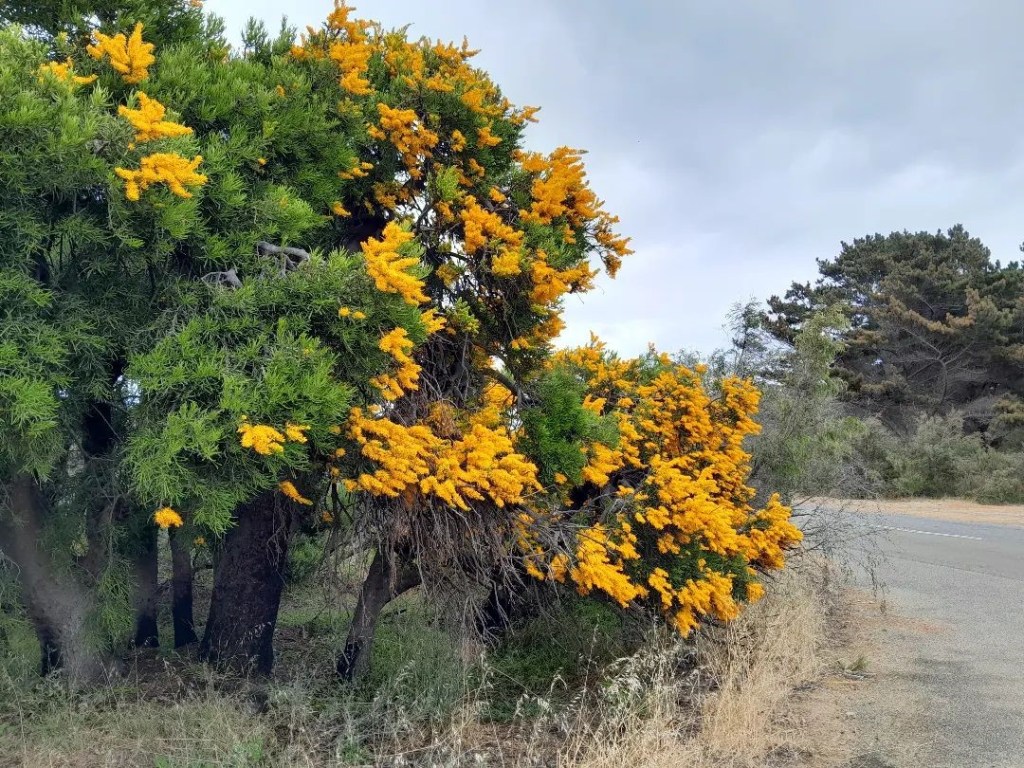
When the plane turned inland, and I saw amongst the green vegetation the bright orange of the Western Australian Christmas Trees, I sighed contentedly. I was home.

Nuytsia floribunda (Labill.) G.Don

I spent the first week home getting my unit into some semblance of order. Oddly, three weeks in Hong Kong had left me paradoxically agoraphobic. Luckily I had plenty of things to do in my unit to deal with until this abated. Was I even the same person who called his girlfriend that he thought the skyscrapers were stalking him?

For the most part, things in Albany were the same. But I was different. Two tattoos, a long-distance girlfriend. A few personality traits adjusted, maybe for the better. Perhaps I was suffering from premature enlightenment, but I tried to hold on to some self-improvement regardless.

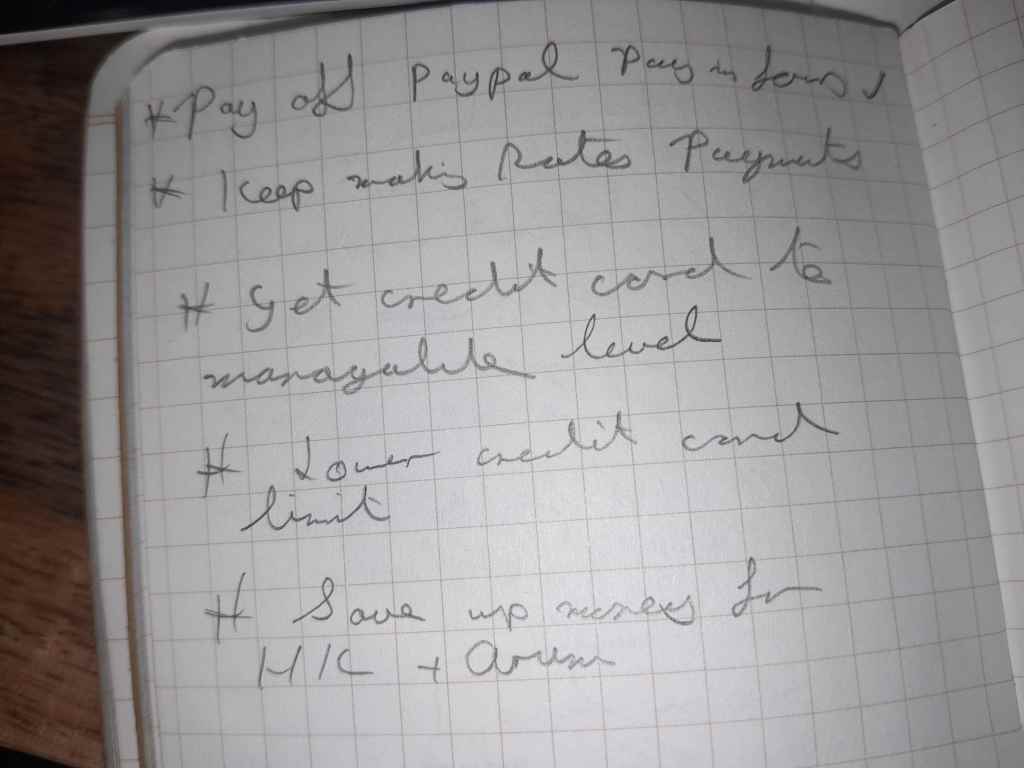
It’s a common traveller’s conceit that travel changes a person. I am certainly guilty of that as well. Keep your home tidy. Go to the gym every day. Make your lunch every day for work. Cut up your credit card and pay all your bills on time. It’s easy to promise these things to yourself while sipping a beer in Cambodia.

Written in the Field Notes notebook that went with me everywhere.

I gained strength to work on my goals due to the enticement at the end of that list- To see Arum again.

For better or worse, before I could work on that last item my relationship with Arum disintegrated. It was not just the relationship that ended, It was the last aspect of my life that had turned it from good to amazing. I found this to be devastating for the first few weeks, but help from friends, family, hindsight, and Prozac got me back to normal. Now Hong Kong is not an option for my next trip; chances are I will never return there. Too many ghosts. Maybe South America. Maybe China or India. Maybe i’ll wait until I have someone to share the road with, sunsets and potholes.

If you liked this post, please check out the rest of the posts from this trip here!

Hong Kong and Hot Pot

Something I didn’t pay much attention to on my previous visits to Hong Kong, is the constant noise of the city. Trains moving underground, traffic backed up, the footfalls of a million pairs of feet in a desperate need to be somewhere else. Late at night, when the MTR stops, the traffic abates, and most people are safely in their homes, you can hear the city snoring, as if anything approaching silence is an anathema to the spirit of the city.

New Oppo phone just dropped. TST.

The flag of Hong Kong should be a middle-aged man, screaming into a mobile phone

I usually barely wake up when Arum gets up and ready for work. I have no job here, no obligations, nowhere to be. I sleep late, get up, shower, shave and dress, and leave the flat and not return until Arum has finished work. Without her, the flat is a cold, empty place.

Cocktails before Poetry Club, Central.

The national symbol of Hong Kong should be a Rolex shop, one of three on the same city block, entirely absent of clients.

Word on the street is that due to the interchange of four MTR lines, Admiralty Station is insanely busy and chaotic. Out of sheer bloody-mindedness, I visited at 1645, and found it to be tame and uninteresting. For me, the TST/East TST is far busier and interesting, with the contrast of people moving to and from Chungking and Mirador mansions, and the upscale K11 Art Mall. I stood still for two minutes, the ultimate sin, listening to Apparet’s Goodbye , just letting the tide of humanity move around me.

Excellent art at Admiralty, however.

Hong Kong is full of 7.4 million people who don’t know their left from their right, or know, and don’t care.

The bar is smoky, it’s dimly lit, and that’s doing more for me than the waitress, in the beer-girl dress I have seldom seen outside of Vietnam. Of course, I could not remember what brand of beer the dress was advertising, but I do remember the row of perfect roses tattooed on one perfect leg.

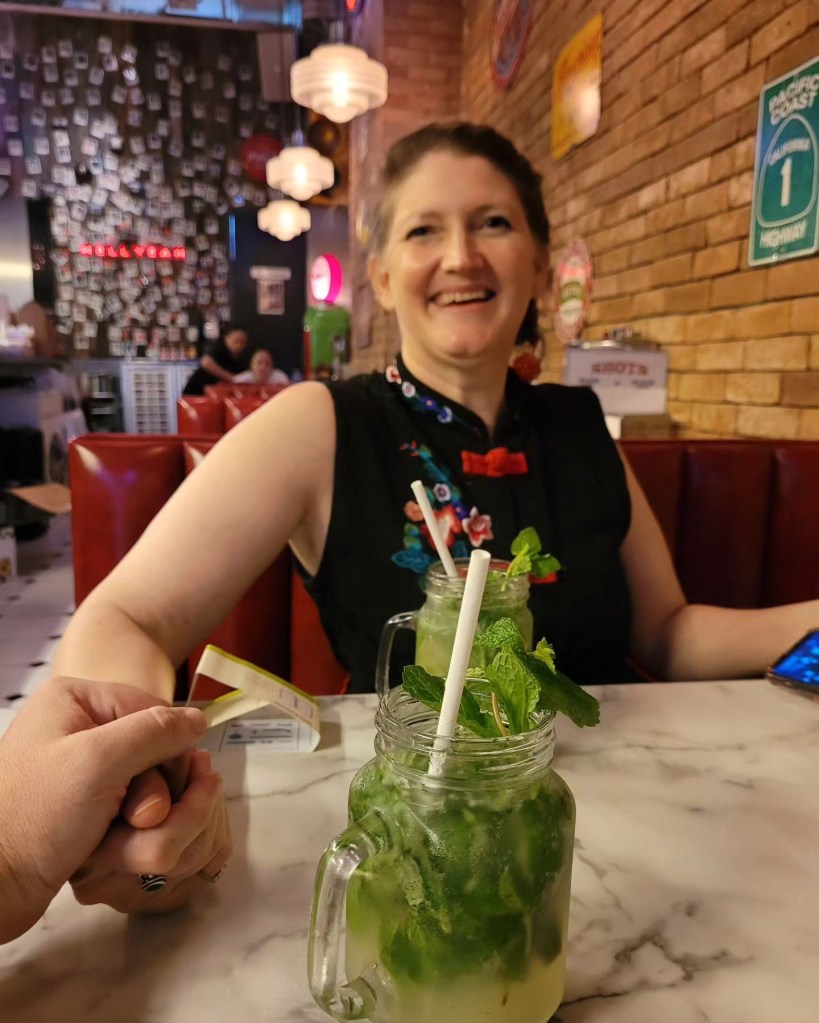
Two of Arum’s friends at the same bar.

Hong Kong only dreams on a feather bed of late-stage capitalism.

With Arum, I attend two meetings of the Peel Street Poetry Club, high above a street side restaurant in Central. Usually poetry does not appeal to me much, but I find this gritty, raw variety more compelling. On the second meeting Arum reads a poem of her own, to much acclaim, both of the poem and her recital. Now she is one of them, while I am still an outsider, but some of that belonging does rub off on me, as a poet-consort, like Arum’s glitter on my shirt.

If you liked this post, please check out the rest of the posts from this trip here!

Pattaya and the Plague

Due to my unhealthy addiction to Youtube, during the planning stage of my trip I discovered a number of channels by expats living in Pattaya, a city that I had only ever heard of in reference to the sex trade. In contrast to stereotypes, these often charismatic men were unabashed and proud of the place they had made their homes.

I would love to have a beer with this guy.

I made up my mind, I would go to Pattaya, let it wash over me, maybe sample some delights as my somewhat untrustworthy ethics would allow, then leave before I learned to love or hate the place.

By the time I got off the bus in Pattaya, three things made this plan unmanageable. First, I was in a meaningful, exclusive relationship, not the bored and horny single man I was when I was still at home. Second, the Aussie dollar was taking a massive battering against all other currencies, in addition to inflation, which meant I was on a stricter budget than I was used to, and a night’s drinking at inflated Go-Go bar prices was not an option unless I was willing to sleep under bridges until next pay-day. Thirdly, in Kanchanaburi I had gained some kind of horrible flu, and all I wanted to do was sleep with my back against a wall. None of this boded well for any kind of Gonzo journalism, but with bloody-mindedness typical of me, I went anyway.

I booked a three night stay in a hotel just back from the beach road in Jomtien, a satellite city of Pattaya. Of course my room was in a low-rent wing of an otherwise fancy hotel, that seemed to be exclusively inhabited by local workers. I didn’t mind that, but I did mind the slices of tomato that stayed in the hallway for two days, and the shared bathroom that looked like it had been transplanted from a maximum security prison. For the first two nights I only left the hotel for food, medication and runs to the nearest Seven-Eleven.

My first impressions of Jomtien from my short trips was of incredible normalness. For every single guy I saw, there were three or four couples, some with kids in tow. Surely they all cannot be here out of morbid curiosity? The beach was long, straight, and made up of yellow-grey course sand, not at all inviting to me even if I was not feeling like a brisk walk would kill me.

There seemed to be a lot of businesses run by Russians, for Russians, which I soon learned to avoid.

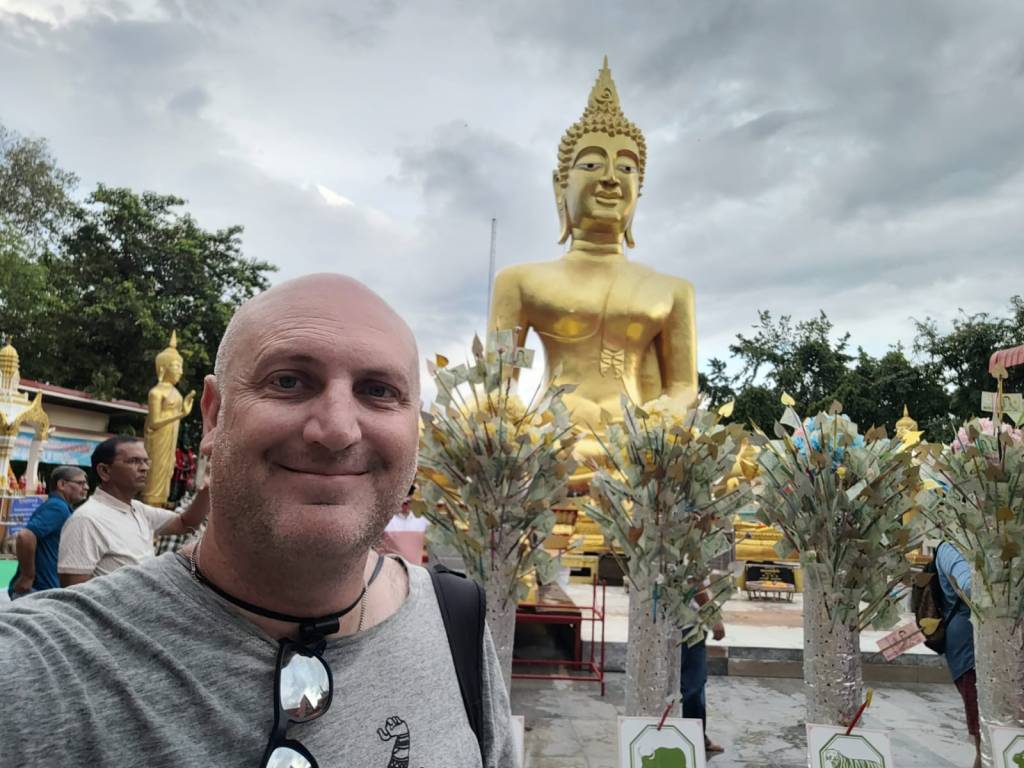
By the last night I started to feel vaguely human, so I took a baht bus from the beach towards Central Pattaya, and then walked up to the Big Buddha Temple.

Further evidence of my unwillingness to spend time with my back to the door of that bathroom.

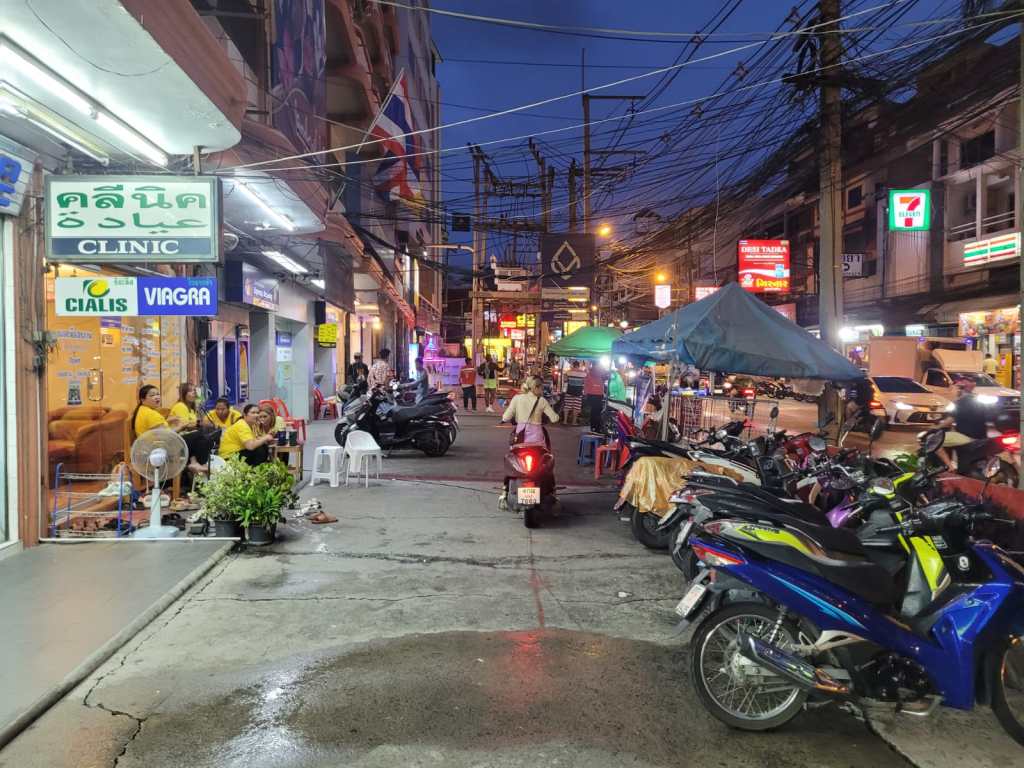
I continued walking towards the infamous Walking Street. I passed Seven-Elevens, I passed squash courts underneath freeway overpasses, I passed more weed dispensaries that I thought were sustainable. When I started passing an alarming number of Indian restaurants and massage parlours, I figured I was getting close.

Very useful, thanks.

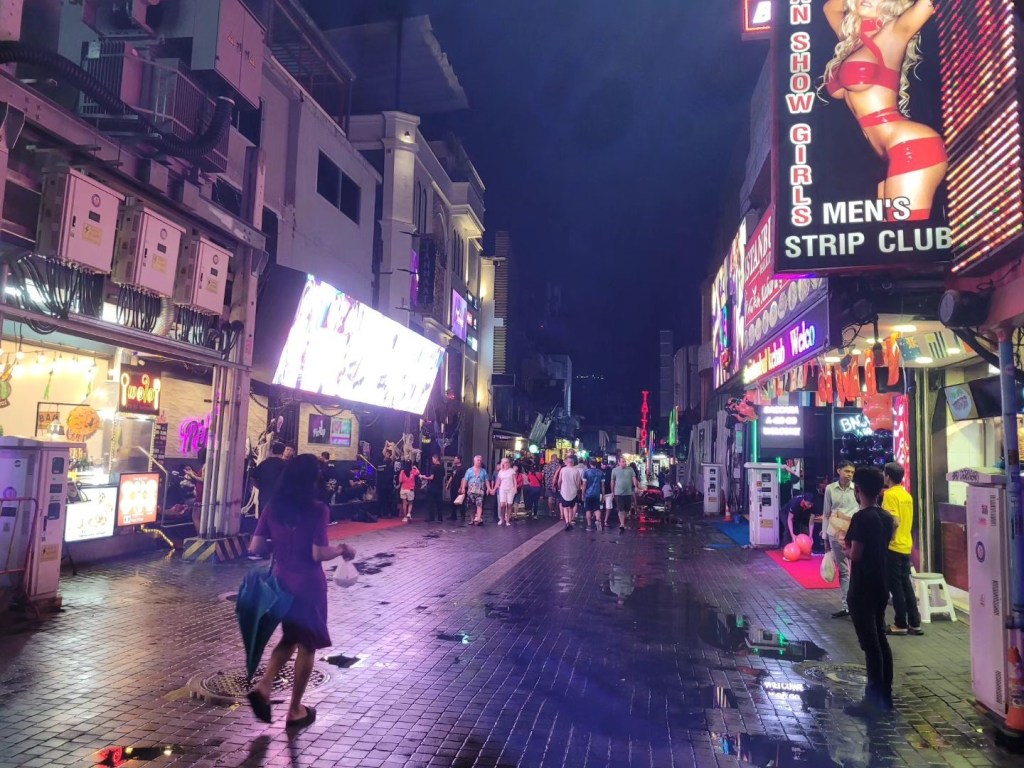
By now it was raining, and just on six PM, I suspected it would be a few more hours before things got interesting, but I was already feeling tired and a little unimpressed with myself when I got to Walking Street. Out of instinct to get off the street while I had no real purpose, I found a restaurant and ordered a decent chicken rice dish and two only slightly overpriced beers.

When I paid up and continued walking, things did look a little busier but still hardly pumping. I noticed a Korean tour group being led through the streets, never a good sign when you want any kind of authentic experience. And like most tour groups, they seemed to be going through the motions rather than any kind of meaningful experience or education. At least I didn’t have to follow a bored man waving a flag. I observed a few clubs, but no one trying to drag people in like I was warned about, and the prospect of entering felt like a Rubicon that I was not willing to cross.

Just going through the motions.

Of course, there were a number of weed shops, and a handful of stalls selling butterfly knives, nunchucks and other things only being sold because they were illegal back home. Further down the road there was a number of businesses advertising Russian girls. I know for a long time women from former Soviet Bloc countries having been selling their services, sometimes in conditions that would be described as slavery, in South East Asia for years, but I suspect recent events have made this even more prevalent.

If they were Russian Salty Girls I would have been straight in.

By now, I was feeling tired, bored, and mildly sexually frustrated. I got to the end of Walking Street, got a Pocari Sweat from Seven-Eleven, and then a Grab back to my hotel. It was nine o’clock.

If you liked this post, please check out the rest of the posts from this trip here!

Lovely Luang Prabang

Leaving Vang Vieng proved to be difficult. After the third travel agent told me that a landslide had closed the road between Vang Vieng and Luang Prabang, I finally admitted defeat and booked a train.

It turns out that the Laos-China Railway is the only piece of infrastructure in Laos that approaches western standards, most likely due to the influx of Chinese money. The security measures seemed on paper to be strict, but in practice seemed entirely for show, a wand was neglectfully waved all over me, but no attention was being paid to the beeps and I was shoved through.

The trip was uneventful and I got a shared taxi to the centre of town, and then walked the last kilometre to my hostel. Luang Prabang has a delightfully shabby historical centre, and was the capital until 1975, which may explain why Vientine feels a little soulless by comparison.

Royal Palace

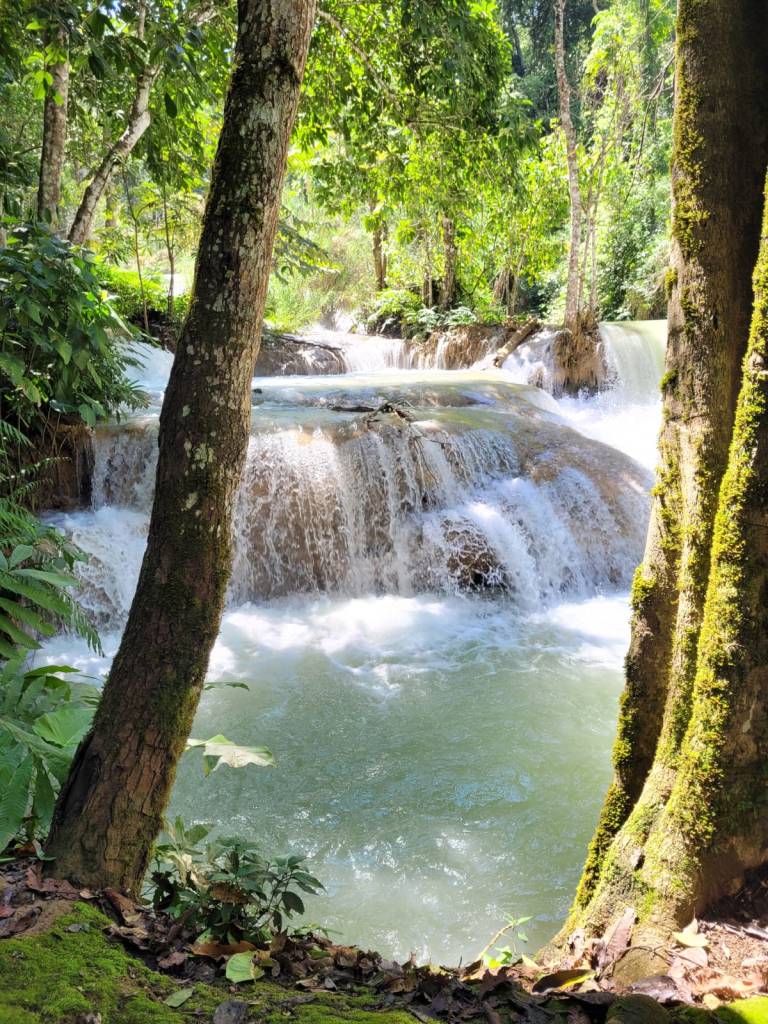
On my first full day I took the hostel’s mini bus to Kuang Si Falls, which are incredibly epic.

One of the three tiers

Three tiers and multiple pools you can frolic in. After taking many photos and a short swim, I spent the last half an hour with my feet in one of those pools, reading a vampire novel, unmolested by the tourist hordes.

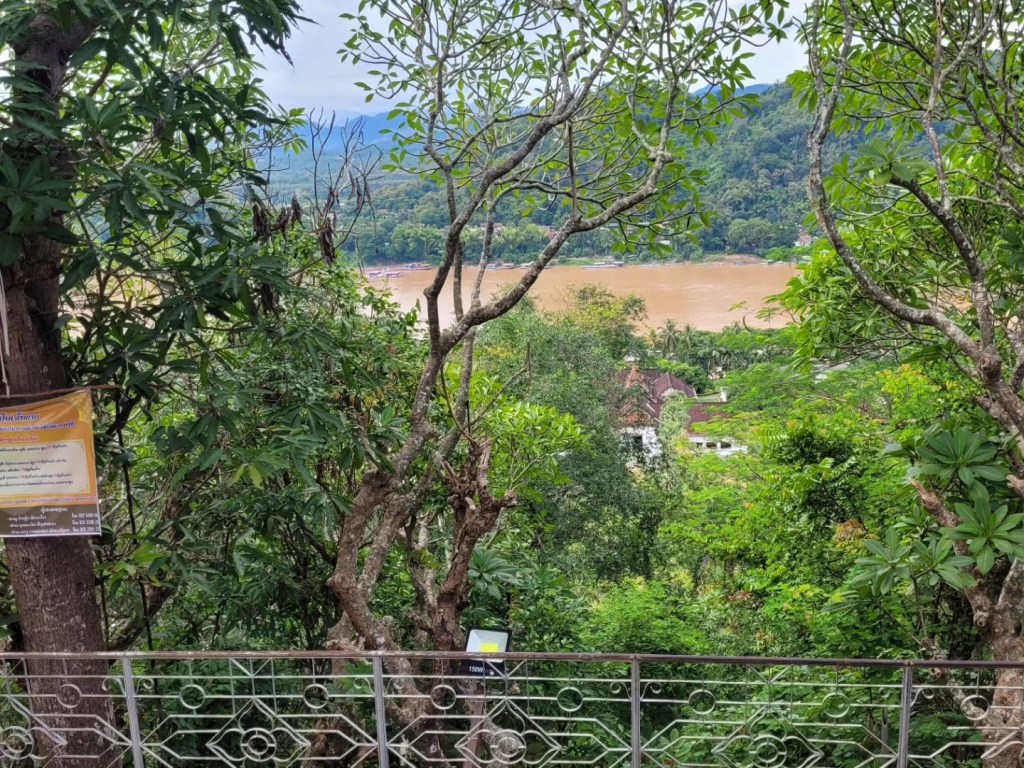
The focal point of Luang Prabang is Phousi Hill, overlooking the night market, The Mekong, the Nam Khan River, and the Royal Palace.

View from Phousi Hill

The hill itself features a beautifully ramshackle wat, with incredible views from the top.

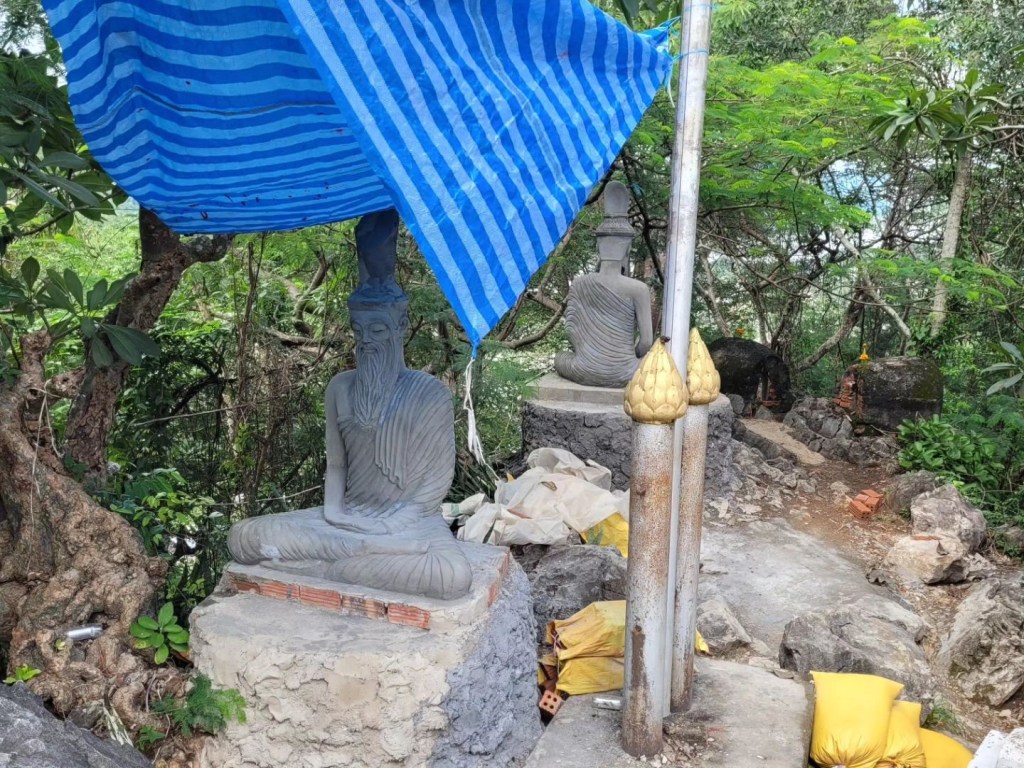
Like so much of Laos, the temple was once grand, but now much faded. The ticket seller was engaged in some paving repair when I arrived, which gave a good indication about how well funded the place is.

A forgotten corner of a near-forgotten wat.

The hostel I stayed at was well populated by young backpackers, most of which I struggled to relate to, but I did get to know a few. Bree, an Australian lady from Sydney I bonded with over a similar history. Ruby, an English lady who contracted Dengue Fever in the jungles of Thailand. Leander, an irrepressible Canadian lad who shattered his ankle on a motorbike and was awaiting his insurance company to organise his flight home. These last two were a sober reminder on how precarious the situation can be here for independent travellers, and how lucky I had been that after two and a half months of travel, I had no trouble apart from a stomach bug and an infection that responded well to antibiotics.

My second to last night in Laos I was manipulated into joining the pub crawl. After we left the first bar, we were waiting outside the second bar while our guide tried to sort out our previously approved entry, and I was feeling sweaty, bored and very out of place. I slipped away unnoticed, bought a beer to drink on the way back to the hostel, then headed to bed.

If you liked this post, please check out the rest of the posts from this trip here!