Alluring Alexandria

The first thing I noticed on the Uber ride from the bus station to my hotel was the considerable number of medical supply shops. The next was the women. I had gotten used to 99% of Egyptian women wearing headscarves, and often the full hijab, with some covering even their eyes with black cloth, leading to them walking into the kind of people they wanted to be isolated from. Now, I was seeing at least half the women with fully exposed heads of perfect hair. If I were a poet, this would have caused me to write pages and pages of overwrought, terrible verses.

As it was, I almost gave myself whiplash. My tired brain finally put it all together after a quick Google search; Alexandria is host to numerous universities, including at least one exclusively for both medicine and dentistry. I suspect that very few women embarking on such studies were willing to submit to society and religious pressure. Later, while walking towards the ocean, I discovered the Egyptian version of punks in a small group of mixed sex youths (itself unusual), which also made me very happy.
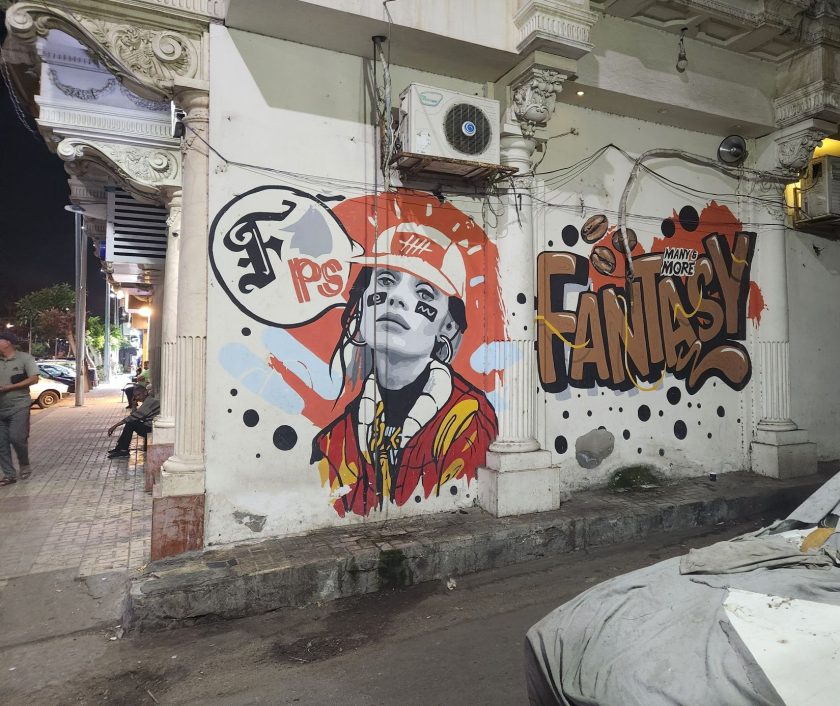
Street art near my hotel

Alexandria, founded by its namesake Alexander the Great in 331 BCE, is famous for two great structures- The Lighthouse of Alexandria and the Great Library of Alexandria. I was, of course, centuries too late to visit either of them. Screwed by my birthday again.

The Lighthouse of Alexandria was built in the third century BCE and was one of the Seven Wonders of the Ancient World. It was damaged by a series of earthquakes a thousand years ago, with much of the lighthouse ending up in the Mediterranean Sea.

By Philip Galle – https://artsandculture.google.com/asset/vuurtoren-van-alexandri%C3%AB-galle-philips/xQG_r1IGU9hKEw, Public Domain, https://commons.wikimedia.org/w/index.php?curid=116950381

In 1480, the remainder of the lighthouse was used to build the Qaitbay Citadel, on the same site. Qaitbay Citadel was built by the Sultan of Egypt by the same name to defend the harbour of Alexandria, at the time having extreme military importance. It changed hands a number of times, and left in ruins after the British made a pointless and misguided attack.

The Citadel has been rebuilt, renovated and then restored, with 1984 being the restoration to its current state.
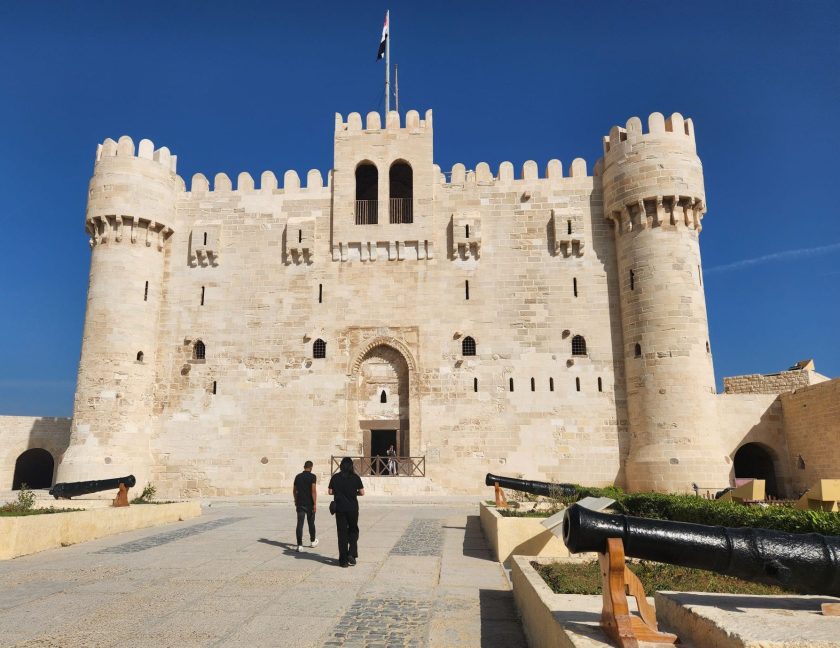
Qaitbay Citadel, from the main car park.

My camera took this oportunity to die entirely here, so all my photos here on in are from my phone. While I have no idea how historically accurate the restoration was, I was impressed how light and airy much of the fort was on the inside.
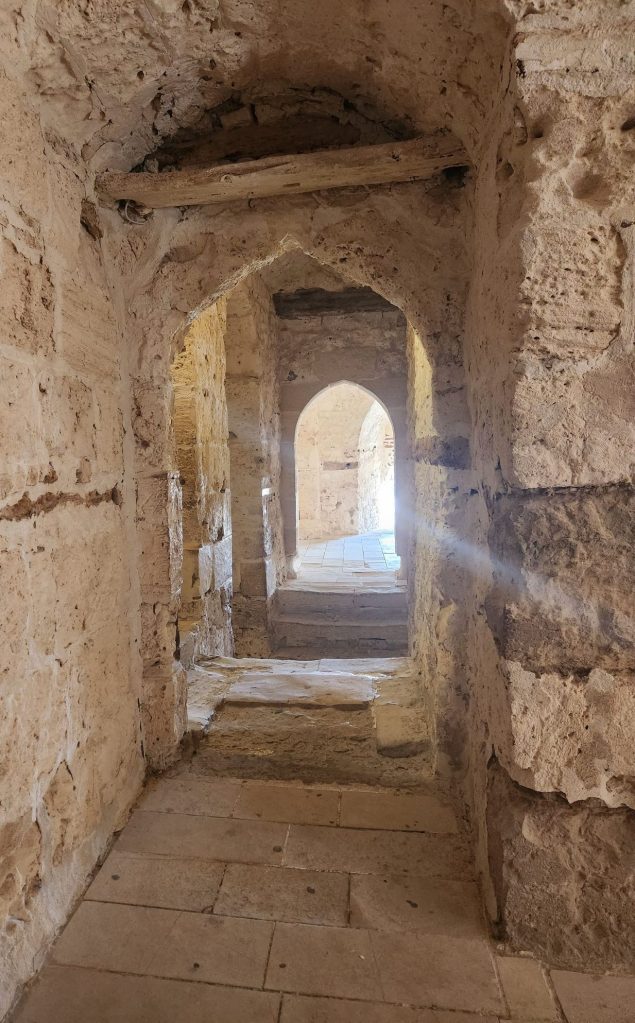
First floor

In one second floor corner, a monitor is set up playing footage about the Lighthouse of Alexandria, and efforts to document the remains.

Cleaning ladies pointed me towards good areas to take photos, in an effort to get baksheesh from me, which I have to say was successful as at least they were pleasant about it.
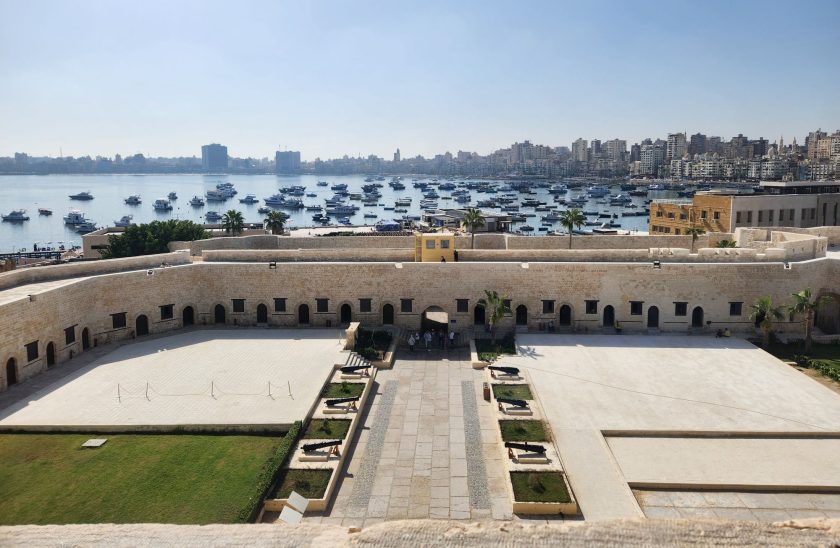
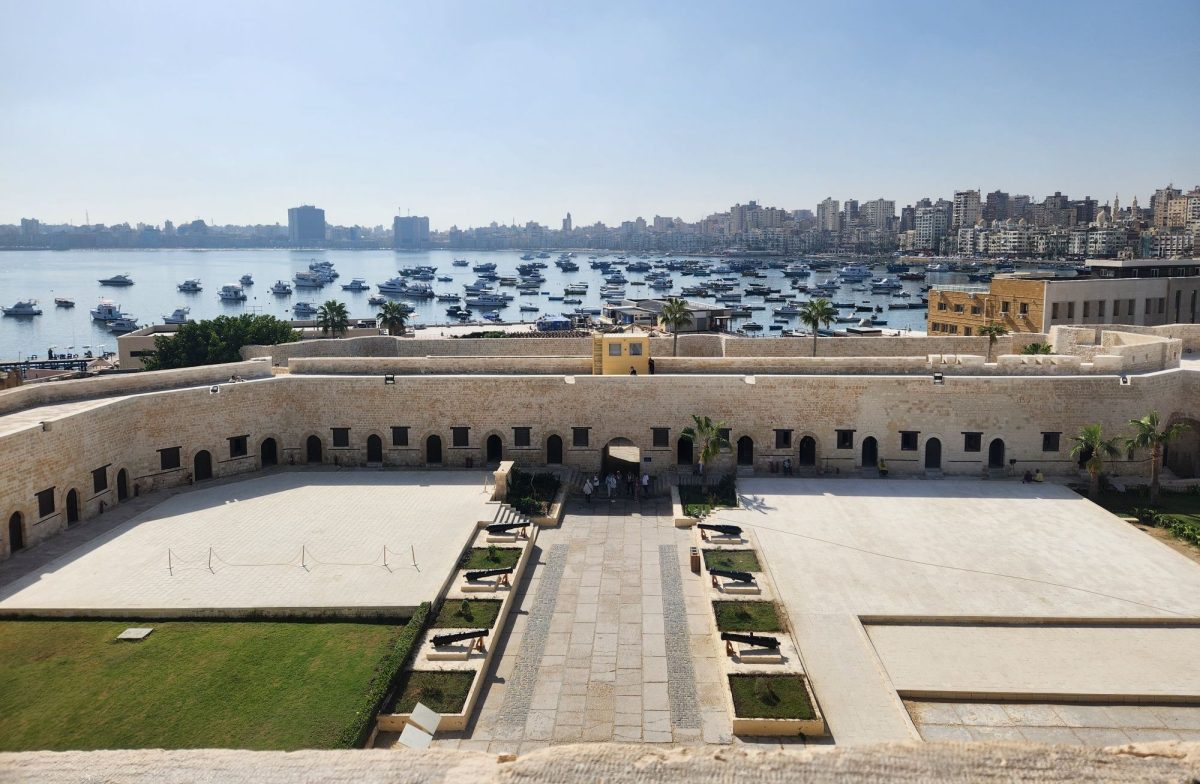
Still a busy harbour to this day.

From the highest points I could not help but try to imagine how incredible it would have been from the top of the Lighthouse, and the sheer majesty of such an endeavor. Now when we conduct public works they tend to feel sterile, replaceable and generic, instead of the stuff of legends.
Home/Post Mortem

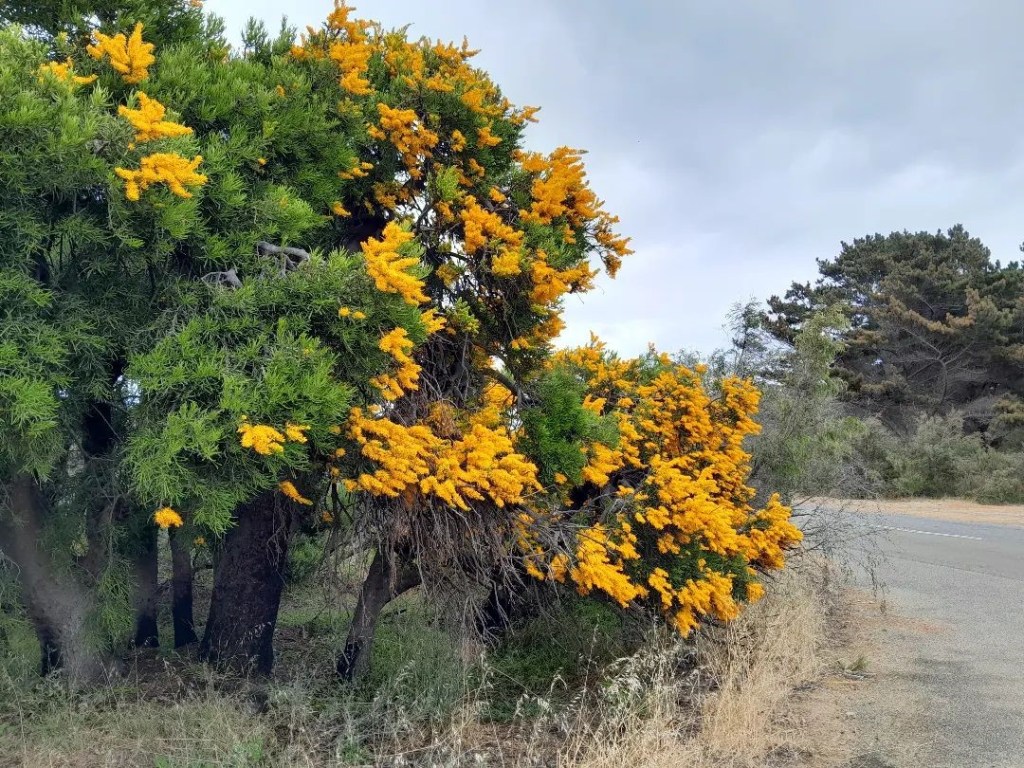
When the plane turned inland, and I saw amongst the green vegetation the bright orange of the Western Australian Christmas Trees, I sighed contentedly. I was home.

Nuytsia floribunda (Labill.) G.Don

I spent the first week home getting my unit into some semblance of order. Oddly, three weeks in Hong Kong had left me paradoxically agoraphobic. Luckily I had plenty of things to do in my unit to deal with until this abated. Was I even the same person who called his girlfriend that he thought the skyscrapers were stalking him?

For the most part, things in Albany were the same. But I was different. Two tattoos, a long-distance girlfriend. A few personality traits adjusted, maybe for the better. Perhaps I was suffering from premature enlightenment, but I tried to hold on to some self-improvement regardless.

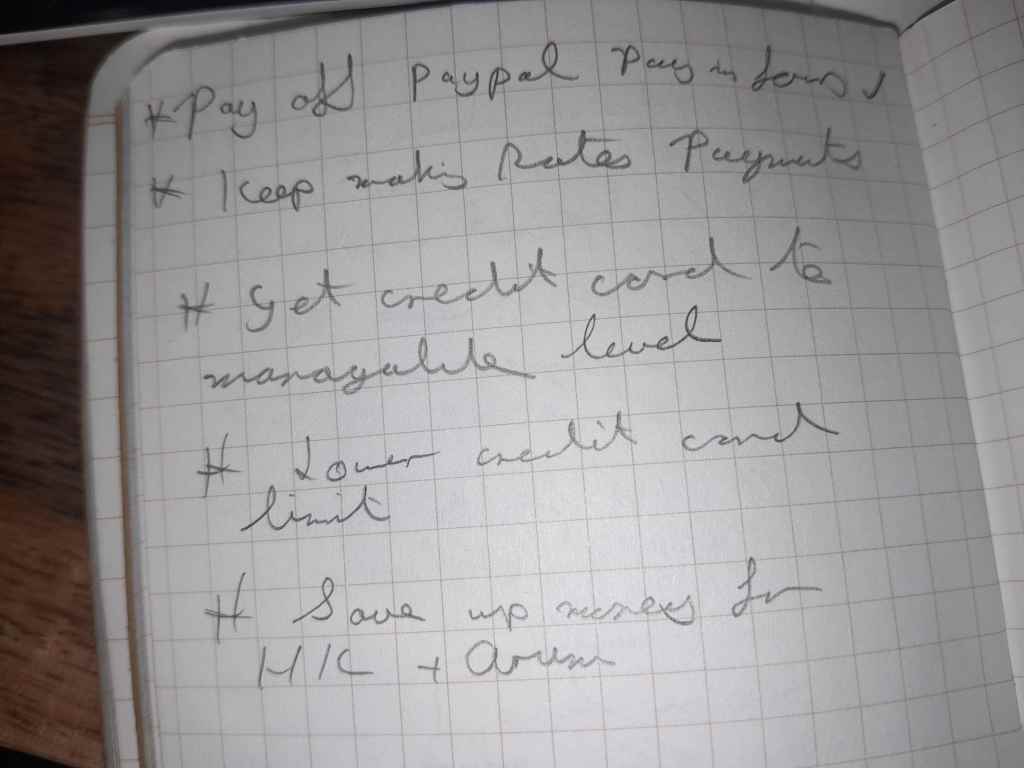
It’s a common traveller’s conceit that travel changes a person. I am certainly guilty of that as well. Keep your home tidy. Go to the gym every day. Make your lunch every day for work. Cut up your credit card and pay all your bills on time. It’s easy to promise these things to yourself while sipping a beer in Cambodia.

Written in the Field Notes notebook that went with me everywhere.

I gained strength to work on my goals due to the enticement at the end of that list- To see Arum again.

For better or worse, before I could work on that last item my relationship with Arum disintegrated. It was not just the relationship that ended, It was the last aspect of my life that had turned it from good to amazing. I found this to be devastating for the first few weeks, but help from friends, family, hindsight, and Prozac got me back to normal. Now Hong Kong is not an option for my next trip; chances are I will never return there. Too many ghosts. Maybe South America. Maybe China or India. Maybe i’ll wait until I have someone to share the road with, sunsets and potholes.

If you liked this post, please check out the rest of the posts from this trip here!

Hong Kong and Hot Pot

Something I didn’t pay much attention to on my previous visits to Hong Kong, is the constant noise of the city. Trains moving underground, traffic backed up, the footfalls of a million pairs of feet in a desperate need to be somewhere else. Late at night, when the MTR stops, the traffic abates, and most people are safely in their homes, you can hear the city snoring, as if anything approaching silence is an anathema to the spirit of the city.

New Oppo phone just dropped. TST.

The flag of Hong Kong should be a middle-aged man, screaming into a mobile phone

I usually barely wake up when Arum gets up and ready for work. I have no job here, no obligations, nowhere to be. I sleep late, get up, shower, shave and dress, and leave the flat and not return until Arum has finished work. Without her, the flat is a cold, empty place.

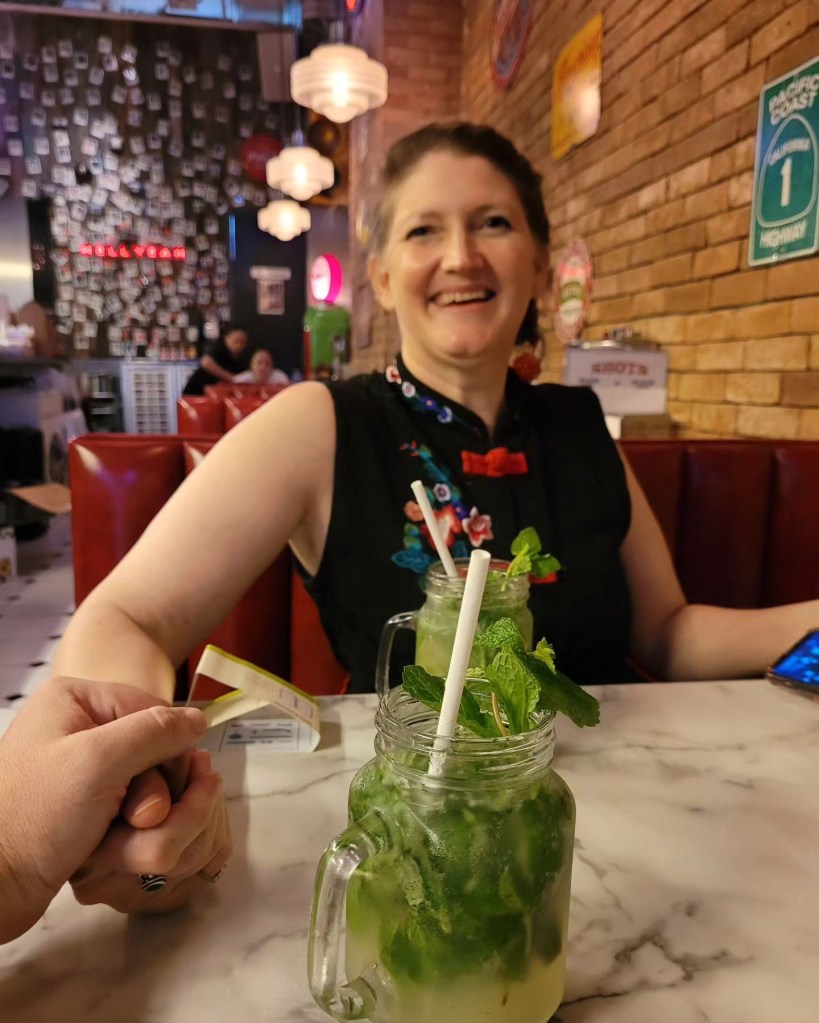
Cocktails before Poetry Club, Central.

The national symbol of Hong Kong should be a Rolex shop, one of three on the same city block, entirely absent of clients.

Word on the street is that due to the interchange of four MTR lines, Admiralty Station is insanely busy and chaotic. Out of sheer bloody-mindedness, I visited at 1645, and found it to be tame and uninteresting. For me, the TST/East TST is far busier and interesting, with the contrast of people moving to and from Chungking and Mirador mansions, and the upscale K11 Art Mall. I stood still for two minutes, the ultimate sin, listening to Apparet’s Goodbye , just letting the tide of humanity move around me.

Excellent art at Admiralty, however.

Hong Kong is full of 7.4 million people who don’t know their left from their right, or know, and don’t care.

The bar is smoky, it’s dimly lit, and that’s doing more for me than the waitress, in the beer-girl dress I have seldom seen outside of Vietnam. Of course, I could not remember what brand of beer the dress was advertising, but I do remember the row of perfect roses tattooed on one perfect leg.

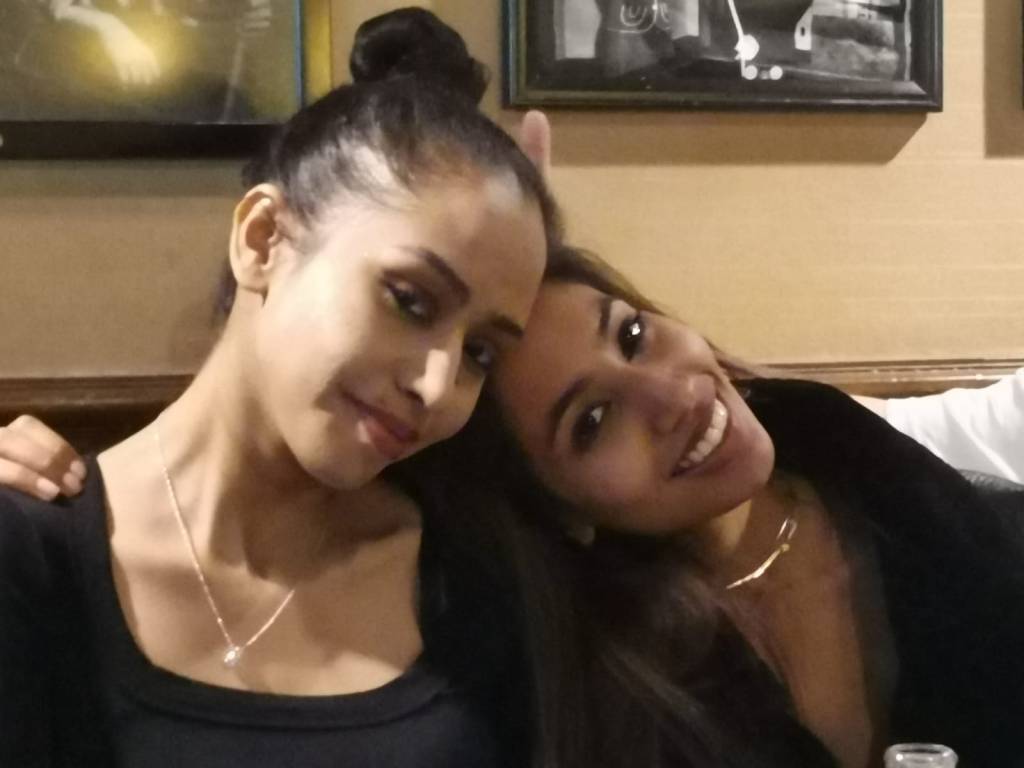
Two of Arum’s friends at the same bar.

Hong Kong only dreams on a feather bed of late-stage capitalism.

With Arum, I attend two meetings of the Peel Street Poetry Club, high above a street side restaurant in Central. Usually poetry does not appeal to me much, but I find this gritty, raw variety more compelling. On the second meeting Arum reads a poem of her own, to much acclaim, both of the poem and her recital. Now she is one of them, while I am still an outsider, but some of that belonging does rub off on me, as a poet-consort, like Arum’s glitter on my shirt.

If you liked this post, please check out the rest of the posts from this trip here!

Back to Bangkok

Bangkok at least felt familiar ground after Pattaya. I booked a capsule-style hostel closer to Khao San Road this time. The staff did not look like they were on day release from the nearest prison, and my fellow guests were more social than myself, and didn’t seem to be sizing up my organs for a quick sale on the black market.

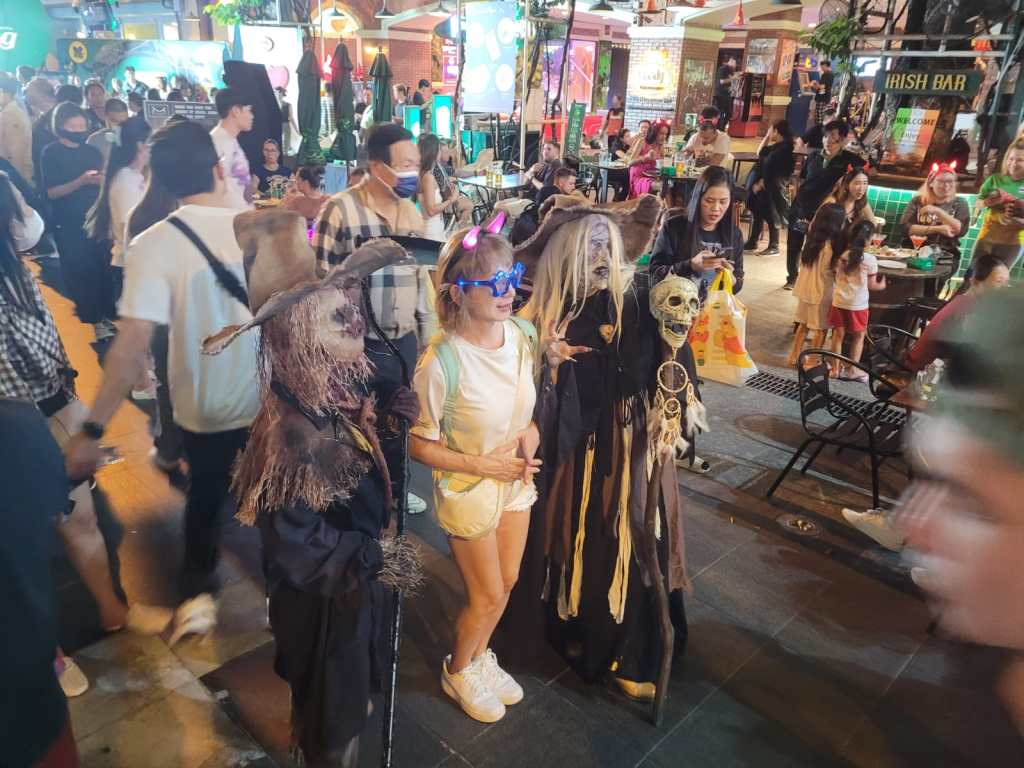
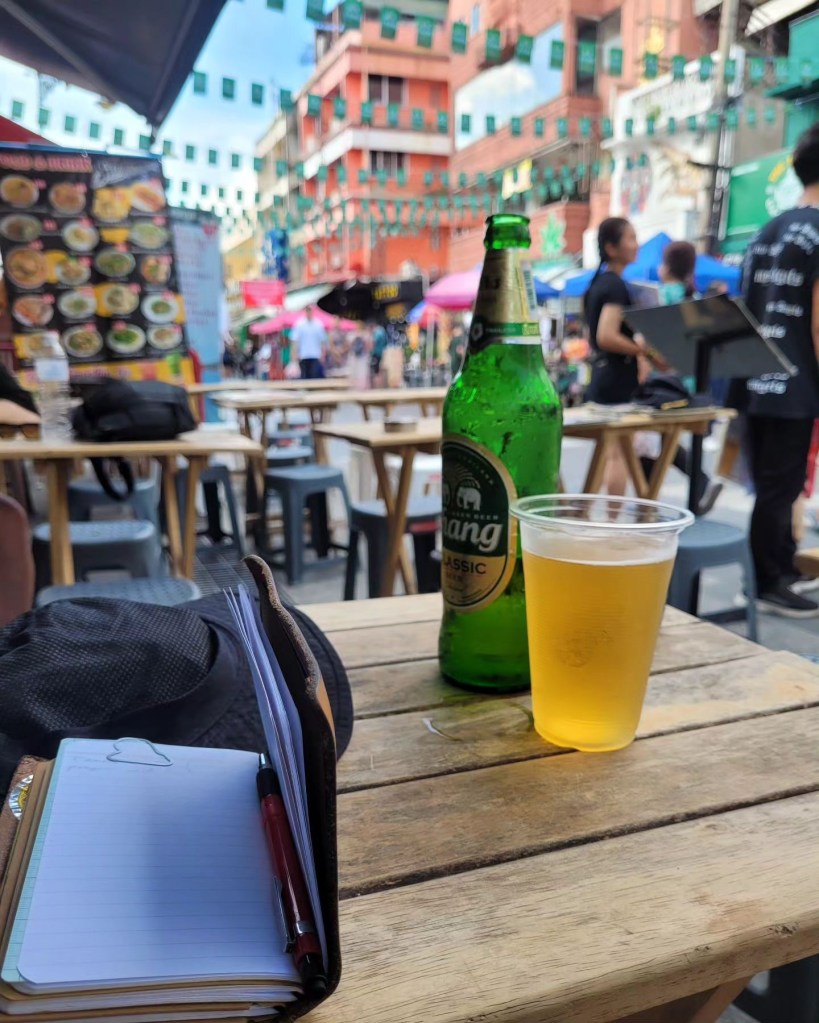
On my first night I ended up on Khao San Road, drinking and watching the constant stream of tourists, taxis, and touts. The second night was Halloween, and the Thais never miss an opportunity to party, and to get tourists to party and spend their money.

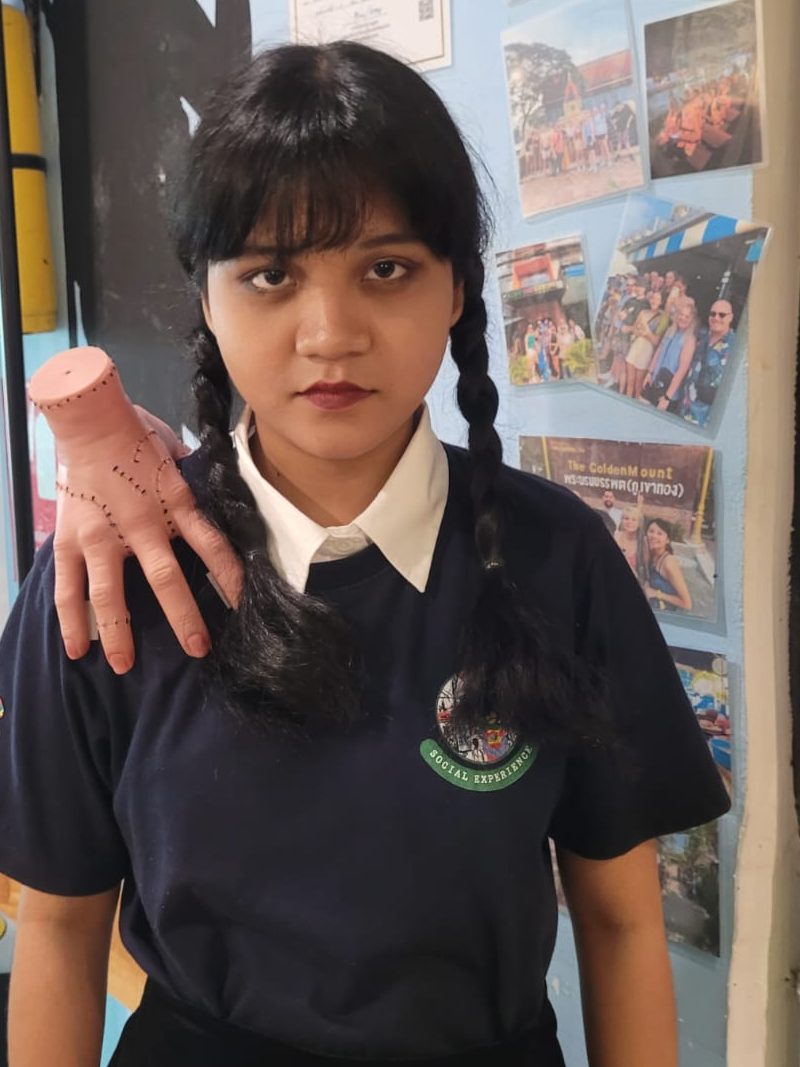
One of the ladies working at the hostel made an excellent Wednesday

I promised our Wednesday that I would show up for the hostel’s rooftop party. I dutifully showed up, chatted to a few people, but declined Beer-pong. My heart was not really in it, and I slipped away.

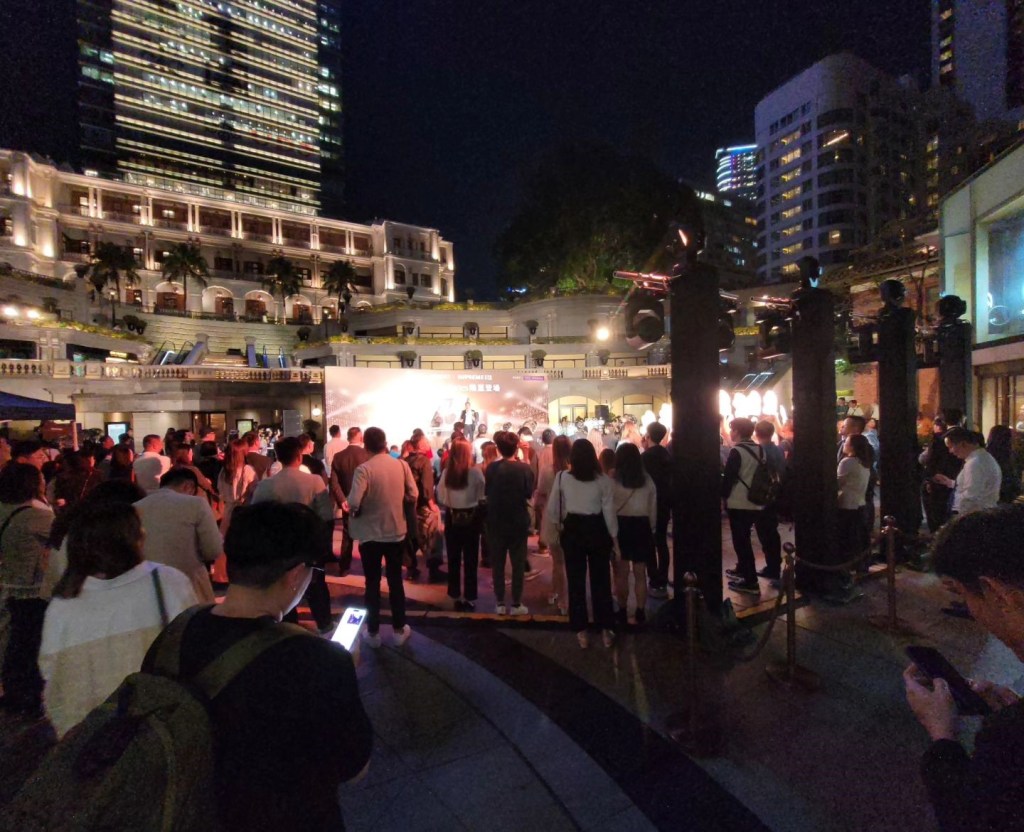
Later I was drinking alone on Khao San Road, and things were in full swing, with both locals and Thais dressing up. Also there was a stage set up and some kind of presentation and awards, but I could not understand the broken English.

This would have been scarier if I was partaking in magic mushrooms.

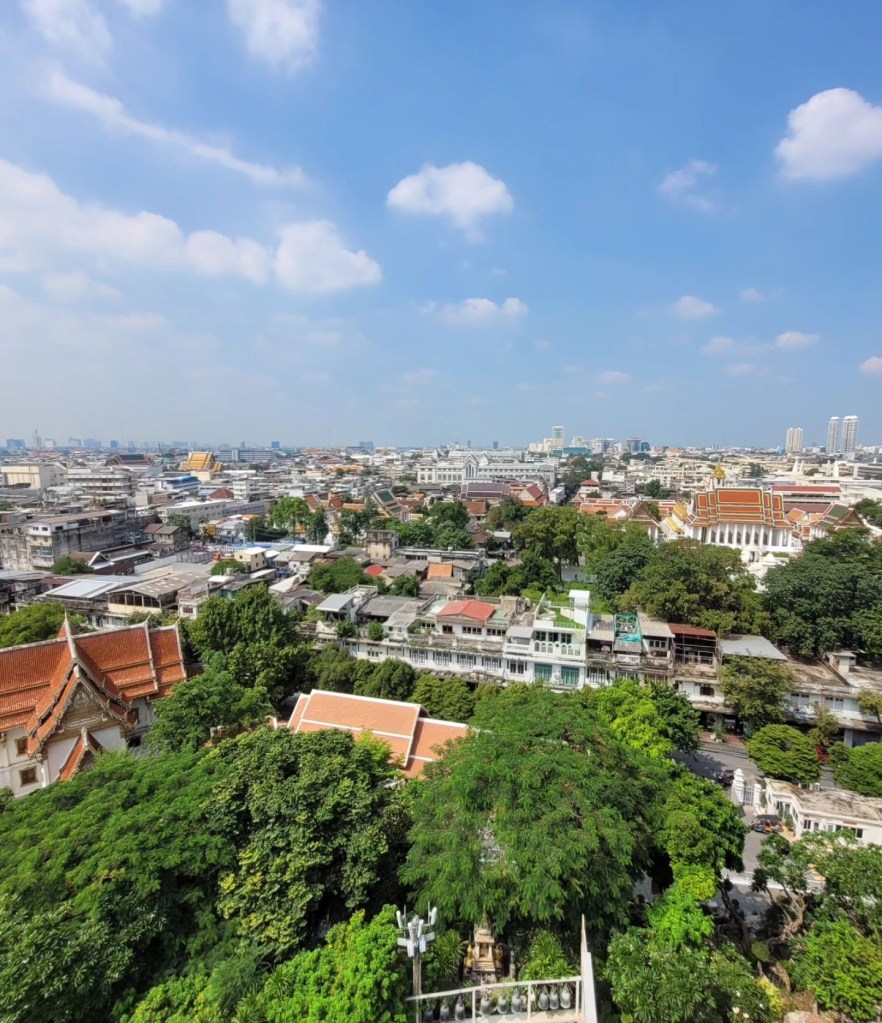
On my last day in Bangkok, I took a walk to Wat Saket, ie the Golden Mount- An ancient temple based on and around Bangkok’s only hill, which is as good a reason as any to build a temple. I walked around the winding path up the hill, which gives some incredible views of the cityscape.

Nice to see trees again.

At the summit, there is a golden stupa, which I found fiendishly difficult to photograph.

best I could do.

As with most Buddhist sites, you can pay to make merit, here by buying sheets of gold leaf that you could write prayers on, and attach nearby. If I had some more money I would have considered doing the same, but in any case, I could not think of a decent prayer.

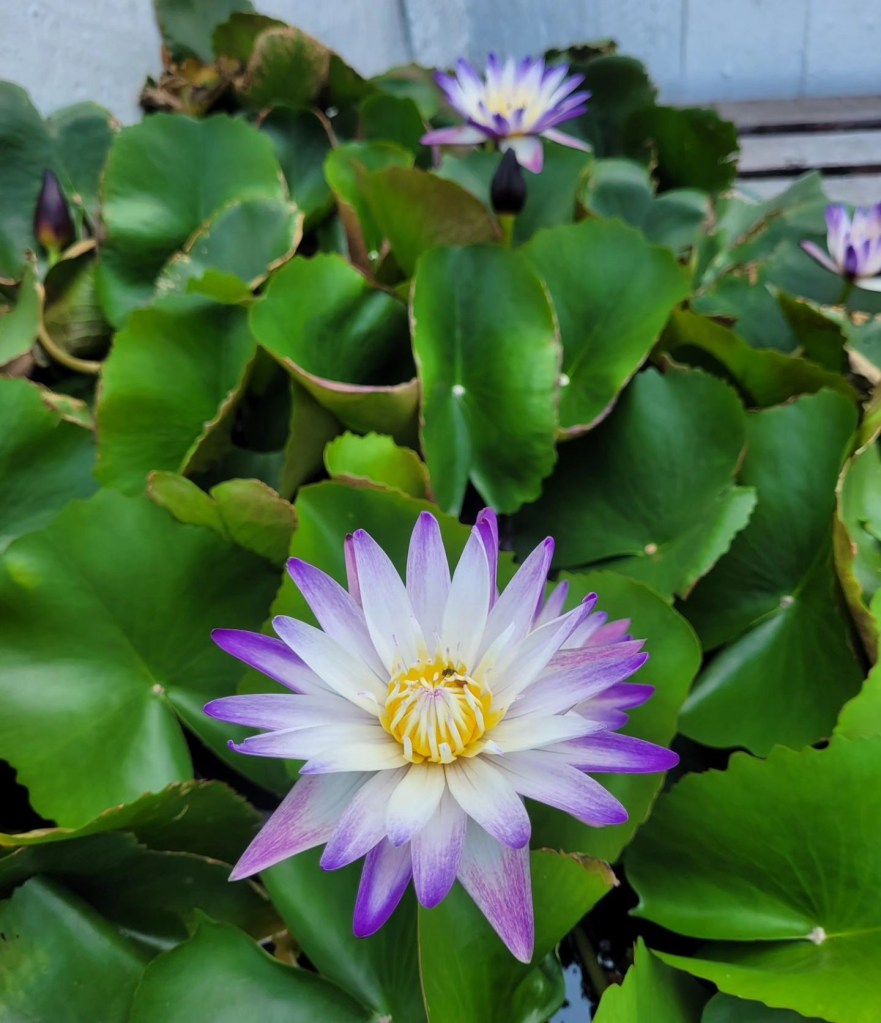
I made my way down, admiring the view, and the lotus flowers.

Arum loved this.

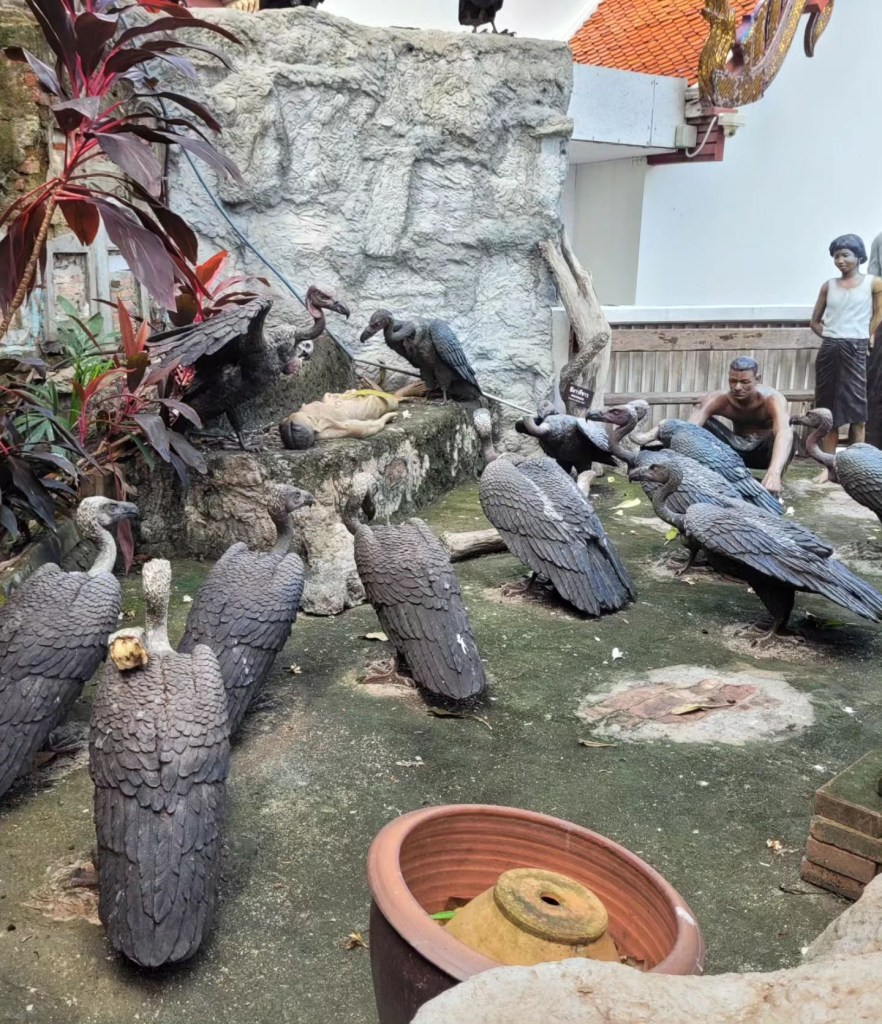
Continuing down, I observed a sign for Buddha’s Footprint and the Vultures of Wat Saket, which I followed. The building housing the Buddha’s footprint was unremarkable and unguarded, but the vultures proved more interesting to me.

a little macabre

Between 1820 and 1840, a Cholera outbreak occurred in Bangkok, and the crematorium at the wat could not keep up with the flood of bodies, leading to further outbreaks of disease, and attracted many vultures to the wat. At some point, the statues were displayed, a grim reminder of this grisly aspect of the past.

It was time to leave Bangkok. It had become impossible for me to sit down and enjoy a beer without being asked to pay up half way through, or have staff try to hurry me away, as if there was not dozens of empty tables. In addition, I had a date in Hong Kong with a South African and pancakes.

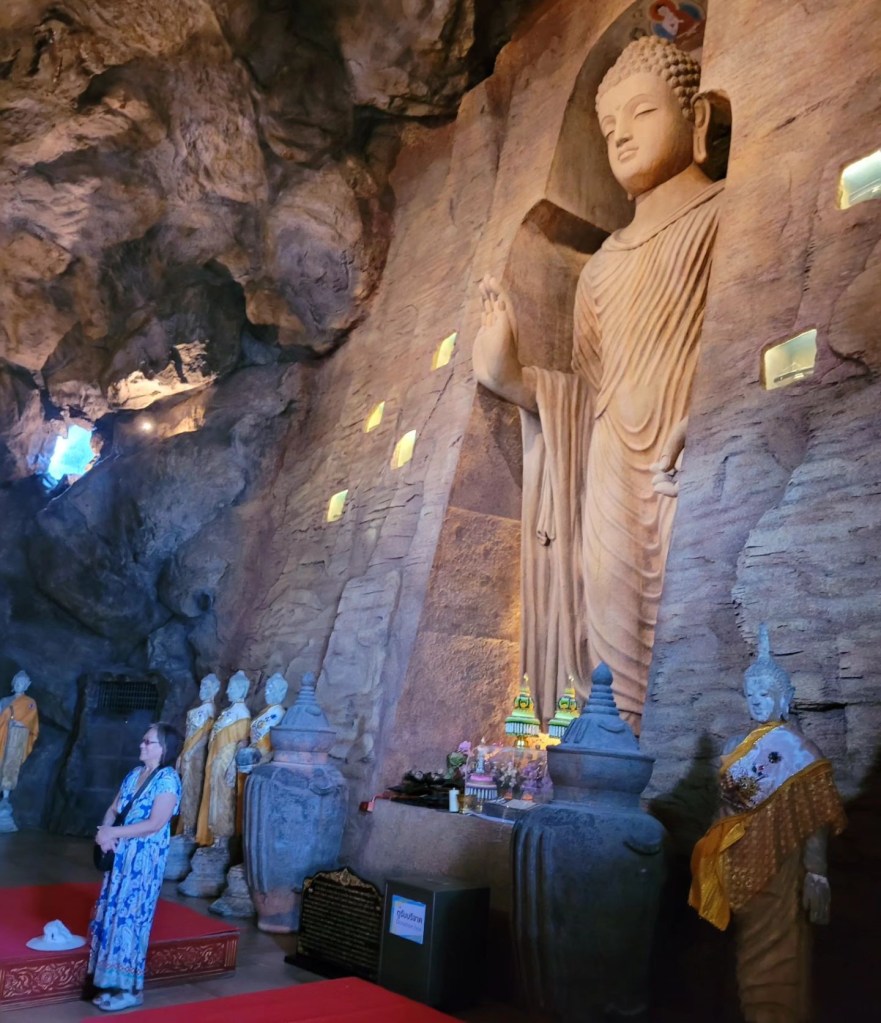
Cave Buddha on the side of Wat Saket.

If you liked this post, please check out the rest of the posts from this trip here!

Kanchanaburi, Kittens and Kindness

Kanchanaburi is a town west of Bangkok, made somewhat famous by its proximity to the Thai-Burma Railway. The Thai-Burma Railway was built by POW labour and indentured workers, victims of the Japenese’s need to join up their empire by rail during World War 2. An estimated fifty thousand POWs, and one hundred and eighty thousand South East Asian workers were forced to work on the railway, where brutal conditions and the brutal treatment by Japanese soldiers competed for the men’s lives. It has been said that every railway sleeper laid cost a man’s life. Half of the men who toiled on the Death Railway died during its construction. If not for the 1957 movie Bridge over the River Kwai, few people outside the Commonwealth would know about the atrocity.

By “Copyright © 1958 Columbia Pictures Corporation.” – Scan via Heritage Auctions. Cropped from original image., Public Domain, https://commons.wikimedia.org/w/index.php?curid=86238561

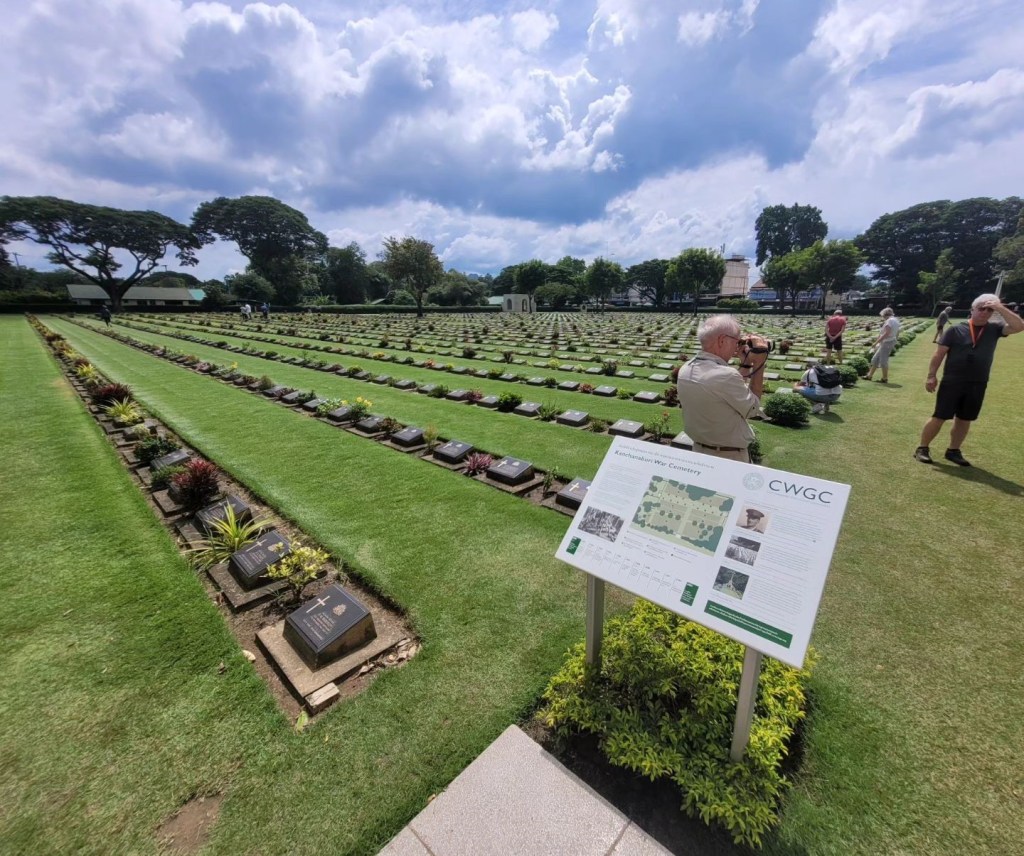
The first stop in my pilgrimage was the Kanchanaburi War Cemetery, a short walk in the blistering heat from my hostel. The cemetery contains the remains of six thousand, nine hundred and eighty-two Australian, Dutch, and British POWs, and is maintained by the Commonwealth War Graves Commission, and works are conducted by local workers, to a high standard in my opinion.

I like the varieties of plant species.

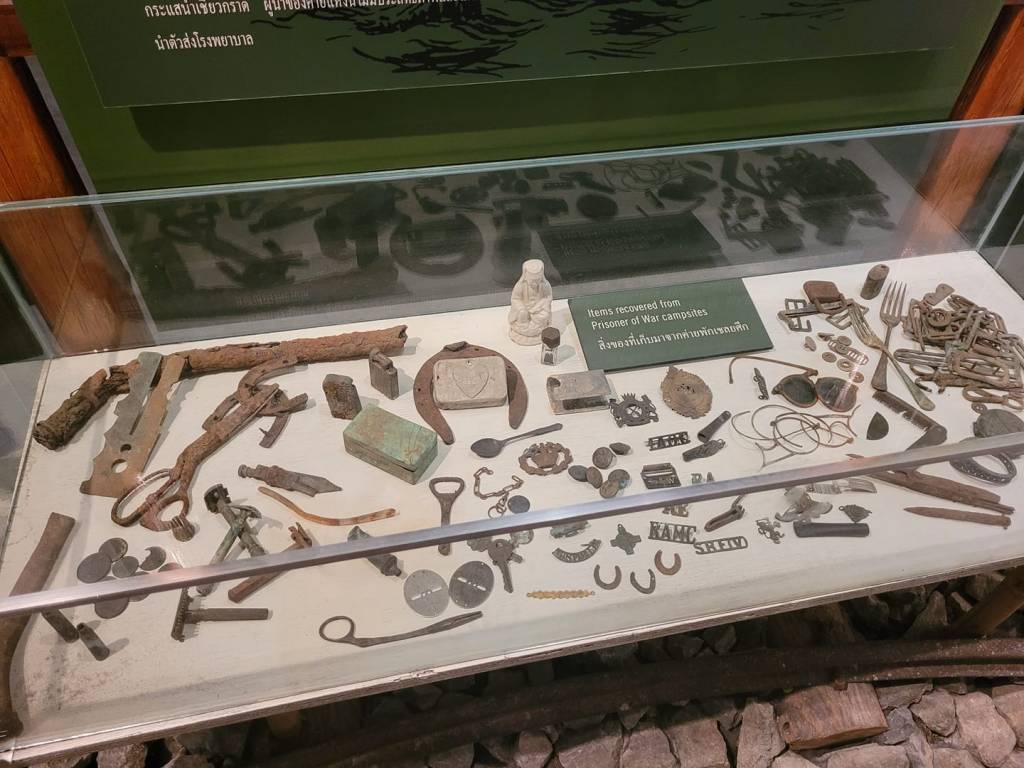
Over the road was the second stop in my pilgrimage, the Australian-run Thailand-Burma Railway Centre, a museum displaying many artifacts from the railway.

That DE Razor looks like it could be cleaned up and put to use.

The centre puts the terrible conditions in context, including the small box car many POWs were transported in like sardines, with no ventilation and toilet facilities.

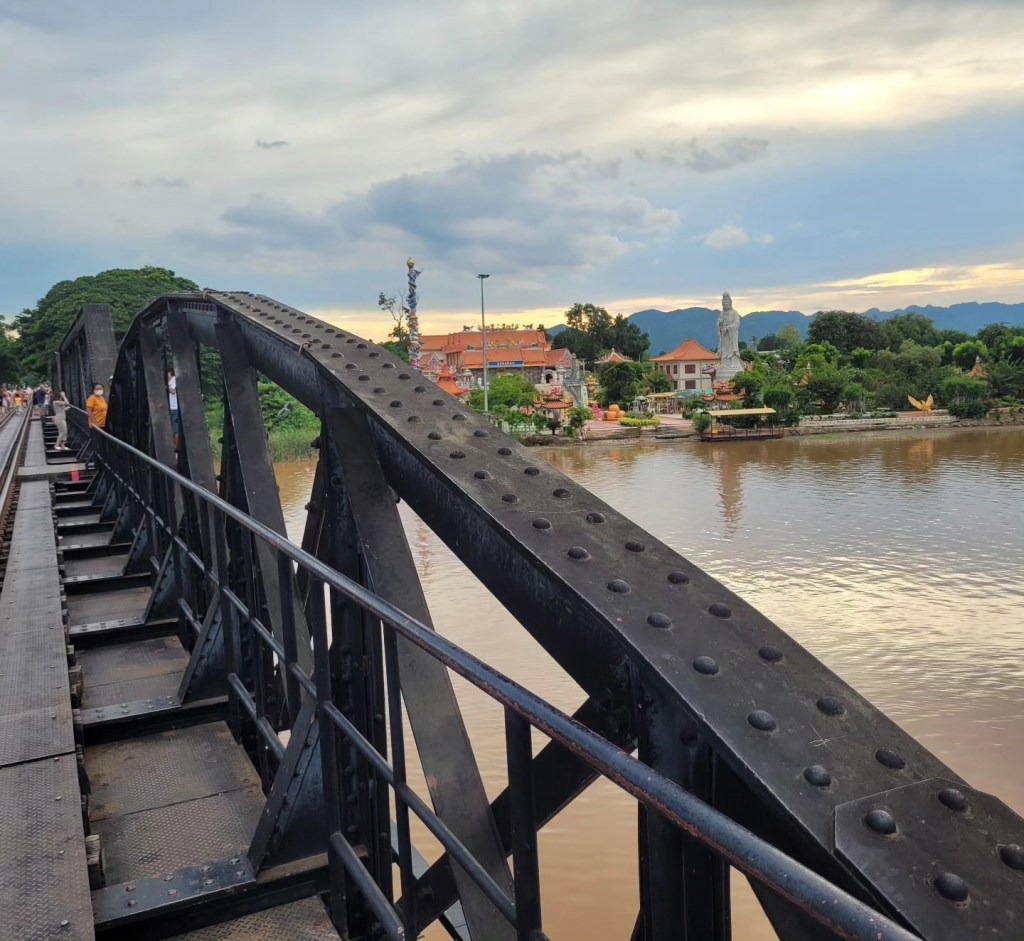
I spent a few hours chilling in my hostel before I decided to walk to the actual bridge over the River Kwai, which was exhausting.

Not pictured: Bloody drones.

By then it was late afternoon, and I was too worn out to spend much time walking around, I got a coffee and a nearby coffee shop, and then got a Grab back to my hostel.

The lovely, grandmotherly lady who owned the hostel fed me that night with local dishes cooked in her own kitchen, including Tom Yum soup, bamboo shoots and pickles, rice, and two varieties of chilli paste, as it is an article of faith amongst Thais that no dish cannot be improved by a little more bite. In return before dinner I headed over to Seven-Eleven to buy iced coffees for the two hosts. The next night my host fed me leftover papaya salad. No wonder I choose to book another night before braving Bangkok again.

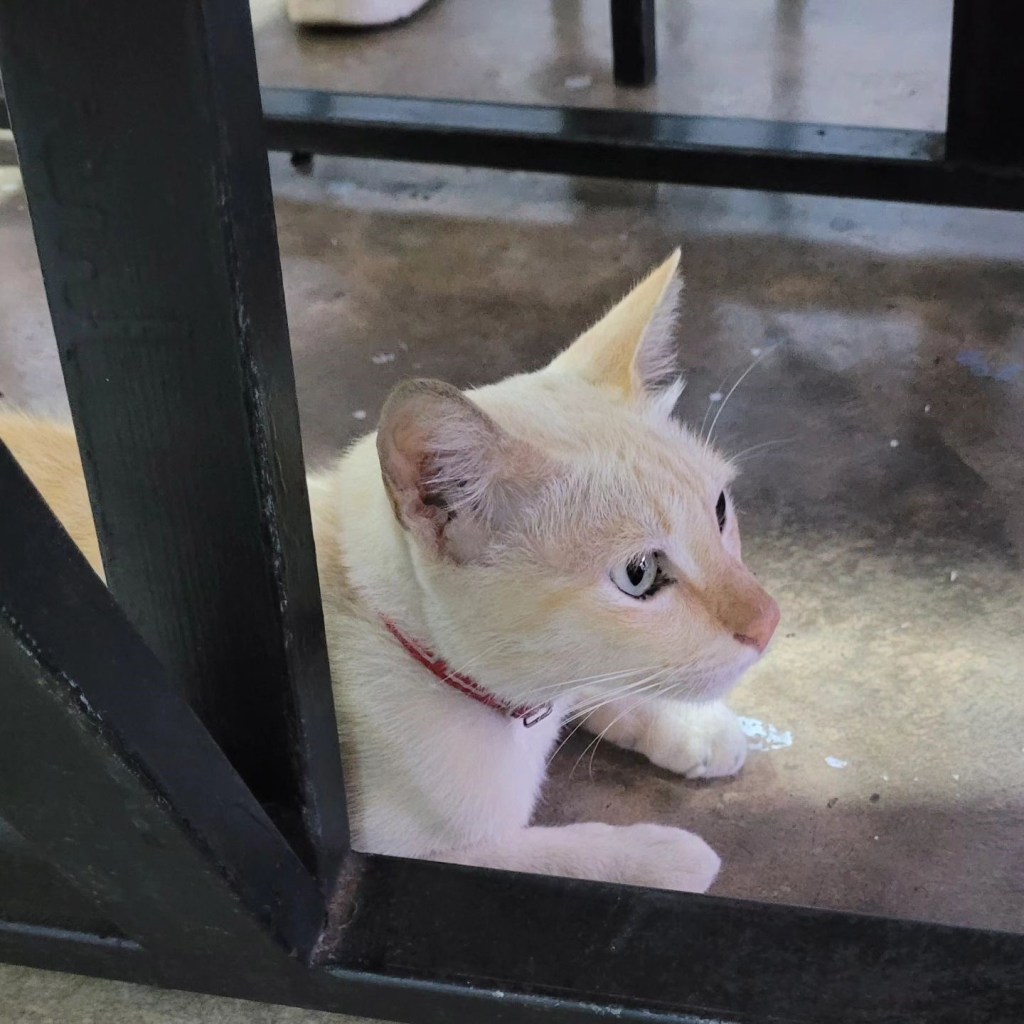
Hostel cat, which was not allowed to stay in the hostel overnight due to an unfortunate shitting incident.

The last night in Kanchanaburi I was showered, shaved and in bed by eleven. I promptly started coughing up a lung, and most likely part of my spleen as well. At midnight I dressed and left the hostel and braved crossing the four lanes of traffic to the Seven-Eleven for supplies. Back in the ground floor of the hostel, I sculled half a bottle of cough syrup, some alarmingly-labeled Chinese medicine, and paracetamol tablets, washed down with iced tea. Feeling slightly improved, I returned to the dorm, where I could only hope that my absence allowed my room-mates a chance to sleep.

If you liked this post, please check out the rest of the posts from this trip here!

Bangkok, Begpackers, and the Reclining Buddha

I think I only booked two nights in Bangkok to give myself a chance to recover after the twelve hours on the bus before I get on another bus to Kanchanaburi. It was not a mistake, but my choice in accommodation, forced by my budget, certainly was.

Not my photo.

After being ransomed for two hundred Thai baht for a key deposit, I was walked over to the hostel next door, which looked nothing like the Agoda listing. This place was not so much a hostel as a flophouse, a storage place for the destitute and those with nowhere better to be. My dorm room had sixteen beds, was full both nights, and stank of dirty socks with top notes of a Frenchman’s sickly sweet vape. As far as I could tell, no one here sight-seed, worked, or did anything at all. I have stayed in dorms with people who worked, and you are barely aware they are there, this was different. Time seemed to have no meaning to the residents, spending their time in the dorm or the common room downstairs watching videos without headphones. No one was willing to meet my eyes. On the last night on my way to my room, I made the mistake of smiling at a Thai woman, and she glared at me.

That night the water supply to the hostel shut off, and people got even more anti-social as the miasma of unwashed bodies intensified. At ten o’clock the water was restored, I waited another hour lying in my bunk in my own stink before heading downstairs to the three shower stalls that serviced the thirty to forty people staying on the lower floors. I didn’t feel much cleaner, but at least I didn’t smell like nervous sweat and Bangkok grime.

I did manage to take a walk down Khao San Road, the most notorious backpacking strips in the world, featuring heavily in the movie The Beach, and often considered the spiritual heart of backpacking. But now it seems to be a more general tourist trap and party street, complete with loud house music.

Apparently I took very few photos.

That is progress I guess, but I didn’t find it as inviting as I did in 2007 when I was a first-time backpacker. Of course, it’s still loaded with tattoo studios, vendors selling drinks to walk around with (of course I partook) and stalls selling vapes, souvenirs, and smoking implements. Henna, dope, and clothing were all readily available, as well as deep-fried arachnids and insects, if you are hankering for that. There are also some upscale accommodation options that few backpackers, including myself, could afford.

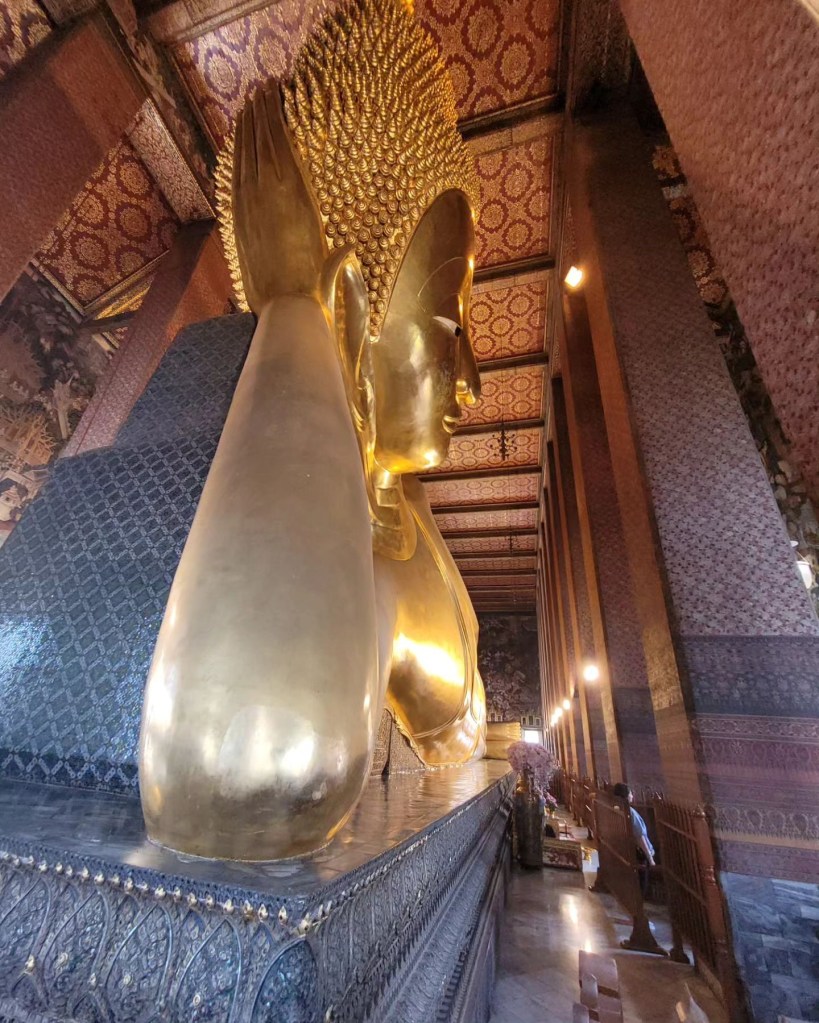
The next morning after a Seven-Eleven coffee, I took a bowel-loosening motorbike taxi to Wat Pho, home to the famous Reclining Buddha.

Difficult to photograph.

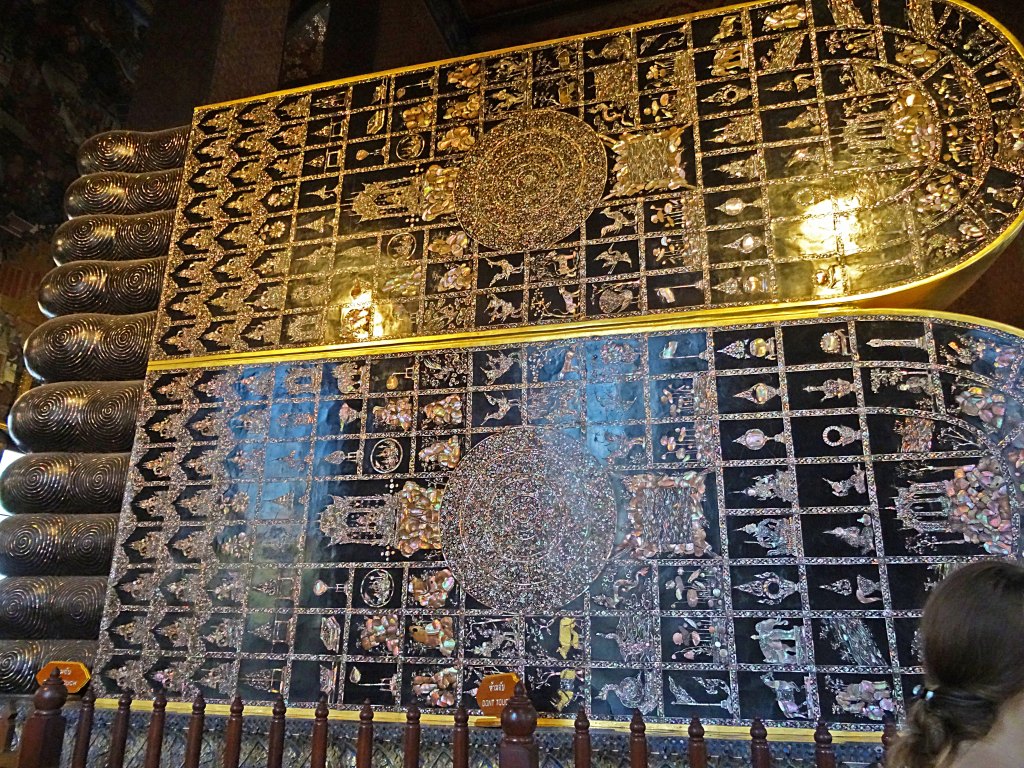
It was constructed in 1832 by King Rama III, it’s forty-six metres long and fifteen metres high. It’s made up of a brick core, covered by plaster, then gilded. It’s impressive enough as you walk around it trying to get a handle on the size, then you realise that the soles of the feet are inlaid with Mother-of-Pearl, an incredible detail considering that the feet are considered unclean by Buddhist belief.

By ErwinMeier – Own work, CC BY-SA 4.0, https://commons.wikimedia.org/w/index.php?curid=78994574

If you liked this post, please check out the rest of the posts from this trip here!

Lovely Luang Prabang

Leaving Vang Vieng proved to be difficult. After the third travel agent told me that a landslide had closed the road between Vang Vieng and Luang Prabang, I finally admitted defeat and booked a train.

It turns out that the Laos-China Railway is the only piece of infrastructure in Laos that approaches western standards, most likely due to the influx of Chinese money. The security measures seemed on paper to be strict, but in practice seemed entirely for show, a wand was neglectfully waved all over me, but no attention was being paid to the beeps and I was shoved through.

The trip was uneventful and I got a shared taxi to the centre of town, and then walked the last kilometre to my hostel. Luang Prabang has a delightfully shabby historical centre, and was the capital until 1975, which may explain why Vientine feels a little soulless by comparison.

Royal Palace

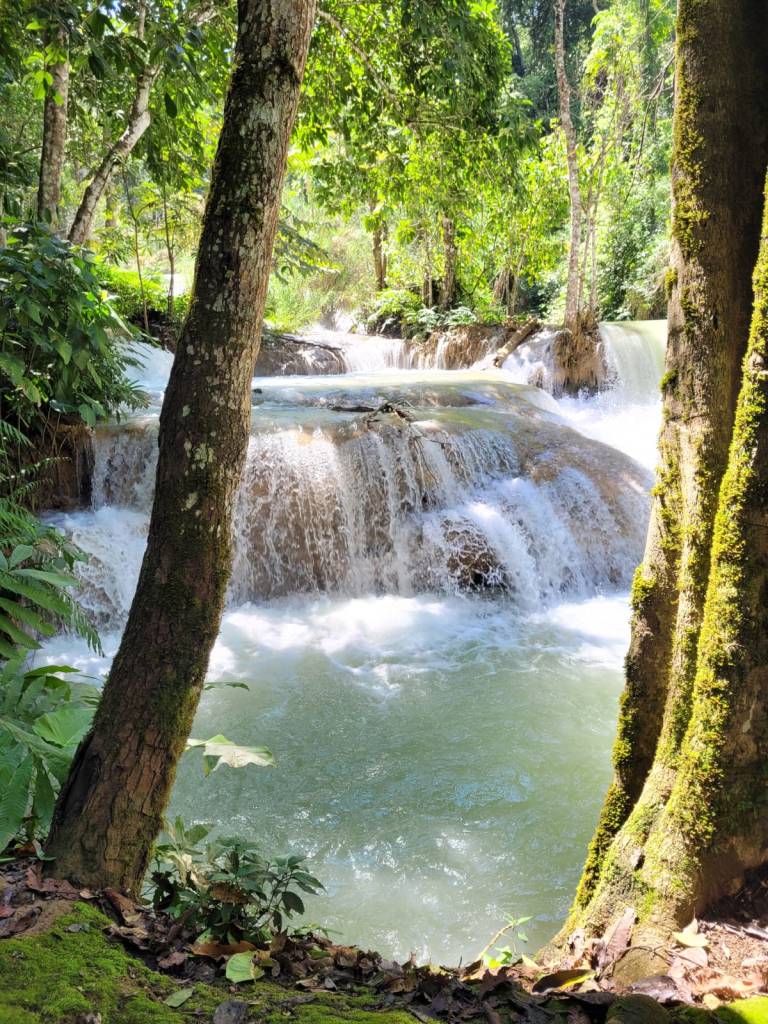
On my first full day I took the hostel’s mini bus to Kuang Si Falls, which are incredibly epic.

One of the three tiers

Three tiers and multiple pools you can frolic in. After taking many photos and a short swim, I spent the last half an hour with my feet in one of those pools, reading a vampire novel, unmolested by the tourist hordes.

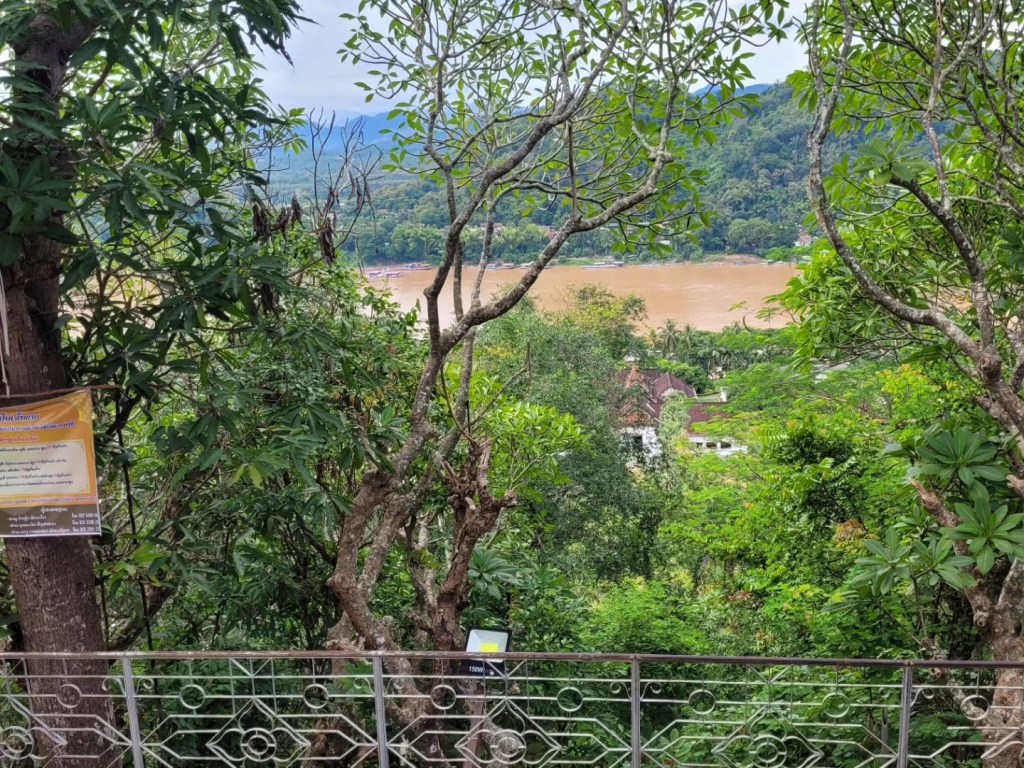
The focal point of Luang Prabang is Phousi Hill, overlooking the night market, The Mekong, the Nam Khan River, and the Royal Palace.

View from Phousi Hill

The hill itself features a beautifully ramshackle wat, with incredible views from the top.

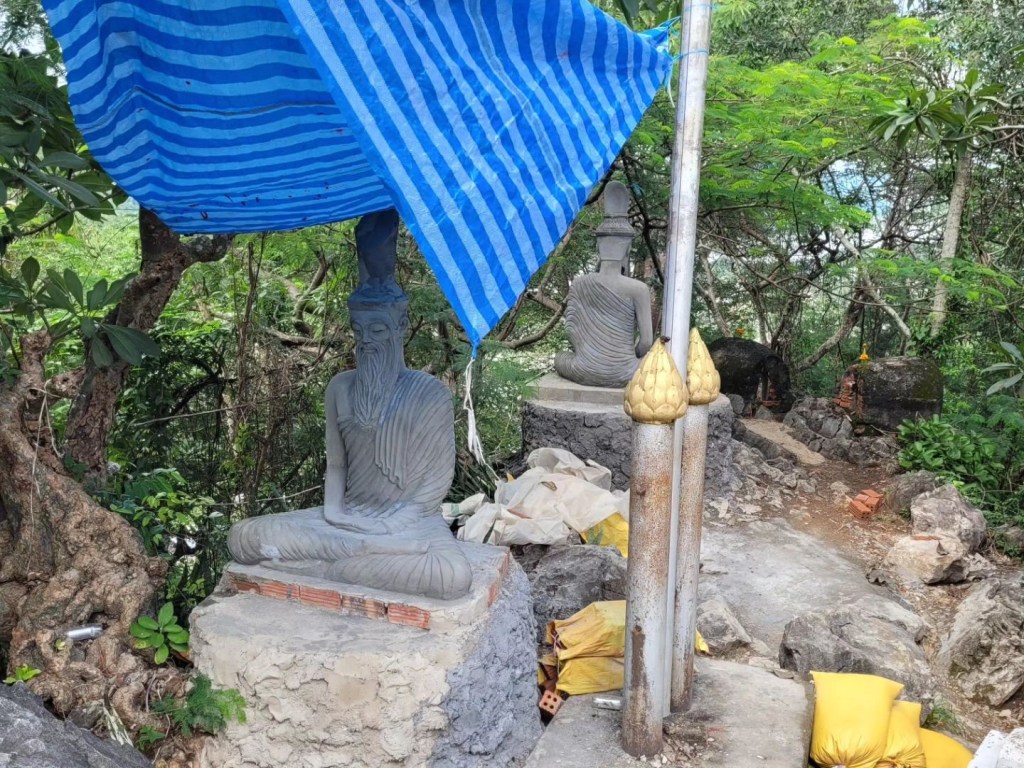
Like so much of Laos, the temple was once grand, but now much faded. The ticket seller was engaged in some paving repair when I arrived, which gave a good indication about how well funded the place is.

A forgotten corner of a near-forgotten wat.

The hostel I stayed at was well populated by young backpackers, most of which I struggled to relate to, but I did get to know a few. Bree, an Australian lady from Sydney I bonded with over a similar history. Ruby, an English lady who contracted Dengue Fever in the jungles of Thailand. Leander, an irrepressible Canadian lad who shattered his ankle on a motorbike and was awaiting his insurance company to organise his flight home. These last two were a sober reminder on how precarious the situation can be here for independent travellers, and how lucky I had been that after two and a half months of travel, I had no trouble apart from a stomach bug and an infection that responded well to antibiotics.

My second to last night in Laos I was manipulated into joining the pub crawl. After we left the first bar, we were waiting outside the second bar while our guide tried to sort out our previously approved entry, and I was feeling sweaty, bored and very out of place. I slipped away unnoticed, bought a beer to drink on the way back to the hostel, then headed to bed.

If you liked this post, please check out the rest of the posts from this trip here!