Kabukicho

It’s long been my habit to book accommodation close to places I can eat and drink. It doesn’t worry me much if I have to take public transport or a taxi to get to a historical site or a famous market, as long as I can chill at the end of the day without trying to negotiate with a taxi driver while half-cut. For Tokyo, I was staying within the confines of Kabukicho, Japan’s most infamous red-light district. Now that I have typed that, I have to wonder if calling a red-light district infamous is redundant, but I’ll leave that kind of argument for when I am not sober.

Kabukicho is full of host and hostess clubs, soaplands, love hotels, girl bars, pickacho palours, claw game arcades, plus regular bars and restaurants. Traditionally, the Yakuza held massive influence here, and while the Yakuza have been diminishing in both numbers and influence in the last ten years, their impact here is supposedly still strong in Kabukicho. While I enjoyed wandering around, I didn’t linger, except for a meal at the world’s narrowest KFC while feeling despondent. At street corners in the larger ward of Shinjuku, loudspeakers warn of touts inviting you to bars that overcharge by factors of a hundred. I soon learned that these touts were exclusively Nigerian, well-dressed and friendly, but informed by the loudspeaker warnings and my own research, this was easily ignored. Stereotypically, the touts are working illegally after overstaying their visas, yet operate so openly that I can’t work out why the authorities are not rounding them up.
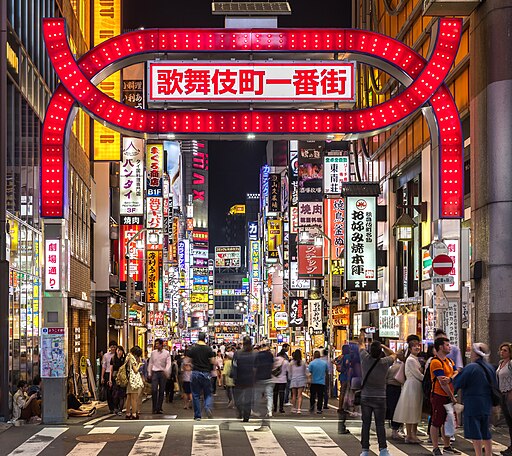
https://commons.wikimedia.org/wiki/User:Basile_Morin

Host and Hostess clubs are nightclubs, where you have your drinks poured and cigarettes lit by incredibly attractive, attentive, and charming members of the opposite sex. While that does sound lovely to a lonely person, and there are many of those in Japan, the price is exorbitant, and the host/hostesses are incentivized to make their guests order more and more. This is not a scam, but one certainly should be very aware of the underlying principles. As much as I would have liked a woman hanging on my every word, I didn’t want to spend my entire Tokyo budget on a few hours. I have been told that it can become very addictive, and in some less reputable host clubs, women can rack up such bills that the Yakuza step in and the women are forced into sex work to settle their bills. Also, some of the hostesses are working illegally, or are victims of exploitation (such as passports being taken from them) and trafficking, so that’s another aspect a guest would need to be aware of.
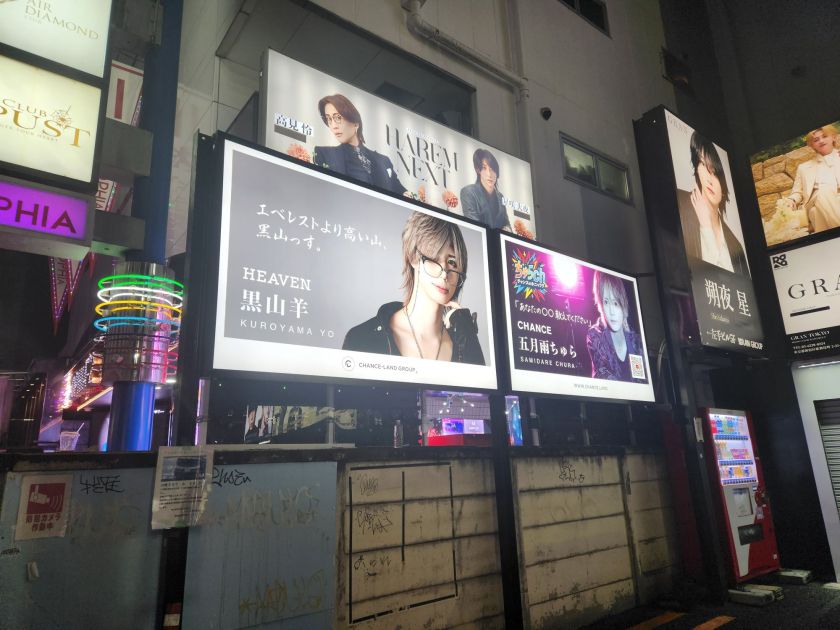
Japan has very different ideas about ideal male beauty than the West.

Brothels in Japan are usually called Soaplands, which used to be called Turkish baths before the son of a Turkish ambassador took offence. From what I read, it’s a very ritualistic way of conducting sex work, similar to the soapy massages one can get in Thailand. Actual sex is negotiated after the bath. If one is not aware of the meaning of Soaplands, a person could walk past them and have no idea what is going on behind the door, which I guess is the way the Japanese like it.

Nothing to see here, no, totally not brothels back to back.

In the heart of Kabukicho, right next to the KFC I previously mentioned and the neon signs of the Toyo Building (Mostly a cinema featuring the famous Godzilla Head, was the messiest sight I saw in my time in Tokyo. Numerous youths, and some older Westerners, sitting on the ground or on folding chairs, surrounded by rubbish and uniformed security staff who were attempting to look nonchalant. These are the Toyoko kids, runaways, marginalized youths and their hangers-on. Homeless and largely ignored by society at large, they have formed their own subculture based on their situation and fashion choices. It’s important as an onlooker not to romanticize their existence, they are mostly homeless and highly susceptible to exploitation by others.
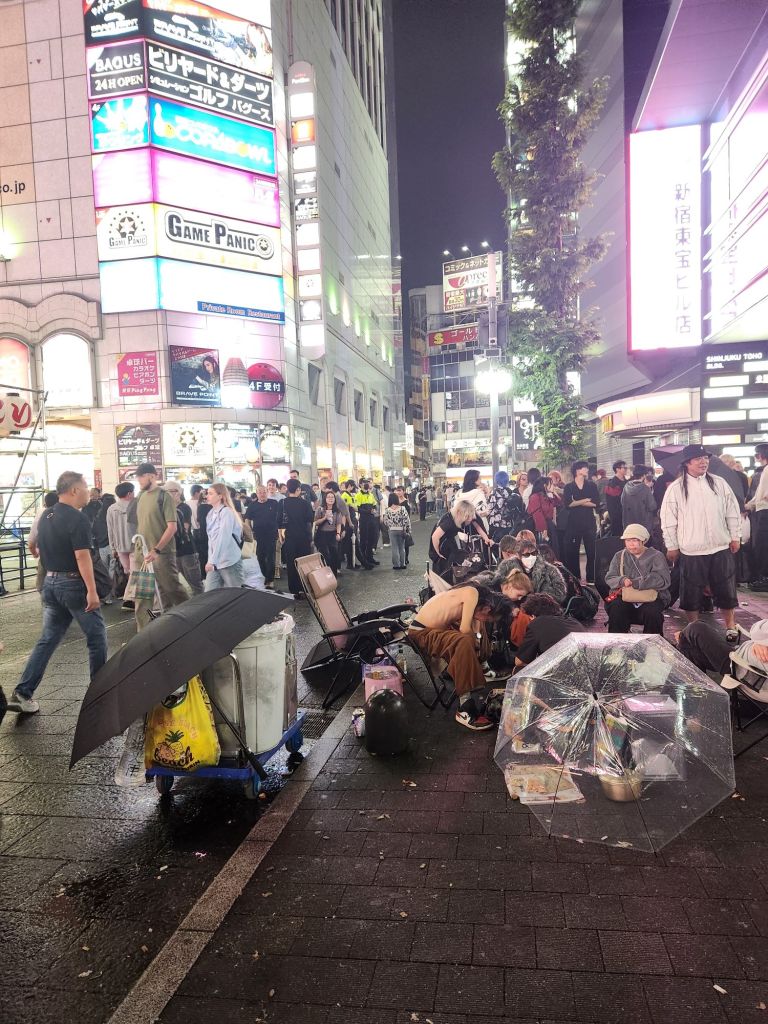
Another thing in Japan that is considered normal, but also ignored.

Moving further through Kabukicho, I discovered two lines of young women, many dressed in Cosplay or school uniforms, kept in order by security guards. They were handing out flyers to hostess clubs, girl bars, and similar establishments. Mostly, they appeared bored and disinterested, although I did get a smile back from one of them as I danced around a group of gawking Germans. I suspect they share some membership with the Toyoko kids, and do not get paid more than a few yen an hour unless they walk someone into an establishment, or their flyers have an identifier that is taken into the bar.
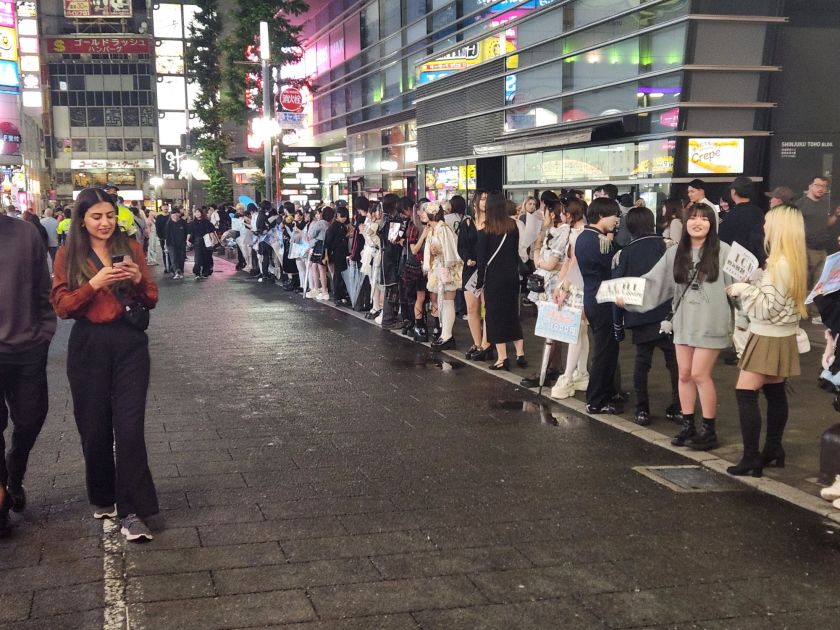
Not an easy way to make a living.

Also in Kabukicho are Pachinko Parlors, which are confusing, pinball-like games that skirt the gambling laws by not having payouts issued from the same building. Love hotels are also common, where couples, Johns and their new lady-friends, can rent a room for a few hours to watch TV and nap. This offers a place for many couples who still live with their parents (paper-thin walls, etc) to get some privacy. There are also bars high in skyscrapers, where, for a modest cash fee, one can receive a much higher invoice for tax or reimbursement purposes.

I suspect that William Gibson’s Night City was directly inspired by Kabukicho, as it also appears to be a barely lawful zone that keeps the rest of Tokyo orderly, safe, and child-friendly. It was also the only place in Tokyo I saw rats. For all that, its probably the most exciting place at night to see in Tokyo, and visually spectacular; on the first night I visited I wished I had a D-SLR and tripod with me, to do super-long exposures.

I know how you feel, random red-shirted guy.

If you, dear reader, are interested in this aspect of Japan, I suggest you watch this video, which does a more reporting-style take on the scene and other aspects of Tokyo.

Tipsy Tokyo

Drinkers are spoiled for choice in Tokyo, the drinking culture being well established before it ever became a tourist hotspot. My capsule hotel is a two-minute walk from the famous Golden Gai. Golden Gai is a small collection of alleyways, full of tiny bars, some seating no more than five people. Before being mentioned in every travel guide, BuzzFeed article, and blog post about Tokyo, locals flocked to it, often choosing their own favourite bar. Some functioned as private clubs, with entry only permitted for members. It was especially known as a haunt for writers, which, of course, helps my fascination.

Apparently I only took a single photo
Golden Gai

Many of the bars have their own themes and have become famous in their own right, such as Open Book, filled with bookshelves and noted for its excellent lemon sours, and Deathmatch in Hell, a heavy metal-themed bar. Due to the popularity of many of these famous bars, I only ended up drinking in Golden Gai once, at a place whose name I never quite caught, hosted by the vivacious Suki. I drank alone until a group of beautiful Dutch youths showed up. On asking for the bill and finding it less than I expected due to the absence of a cover charge (very common in Tokyo, and sometimes described unfairly as a scam), Suki asked if I could shout her a shot, and of course I could not let her drink alone, and thus I had my first Tequila since the exit of a certain South African from my life.

It was the logical thing to do.
To be fair, I was a little besotted by Suki.

I found my regular drinking hole a little further away from my hotel, past the touts of Kabukicko, the holographic cat, and past a common spot where buskers plied their trade.

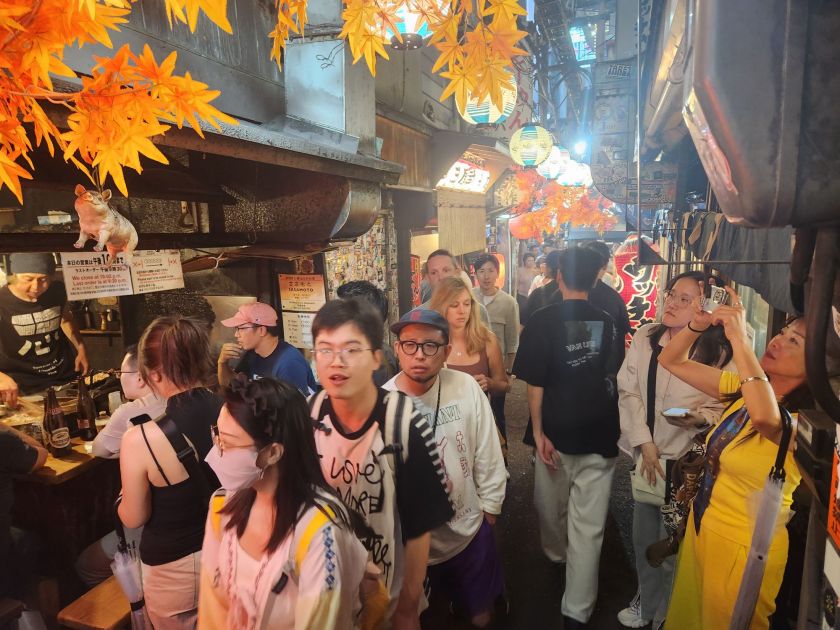
Omoide Yokocho, which translates to Memory Lane, is another collection of small alleyways, better known by its earlier nickname, the less salubrious Piss Alley. When the bars here were not entirely legal post-war, there were no bathroom facilities, and punters would simply relieve themselves on the nearby train tracks. Since then, the alley has been largely gentrified, with very nice toilets hidden in between the bars, but it’s still a lot of fun. The atmosphere is great, with the smoke from the cooking meat, the hanging lanterns, and fake tree decorations; it’s a great, if difficult, place to photograph.

Also, crowded
Apparently, I didn’t take a photo of the entrance.

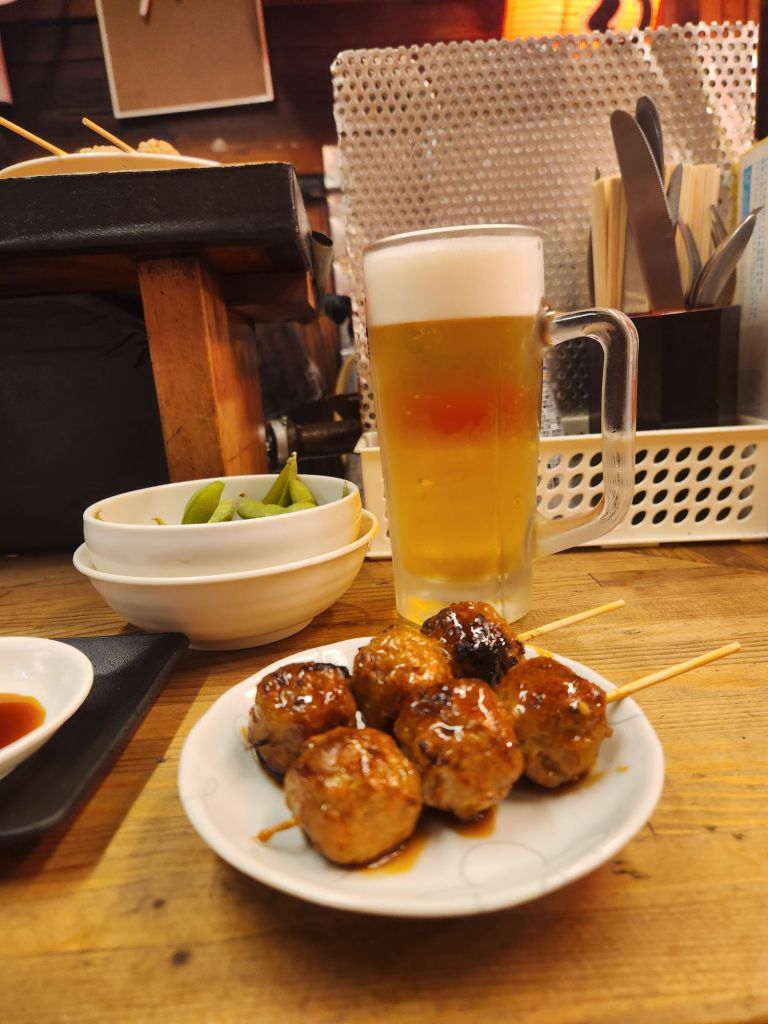
As well as copious draft beer and sake, the main focus here is meat skewers, cooked on a grill on the bar. The first bar I entered here became my regular place, and I became a big fan of their minced chicken skewers.

meat on a stick and beer, what more could I want? Apart from female company, of course.

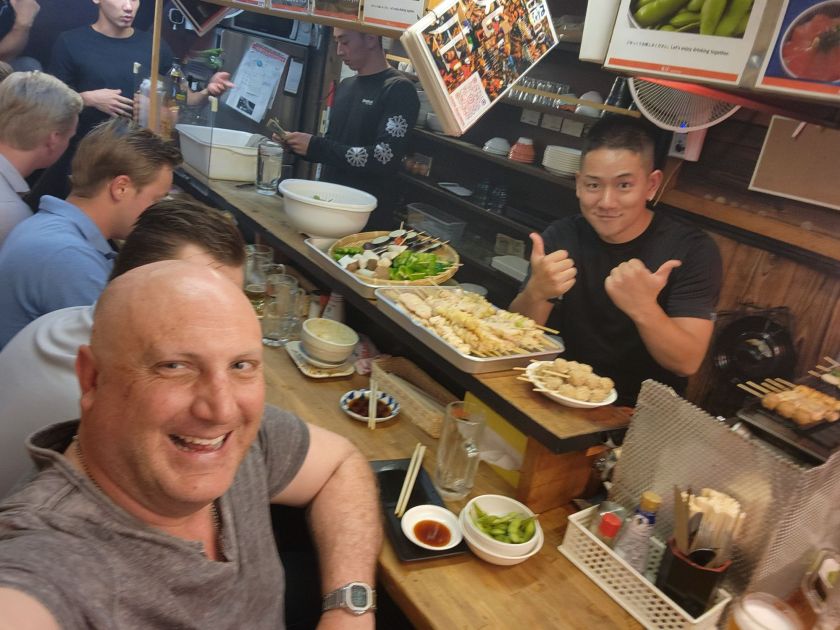
The staff were fantastic and attentive, and took a genuine interest in their customers. And were happy to pose for some photos for customers.

At least I was wearing a different shirt than in my Golden Gai photos
And hamming it up!

I drank there for half an hour on my last night before catching my flight onwards to Cairo, and I felt sad that I wouldn’t see these guys again. Hopefully, I’ll get back to Tokyo sometime soon, as I found it almost as addictive as Istanbul.

A Tourist in Tokyo

Perhaps because I had trouble navigating the public transport system, I never felt like I was massively successful in visiting Tokyo’s historical sites.

The Meiji Shrine is surrounded by vegetation with minimal undergrowth. The shrine is dedicated to the spirits of Emperor Meiji and his wife, the Empress Shoken, who are most famous for the Meiji Restoration. They were both transformed into gods after their death.

At the time of my visit, the shrine was hosting a festival to honour dolls, which are often considered to have their own spirits. I couldn’t help but think sadly of my old teddy bear, stored away at my parents’ house.

I should not be shocked that there is an association.

I was definitely missing much context, as I know little about Japanese history and little about Shintoism. But at least I didn’t have to pay for the privilege, something I should have appreciated more at the time. The original complex was, as much of Tokyo, destroyed during Allied raids in World War II. It was rebuilt from publicly raised funds.

And hard to photograph.

Much of the outer features of the shrine were either closed or not readily accessible, and having hiked to the Treasure Room, and finding it closed, I ended up swapping the change in my pocket for an iced tea and some chocolate from a conveniently nearby bank of vending machines, and sat under a tree and read for an hour, which seemed to be a popular choice. I lingered longer than I intended, as a group close to me seemed to be getting ready for some kind of photoshoot, but it took too long to get started, and I moved on.

Making my way back through the shrine grounds, a Canadian lady who gave her name as Mary thought I looked put together enough to ask me for directions. I walked her back to the main building before leaving her to it and making my way back to the train station.

Asakusa Shrine I found to be more interesting, perhaps because it was positioned in one of the older parts of Tokyo.

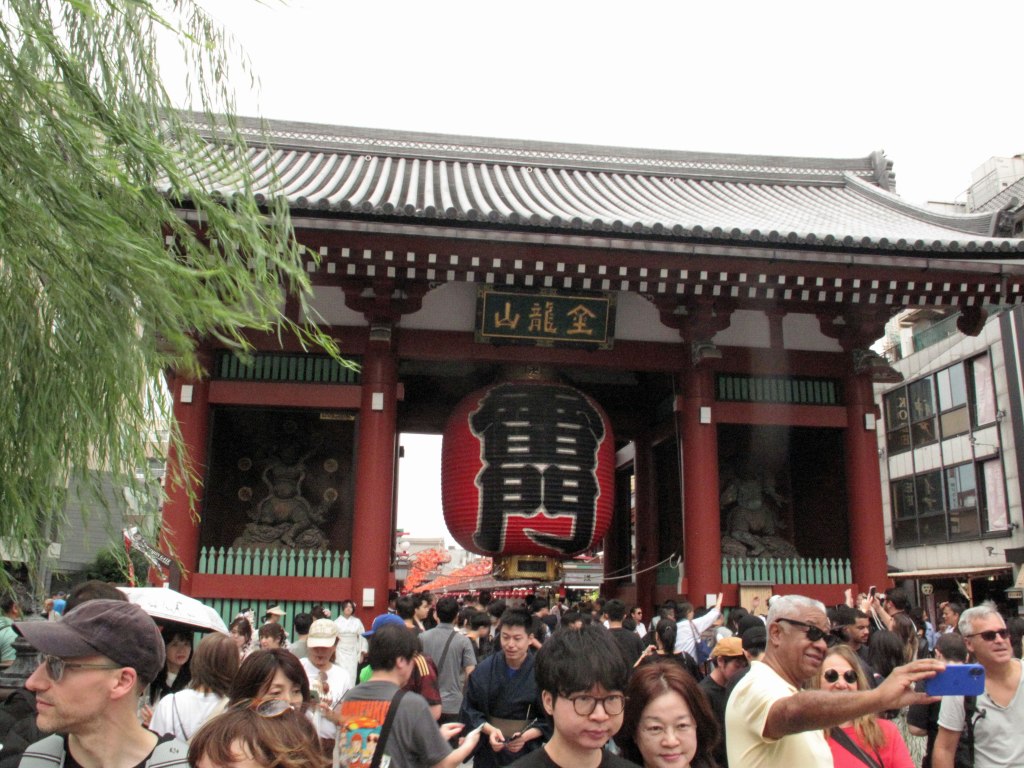
Thunder Gate, yes, it was that busy everywhere. Is that a Willow Tree to the left?

Between the main gate and the main shrine building are hundreds of small shops, selling tourist tat, traditional foods, and handicrafts, including hand-made Buddhist scrolls. I was tempted by a katana letter opener, but it seemed like the kind of thing that Customs back home would have questions about.

The Treasure House Gate is two stories high, with the upper story containing many of the shrine’s treasures. The entire area was packed with people, and I struggled to gain any type of understanding.

Treasure House Gate

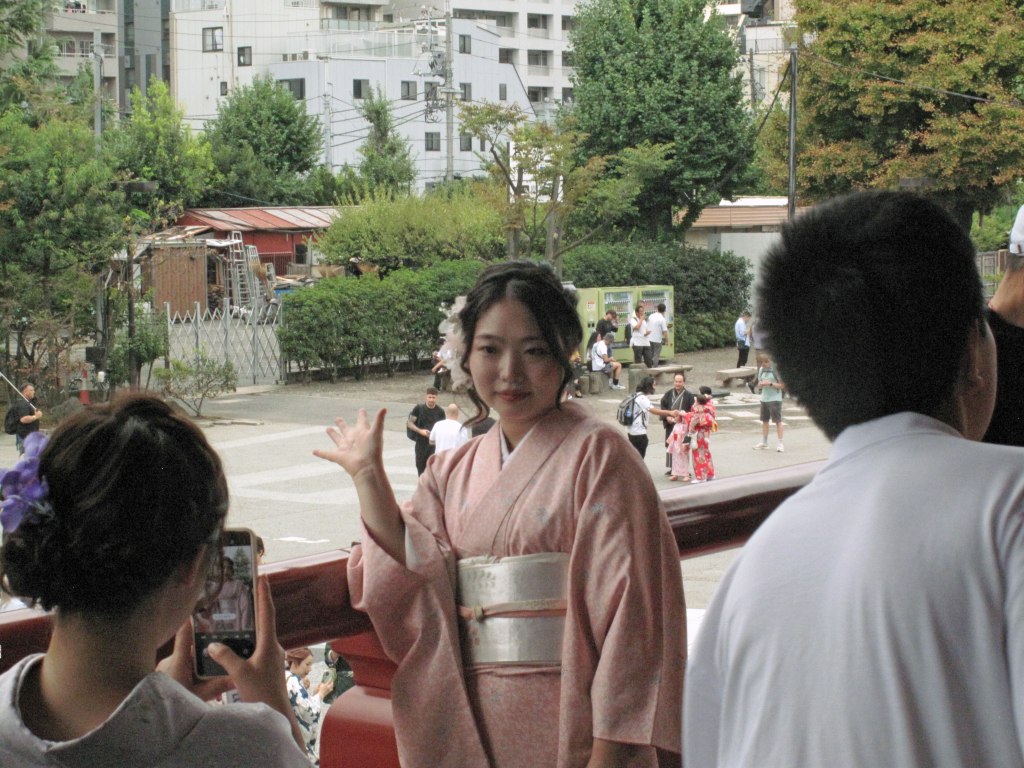
Some women, tourists and Japanese alike, choose this place to have photoshoots in traditional kimonos, accompanied by professional photographers or lucky boyfriends. The Japanese women here put most of the Western women to shame, perfectly poised and made up in their multitudes, like ordinary angels, routine and mobile works of art.

Sigh.

Perhaps it was a desperate attempt to view Tokyo as a whole rather than a bunch of train stations with their surroundings, or perhaps it was some monkey-brain need to find the tallest thing around and claim everything I could see as my own.

Whatever my motivations, I found myself waiting in line for half an hour, passing through a rigorous, but entirely polite security check, and rode in an elevator for fifty-five floors to get to the Southern Observation Deck of the Tokyo Metropolitan Government Building. This proves that while close to a billion US dollars were spent building the skyscraper, they spent five minutes in a committee naming it before heading to an izakaya.

I can see my capsule hotel from here!

The view was impressive, and the gift shop was lovely. The cafe seemed delightful, but the price for a latte were as high as I was. This may be to compensate for the free entry to the observation deck, the Japanese being oddly principled and pragmatic in that way.

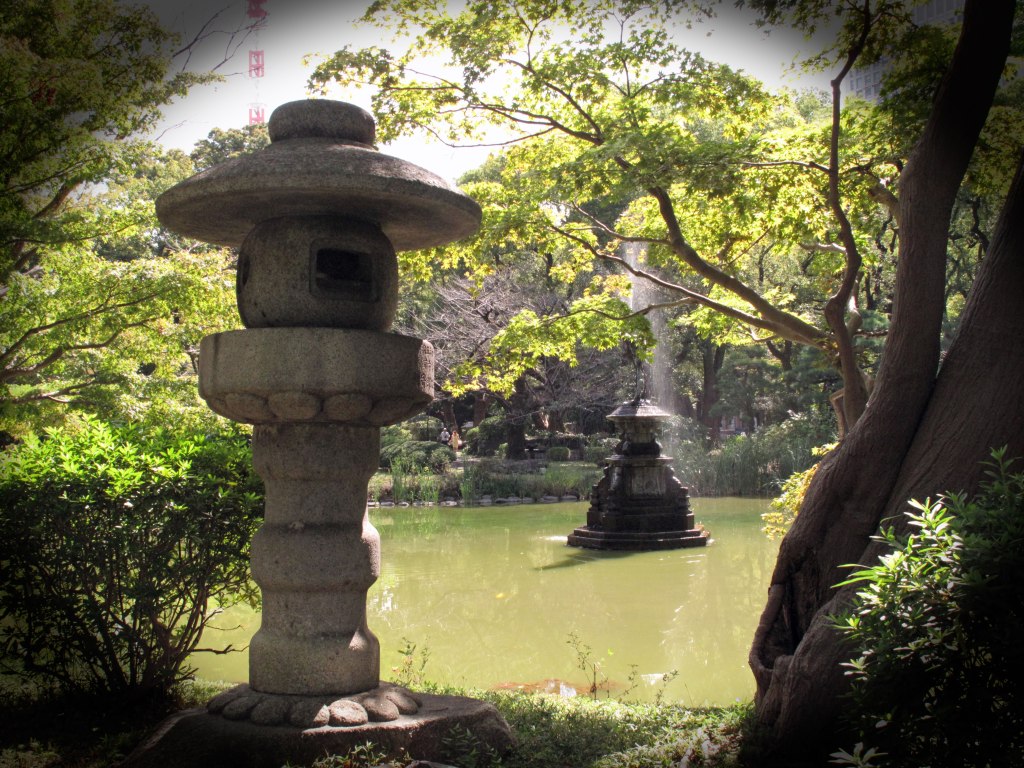
On my last day in Tokyo, I decided I should see the Imperial Palace. Unfortunately, I discovered that it was only open on seemingly random hour-and-a-half blocks, so I never ended up inside the walls. I did, however, take some nice photos in the nearby Hibiya Park, which had lakes, tennis courts, and scattered historical places of interest.

Crane Fountain at Hibiya Park.

The Trouble with Tokyo

Tokyo is vast and filled to capacity with both locals and tourists. The small percentage that is not filled with skyscrapers are roads, historical sites, and small, underfunded parks- That last may be unfair, but the parks I visited were poorly maintained compared to my own fair city.

The size of Tokyo, unrestrained by geography, meant it was hard for me to get a proper understanding of its soul. Wherever I went, hordes of people were moving in every direction. Personal space is mostly academic here, as every shop, elevator ride, and street is jam-packed.

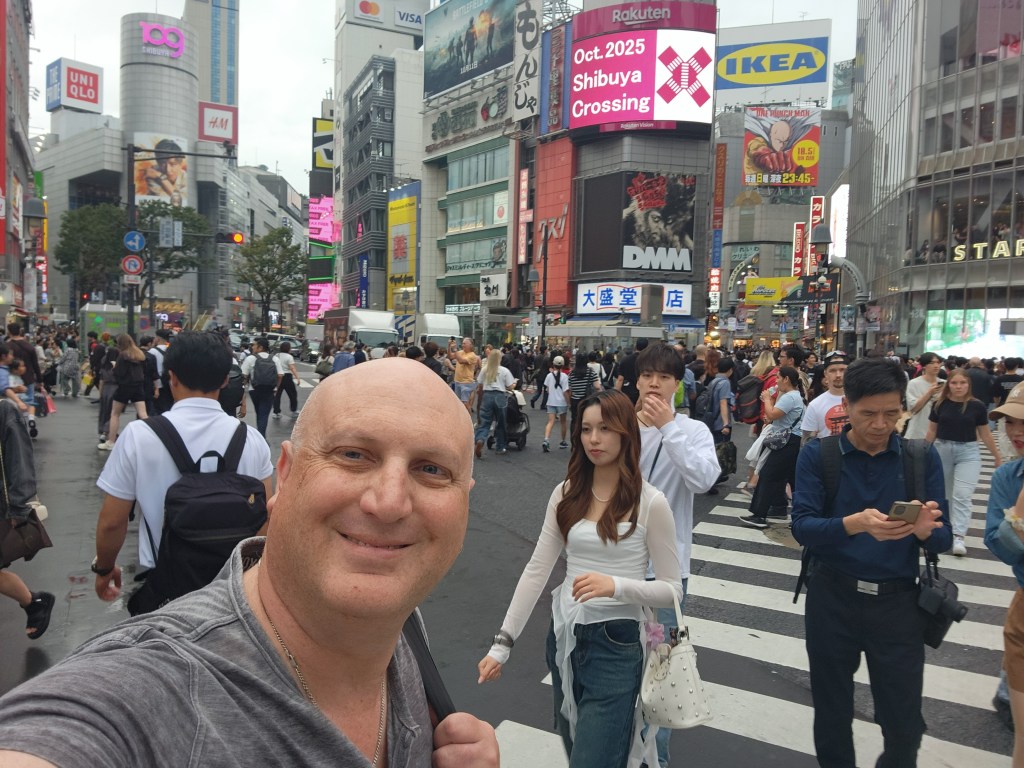
I was not the only person taking selfies at the famous Scramble Crossing that day.

Tokyo’s train stations, which 99% of locals and tourists will use multiple times a day, are a confusing mess, even to the Japanese. A single station will have multiple sections within it, functioning as separate stations in their own right. Google will send you to an entrance, and ten minutes later, you discover that you cannot get to the platform you need, and you have to exit the station, walk to another entrance, and try again. I barely ever sat down in a train in Tokyo, and often struggled to even walk through the corridors without colliding with people. Perhaps because of how extensive the public transport system is, or because of my own bloody-mindedness, I managed to not resort to Uber, but I did walk a great deal, resulting in sore feet, the purchase of a cheap pair of sneakers from an amused elderly man running a hole in the wall shop in Asakusa, and the abandoning of an expensive pair of well-worn hiking shoes that had survived my entire three month SE Asia trip.

I found the Japanese to be faultlessly polite, and often highly reserved unless alcohol is involved. Many people online have mentioned that Japan has a deeply conflict-avoidant mindset. Often, bad behaviour will be ignored, rather than have more attention drawn to the behaviour, Which may explain why serial pests like Johnny Somali managed to make so much content in Japan. In many ways, this leads to a harmonious society. I don’t think I heard a raised Japanese voice in the five days I was there. However, I suspect that the same conflict-avoidance prevents their society, both people and government, from addressing the homeless and disenfranchised youth.

On the Subtle Art of Washing your Testicles Amongst other Sets of Testicles

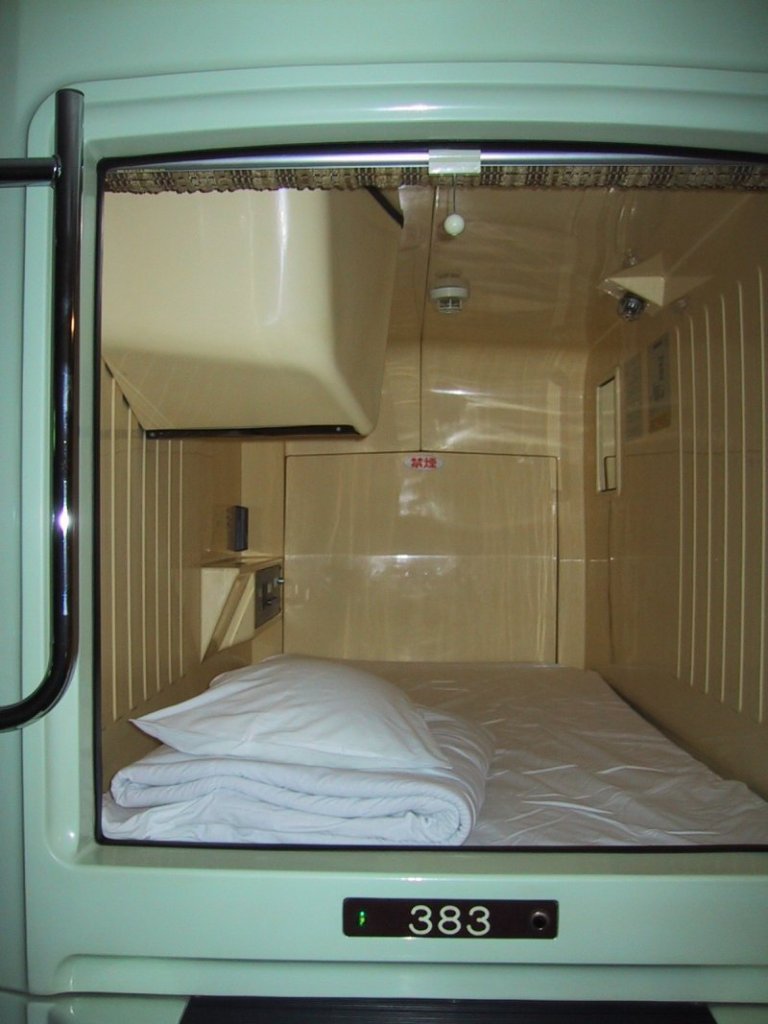
I have stayed in capsules (also known as pods, or coffins if one is feeling disparaging, or claustrophobic) in Singapore, Bangkok, Jerusalem, and Phnom Penh. But this is the first time I have stayed in a purpose-built capsule hotel. Japan, of course, is where this method of accommodation originated, with the idea that drunk salarymen who missed the last train home needed a cheap place to sleep, sober up, and start again in the morning. It’s the same thought process that leads convenience stores in Japan to sell underwear and socks. For budget travellers in a country known for being tough on even a generous travel budget, they are an ideal alternative to hostels, providing a place to sleep, attend to personal hygiene, and to have a tiny piece of privacy, which is in short supply in Tokyo.

By Chris 73 / Wikimedia Commons, CC BY-SA 3.0, https://commons.wikimedia.org/w/index.php?curid=19656 Same model capsule as in my hotel.

Two things bugged me about this capsule hotel. The first being the fact that even with my multiple-night booking, I still had to vacate the hotel by 1100 every day, and my belongings evicted to a tiny locker or the luggage storage room on the top floor. The second was the public baths, which were the only option for bathing for men staying at this hotel.

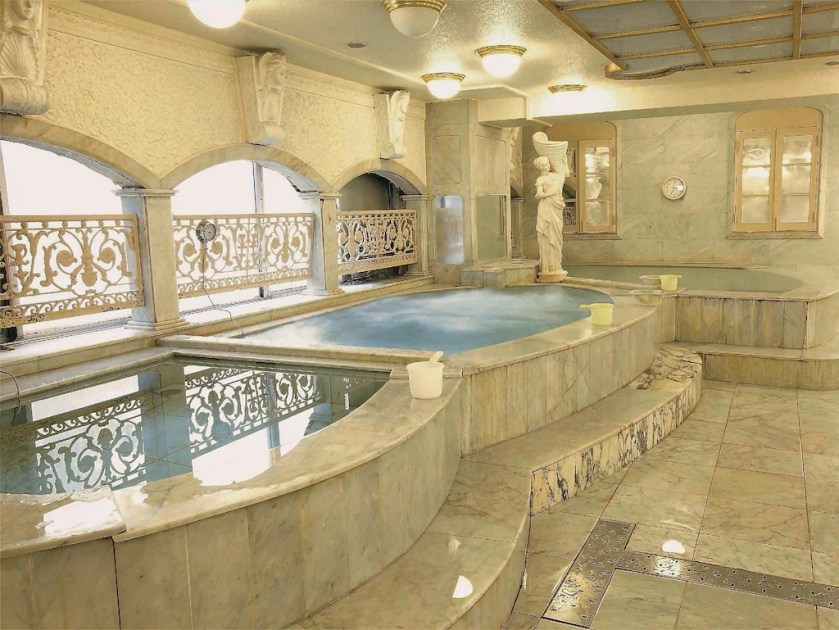
You strip naked at your locker, and enter the main bathroom, where you sit at a plastic stool set in front of a set of taps and a wall-long mirror. Shower gel and shampoo are provided, and here is where you lather up your entire body, scrub, and then rinse off. Once you are clean enough, you are free to have a soak in one of the spa baths or use the sauna.

Naked men omitted.

Now you are clean and relaxed, you sit at what amounts to bathroom sinks, and brush your teeth, do your hair, shave, etc.. Still, during all this, you are supposed to be completely naked. Once again, I was supplied with a hair dryer with no hair to dry. Once you are satisfied with your appearance, or at least manage to delude yourself that you are in fact highly attractive, you discard your towel and dress in the super sexy robes provided by the hotel, and lounge around for the rest of the night.

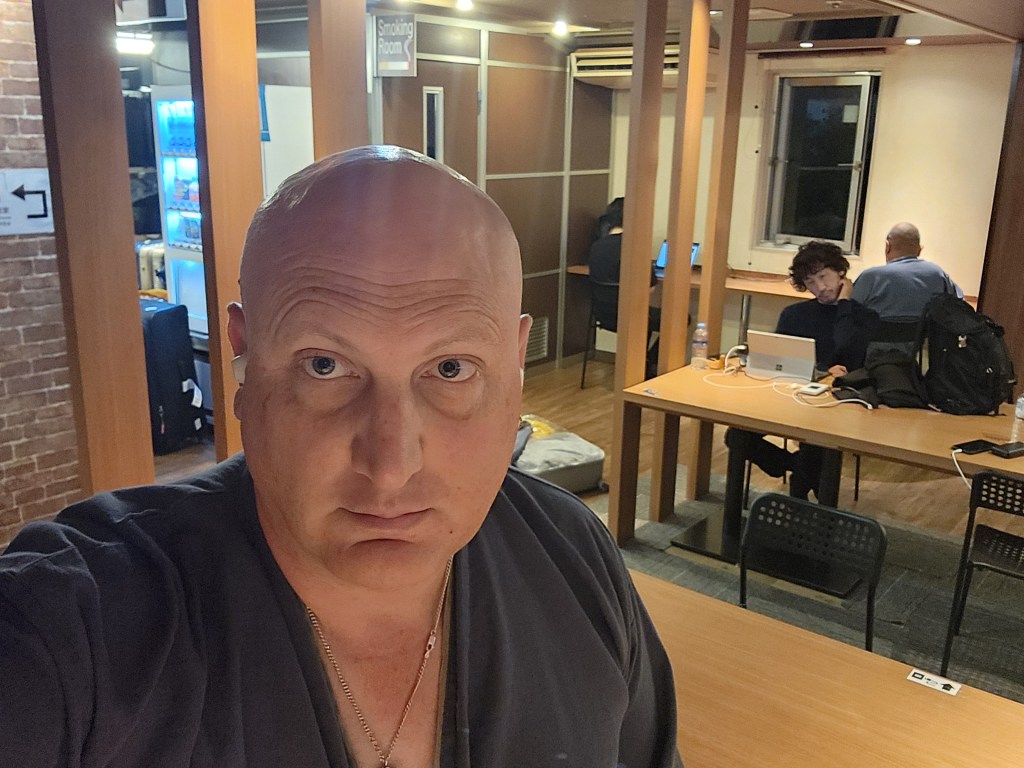
With every selfie, the eye bags get a little bigger.

The Japanese, of course, take all this nudity in their stride. It’s part of their culture, and I suspect they think no more about it than I do when getting changed at gyms. They don’t exactly strut around, but act as if its the most normal thing to be naked, which of course it would be if we didn’t get screwed over by a snake.

Numerous times in my five-night stay, I used this shared space every night, and every night I noticed a new resident walk in, look confused, look for the shower stalls they were expecting, before trying to look nonchalant and getting on with it. Most notably was a six foot six African gentleman, who had more muscle mass in his neck than I can claim all over, looking around bashfully, trying to wrap the towel around himself modestly (they seem to be made so you cannot quite do this) before getting on with it like everyone else. This was in constrast to the fact that he had nothing to be bashful about, having a body that most of us are envious of.

At first I was also awkward, but after the second night, I got used to it and enjoyed the process. Then it got routine, then tedious. By the last night, I was wishing I could just have a quick shower without getting involved in a ritual. I was also thinking that at some point I was going to get up arse up, slipping on the slippery tiles-Who thought that was a good idea? I’ll tell you one thing about bathing in company, it does wonders for your willingness to take your time washing everywhere when you are surrounded by men doing the same.

A Coffee Tour of Tokyo

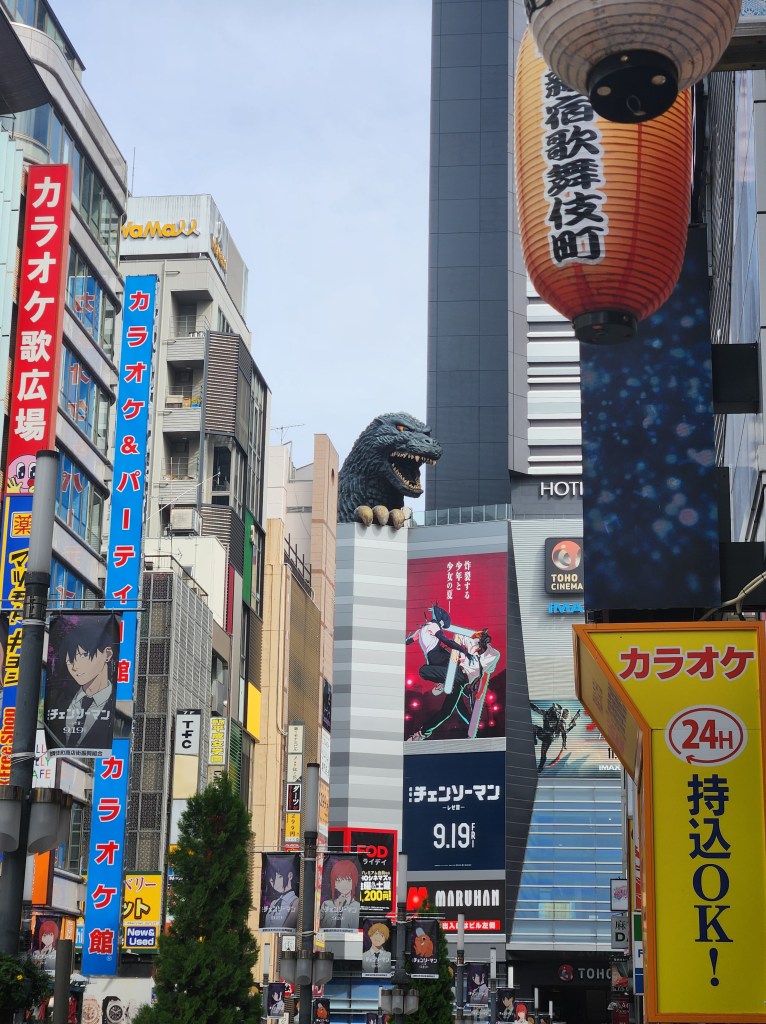
Having managed to escape the airport and get the Limo Bus to Shinjuku, I promptly got lost and ended up in the heart of Kabukicho, which at least let me take a photo of one of the prominent landmarks.

I was very glad I knew about this, and was entirely sober.

Once I got myself geographically sorted, I arrived at my capsule hotel. Predictably, they were in the process of kicking people out rather than letting people in, so I dumped my bag with the big pile of other luggage at reception. I had barely slept on the plane, and my central nervous system was making unreasonable demands for sleep, intimacy, and stimulants. Only one of those things was practical and readily available for purchase. It was time for coffee, and what better way to start getting my head around the place than a coffee tour?

Lawsons, Shinjuku.

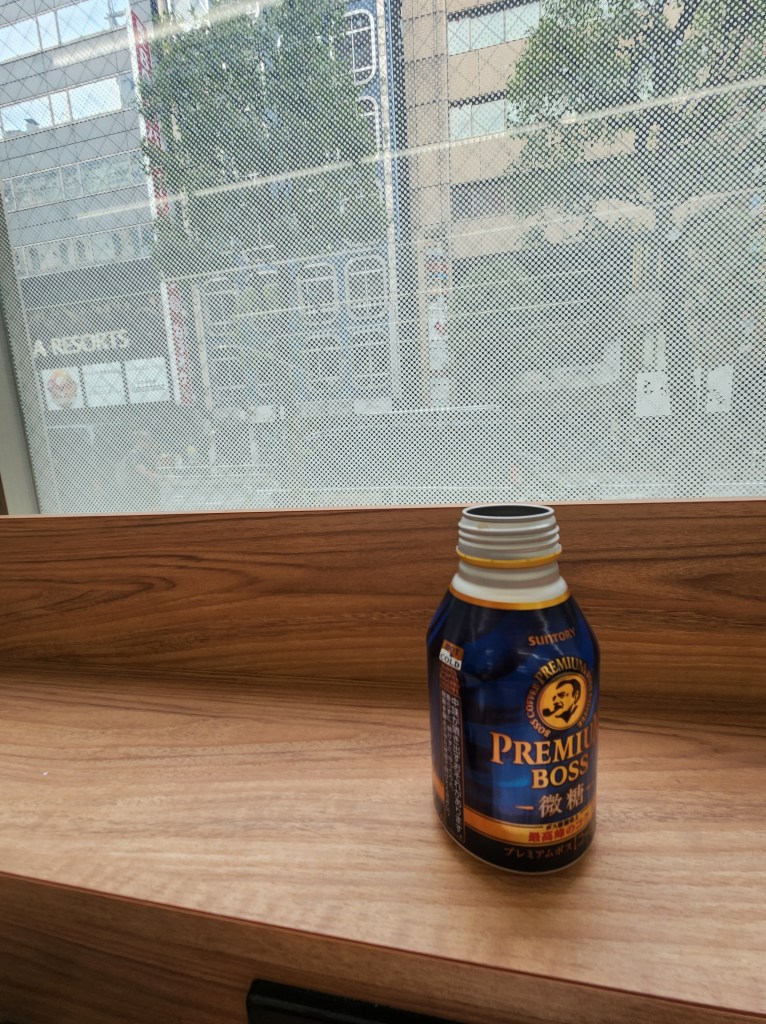
Coffee in a can.

My first caffeine hit needed to be convenient, immediate, and no-nonsense. I managed to find a Lawsons just around the corner from the hotel. It tasted like you would expect coffee in a can to taste, overly sweet, a little metallic, but had the intended effect. Mostly, I choose it because Suntory makes some excellent whiskey. While I was there, I also managed to withdraw some cash from their ATM. 6\10, iced coffee might be the only thing Australia does better than Japan.

Tomato Cafe, Shinjuku

Classy.

A short walk from my hotel towards Kabukicho, this place reminded me of Dome back home, only with Italian pretensions. The place was showing a lot of wear and tear, but the cappuccino was quite decent, and by now I was feeling human enough to read my Kindle. 7\10, loses points for the chipped furniture.

Maid Dreamin, Shinjuku

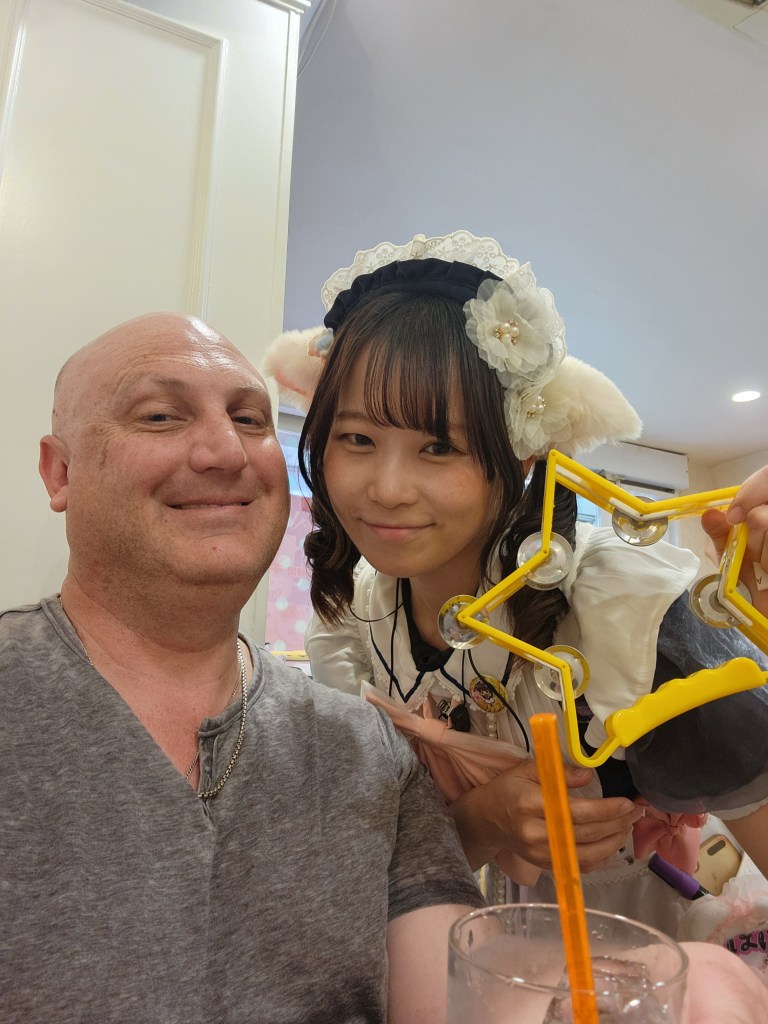
I should stop being in selfies with people cuter than me.

Maid Cafes are common, with various franchisees and concepts, Maid Dreamin being a more generic form as far as I can tell. For a considerable sum, I enjoyed a fairly bland coffee, which featured a magical incantation, and from a distance (courtesy of a group of Americans) a dance performance. I felt ludicrous, but did enjoy the attention, specifically non-sexual, as it was supposed to be from my maid. While I am certainly not immune to kawaii, the whole experience was a little too close to some boundaries I have. 7\10, a fun but one-time-only thing.

Warhammer Cafe, Akihabara
For the Emperor!

I am a big Warhammer 40K nerd, I read a lot of the books but don’t play the game, as soon as I discovered they had this in Tokyo, I knew I had to have a look. The cafe was really just a counter, and I had to take a seat at a bench set up for painting miniatures, and it did take quite a long time to get my latte. While I waited, the manager sat next to me and had a chat, mostly about the hobby and maid cafes, which he informed me about a cyberpunk-themed maid cafe around the corner, which sounded interesting, but I never ended up visiting. I enjoyed some people watching, noting with interest that quite a few couples were walking in and having a look around- proving that indeed some 40K fans have known the touch of a woman. But after a quick look at the displays, there was nothing to keep me here, and I departed. 6/10, would not go out of my way to have coffee here again.

Glitch Coffee, Ginza
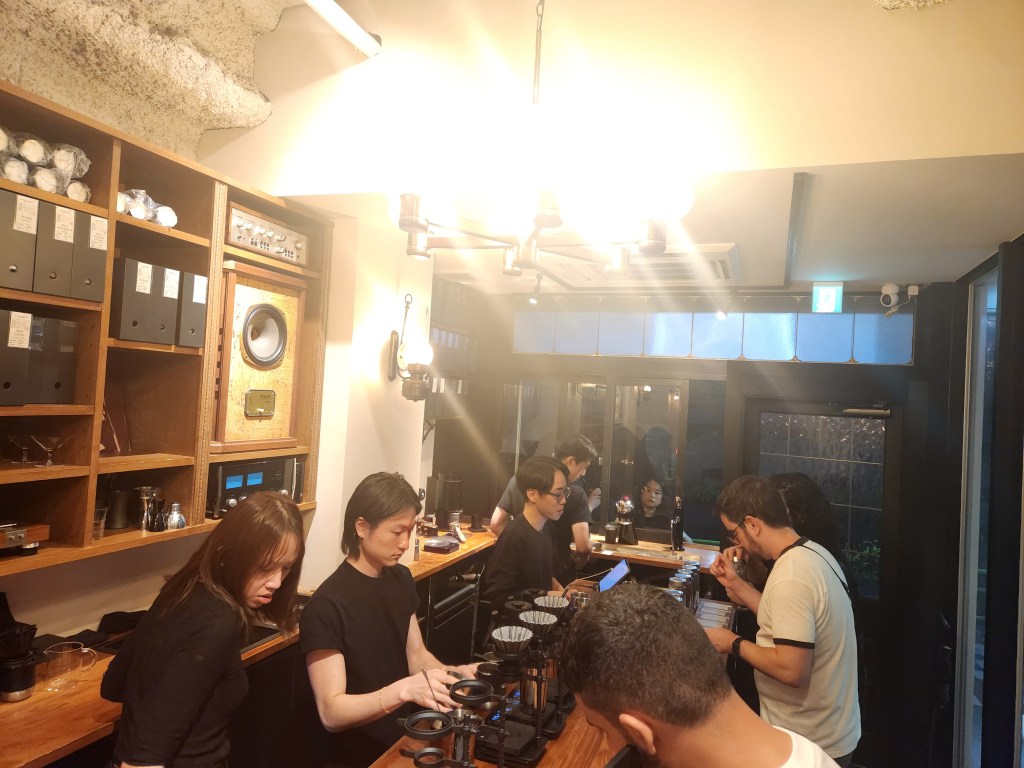
“Staff will wear black, customers white, no exceptions”

Down a side road just off from the main shopping area, my Google searches often resulted in mentioning this place as the best coffee in Tokyo. I had to line up for half an hour outside the shop. At first, I enjoyed the wait, listening to the Russian spoken by the couple in line in front of me, and trying to start a conversation with a Japanese man wearing a vintage Nick Cave shirt walking past with his friends. This turned to frustration when it became obvious that the Russian couple gave every indication that this was their first outing without supervision, having a lengthy and ultimately one-sided argument with the staff about their payment policy ( I thought everyone knew by now that having both card and cash is always a good idea when travelling?). Then I was allowed in and able to sniff some beans before ordering. I ordered a short machhiato and selected Catubba Bourbon beans from Colombia. Rather than be seated near the Russians, I sat at the bar and within a few minutes had my drink in front of me.

The average person has between two thousand and ten thousand tastebuds, I now know I have six thousand, six hundred and three. Each tastebud in my mouth started singing Accidentally Kelly Street by Frente! as soon as the crema hit them. When I finished my coffee, they started sulking, knowing that they would never be so happy again. I didn’t linger after my drink and headed back to the train station. When I checked my banking app I realised that while that drink was pricy, it was still cheaper than what I paid for Maid Dreamin, so I felt further justified in going out of my way for this experience.