There are provinces in the north of Laos that are entirely forgotten by the government, the roads are barely passable at the best of times, resulting in a situation where the only reliable transportation is by boat, on that ever-present Mekong River. There was nothing further for me in Laos, except the near-legendary slow boat to Thailand.
On the shared taxi to the pier, I met the Westerners I would be sharing the journey with. Four beautiful but highly aloof Dutch girls, an extremely conceited Swiss man, a Japanese couple, and an Australian music producer doing the digital nomad caper. The boat was bigger than I expected, which was somewhat comforting to my caffeine starved mind, something I managed to ease further after I spotted eskies outside a hut and purchased two Birdy iced coffees.
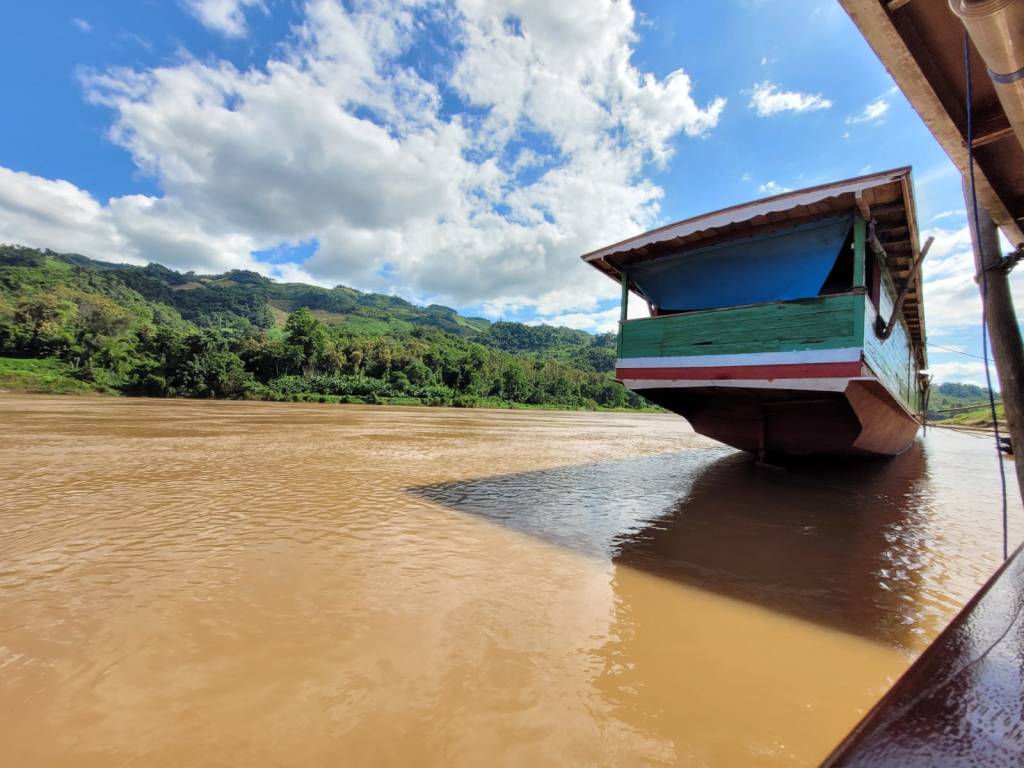
We made our way upstream under the loud, low-revving Diesel motors, as our captain piloting a convoluted path, whether to avoid the strongest currents or to avoid underwater hazards I had no clue.
Having attempted, and failed to engage my fellow passengers in conversation, I turned my attention to the views. The Mekong here is nestled between high hills, leading to some dramatic landscapes.
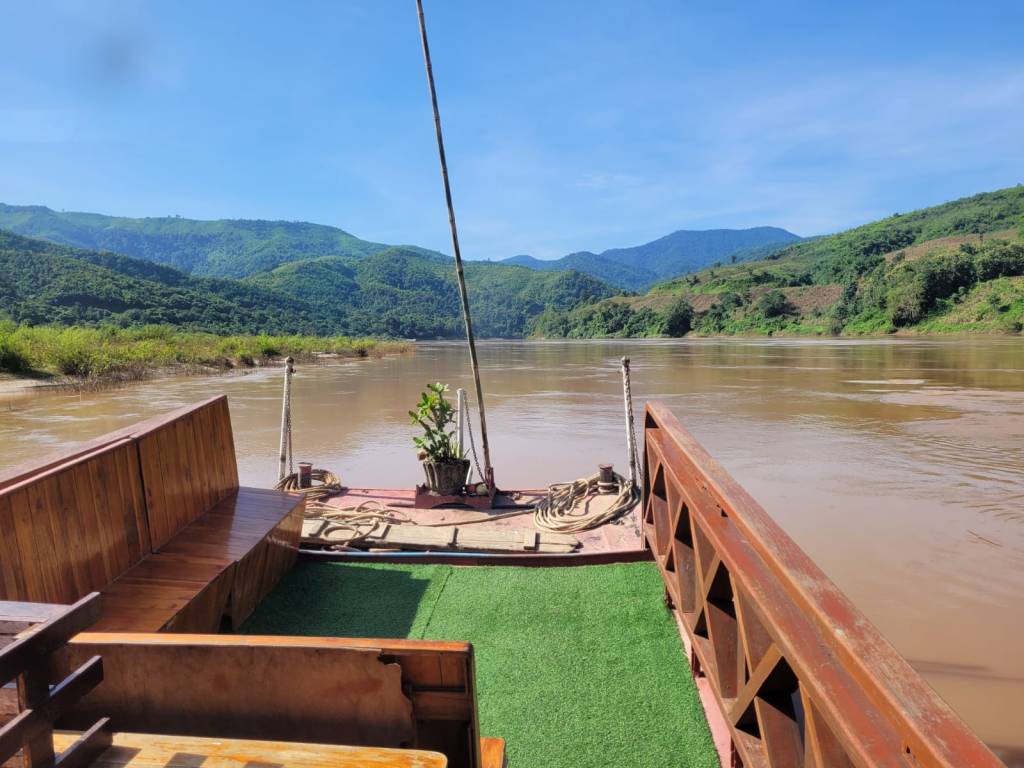
Some buildings dot the river banks, most were humble, which in Laos can be nothing more than a lean-to made from scrap materials. A number of bridges cross the Mekong, many half finished, no doubt stalled by sudden lack of funds, or interest as political forces waxed and waned. Judging by the vegetation growing around the stark concrete pylons, progress had been stalled for years.
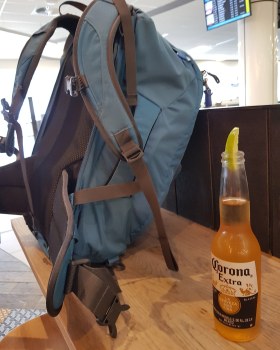
After a few hours I got bored, and turned to my Kindle, and when cell-phone towers got close, tedious Youtube videos. At eleven o’clock I decided boats are like airports and its never too early for beer. After ten hours on the water, we arrived at Pekbeng. I had booked the night’s stay at the unimaginatively named Pekbeng Guesthouse, a two minute walk from the pier. I took great satisfaction in checking in while the Eurotrash was still trying to get their luggage and bodies into a truck. An hour later I was eating a curry dish while the family who owned the guesthouse watched a trashy TV show, the situation mired when half -way through the meal a cockroach scarpered over my table.
The next morning I woke early and walked to the pier, which was worth it for the light shining onto the river.

The second day was very similar to the first day, and this time I made sure I had my notebook with me to keep myself occupied. I landed in Huang Xai, walking the two kilometres along a faded promenade, much to the amusement of school children and dog walkers. My hotel room in Huang Xai was lovely, and featured a balcony helpfully overlooking an alleyway instead of the river. I stayed for one night, which was enough to book my onward trip into Thailand, and enjoy my last Larp dish, a few Big Beer Laos and a sundae to burn through the last of my Lao Kip.
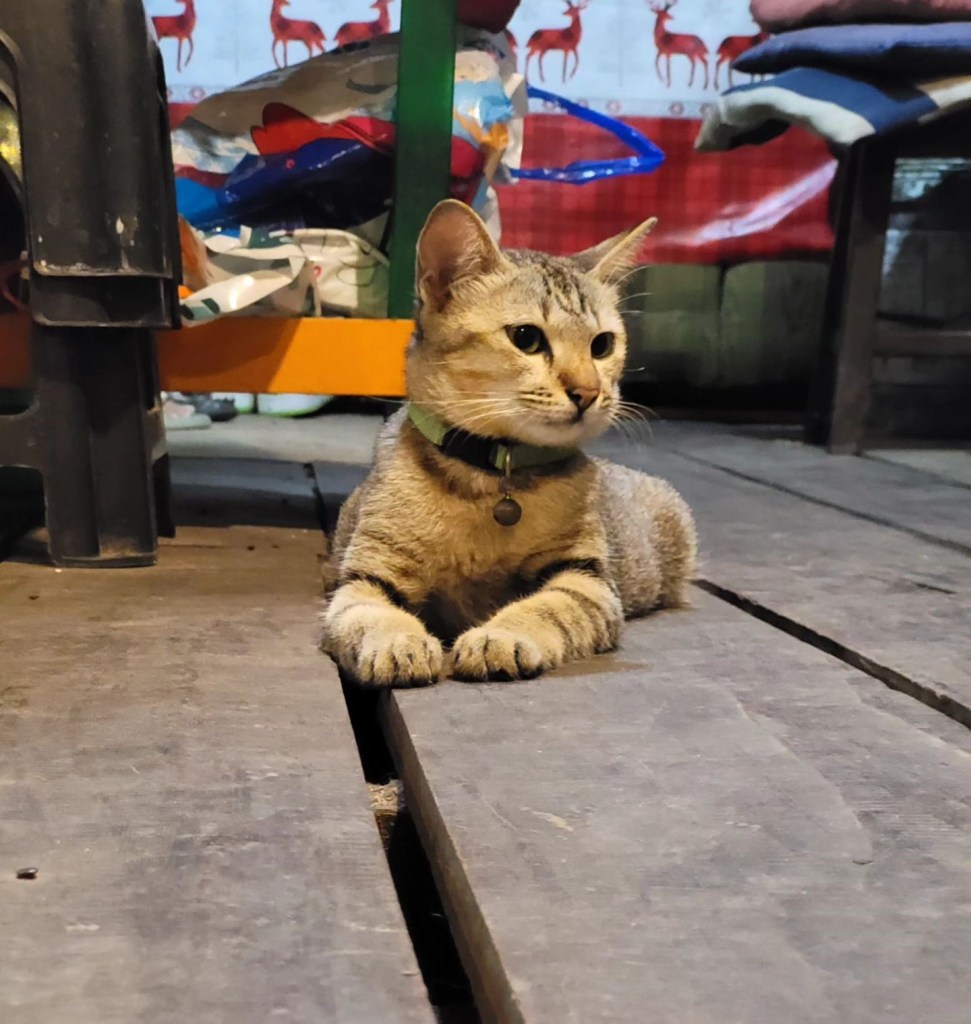
In the early morning light I walked to the hostel I was to meet my guide half an hour early, to discover my flawlessly polite guide was already waiting for me in his Landcruiser.
Apparently I was the only one who booked today so we set off. My guide drove us towards the Lao-Thai Friendship Bridge, where I was stamped out of Laos. A bus took me across the bridge, and at the Thai border my Australian passport granted me my first free entry into a country since Hong Kong. I was picked up at the other end by my previous guide’s Thai offsider, who was less useful, who managed to hit a stray dog on the way to Chang Rai. I stayed in Chang Rai just long enough to buy a local SIM card, get some coffee, and then on the bus, where I was seated next to a head-scarfed older lady who made it abundantly clear she didn’t want to sit next to me.
If you liked this post, please check out the rest of the posts from this trip here!
 Adrian's Got The Moose