
The next day, I made the mistake of spending ten minutes arguing with a tuk-tuk driver to take me to the actual oasis of Siwa. Note to self, never engage the services of anyone wearing Tommy Hilfiger, they have an excessively high opinion of the value of their services. The driver dropped me off near a closed cafe on a causeway through the oasis, and while the landscape had an undeniable desolate beauty, the oasis is huge, and any plan to walk around it was pointless.
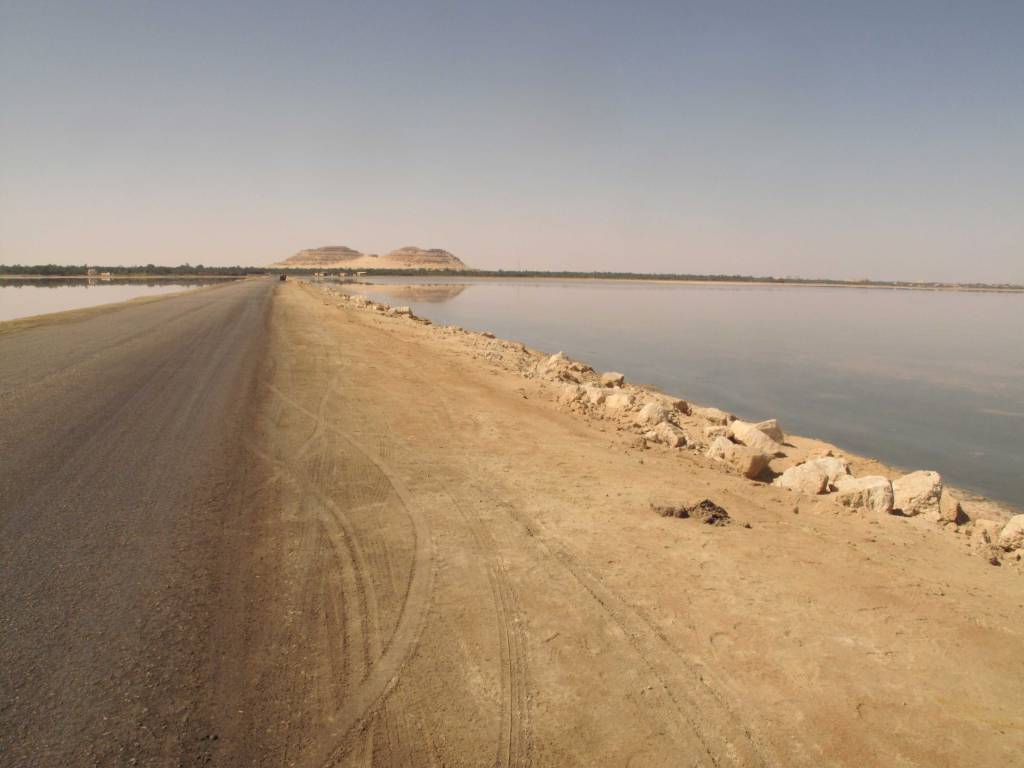
There was no vegetation to offer shelter from the sun anywhere in sight, and very little of anything else. I suddenly felt very foolish as I took a few photos and started walking back towards town. Luckily ten minutes later, a couple in a late-model Toyota Land Cruiser pulled up, and I managed to bag a lift. I jumped in the backseat, and while the couple, several social and economic levels above anyone I had interacted with in Egypt so far, chatted to themselves in Arabic that seemed more melodic than the Egyptian dialect, I tried to look non-threatening and not sweat on their leather seats. They dropped me off in town near the mosque, and I didn’t insult them by offering payment, but did thank them profusely and shake hands with them before we went our separate ways.
After a few iced coffees and a light lunch at a nearby cafe, I realised there was only one thing I really needed to see in Siwa before moving on.
Shortly after I arrived at Siwa, I spotted a partially ruined fort on the hill overlooking the mosque, and I was immediately intrigued.
From where I started, Google Maps led me through a rubbish-strewn alley, along a loose wall of bricks, then advice from a traditionally-garbed man led me through an abandoned home and another alley. I squeezed past some parked motorbikes and unceremoniously dumped myself in an alleyway I was in on my first night in Siwa, which I could have simply walked to from where I had dinner the night before. Stairs hewn into the bedrock led me uphill, and to the ancient mosque, the only part of the fort still in official use.
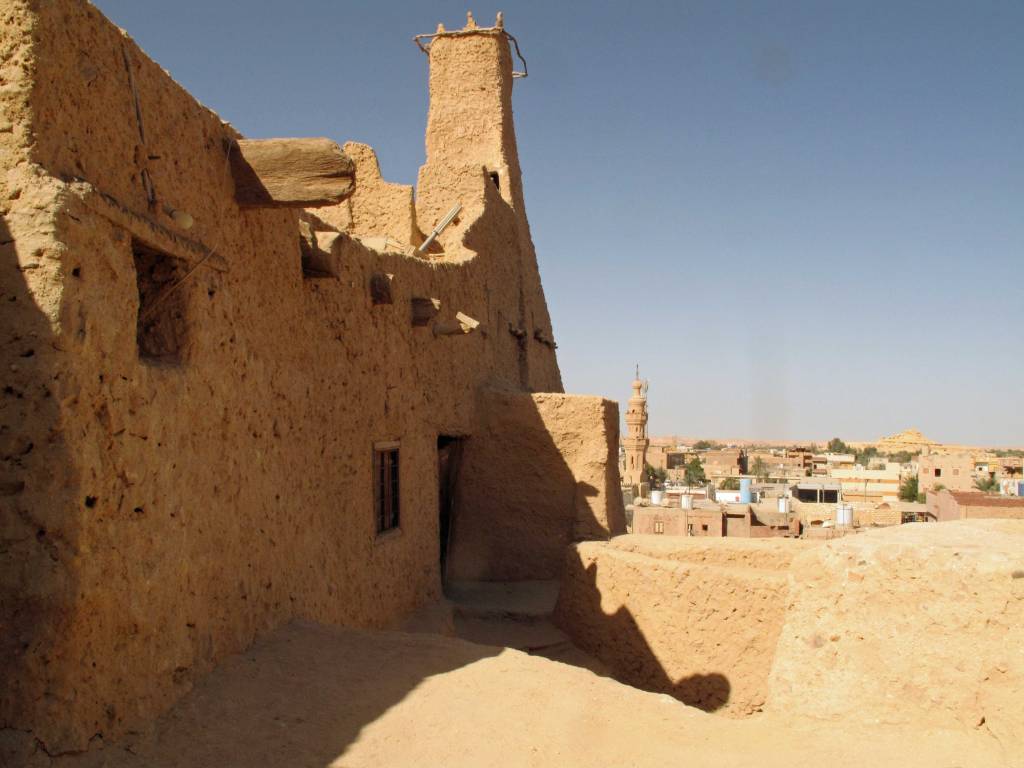
While I didn’t see anyone around, it didn’t seem like the kind of place people would have liked me poking around, especially considering my complete lack of Arabic, so I continued uphill.
Amongst the ruins, I spotted walled sections that seemed to feature either toilets or small wells, along with a small handful of buildings that were either very small homes or storage rooms, which showed signs of use and upkeep.
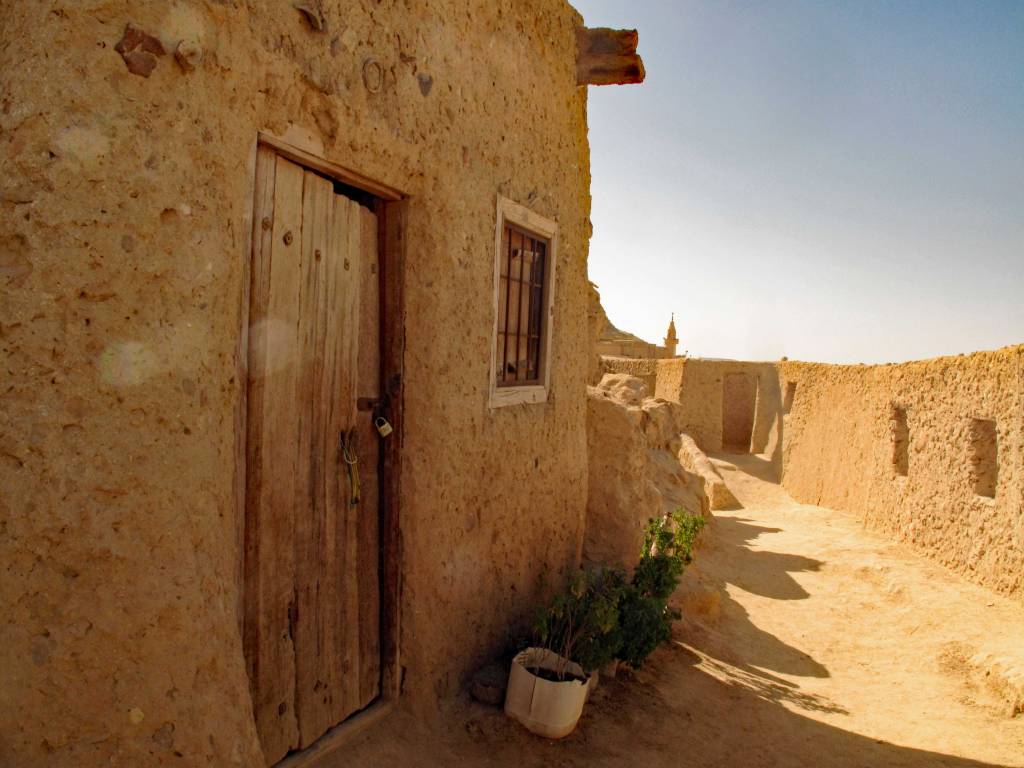
Finally, after scrabbling up worn steps and avoiding an incredibly attractive couple making out while taking selfies, I reached the top.
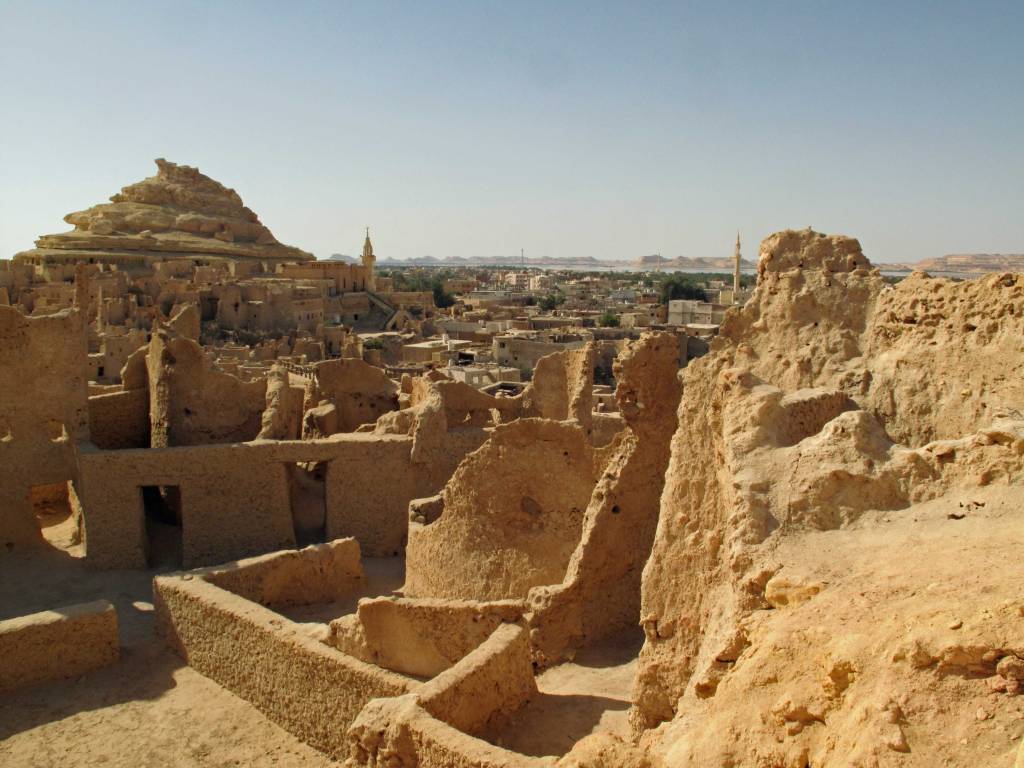
Shali Fortress was built in the twelfth century by Siwi Berbers to defend against the Bedouins. It was constructed from kercheif, a mixture of rock salt and clay. The walls survived many attacks and the passage of time until three days of rain in 1926 caused considerable damage. In 2018, locals, many of the descendants of the original Berbers, partially rebuilt the fortress.
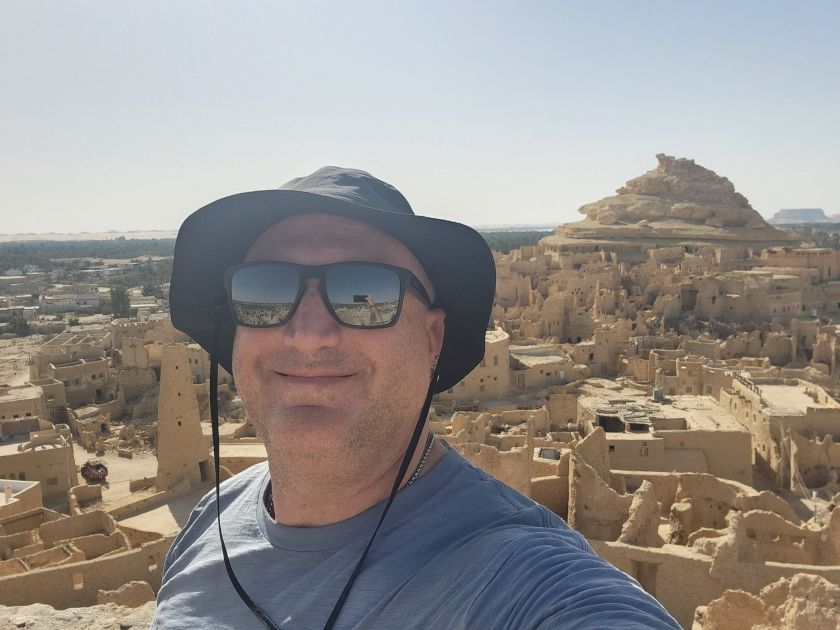
By the time I reached the top, my camera was starting to have issues, so I only have a few phone pics to show for my trouble. I could not help but think about how many people lived and died defending this fort. I suspect I only scratched the surface of the history of this place, and would dearly love to find some books written on the subject. Sadly, I struggled to find a path down to what I thought of as the town square of the fort. I could have done with a guide.
 Adrian's Got The Moose