I left my home during a solar eclipse. I crossed forests and rivers, mountain passes and glaciers. I shared meals with princes and beggars, shared fires with soldiers and priestesses. When I reached a great desert, I drank tea with a Bedouin and traded my watch for his camel. He had no need to know the time, but he liked the way it caught the desert sun on his wrist.
I named the camel Daisy and rode him for countless days, until he expired on the edge of an oasis. I buried him and drank my fill, then continued on for countless more days.
When I knew I could walk no more, I looked up and saw the Sphinx, and fell to my knees.
“Oh Great Sphinx, which way should I go?” I asked, my voice barely above a whisper, cracking with thirst.
The Sphinx yawned, stretched his great paws, and looked down at me balefully and spoke.”Where do you want to go?” His voice was like granite boulders rolling down a mountain, in no particular hurry.
“I don’t know,” I said, knowing I would be crying if I had the water to spare.
“Then it doesn’t matter.” The Sphinx replied.
Confused, I asked, “Wait, didn’t you steal that straight from Alice in Wonderland? “
The Sphinx yawned again and stated, “You try being original for five millennia, then we can talk about plagiarism.” The Sphinx closed his eyes and began gently snoring.
“You were a big help,” I muttered darkly. I stood up, swaying in the desert wind, turned around, and started for home.
There are three things I need you to understand about the Pyramids of Giza.
It doesn’t matter how many photos, videos, blog posts, articles, and documentaries you have consumed about this place; nothing will prepare you for just how impressive they are in person.
Every bit of statue, carving, every sarcophagus, every column, every obelisk that can be dragged away and taken to a museum or private collection has been. This leads to visiting the Pyramids to be a stark experience, devoid of context.
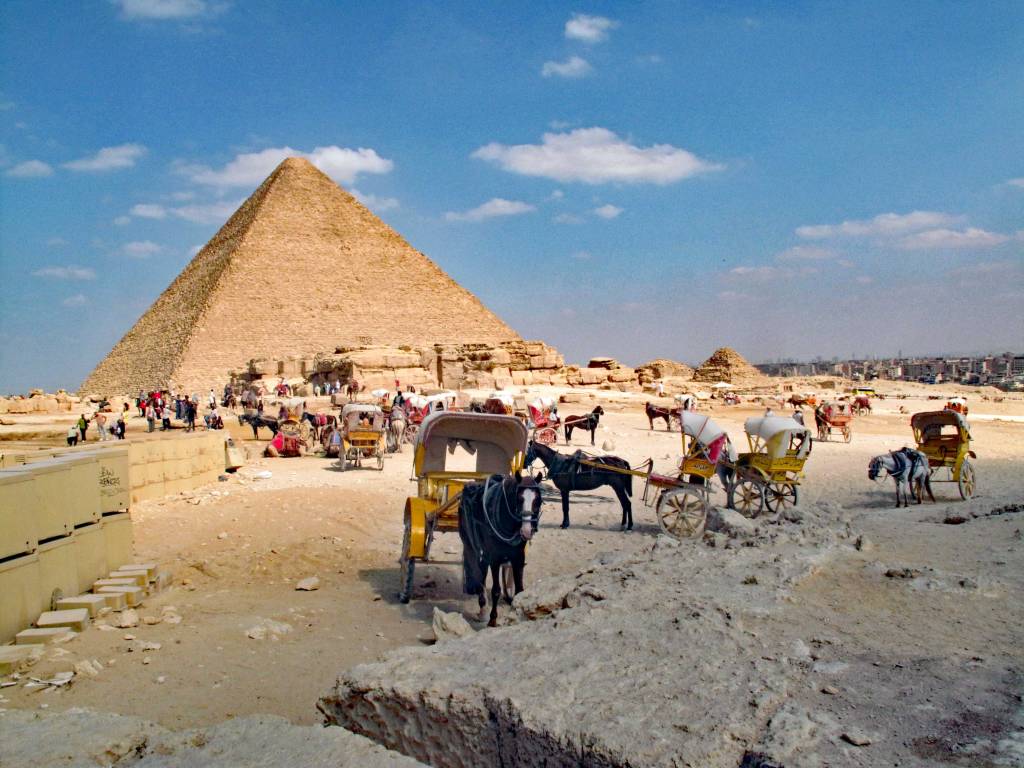
You cannot escape the overwhelming miasma of horse and camel shit.
After managing to avoid my Uber driver’s efforts to have a tour through his brother-in-law’s, fighting my way through the touts, and paying the exorbitant entry fee, I passed through the security as if I was some dubious English lord looking for a nice piece to hang over his mantle, and was let loose inside the Giza Necropolis.
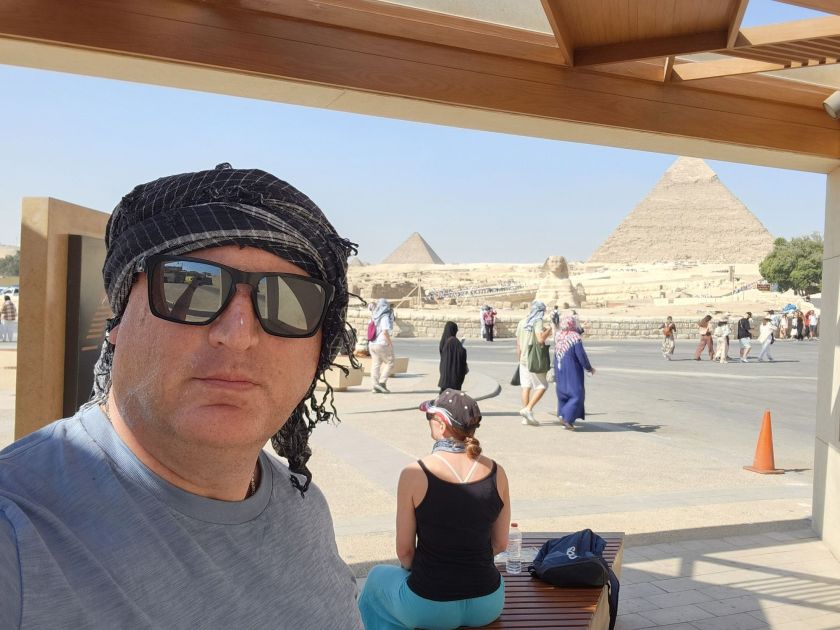
Just past the gate was a modest pavilion, and I stopped there to apply sunscreen to my delicate skin. This is where I saw my first glimpse of the Sphinx.
You kind of have to squint to see it, unlike the sunscreen on my nose.
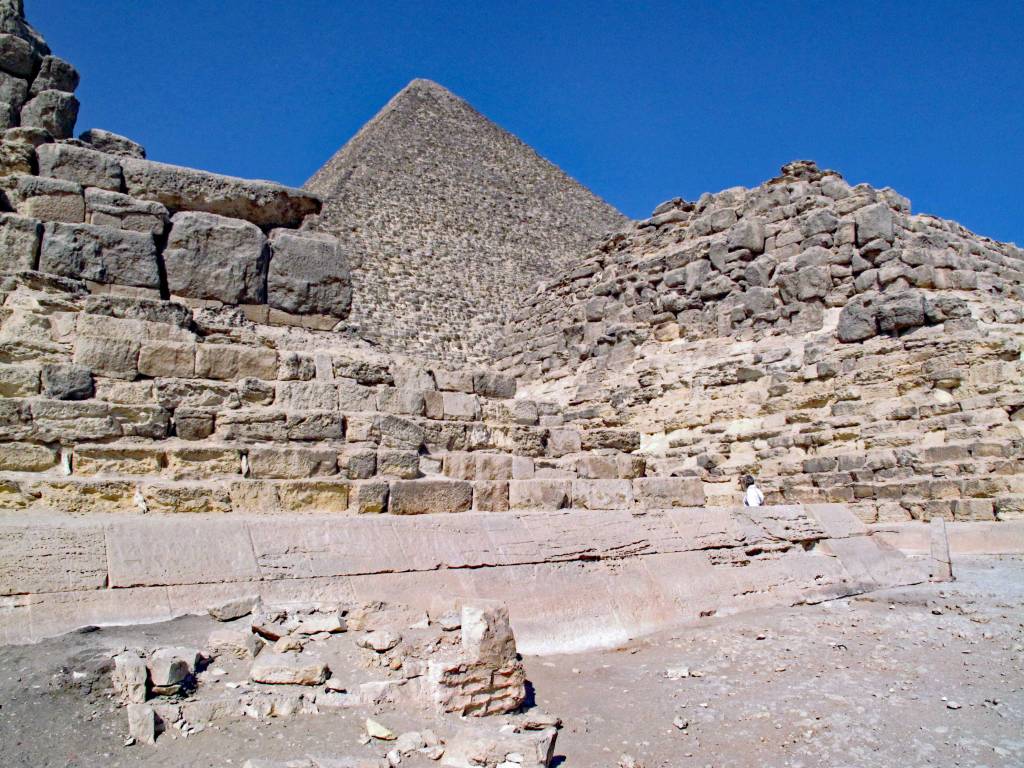
The way to the Sphinx was unclear, which I suspect was on purpose, so I walked uphill to the tomb of Meresankh III, Queen and wife of Khafre.
Tomb of Maresankh III
It was a comparatively modest structure that I enjoyed exploring despite various touts yelling at me at all times.
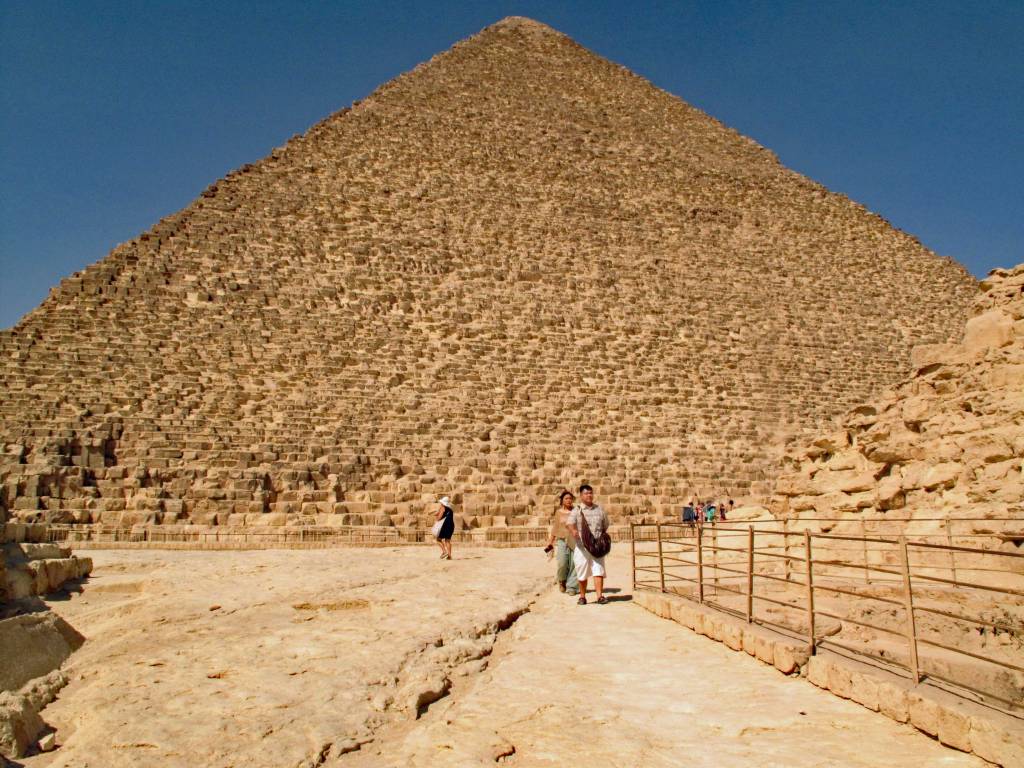
I moved on to the Great Pyramid of Giza.
Great Pyramid of Giza
Correctly known as the Pyramid of Khufu, it has lost eight metres of its height due to the pillaging of its limestone shell, but the one hundred and thirty-eight metres left was still enough to leave me dumbfounded. This colossal structure was the largest man-made building for three and a half millennia. Even with access to modern trucks, cranes, loaders, and diamond-tipped saws, the logistics to recreate it today would be staggering. It’s also the only one of the Seven Wonders of the Ancient World still standing to this day. After walking around the pyramid and taking in its majesty, I moved on to the Pyramid of Khafre.
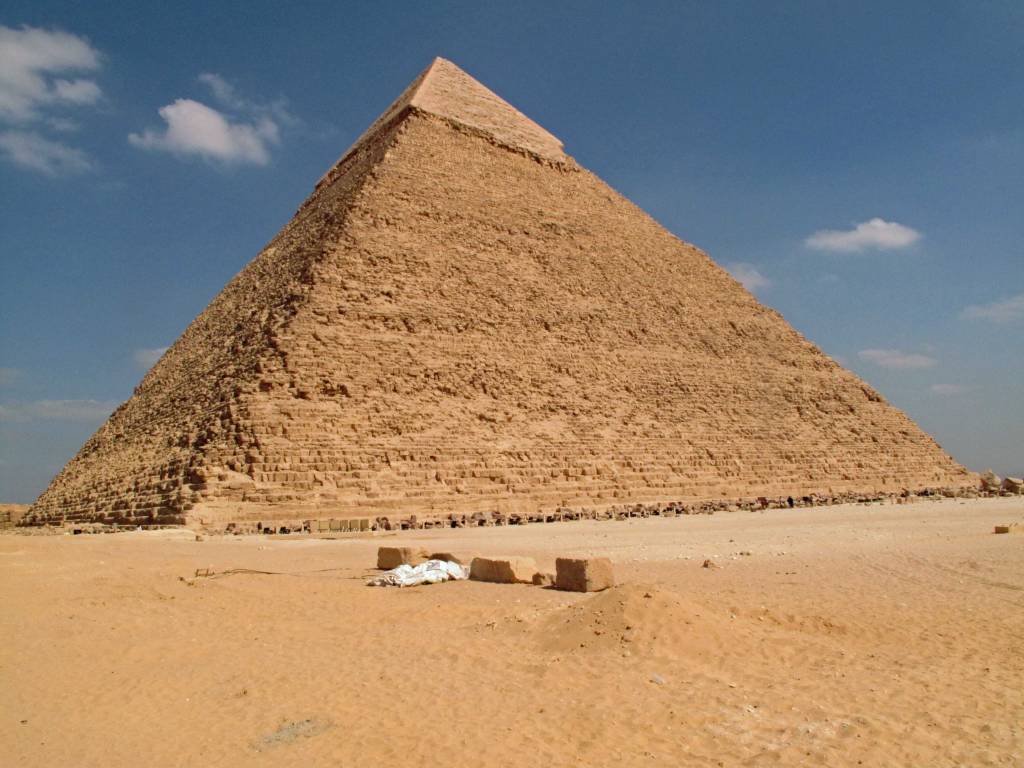
Tried removing that white thing 😦
The middle-sized of the Great Pyramids, it’s perhaps the most striking of the three due to the limestone cap that still remains to this day. Here I could have paid extra to go inside, but my claustrophobia and early-trip cheapness prevented me from taking advantage of this.
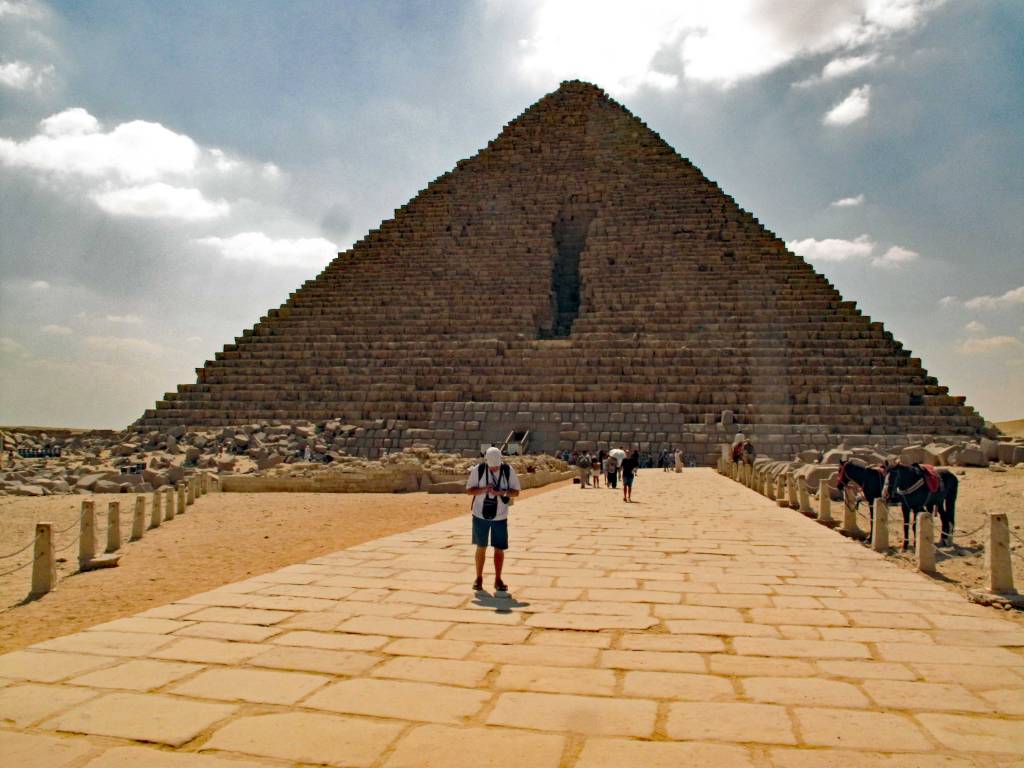
The third of the Great Pyramids is the very much reduced Pyramid of Menkaure.
Pyramid of Menkaure
It stands at sixty-one metres high today. The large vertical gash is the result of the Sultan of Egypt’s efforts to demolish it; luckily, after eight months, this act of vandalism was abandoned.
By now, I was getting worn out and baked in the sun, and I followed a group of tourists who seemed to be walking with confidence, hoping they would lead me to the Sphinx.
Too many horses, not enough people willing to ignore their condition.
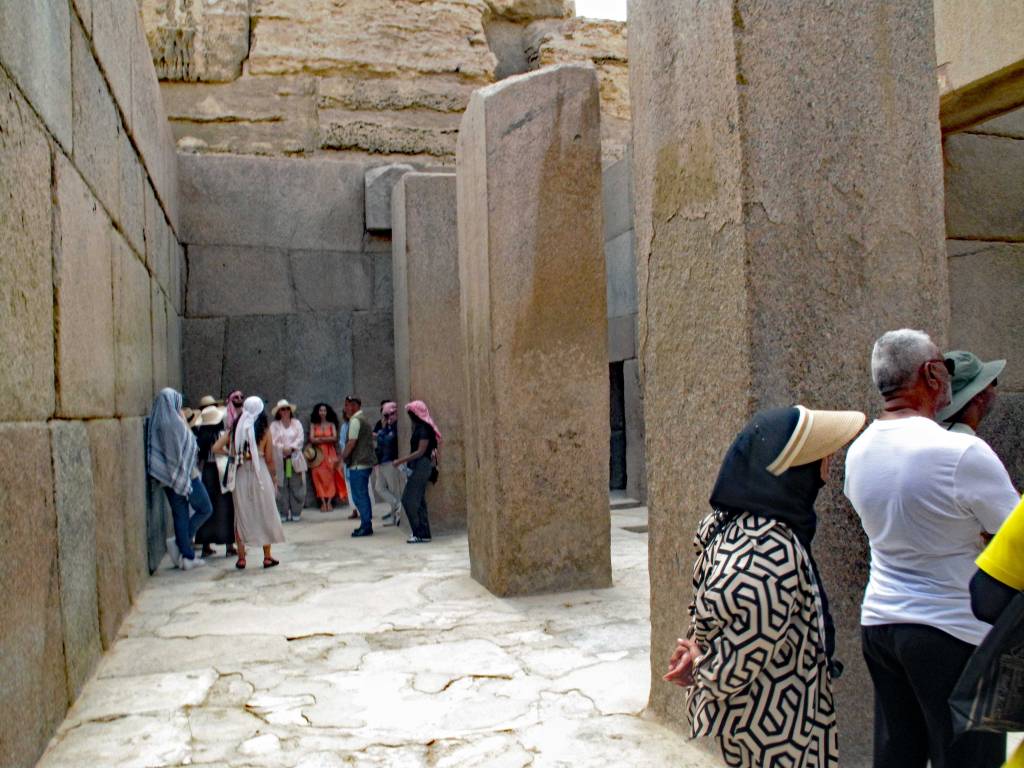
This area seemed to be where the freelance horse carriage operators congregate, away from the Great Pyramid scammer bros. I managed to find the entrance to the Sphinx, which was through the Valley Temple of Khafre, who was also one of the suspected builders of the Sphinx.
Partly restored.
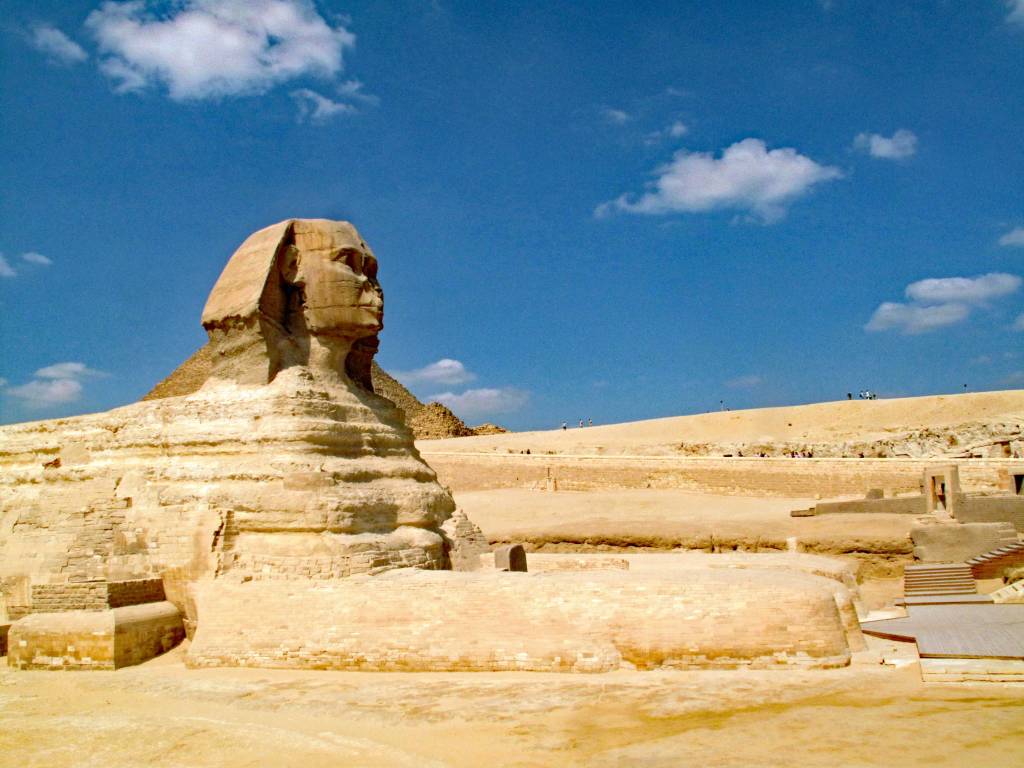
Once I made my way through the temple, I climbed a causeway with a view of the Sphinx, which is the closest one can get without bribing a guard or jumping a fence.
Great Sphinx of Giza.
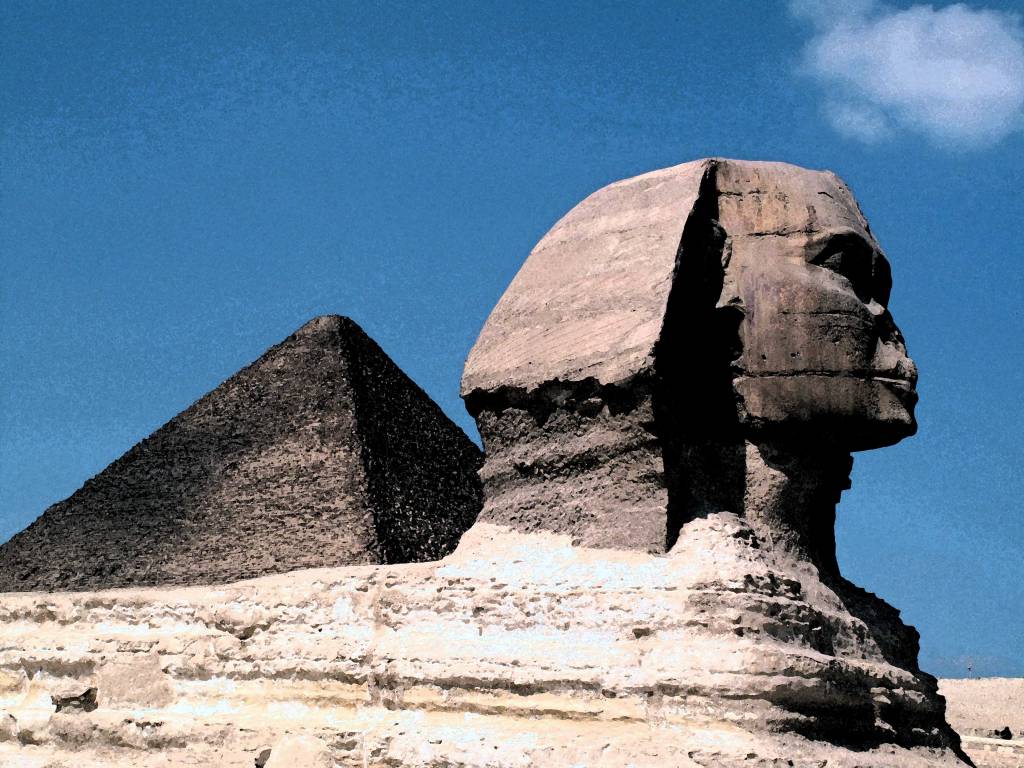
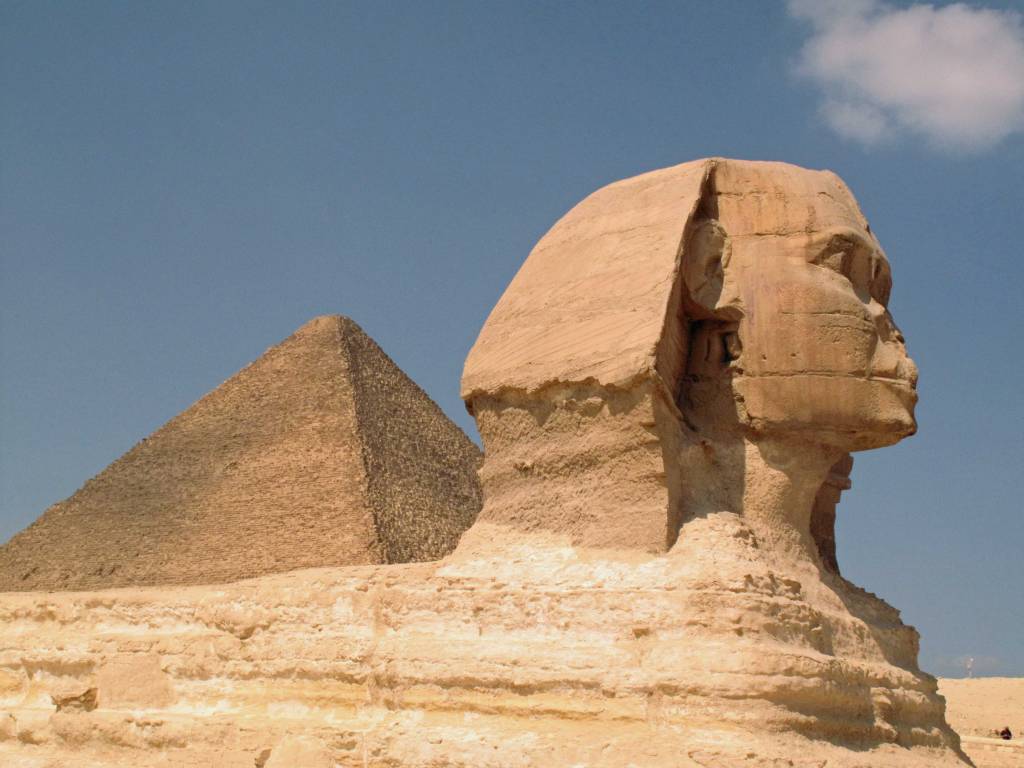
Standing taller than the nearby Pyramid of Menkaure, the Great Sphinx of Giza (It’s certainly not the only one; it’s a common motif) has been the stuff of legends since it was carved from the bedrock over four thousand years ago. I grew up reading fairy tales featuring this enigmatic statue. Including ones where the statue is alive and poses riddles to weary supplicants.
I managed to hold off on taking a selfie snogging this ancient monument, which at least placed me in the minority of the crowd on that day. He or she deserves more respect than that. I sat on the stone wall lining the causeway for a few minutes, simply soaking up the view as much as I could while tourists milled around me, taking photos from every available angle.
Great Spinx of Giza, with the Great Pyramid of Giza in the background.
 Adrian's Got The Moose