Valley of the Kings Part III

Continued from here…

If carving tombs underground instead of building massive pyramids made anyone think the Pharaohs were done with massive building projects, they would have been sorely mistaken.

The Mortuary Temple of Hatshepsut was built into the cliff face on the other side of the Valley of the Kings, and I believe it is every bit as impressive as the Pyramids of Giza.
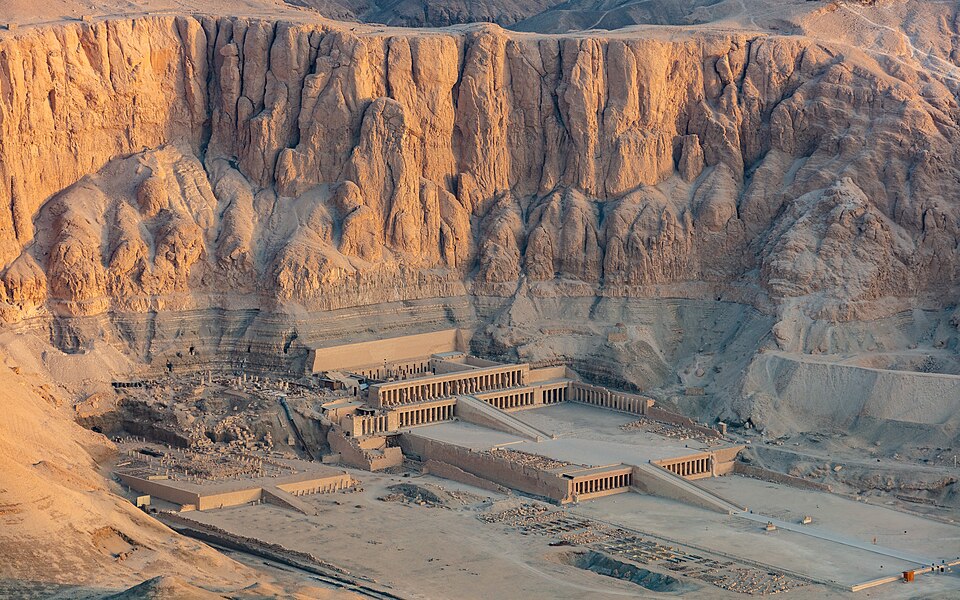
Aerial view. Attribution: Diego Delso

Three terraces lead to the main temple, with a central causeway that is guarded by a Sphinx on either side. One of each has been restored, gazing benevolently at visitors, and the other features the original, half-destroyed head.
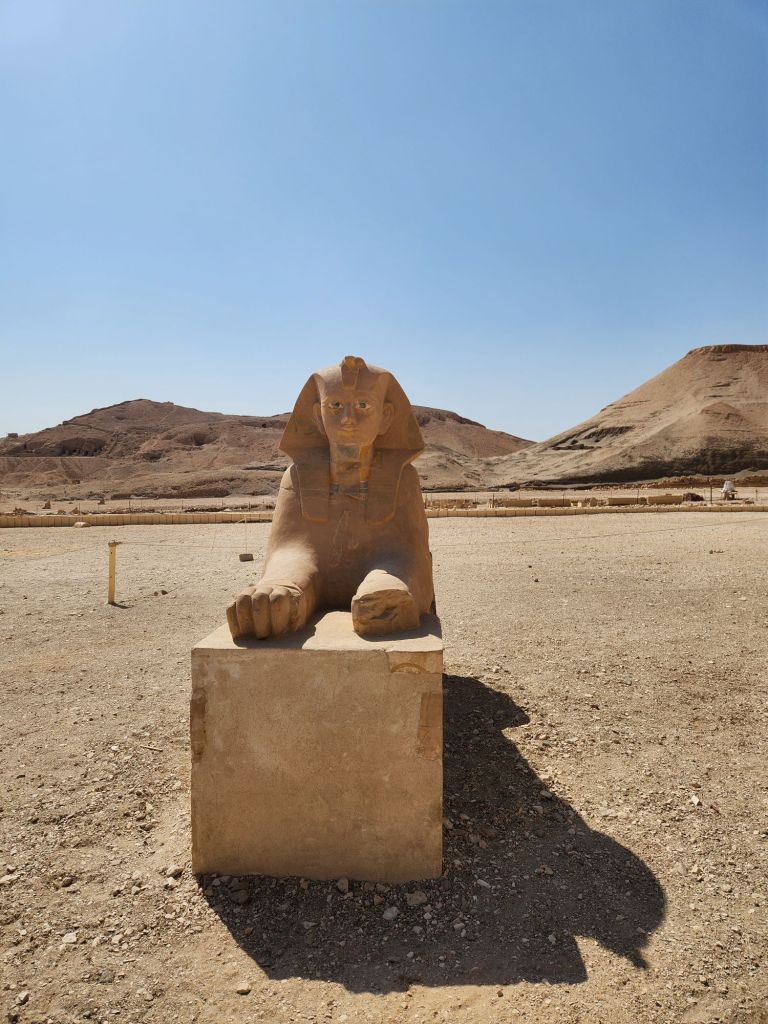
The left-hand Sphinx, from memory.

Each of the twenty-six columns of the upper terrace is fronted by a statue of the queen in her Osiris aspect, each over five metres tall.
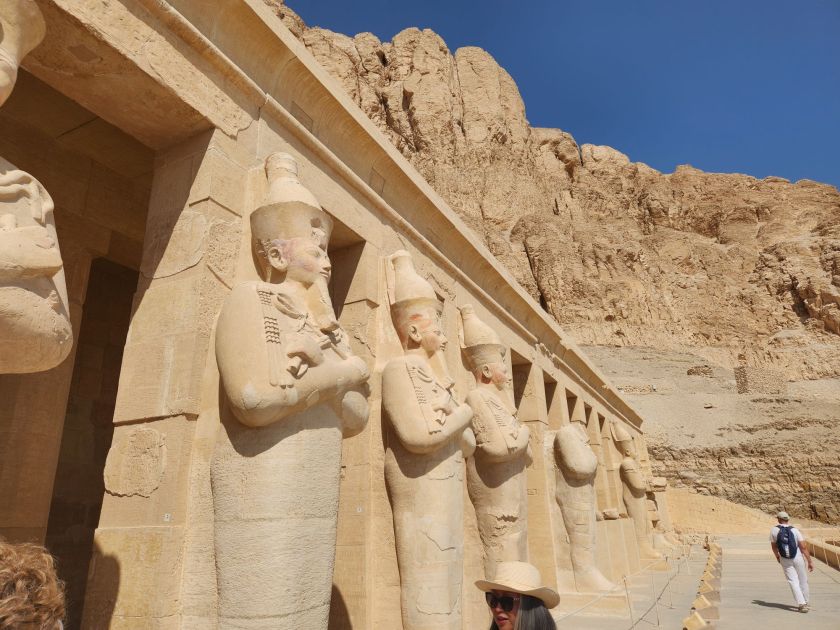
Upper Terrace.

While her successor, Thutmose III, attempted to remove all references and proof of Hatshepsut’s rule, some of the carvings and paintings in this temple have survived.
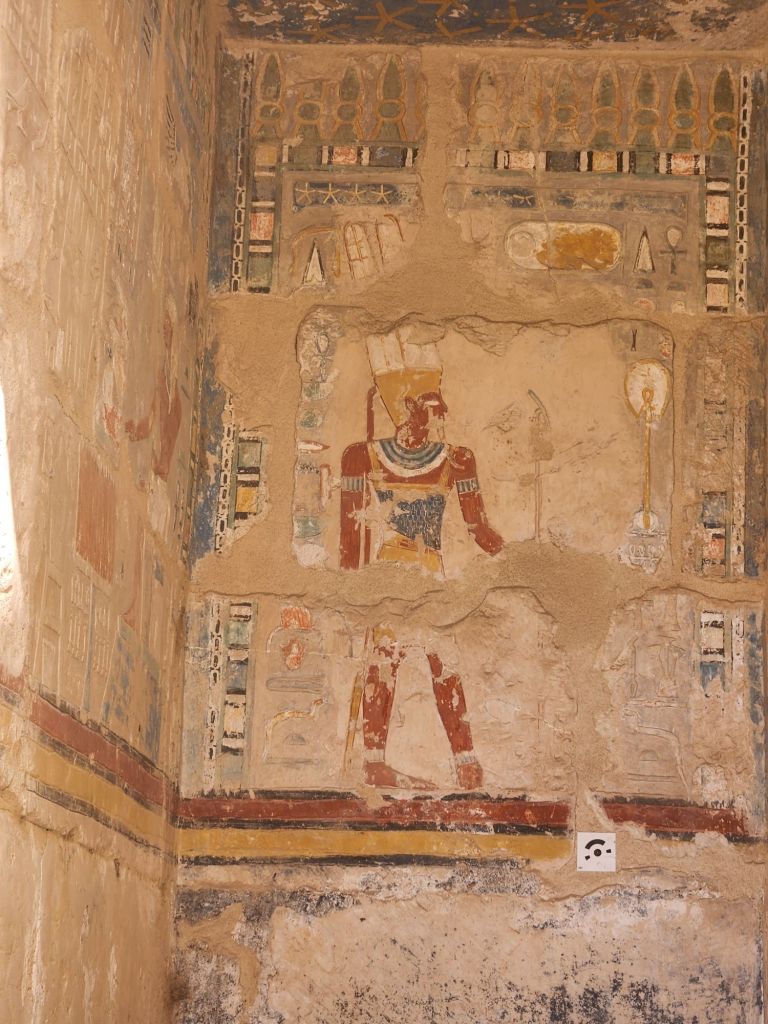
Depictions of Amun.

As is typical, the innermost part of the temple is blocked off, leading to the crowd only being able to look into the sanctum.
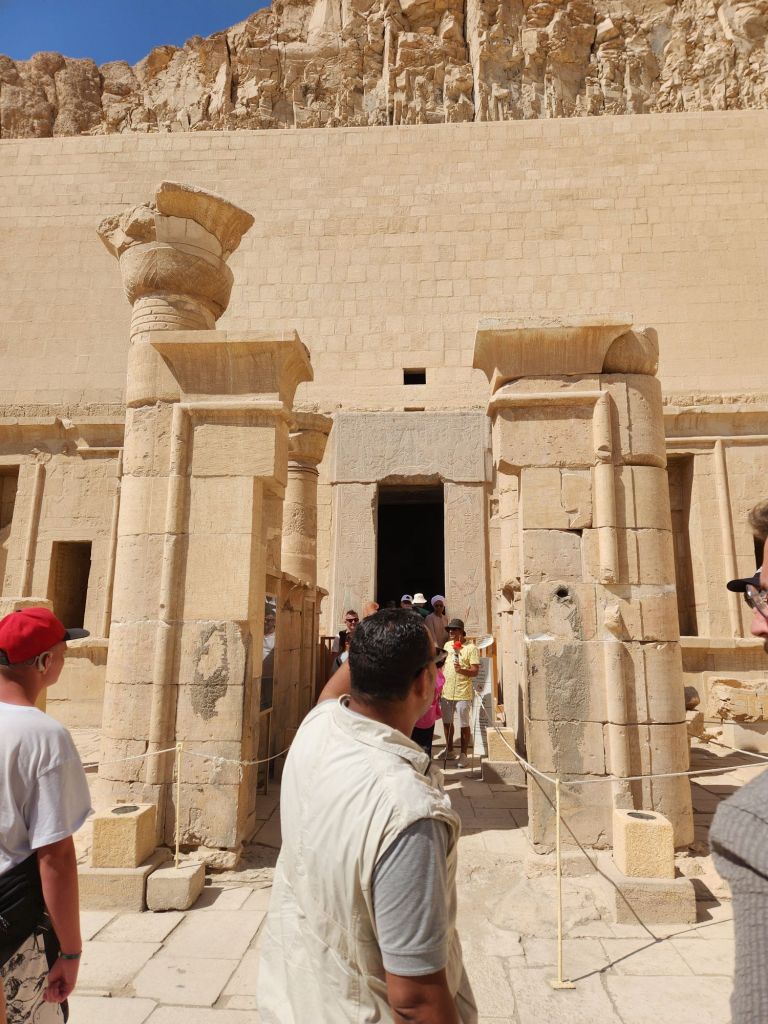
Oh yeah, and our guide.

An area to the left of the main temple has a chapel dedicated to Hathor, which I quite liked. Plus, it was comparatively quiet.
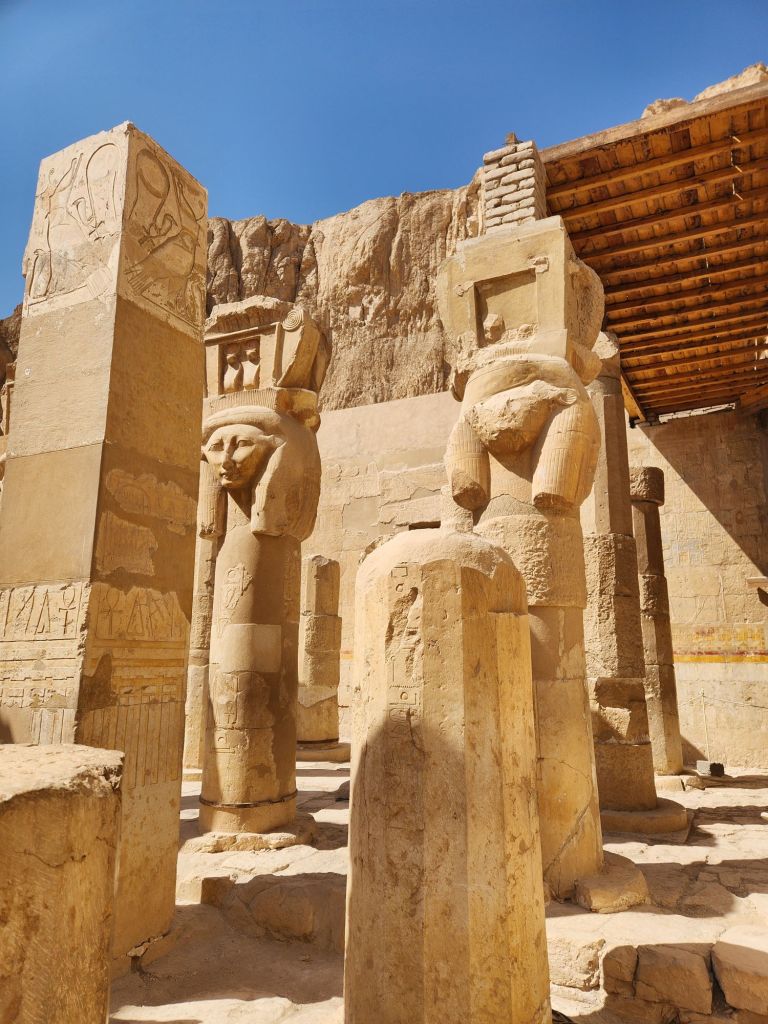
Chapel of Hathor.

To the left was of interest, which included an altar of the solar cult, but much of the more interesting places were blocked off by locals on demand of baksheesh, so I did not linger.
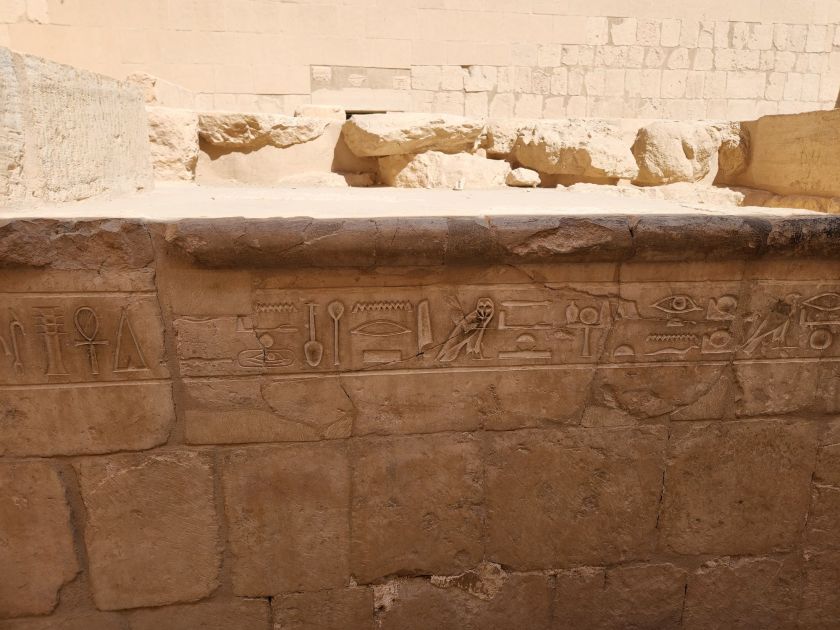
Maybe the actual altar?

Behind the row of statues, I spotted carvings that document the Queen’s trading expedition to the Land of Punt, believed to be to the south-east of ancient Egypt, bordering the west bank of the Red Sea.
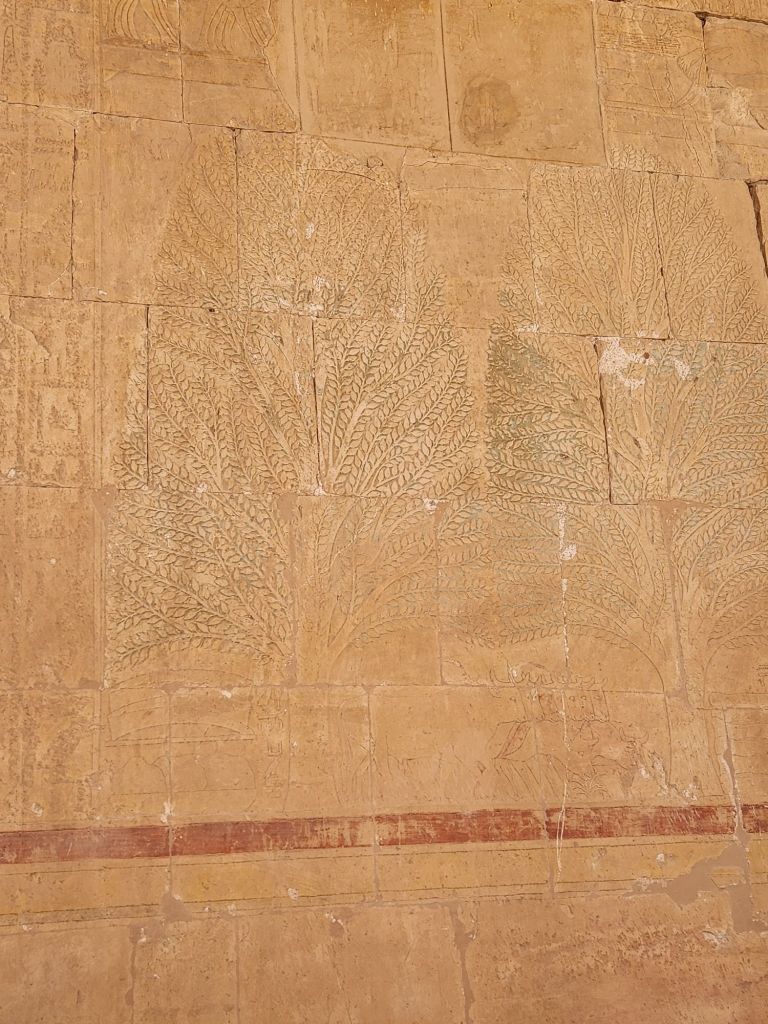
Believed to be Sandalwood trees, brought back from Punt.

I think what I liked about this temple was the fact that it was designed to complement, rather than just be placed, in the surrounding geography.
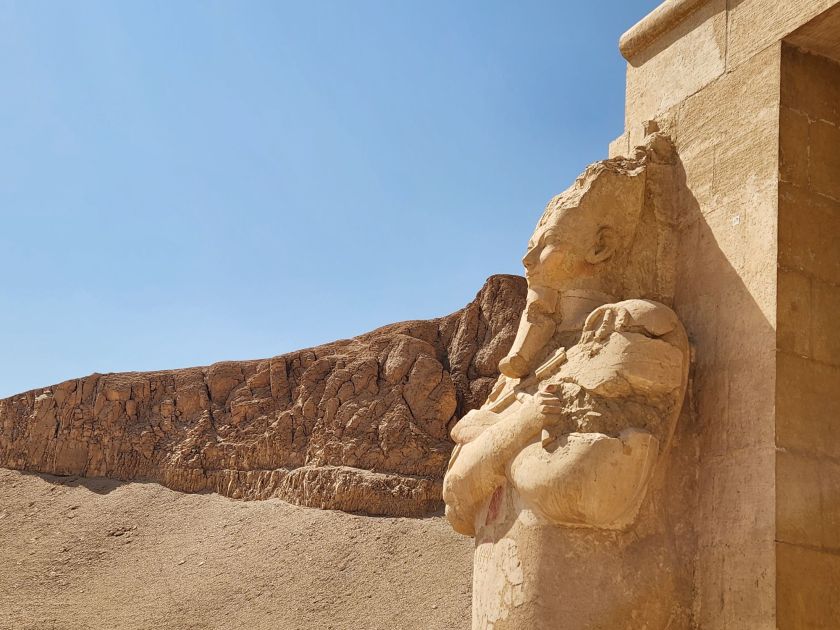
Statue of Hatshepsut, overlooking the nearby cliff.

Our next step was a nearby factory throwing out alabaster carvings, in the traditional, hand-carved methods. What this had to with ancient Egypt was tenious at best, but had much to do with our guide and driver earning commission. I was also somewhat dubious about how the half dozen guys with small pieces of alabaster and sandpaper outside could produce so much product. While some of the pieces were beautiful, and I would have loved one of the smaller “scribe” figures for my desk back home, I didn’t relish having to haggle over one or lugging it back home. But I did appreciate the offer of a cold drink without being charged ten times the retail price. Eventually, the three of us convinced them that we were not in the market for anything, and we headed back to the bus. Before we left, one of the workers made his way to me and, with a look askance for supervisors, palmed me a “gift” of a half-finished sacarab and some rough alabaster pebbles. I gave him a small note of Egyptian pounds, which was probably less than he hoped.

Our final stop was the Colossi of Memnon, two huge statues that depict Amenhotep III, built to guard his mortuary temple, of which little remains.
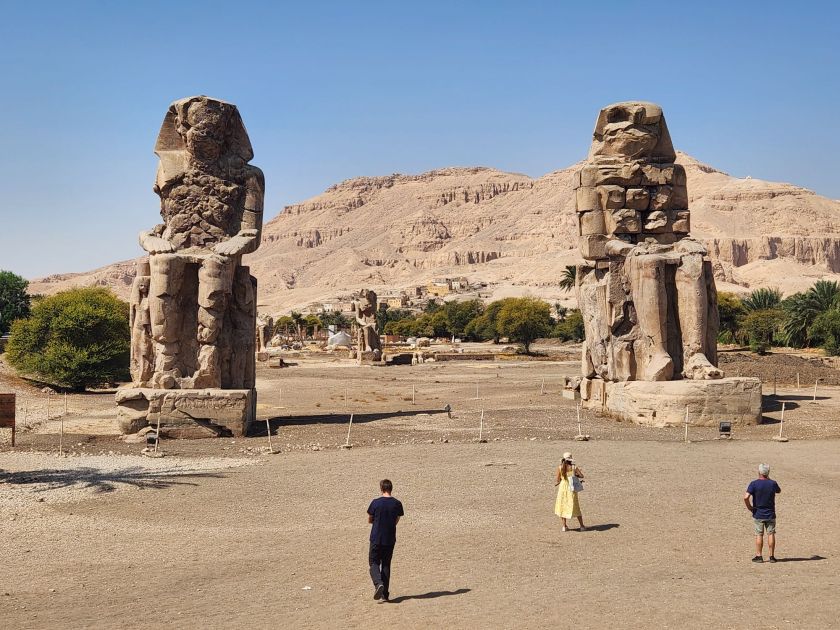
Colossi of Memnon.

Both statues are eighteen metres tall, and can be seen for fifteen kilometres around, which was most likely a deliberate choice for them to become a landmark. Both statues are quite damaged, despite various restoration efforts. The bases of both statues feature inscriptions in Greek and Latin.

The confusion of the name is an interesting (at least to me) story. At one point in time, the northern statue made a screaming sound when the dawn winds through it. This was due to damage it had sustained, which was later fixed. This screaming led to an association with Mennon, a hero of the Trojan War, who was said to be the son of Eos, the goddess of dawn.

By now, all three of us were tired and in need of air-con and affordable cold drinks, and after ten minutes, we made our way back to our bus. Our guide then offered to take us to a nearby restaurant for lunch, but one of my street-wise fellow guests asked about the cost, and it turned out we had a very different understanding of what affordable was, and so we declined and were driven back to Luxor, where we parted ways.

Valley of the Kings Part II

Continuing from Part I

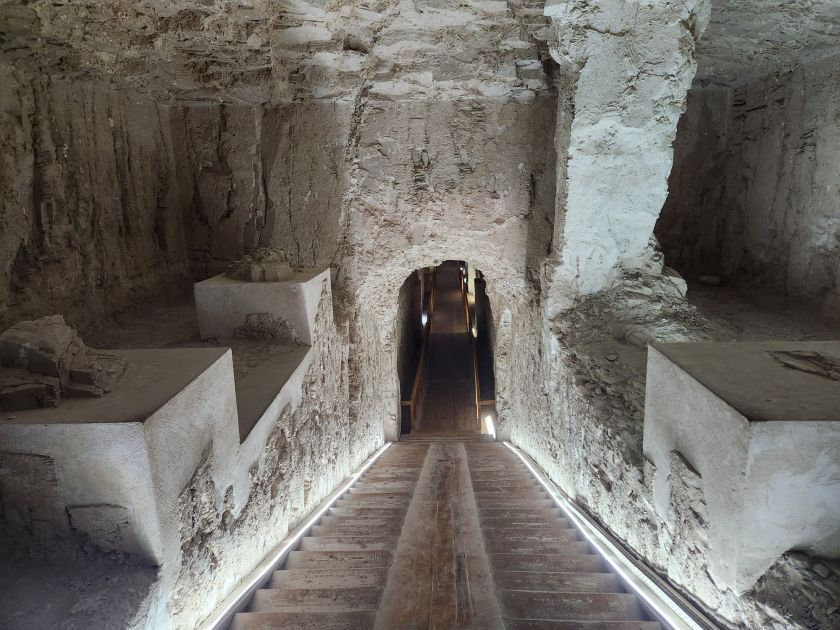
The next tomb was KV47, the eternal home of Siptah, who ascended the throne at fourteen. Siptah was perhaps the illegitimate son of King Merneptah and his Syrian concubine. The tomb was never completed, which explains why it was so austere compared to the first tomb I visited, but it was also the victim of damage and pillaging.

Central passageway

The other obvious difference when I visited was the almost complete absence of tourists. I waited for a couple to exit the burial chamber before stepping into it myself. Into this incredible still space. It took me a while to work out what was so peculiar and disconcerting about this space, then it was obvious; it was silence, something I had not experienced since I had landed in Egypt.

Burial Chamber, KV47

I would have happily curled up on the floor and slept, but five minutes later, I was out, avoiding the ticket seller’s demands for baksheesh. A tomb I had paid extra to see had a long queue, and so I made a vague promise to circle back to it and continued on.

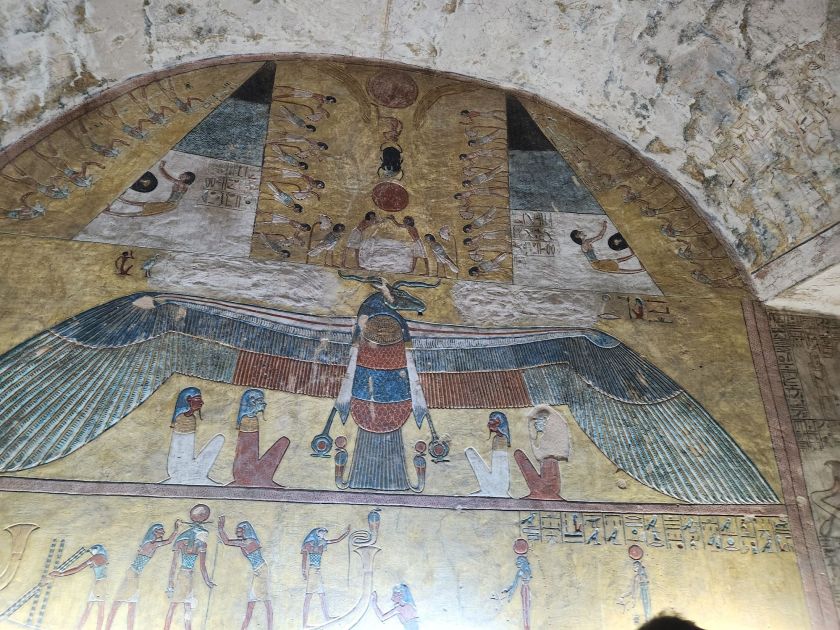
The third tomb I explored was KV14, tomb of Queen Tausert, and then reused and extended by King Setnakht. Tausert was the final Pharaoh of the nineteenth Dynasty. Her claim came from her marriage to Setti II rather than through her bloodline. Hence, her successor was also not of royal blood and usurped her during a time of crisis and political upheaval. Both only resided for a short time. It is thought that Setnakht co-opted the Queen’s tomb out of both pragmatism and as a way to further cement his right to rule. Renocations by Setnakht also made it one of the largest tombs in the valley. What I liked the most was this large painting winged goddess, which is assumed to represent the afterlife.

KV14

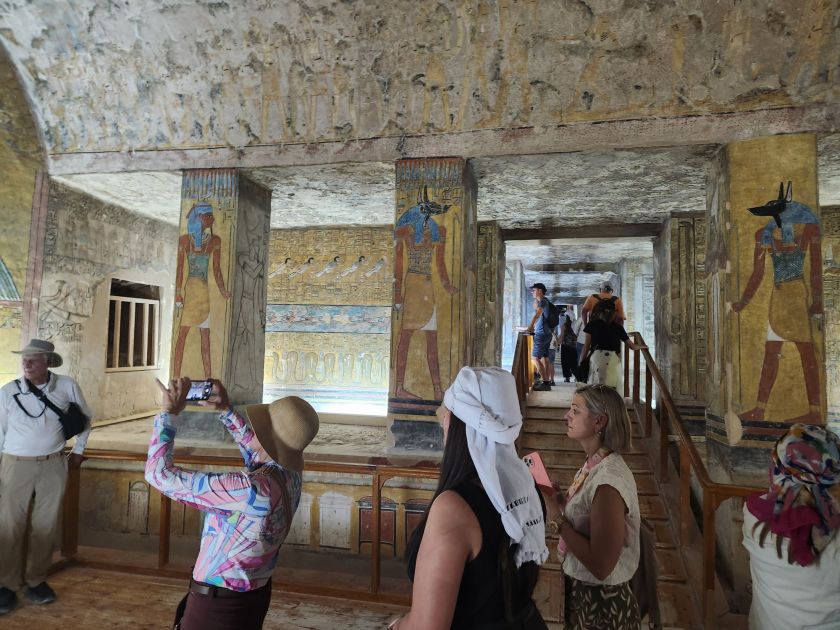
The tomb was quite busy when I visited, and was well-decorated leading up to the burial chamber.

Corridor.

The fourth and final tomb I explored was KV2- the tomb of Ramesses IV. Ramesses IV came to the throne after his father was assassinated, and his first act as Pharaoh was the arrest and execution of the conspirators.

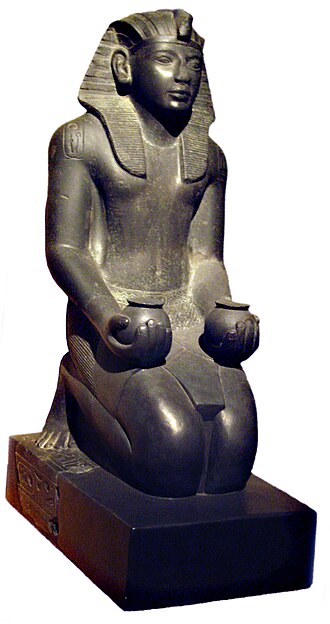
Ramesses IV offering two Nu Vases, stolen from Egypt and placed in the British Museum. https://commons.wikimedia.org/wiki/File:M-Ramses_IV.jpg

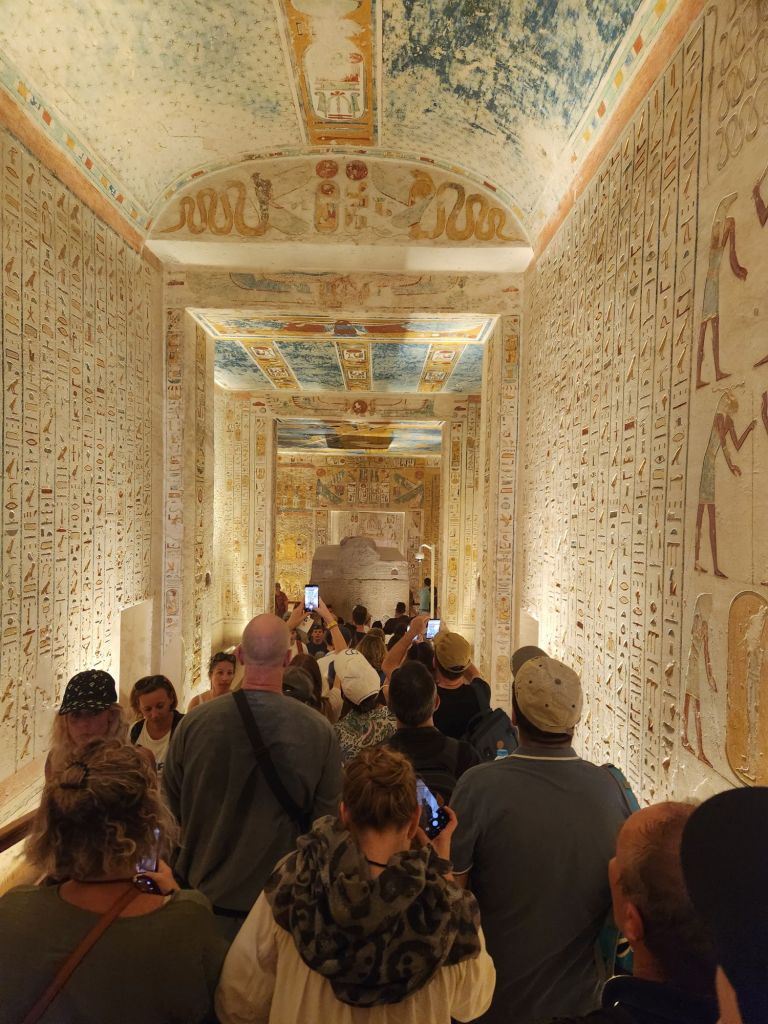
The tomb has been open since antiquity, and visitors often vandalised the tomb with their names and other details. At one point, it was believed to house Coptic priests, who also left their mark. Fortunately, enough decoration remains along the corridor, which probably led to it being choked with people, much to my frustration.

Main Corridor.

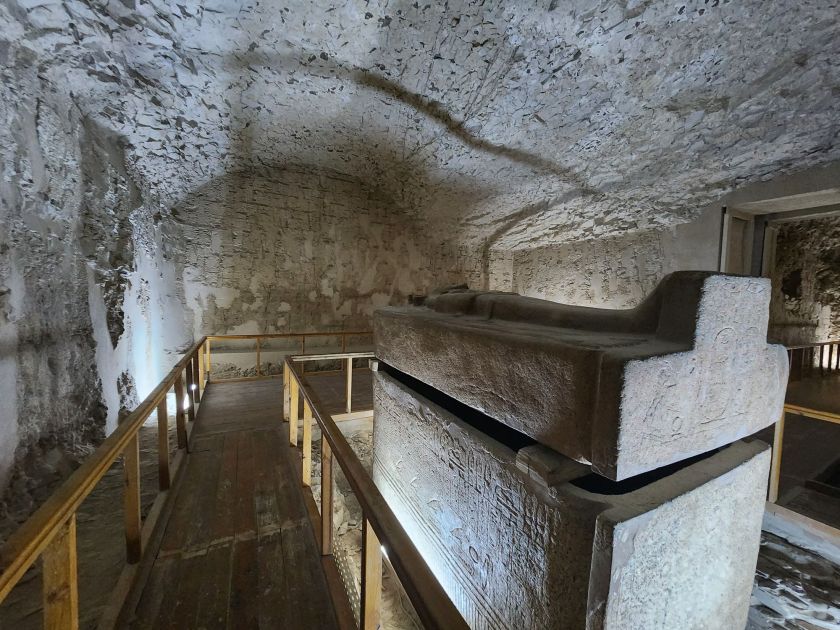
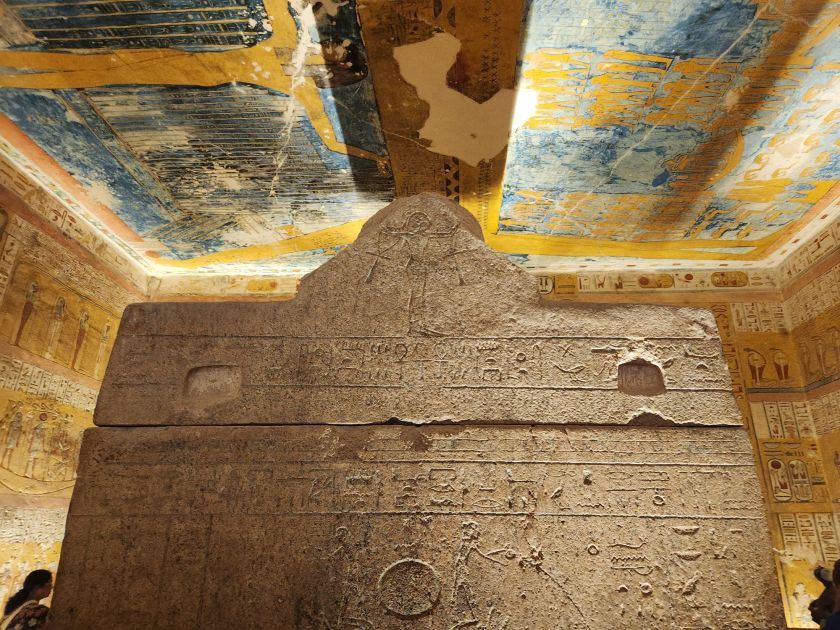
The sarcophagus, still present, was of course the focus of much attention, but I did manage to make my way to it, However I struggled to get a proper angle on it.

Ugh. Can only assume it was too heavy for the English to cart away.

Feeling equal parts awe and irritation, I made my way back out and to the cafe that was our meeting point, where I discovered that a simple iced coffee would cost me more than the entire tour. Instead, passing through the market on our way back to our bus, I bought a pomegranate juice can for a more mild rip-off.

To be continued…

Valley of the Kings: Part I

Due to the Valley of the Kings being on the West Bank of the Nile, opposite to the modern city of Luxor, visiting the Valley under my own steam, short of hiring a car, seemed impossible. Against my usual nature, I decided to book a tour through my hotel.

Shortly after eight o’clock, I was picked up in a mini-bus, with one other client on board, and proceeded to pick up another to the north of my hotel. One South African who works on oil rigs, and one Englishman, a tradie from Bristol. With the addition of myself, an agreeable bunch who immediately formed a pact with the tour guide as our enemy.

At the Valley of the Kings ticket office, an expansive and soulless building, which was still much more impressive than the simple ticket booths at Giza. Our guide directed us to the automated kiosks, rather than to fight for a position in the queues for a human. Here, we discovered that the minimal entry ticket only provided access to a handful of the least interesting tombs in the Valley. This is how the Egyptian Government keeps these sites as a massive cash cow. With our guide’s dubious advice, I chose three add-on tombs. Later, I made the mistake of checking my bank app for the transaction; I could have stayed in a luxury accommodation anywhere in Egypt outside of Cairo for a few nights for less than that figure.

Heading through the turnstiles and battling through the hordes of people who thought nothing of standing in front and immediately behind them, we were hit up for 30 EGP for a ride to the main entrance via those extended-cab gold carts so beloved by governments the world over. The driver also made a stringent attempt for backsheesh at the end of this two-minute trip, which I pretended to not hear. While this did save us a walk, uphill and in the sun, it was still irritating.

After the main entrance, our guide bustled us past the covered market with warnings about how aggressive the sellers are. Then we were set loose, with the announcement that we would have forty-five minutes in the Valley of the Kings. This is one of the reasons I avoid tours; entirely unreasonable time restraints.

During the New Kingdom, the Pharaohs made an observation that building massive tombs in the shape of pyramids did nothing but advertise where all that sweet loot was piled up, and that a more subtle approach was needed. Thus, to the West of the Nile and the ancient city of Thebes, a wadi was reserved for the burial of the royals. The idea being that once the tombs were sealed, no one would know that gold, silver, and gems equivalent to multiple years of Ancient Egypt’s GDP was hidden behind the stone. Of course, it was all for naught, as all but one of the tombs were looted before the end of the Twentieth Dynasty, most of them within years of the pharaoh’s death, at least sometimes with the consent of the new pharaoh, with him or her taking a cut. I suspect that the suggestion that Pharaohs not be interred with so much wealth was never stated by anyone wishing to keep their head attached to their bodies.

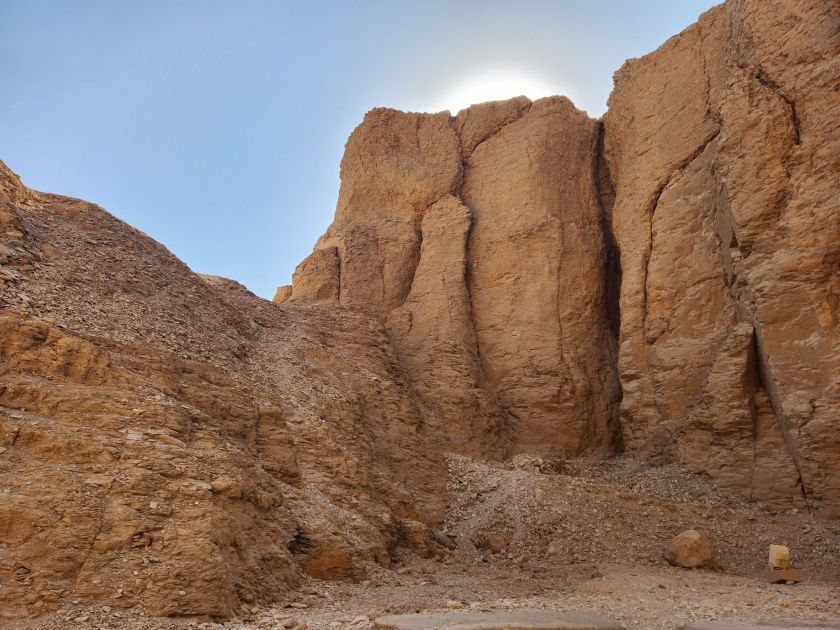
Impossible to take a pic of the entire valley.

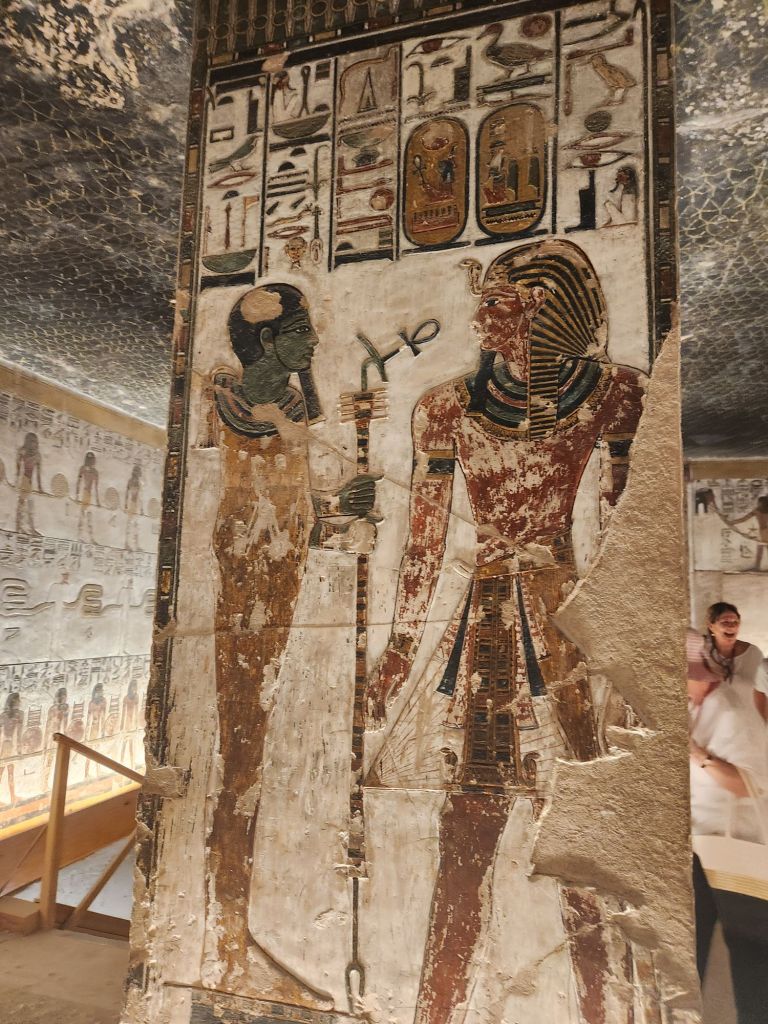
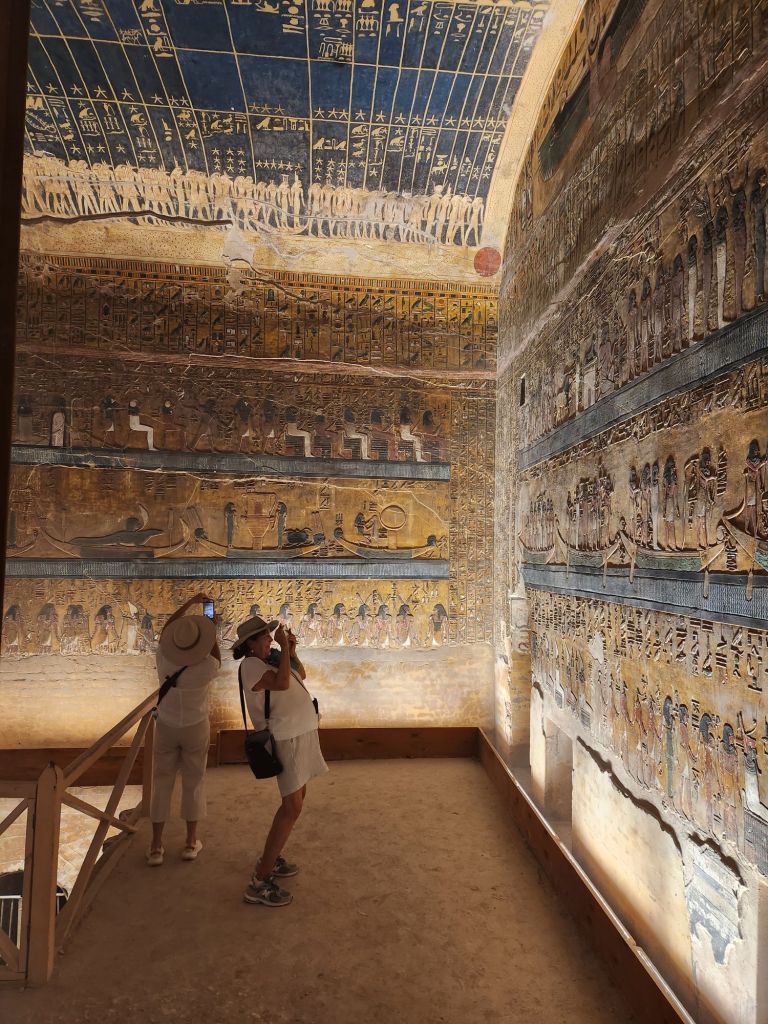
The first, and most impressive tomb I visited was KV 17, the former home of Seti I, son of Rameses I. He was most notable for his military campaigns, especially into Libya and the Levant. KV17 is famous for its decorated walls.

Pillar.

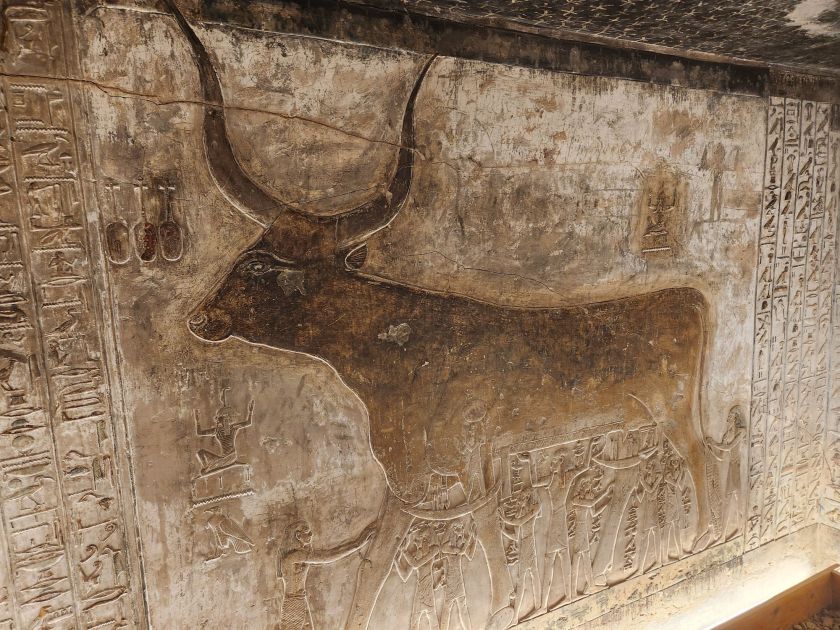
While the whole tomb was stunning, I was greatly drawn to a depiction from The Book of the Heavenly Cow, which I will pretend I knew all about before I visited this tomb.

Depiction from the Book of the Heavenly Cow.

The tomb was very crowded, with hordes of Americans, Germans, and (sigh) Australians getting in my way at every turn.

The blue on the ceiling! Astrological depictions.

To be continued…