
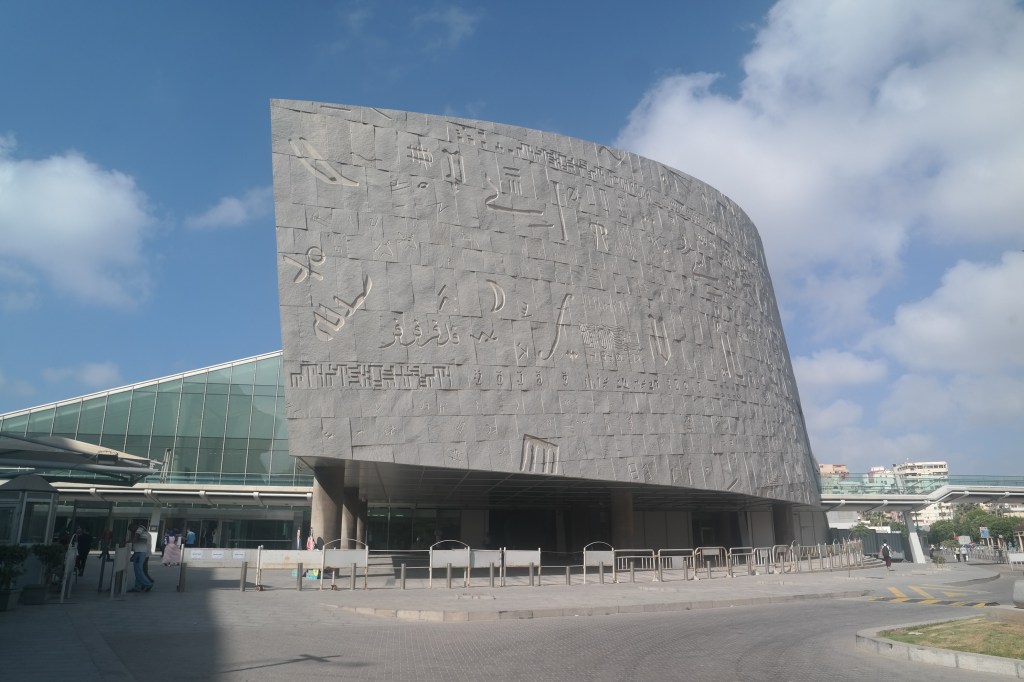
The Great Library of Alexandria was one of the greatest centres of learning in antiquity, and scholars from every corner of the known world in the second and third centuries BCE made pilgrimages to study there. While history still lists some of the head librarians and some of the manuscripts that were held there, the actual site of the library is unknown. The importance and the contents of the library had been in decline for years before the supposed destruction by Julius Caesar in 48 BCE. Now, only the legend remains, which may be more interesting than the real history.

With the lack of concrete facts, and considering the remains of the Great Library of Alexandria could easily now have a Starbucks built on top of it (it’s a nice Starbucks, filled with pretty medical students when I visited), the Bibliotheca Alexandrina is much more a spiritual than a practical one, but it’s very impressive nonetheless.
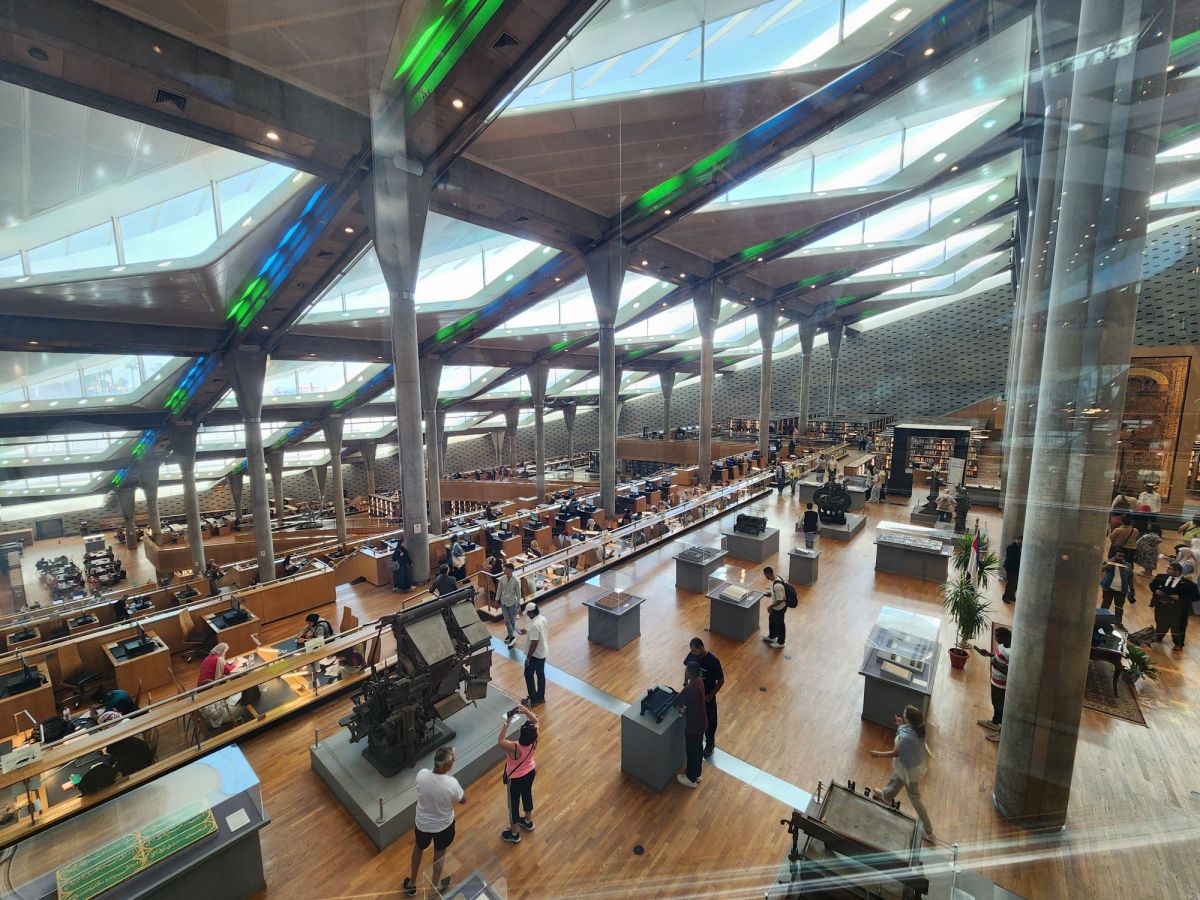
The library was officially opened in 2002, at a cost of two hundred million USD. Its main reading room sprawls over eleven levels and covers twenty thousand square metres.
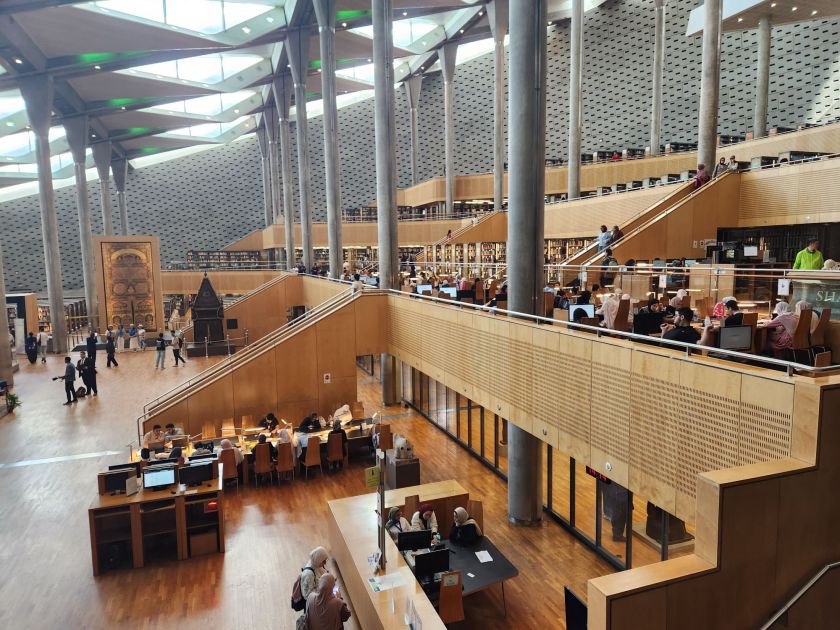
In addition to its main library, it contains six specialised collections, including one specifically containing Braille books. Even forgetting about the books, the Bibliotecha is home to nineteen art galleries, a planetarium, a conference centre, two gift shops, two cafes, and a restaurant.
I accepted the offer of a free tour, where a stunning woman walked us through areas and explained that for a fee equivalent to two coffees, an Egyptian student can gain access to all this, in addition to internet access, catalog access, study space, and more. She explained the symbolic aspects of the architecture and answered our questions faultlessly. Her (I neglected to jot down here name) delivery was a masterclass in public speaking and interpretation, and I wished I had a tenth of her ability. I was also incredibly smitten.
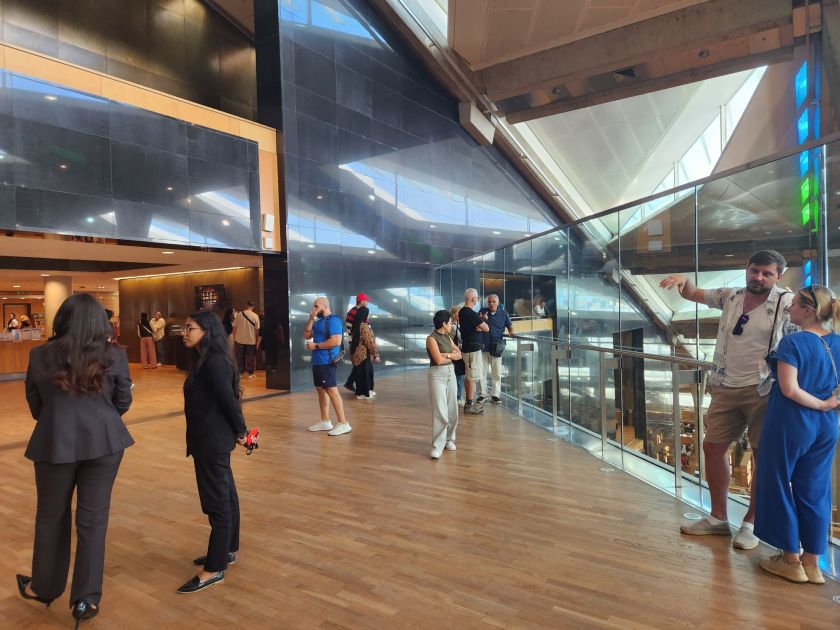
I couldn’t help but think what a balancing act these incredible, smart, and beautiful women working here must perform. Trying to keep to an authentic and self-determined life, working in such a modern institute of learning, while living in a culture that insists on a tradition of women being dependent on the men in their lives. All I could do was thank her for the tour and walk away.
On the way out, numerous security types and police seemed to be milling around, waiting, and so I waited to see what would happen. Soon, a convoy of conference attendees exited the grounds in chauffeured Mercedes and BMWs, while police shut down traffic outside the library to allow them to stay together with their escorts.
After a quick stop at a cafe for coffee and journalling, I discovered a small group of young ladies selling stickers. After walking past them I doubled back to buy some stickers and have a chat. 50 Egyptian pounds later, I asked if I could get a photo, which they were good-natured enough to consent to, with one of them offering to take the photo.
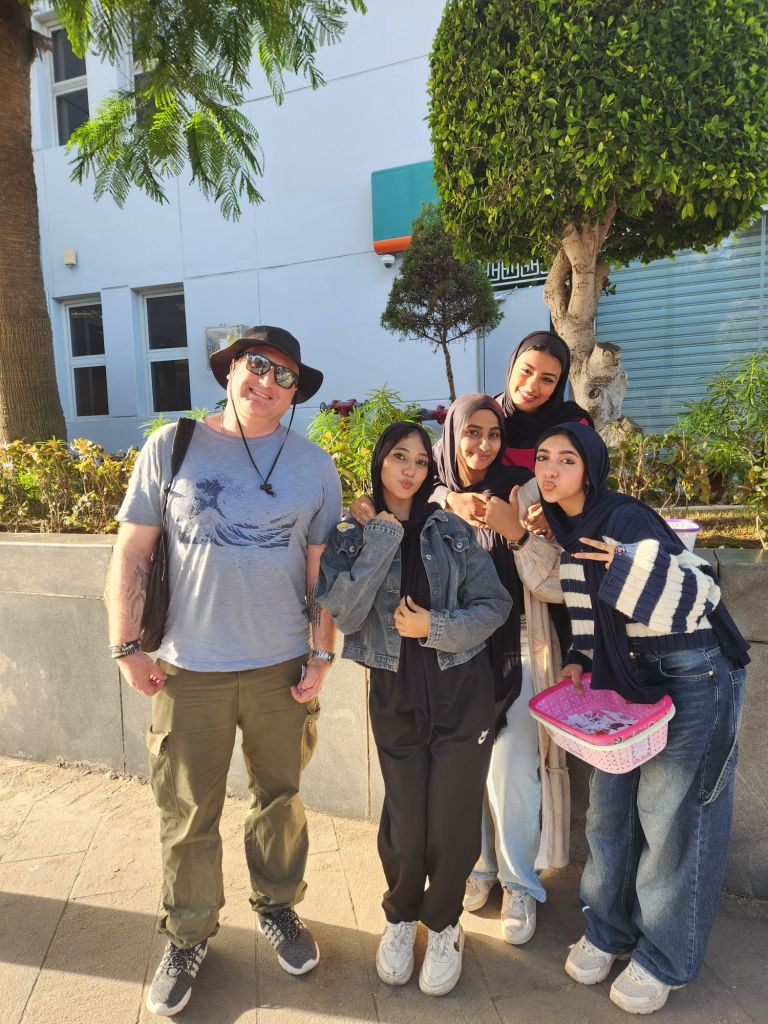
When I looked back at the photo, I said “Awwww, beautiful Egyptian ladies” which seemed to make them very happy as I said thank you and departed.
One day, when these amazing Egyptian women become a powerful force in Egyptian politics, Egypt will experience a rapid improvement for all its people.

 Adrian's Got The Moose