Bangkok at least felt familiar ground after Pattaya. I booked a capsule-style hostel closer to Khao San Road this time. The staff did not look like they were on day release from the nearest prison, and my fellow guests were more social than myself, and didn’t seem to be sizing up my organs for a quick sale on the black market.
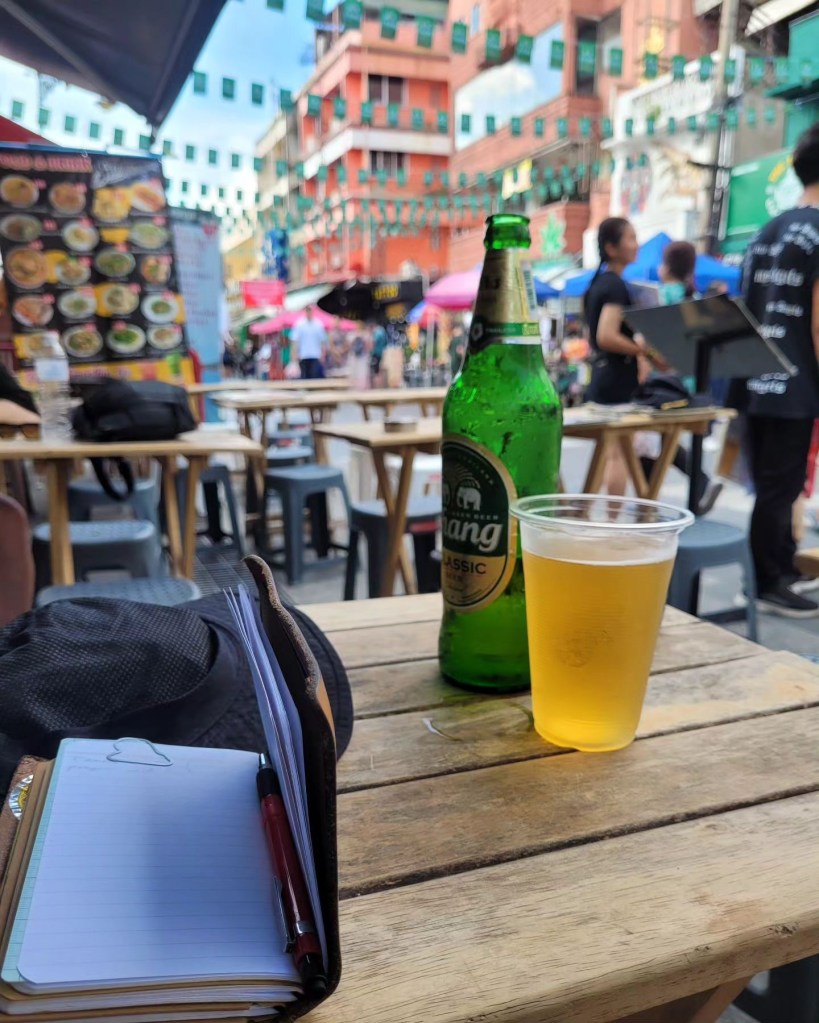
On my first night I ended up on Khao San Road, drinking and watching the constant stream of tourists, taxis, and touts. The second night was Halloween, and the Thais never miss an opportunity to party, and to get tourists to party and spend their money.
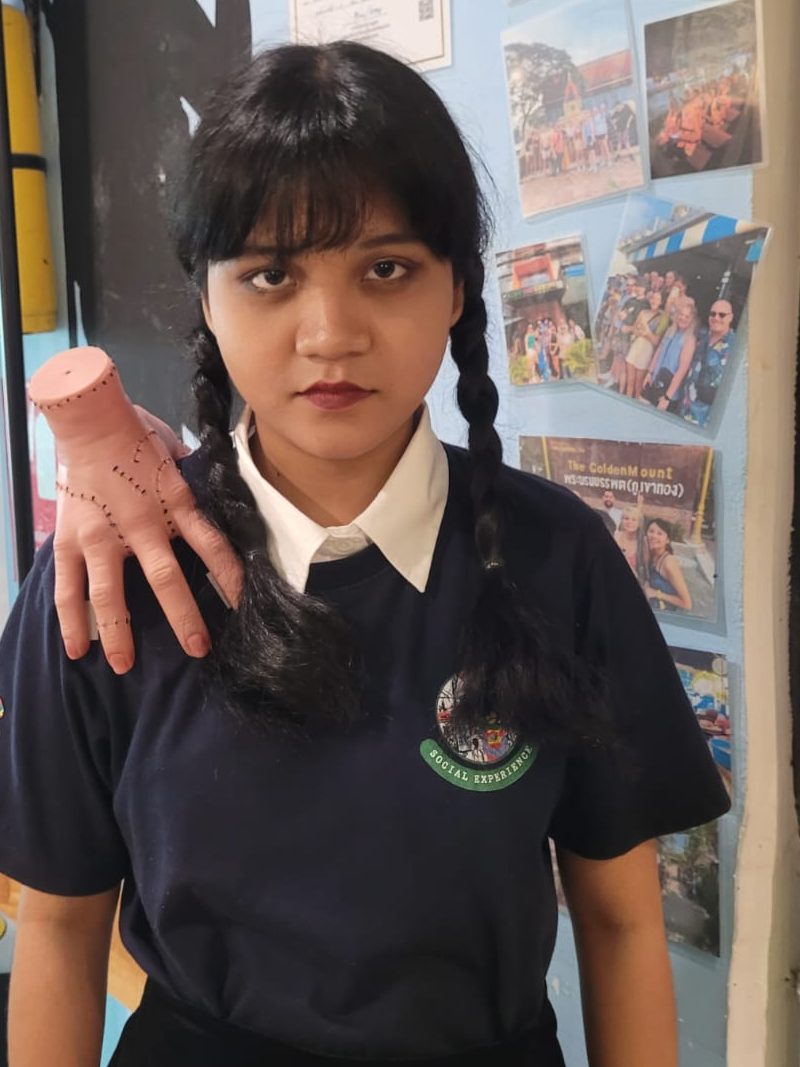
One of the ladies working at the hostel made an excellent Wednesday
I promised our Wednesday that I would show up for the hostel’s rooftop party. I dutifully showed up, chatted to a few people, but declined Beer-pong. My heart was not really in it, and I slipped away.
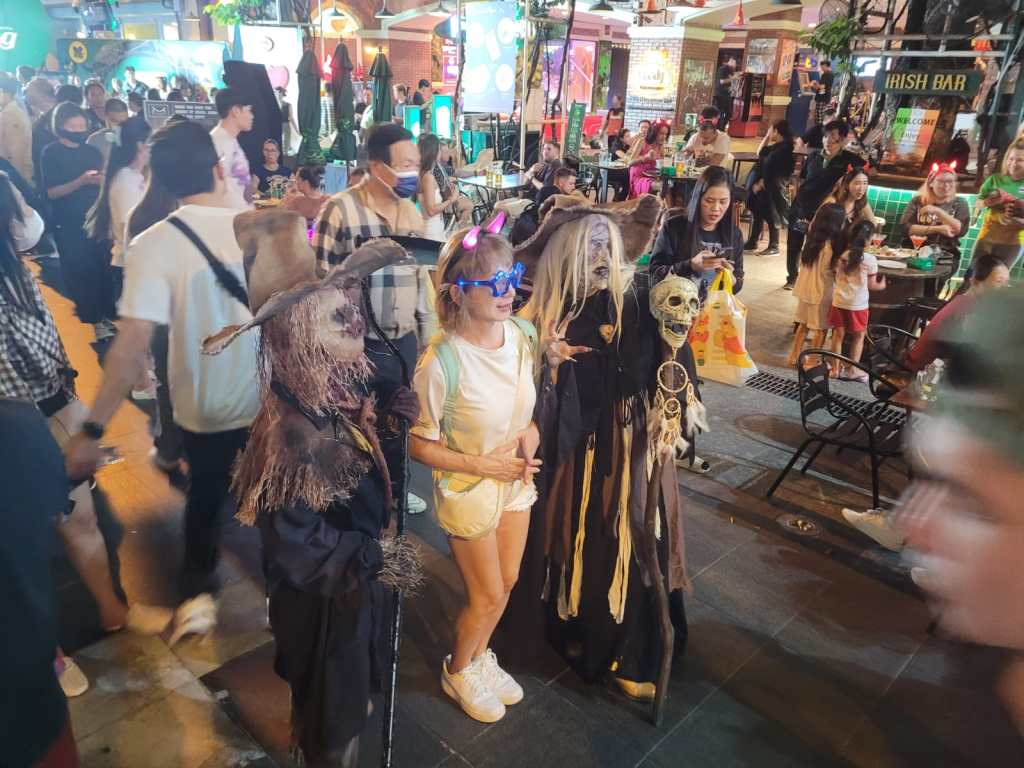
Later I was drinking alone on Khao San Road, and things were in full swing, with both locals and Thais dressing up. Also there was a stage set up and some kind of presentation and awards, but I could not understand the broken English.
This would have been scarier if I was partaking in magic mushrooms.
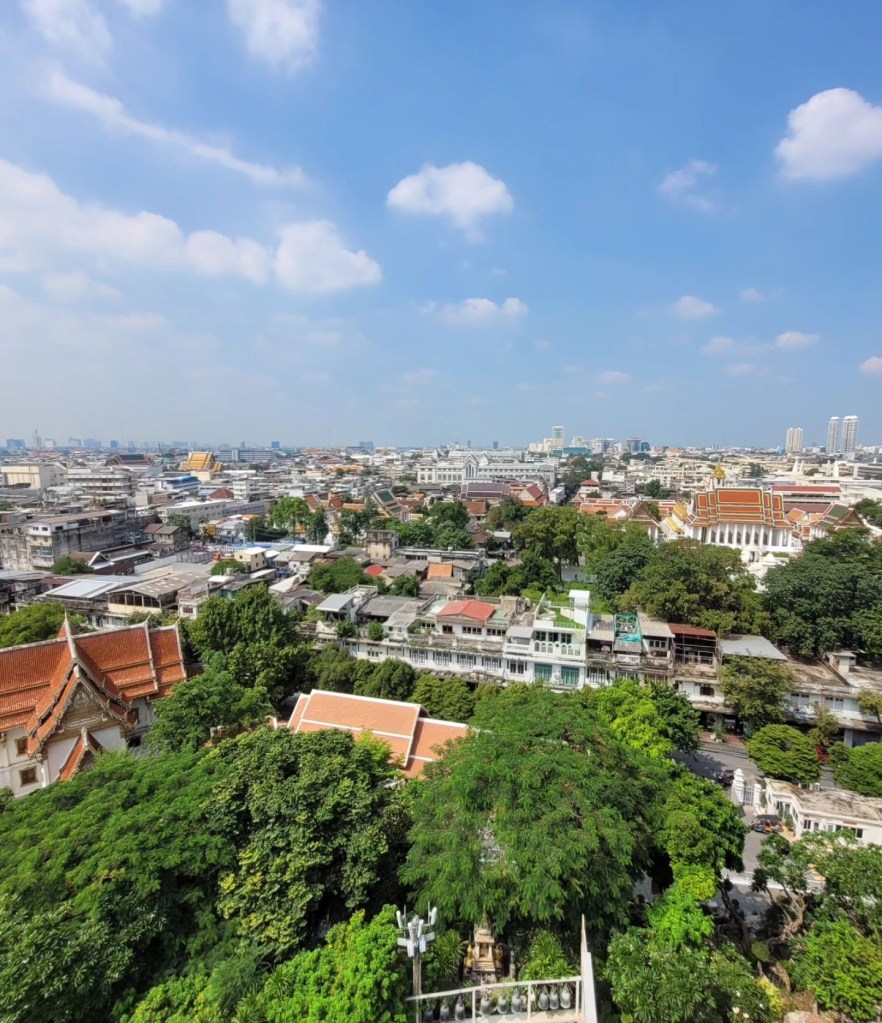
On my last day in Bangkok, I took a walk to Wat Saket, ie the Golden Mount- An ancient temple based on and around Bangkok’s only hill, which is as good a reason as any to build a temple. I walked around the winding path up the hill, which gives some incredible views of the cityscape.
Nice to see trees again.
At the summit, there is a golden stupa, which I found fiendishly difficult to photograph.
best I could do.
As with most Buddhist sites, you can pay to make merit, here by buying sheets of gold leaf that you could write prayers on, and attach nearby. If I had some more money I would have considered doing the same, but in any case, I could not think of a decent prayer.
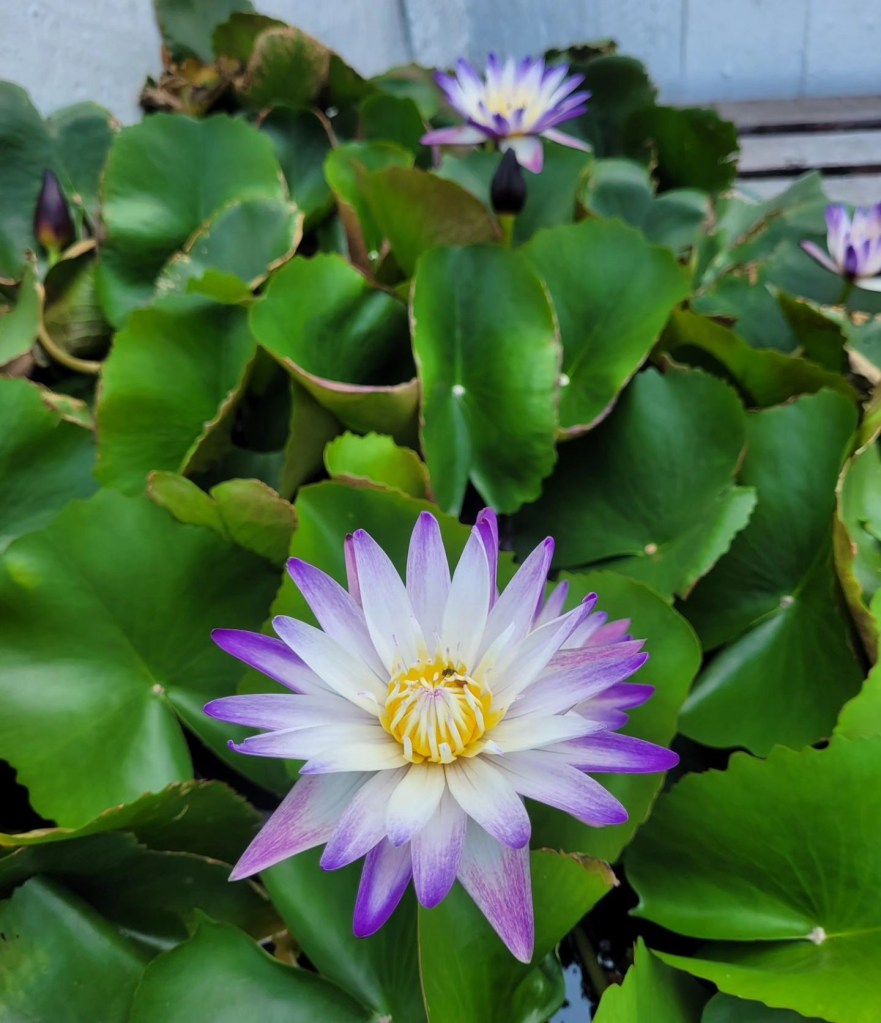
I made my way down, admiring the view, and the lotus flowers.
Arum loved this.
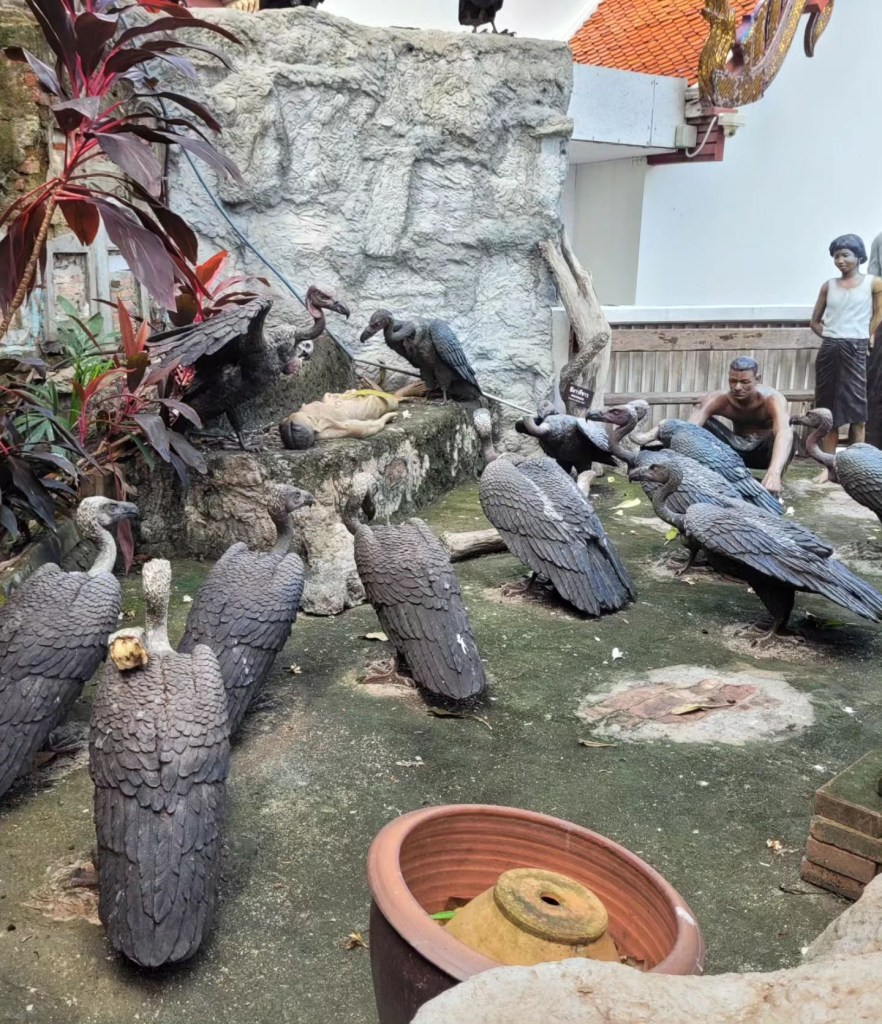
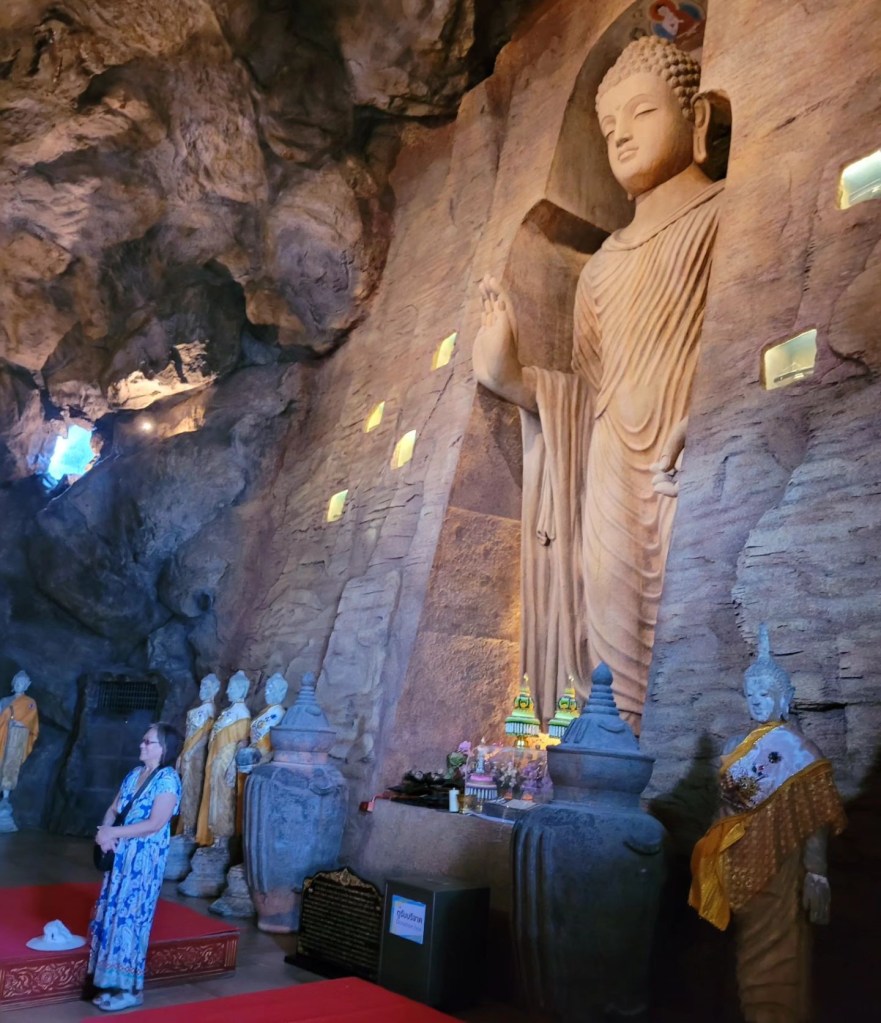
Continuing down, I observed a sign for Buddha’s Footprint and the Vultures of Wat Saket, which I followed. The building housing the Buddha’s footprint was unremarkable and unguarded, but the vultures proved more interesting to me.
a little macabre
Between 1820 and 1840, a Cholera outbreak occurred in Bangkok, and the crematorium at the wat could not keep up with the flood of bodies, leading to further outbreaks of disease, and attracted many vultures to the wat. At some point, the statues were displayed, a grim reminder of this grisly aspect of the past.
It was time to leave Bangkok. It had become impossible for me to sit down and enjoy a beer without being asked to pay up half way through, or have staff try to hurry me away, as if there was not dozens of empty tables. In addition, I had a date in Hong Kong with a South African and pancakes.
Due to my unhealthy addiction to Youtube, during the planning stage of my trip I discovered a number of channels by expats living in Pattaya, a city that I had only ever heard of in reference to the sex trade. In contrast to stereotypes, these often charismatic men were unabashed and proud of the place they had made their homes.
I would love to have a beer with this guy.
I made up my mind, I would go to Pattaya, let it wash over me, maybe sample some delights as my somewhat untrustworthy ethics would allow, then leave before I learned to love or hate the place.
By the time I got off the bus in Pattaya, three things made this plan unmanageable. First, I was in a meaningful, exclusive relationship, not the bored and horny single man I was when I was still at home. Second, the Aussie dollar was taking a massive battering against all other currencies, in addition to inflation, which meant I was on a stricter budget than I was used to, and a night’s drinking at inflated Go-Go bar prices was not an option unless I was willing to sleep under bridges until next pay-day. Thirdly, in Kanchanaburi I had gained some kind of horrible flu, and all I wanted to do was sleep with my back against a wall. None of this boded well for any kind of Gonzo journalism, but with bloody-mindedness typical of me, I went anyway.
I booked a three night stay in a hotel just back from the beach road in Jomtien, a satellite city of Pattaya. Of course my room was in a low-rent wing of an otherwise fancy hotel, that seemed to be exclusively inhabited by local workers. I didn’t mind that, but I did mind the slices of tomato that stayed in the hallway for two days, and the shared bathroom that looked like it had been transplanted from a maximum security prison. For the first two nights I only left the hotel for food, medication and runs to the nearest Seven-Eleven.
My first impressions of Jomtien from my short trips was of incredible normalness. For every single guy I saw, there were three or four couples, some with kids in tow. Surely they all cannot be here out of morbid curiosity? The beach was long, straight, and made up of yellow-grey course sand, not at all inviting to me even if I was not feeling like a brisk walk would kill me.
There seemed to be a lot of businesses run by Russians, for Russians, which I soon learned to avoid.
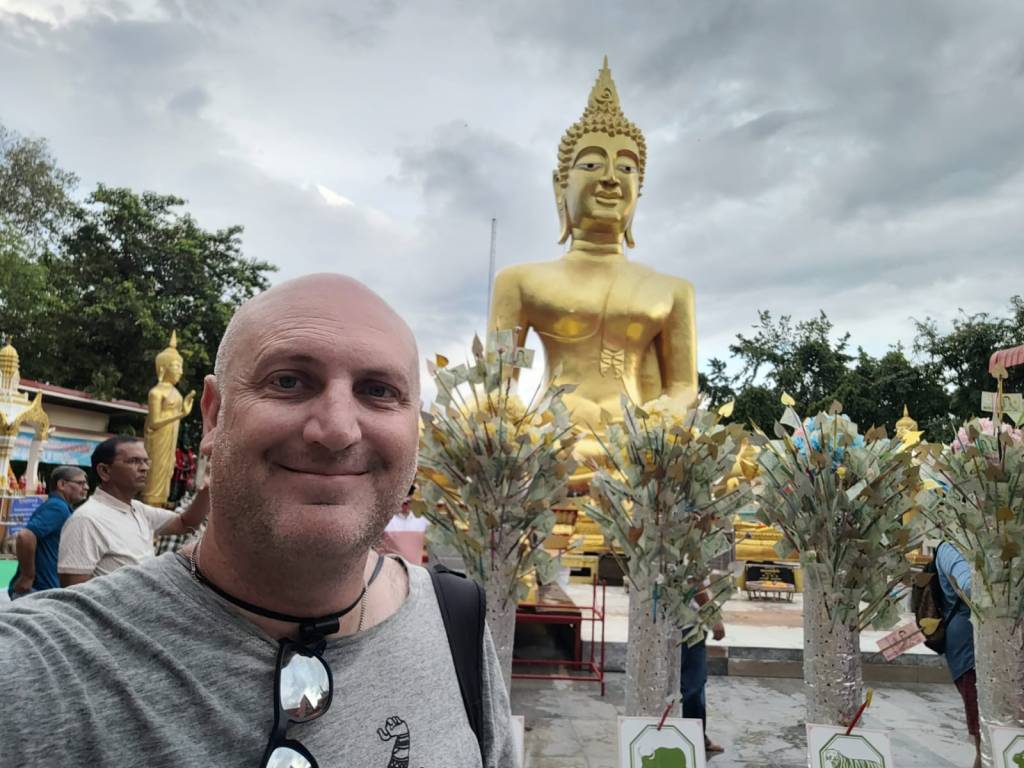
By the last night I started to feel vaguely human, so I took a baht bus from the beach towards Central Pattaya, and then walked up to the Big Buddha Temple.
Further evidence of my unwillingness to spend time with my back to the door of that bathroom.
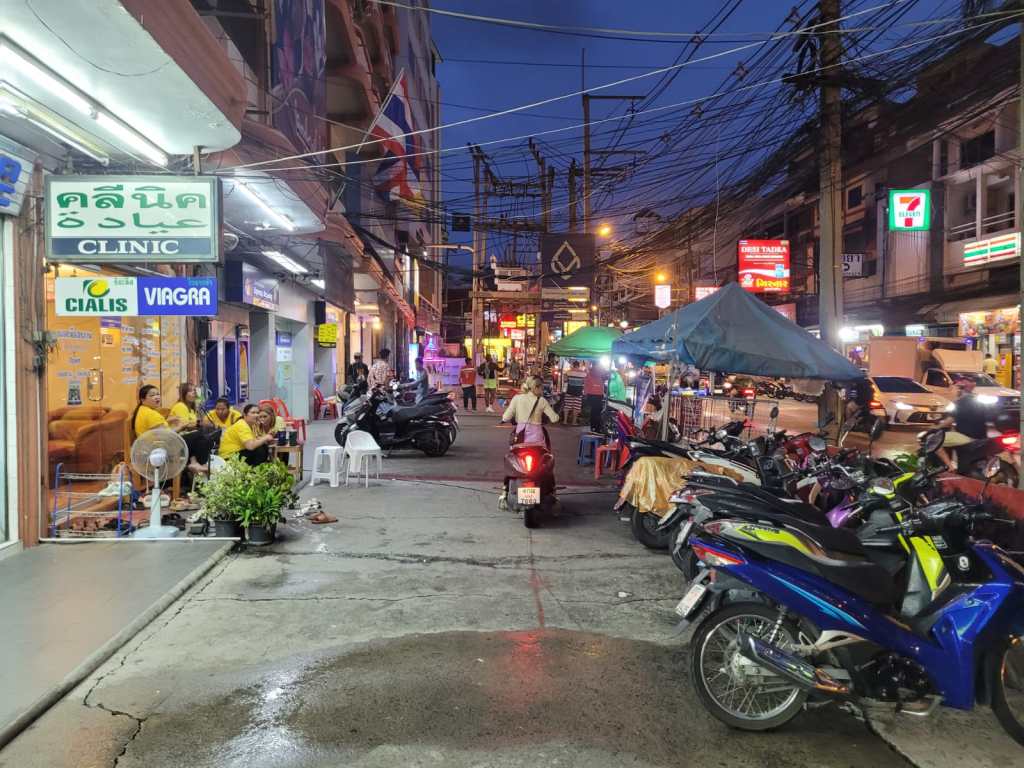
I continued walking towards the infamous Walking Street. I passed Seven-Elevens, I passed squash courts underneath freeway overpasses, I passed more weed dispensaries that I thought were sustainable. When I started passing an alarming number of Indian restaurants and massage parlours, I figured I was getting close.
Very useful, thanks.
By now it was raining, and just on six PM, I suspected it would be a few more hours before things got interesting, but I was already feeling tired and a little unimpressed with myself when I got to Walking Street. Out of instinct to get off the street while I had no real purpose, I found a restaurant and ordered a decent chicken rice dish and two only slightly overpriced beers.
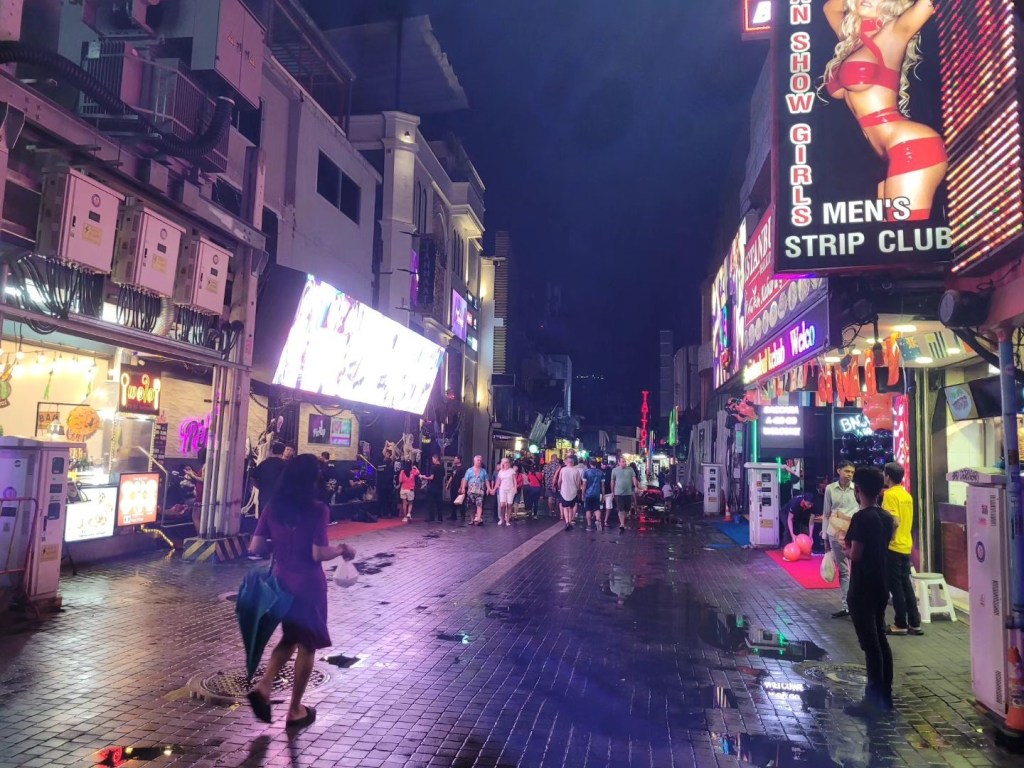
When I paid up and continued walking, things did look a little busier but still hardly pumping. I noticed a Korean tour group being led through the streets, never a good sign when you want any kind of authentic experience. And like most tour groups, they seemed to be going through the motions rather than any kind of meaningful experience or education. At least I didn’t have to follow a bored man waving a flag. I observed a few clubs, but no one trying to drag people in like I was warned about, and the prospect of entering felt like a Rubicon that I was not willing to cross.
Just going through the motions.
Of course, there were a number of weed shops, and a handful of stalls selling butterfly knives, nunchucks and other things only being sold because they were illegal back home. Further down the road there was a number of businesses advertising Russian girls. I know for a long time women from former Soviet Bloc countries having been selling their services, sometimes in conditions that would be described as slavery, in South East Asia for years, but I suspect recent events have made this even more prevalent.
If they were Russian Salty Girls I would have been straight in.
By now, I was feeling tired, bored, and mildly sexually frustrated. I got to the end of Walking Street, got a Pocari Sweat from Seven-Eleven, and then a Grab back to my hotel. It was nine o’clock.
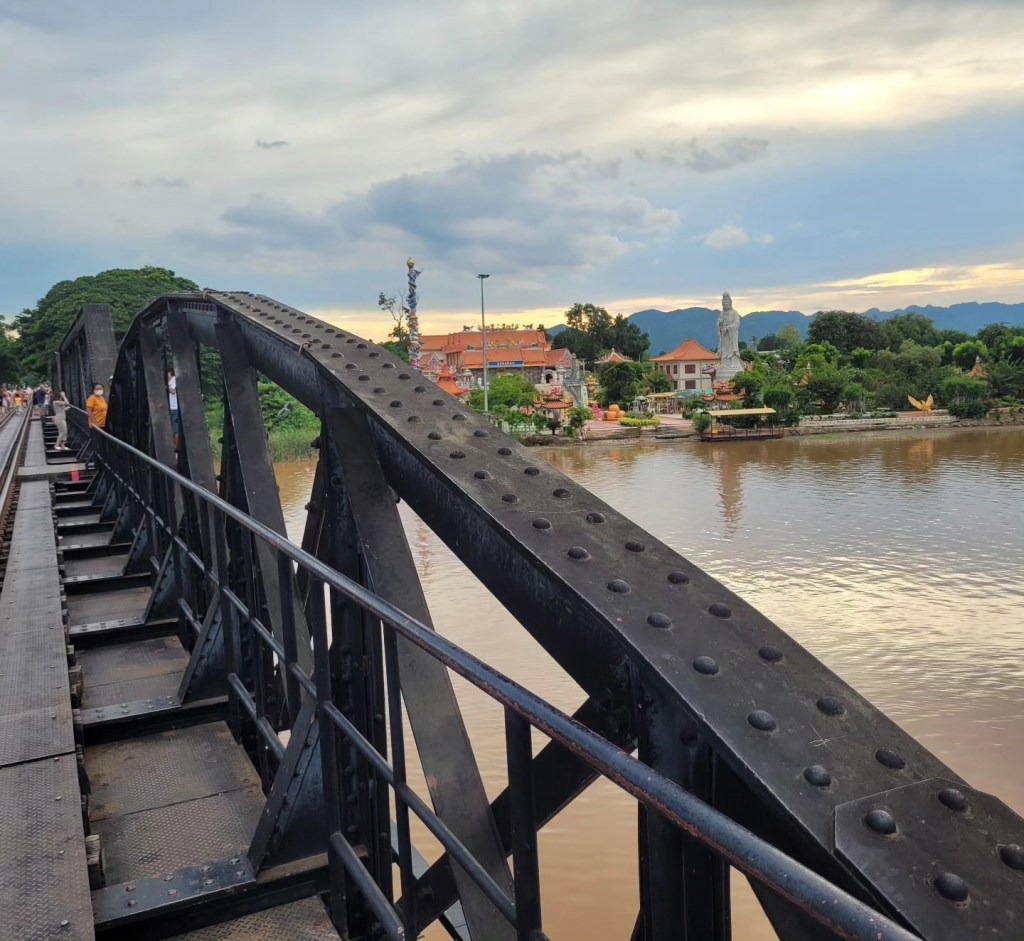
Kanchanaburi is a town west of Bangkok, made somewhat famous by its proximity to the Thai-Burma Railway. The Thai-Burma Railway was built by POW labour and indentured workers, victims of the Japenese’s need to join up their empire by rail during World War 2. An estimated fifty thousand POWs, and one hundred and eighty thousand South East Asian workers were forced to work on the railway, where brutal conditions and the brutal treatment by Japanese soldiers competed for the men’s lives. It has been said that every railway sleeper laid cost a man’s life. Half of the men who toiled on the Death Railway died during its construction. If not for the 1957 movie Bridge over the River Kwai, few people outside the Commonwealth would know about the atrocity.
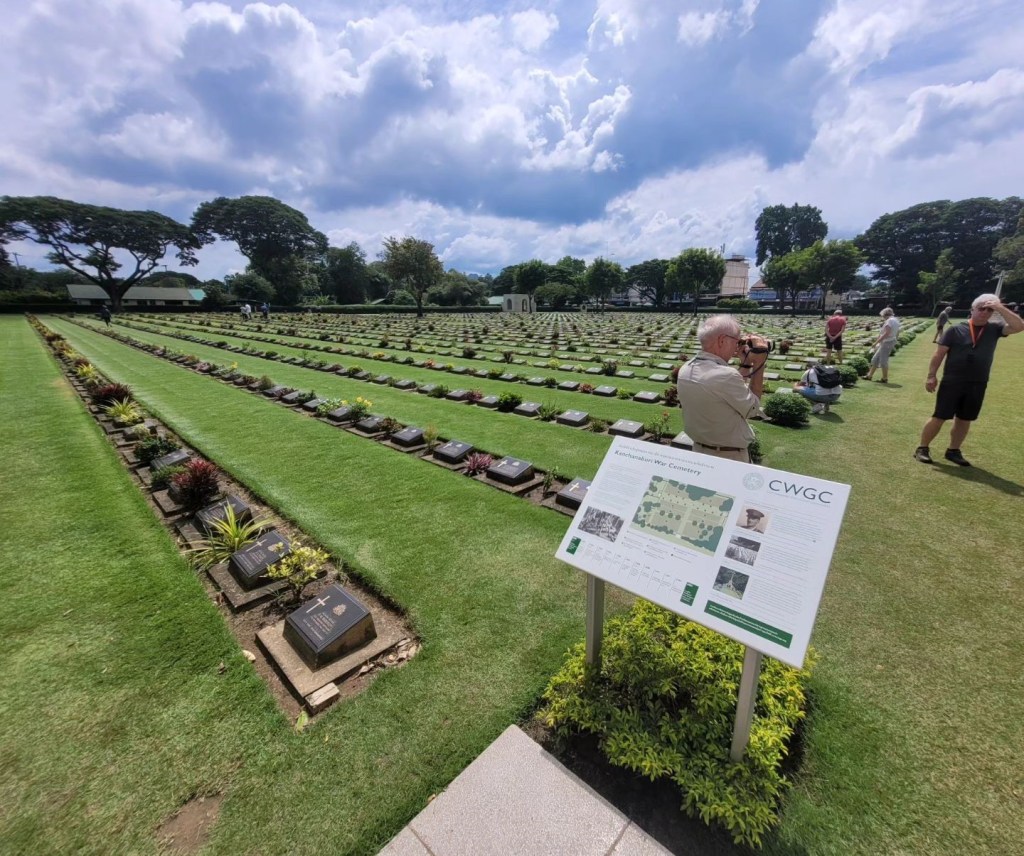
The first stop in my pilgrimage was the Kanchanaburi War Cemetery, a short walk in the blistering heat from my hostel. The cemetery contains the remains of six thousand, nine hundred and eighty-two Australian, Dutch, and British POWs, and is maintained by the Commonwealth War Graves Commission, and works are conducted by local workers, to a high standard in my opinion.
I like the varieties of plant species.
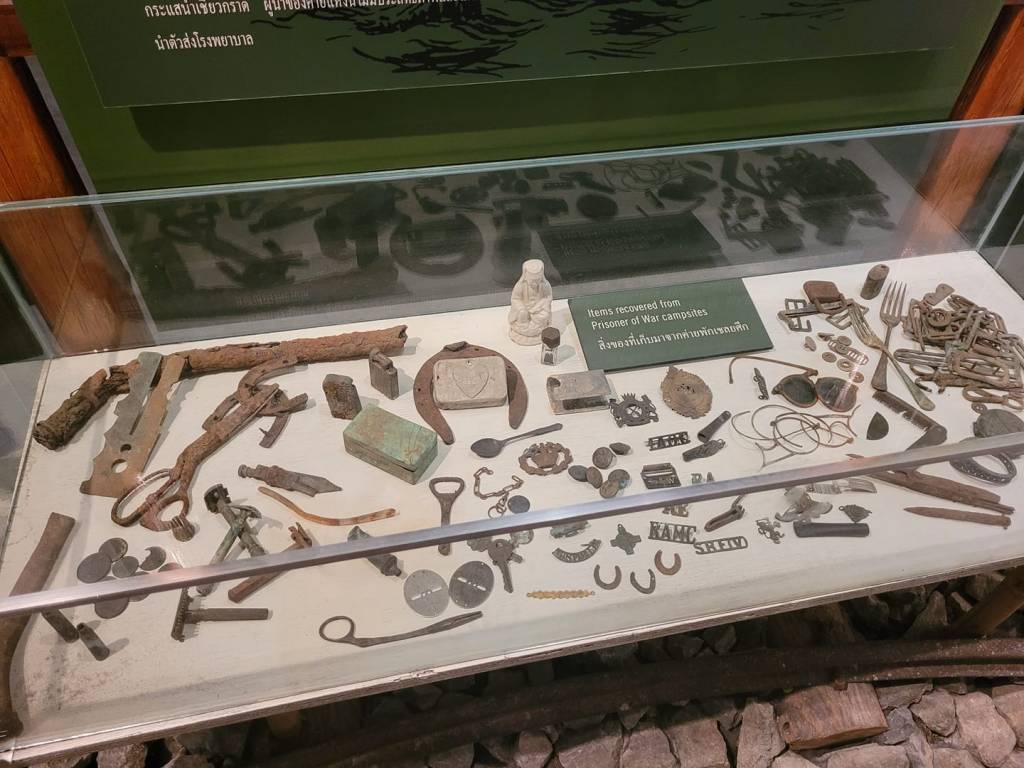
Over the road was the second stop in my pilgrimage, the Australian-run Thailand-Burma Railway Centre, a museum displaying many artifacts from the railway.
That DE Razor looks like it could be cleaned up and put to use.
The centre puts the terrible conditions in context, including the small box car many POWs were transported in like sardines, with no ventilation and toilet facilities.
I spent a few hours chilling in my hostel before I decided to walk to the actual bridge over the River Kwai, which was exhausting.
Not pictured: Bloody drones.
By then it was late afternoon, and I was too worn out to spend much time walking around, I got a coffee and a nearby coffee shop, and then got a Grab back to my hostel.
The lovely, grandmotherly lady who owned the hostel fed me that night with local dishes cooked in her own kitchen, including Tom Yum soup, bamboo shoots and pickles, rice, and two varieties of chilli paste, as it is an article of faith amongst Thais that no dish cannot be improved by a little more bite. In return before dinner I headed over to Seven-Eleven to buy iced coffees for the two hosts. The next night my host fed me leftover papaya salad. No wonder I choose to book another night before braving Bangkok again.
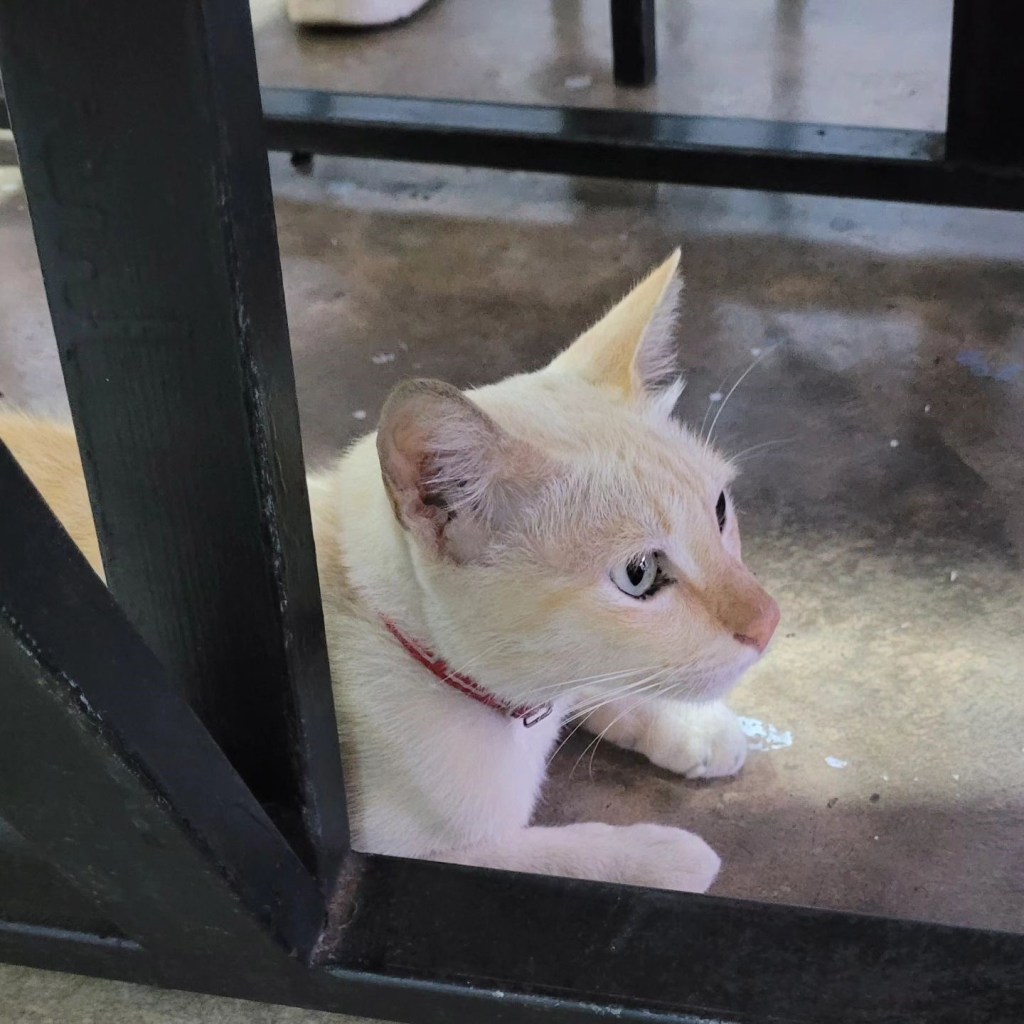
Hostel cat, which was not allowed to stay in the hostel overnight due to an unfortunate shitting incident.
The last night in Kanchanaburi I was showered, shaved and in bed by eleven. I promptly started coughing up a lung, and most likely part of my spleen as well. At midnight I dressed and left the hostel and braved crossing the four lanes of traffic to the Seven-Eleven for supplies. Back in the ground floor of the hostel, I sculled half a bottle of cough syrup, some alarmingly-labeled Chinese medicine, and paracetamol tablets, washed down with iced tea. Feeling slightly improved, I returned to the dorm, where I could only hope that my absence allowed my room-mates a chance to sleep.
I think I only booked two nights in Bangkok to give myself a chance to recover after the twelve hours on the bus before I get on another bus to Kanchanaburi. It was not a mistake, but my choice in accommodation, forced by my budget, certainly was.
Not my photo.
After being ransomed for two hundred Thai baht for a key deposit, I was walked over to the hostel next door, which looked nothing like the Agoda listing. This place was not so much a hostel as a flophouse, a storage place for the destitute and those with nowhere better to be. My dorm room had sixteen beds, was full both nights, and stank of dirty socks with top notes of a Frenchman’s sickly sweet vape. As far as I could tell, no one here sight-seed, worked, or did anything at all. I have stayed in dorms with people who worked, and you are barely aware they are there, this was different. Time seemed to have no meaning to the residents, spending their time in the dorm or the common room downstairs watching videos without headphones. No one was willing to meet my eyes. On the last night on my way to my room, I made the mistake of smiling at a Thai woman, and she glared at me.
That night the water supply to the hostel shut off, and people got even more anti-social as the miasma of unwashed bodies intensified. At ten o’clock the water was restored, I waited another hour lying in my bunk in my own stink before heading downstairs to the three shower stalls that serviced the thirty to forty people staying on the lower floors. I didn’t feel much cleaner, but at least I didn’t smell like nervous sweat and Bangkok grime.
I did manage to take a walk down Khao San Road, the most notorious backpacking strips in the world, featuring heavily in the movie The Beach, and often considered the spiritual heart of backpacking. But now it seems to be a more general tourist trap and party street, complete with loud house music.
Apparently I took very few photos.
That is progress I guess, but I didn’t find it as inviting as I did in 2007 when I was a first-time backpacker. Of course, it’s still loaded with tattoo studios, vendors selling drinks to walk around with (of course I partook) and stalls selling vapes, souvenirs, and smoking implements. Henna, dope, and clothing were all readily available, as well as deep-fried arachnids and insects, if you are hankering for that. There are also some upscale accommodation options that few backpackers, including myself, could afford.
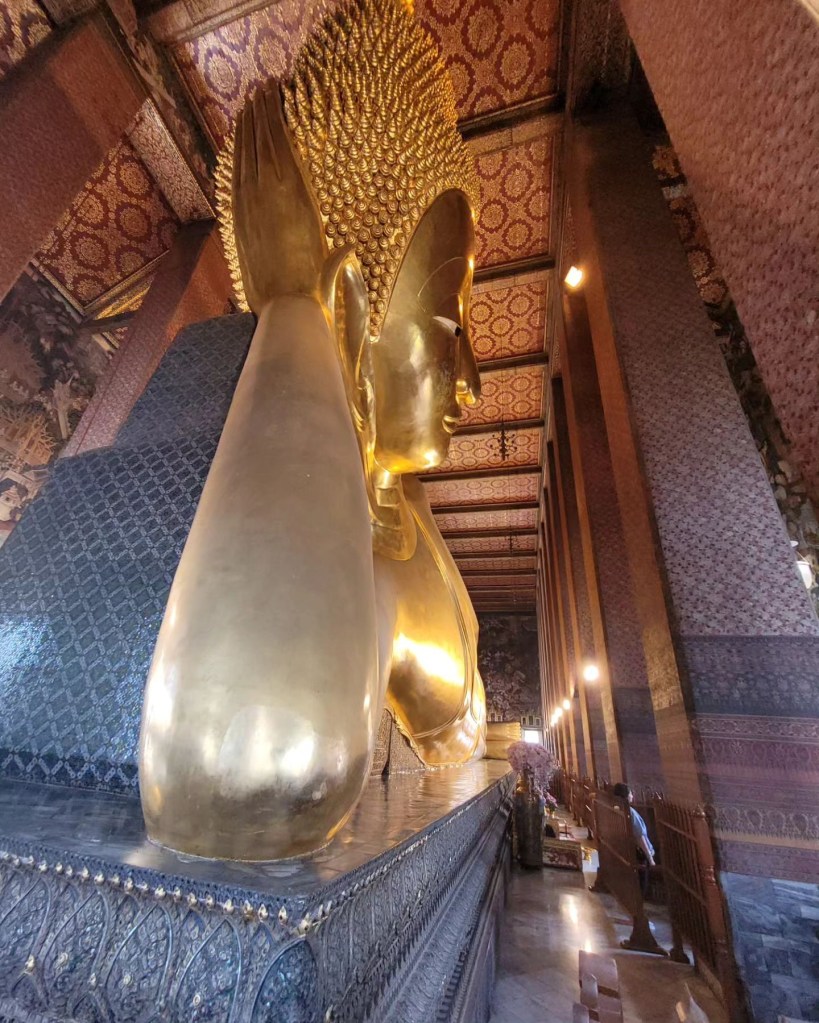
The next morning after a Seven-Eleven coffee, I took a bowel-loosening motorbike taxi to Wat Pho, home to the famous Reclining Buddha.
Difficult to photograph.
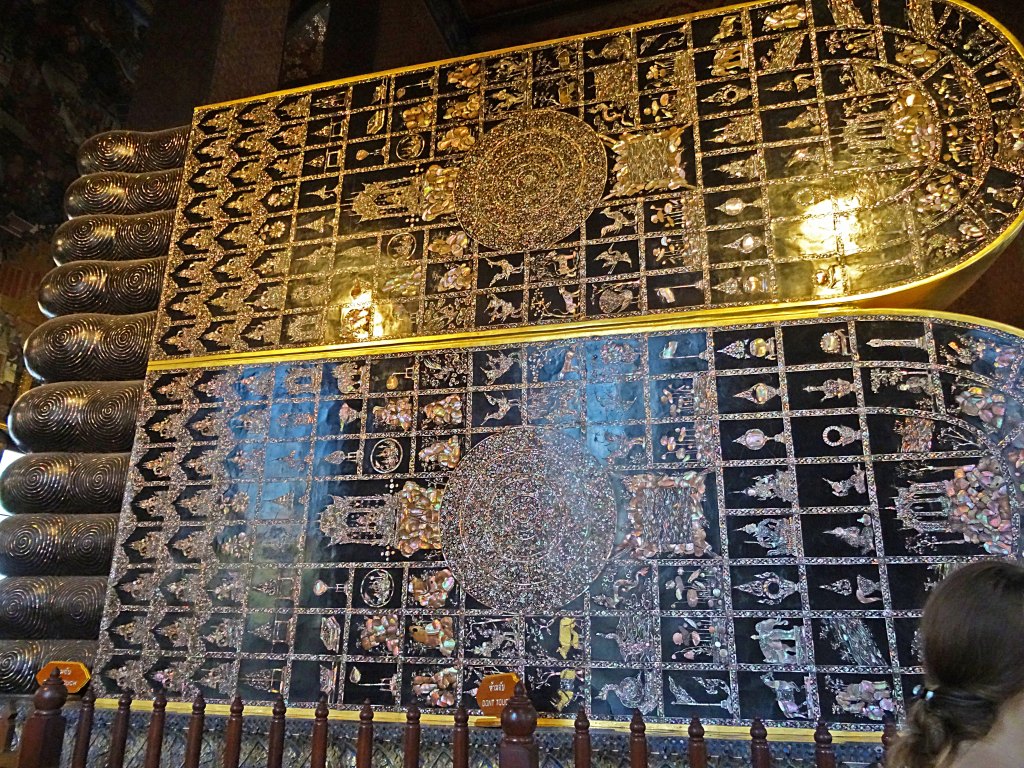
It was constructed in 1832 by King Rama III, it’s forty-six metres long and fifteen metres high. It’s made up of a brick core, covered by plaster, then gilded. It’s impressive enough as you walk around it trying to get a handle on the size, then you realise that the soles of the feet are inlaid with Mother-of-Pearl, an incredible detail considering that the feet are considered unclean by Buddhist belief.
I had something else I had to do before I left Chang Mai. During the worst of the Great Plague of COVID-19, I developed a fascination with Sak Yant tattoos. Sak Yant is an obscure Buddhist tradition of tattooing prayers and animal representations, which are then activated by prayers and incantations. These are done by a monk, or an Ajan, a former monk who still conducts religious rituals. Sak Yant are believed to offer protection and assistance in certain aspects of the receiver’s life. Sak Yant became well known in the West when Angelina Jolie first got one on her delectable back.
I was also previously intrigued by the idea of tattoos for protection in Western culture, such as sailors getting compass tattoos, also tattoos for milestones, such as crossing the Tropic of Capricorn for the first time. In addition, much of the science fiction and fantasy media I enjoy features tattoos for protection and to celebrate milestones.
I wanted an authentic experience, not just a tattoo shop fake, which are all too common, however it’s not something that is easy to navigate as a Westerner, so I opted to book an appointment with Sak Yant Chang Mai, a co-opt of monks, Ajans, and layperson staff who assist and facilitate the process.
A charming lady by the name of Ploy was to be my guide, and after selecting my design, doing some paperwork and making the remaining payment, Ploy tentatively drove us through the afternoon traffic to a temple on the outskirts of Chang Mai- a temple very much untouched by Western ideas or influences. I was lead to the top of a building where I met the monk who would perform the tattoo and activation. Aum has been doing Sak Yants for over fifteen years.
After bowing, we conducted a three-way conversation (Aum spoke not a single word of English), about the design I wanted, and specific issues I would like addressed by the Sak Yant. After this discussion, Aum told me that he would include extra emphasis on communication, as I had stated that’s something I struggle with. After getting my inner forearm shaved, a stencil of guidelines was placed on my skin and we got down to business.
Aum wielded a long and slender tool, tipped with a hollow (and single use, I got to keep it), which he dipped into a pot of ink to load, and then free handed the script onto my delicate skin. I was impressed with the speed, accuracy and lack of hesitation as he tapped away.
The pain was spicier than my other tattoo, that was done with a modern machine, where the needle goes in and out of the skin before you feel it. As it was explained to me, you should not attempt to distract yourself from the pain by reading or listening to music. It seemed the monk’s two offsiders didn’t seem to be aware of this, talking in Thai and laughing, which was a little distracting and annoying, seeing this was supposed to be taken as seriously as Holy Communion in a Catholic church.
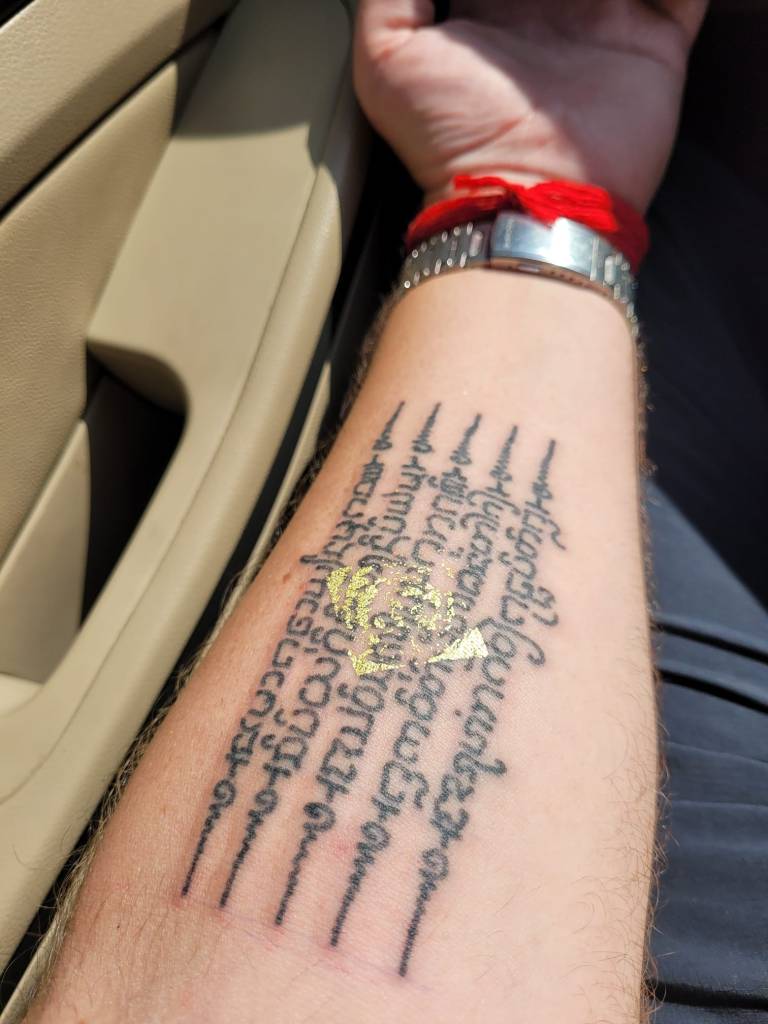
When the tattoo was finished, Aum laid his tool to rest, and placed a square of gold leaf onto the centre of the tattoo and it was time for the activation.
Taken on the car ride home.
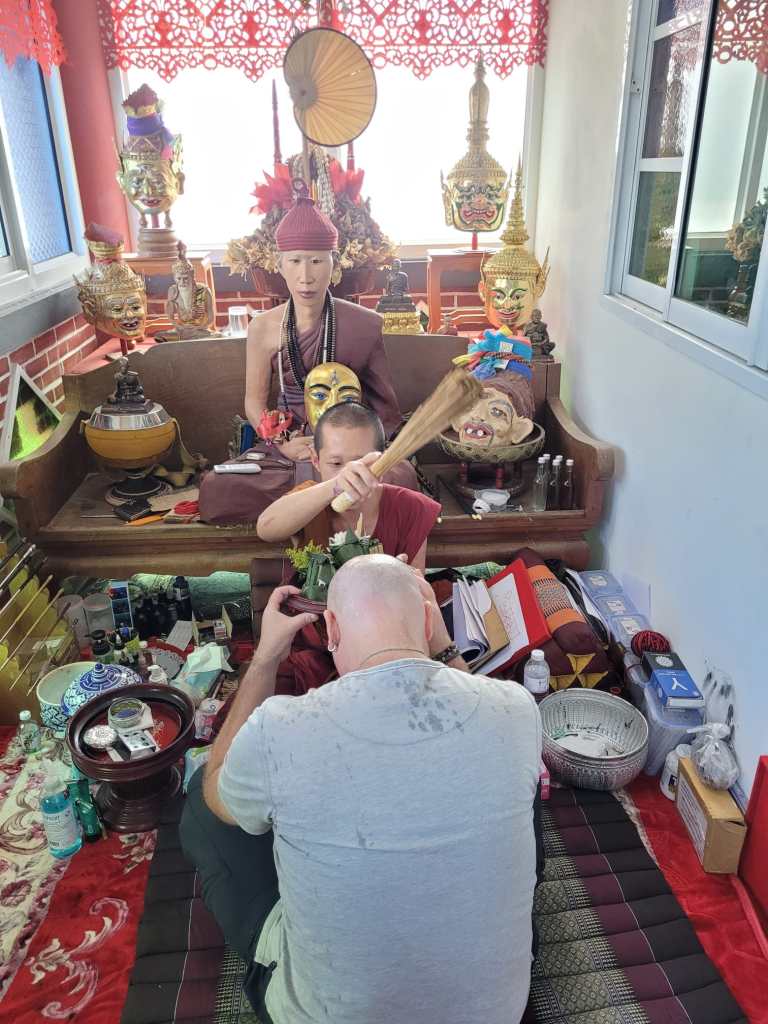
Without the activation, the tattoo would not be considered a proper Sak Yant. While Aum was praying, I was making my own, private chant, similar to the prayers that I would make when I still believed in a Christian God. It was not something that I had planned to do, but seemed appropriate at the time.
Part of the activation, and the blessing of the traditional gifts to the monk.
After this, I was asked if I had any questions, and I just thanked him for allowing me to be part of this tradition. Aum responded, thanking me for showing respect. While one of the temple helpers pulled our car around I got a quick tour of the temple. Also on the way out we stopped for photos at another temple, which featured a school for children which was entirely funded by donations.
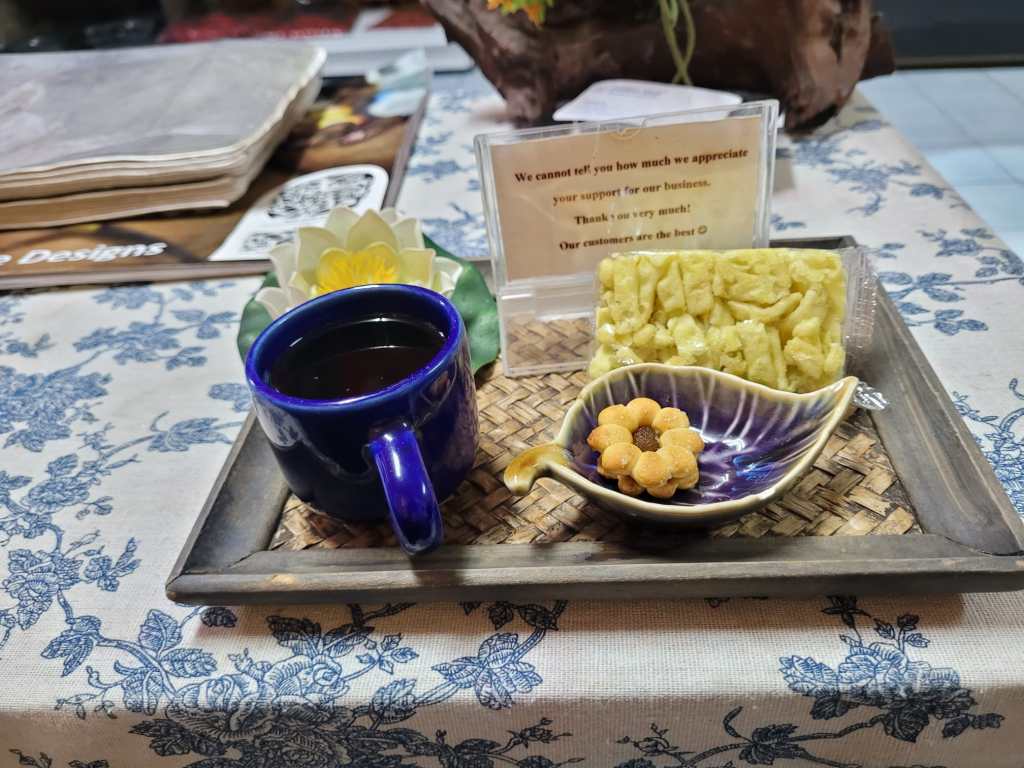
When we returned to the office in the city, I was treated with some excellent tea and cookies, and some further instruction on healing and rules I had to abide by for my tattoo.
Just what I needed.
Rules for having a Sak Yant:
Do not kill
Do not steal
Do not lie
Do not be unfaithful to your spouse
Do not get intoxicated
Do not speak ill of any mother
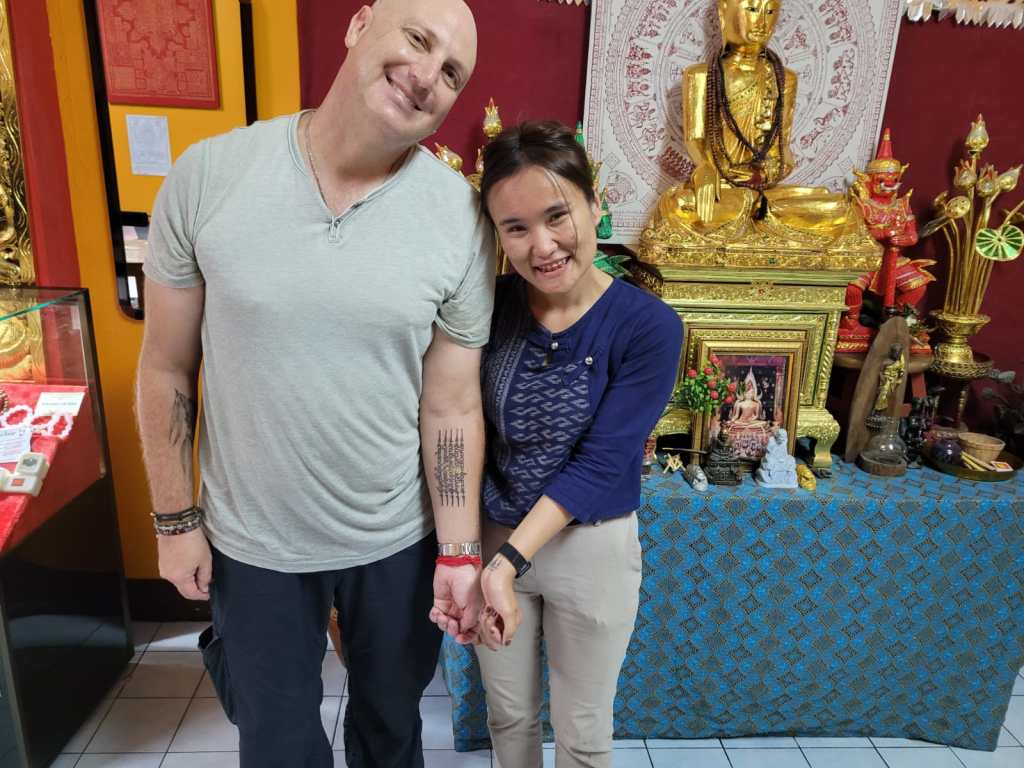
Nothing left to do but get a photo with Ploy, and depart. The experience was awesome and if I ever find myself in Thailand again I will consider getting another one!
Ploy and her amazing smile!
My design: copy and pasted from Sak Yant Chang Mai:
Hah Taew Sak Yant Blessings
1. i ra cha ka ta ra sa 2. ti hang ja toh loh ti nang 3. soh ma na ga ri tah toh 4. pi sam lah loh pu sa pu 5. ka pu bam too tahm wa ka
Hah Taew, represents 5 yants or magical spells. Each one will be done individually and the following magical spells have been cast to do as described below.
.
The first row prevents unjust punishment and leans in your favor when the area is grey, cleans out unwanted spirits and protects the place you live in.
The second row reverses and protects against bad horoscope constellations and bad fortune.
The third row protects you from the use of black magic and anyone who tries to put a curse on you.
The fourth row energizes your good luck, success and fortune in your future ambitions and life style.
The fifth row is to gain charisma and attraction to the opposite sex. It is also is a boost to the fourth row.
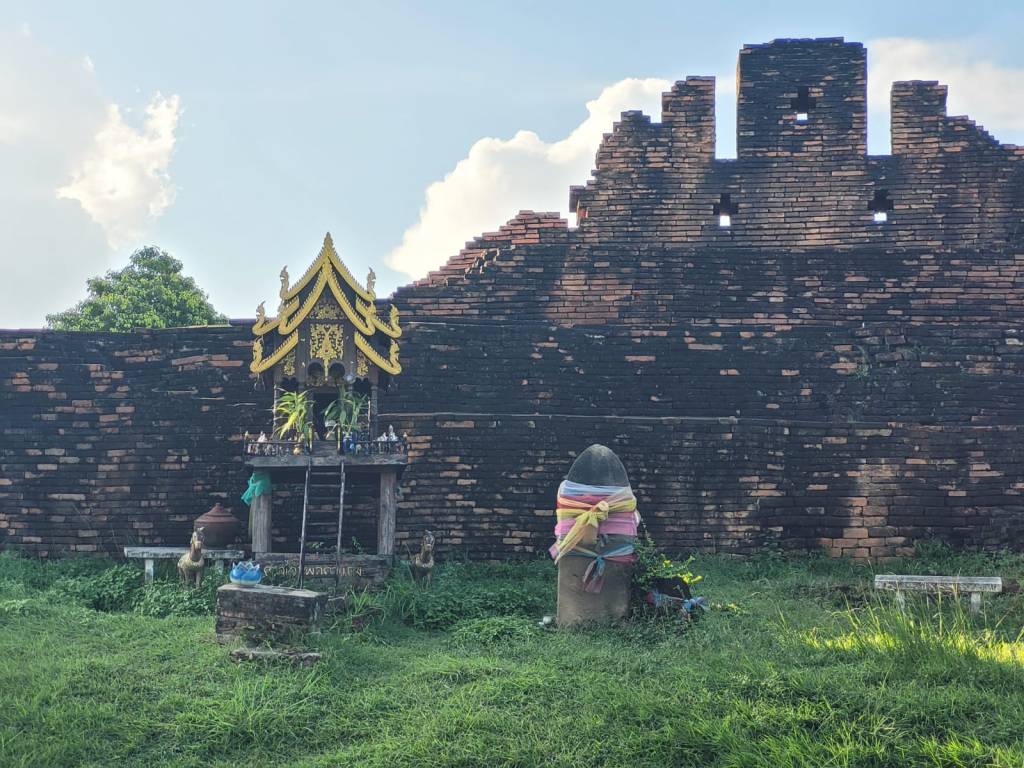
Chang Mai has gotten a lot busier since I was there last, but the old city still feels cool.
Love those Spirit Houses
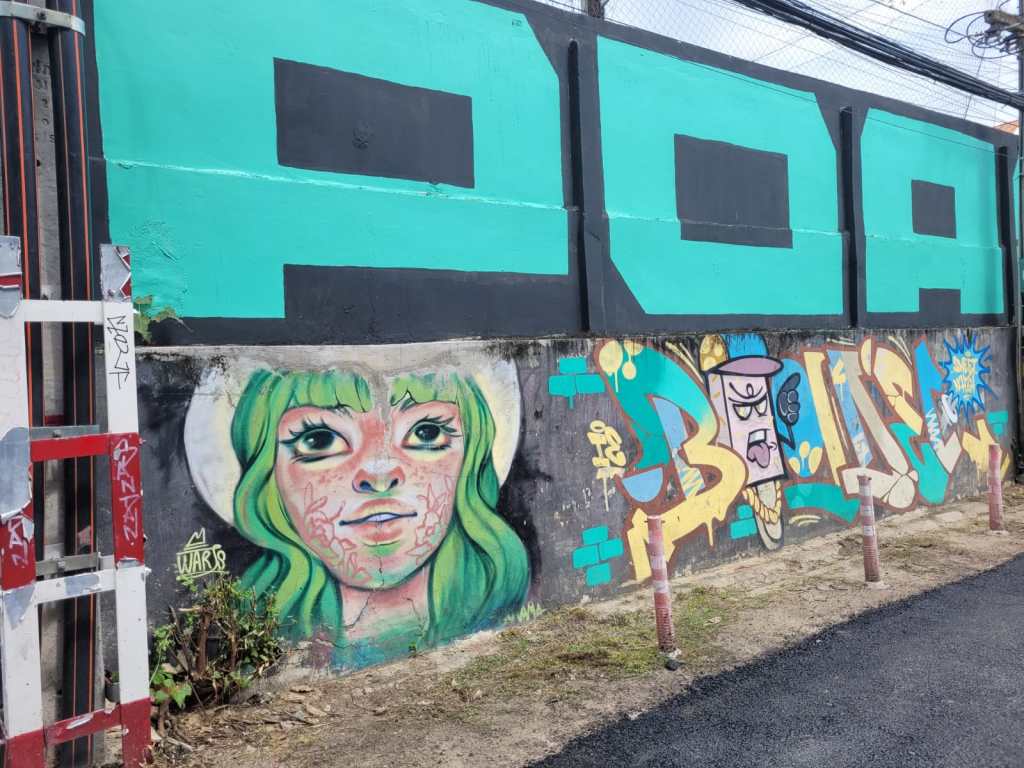
Get past the ring road inside the remains of the ancient walls, it’s a thin layer of hotels, Seven-Elevens and temples, then it’s mostly enchanting windy alleyways, filled with bars, hostels, and so damned many weed shops. Many of the alleyways that seem nothing more than nightsoil roads feature some amazing street art.
Around the corner from Lanna Square
My hostel, one of two identically named ones, was on one of these quiet alleyways, that only allowed one way travel for cars. It was very typical of its breed, a building designed for something else, which failed one way or the other, and now was cheaply renovated into its present, unassuming purpose. The bathroom in my dorm room raised some eyebrows for me. While sitting on the toilet, your eye was immediately drawn to a decoration that to me seemed straight out of a nineties era penthouse.
It’s enough to give you IBS
I asked the lovely lady working in reception if the building had been a brothel or a short-stay hotel, and she very carefully didn’t answer, which of course just made me more suspicious. I have probably stayed in dozens of former brothels during my travels, but this is the first time I felt it was so obvious. The dorm was also racially segregated. When I checked in two Thai lads had set up camp in the bunk beds closest to the bathroom, and out of habit I choose the lower bunk closest to the balcony. When a westerner checked in later, he oddly choose the bunk above me, rather than the two empty bunks in the middle. The oddness continued when I realised the two Thai lads seemed to never leave the room, spending their days in their bunks and taking long showers.
During my night time walks, I discovered Lanna Square, a group of international food stalls set up around a temporary stage, the food was overpriced, but the entertainment was decent.
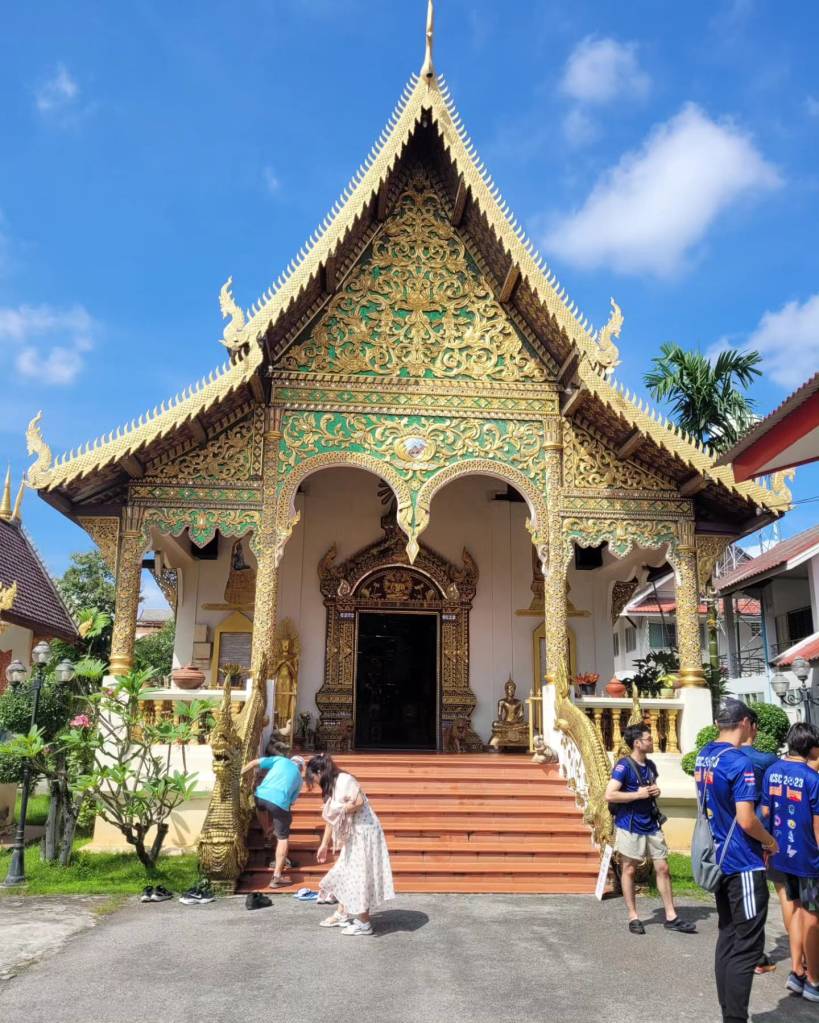
A lot of the temples around the old city, while being open to the public, were in no way being promoted, which meant I could walk around to my heart’s content without being hassled overly.
At least the locals don’t need to be told to take off their shoes.
There are provinces in the north of Laos that are entirely forgotten by the government, the roads are barely passable at the best of times, resulting in a situation where the only reliable transportation is by boat, on that ever-present Mekong River. There was nothing further for me in Laos, except the near-legendary slow boat to Thailand.
On the shared taxi to the pier, I met the Westerners I would be sharing the journey with. Four beautiful but highly aloof Dutch girls, an extremely conceited Swiss man, a Japanese couple, and an Australian music producer doing the digital nomad caper. The boat was bigger than I expected, which was somewhat comforting to my caffeine starved mind, something I managed to ease further after I spotted eskies outside a hut and purchased two Birdy iced coffees.
We made our way upstream under the loud, low-revving Diesel motors, as our captain piloting a convoluted path, whether to avoid the strongest currents or to avoid underwater hazards I had no clue.
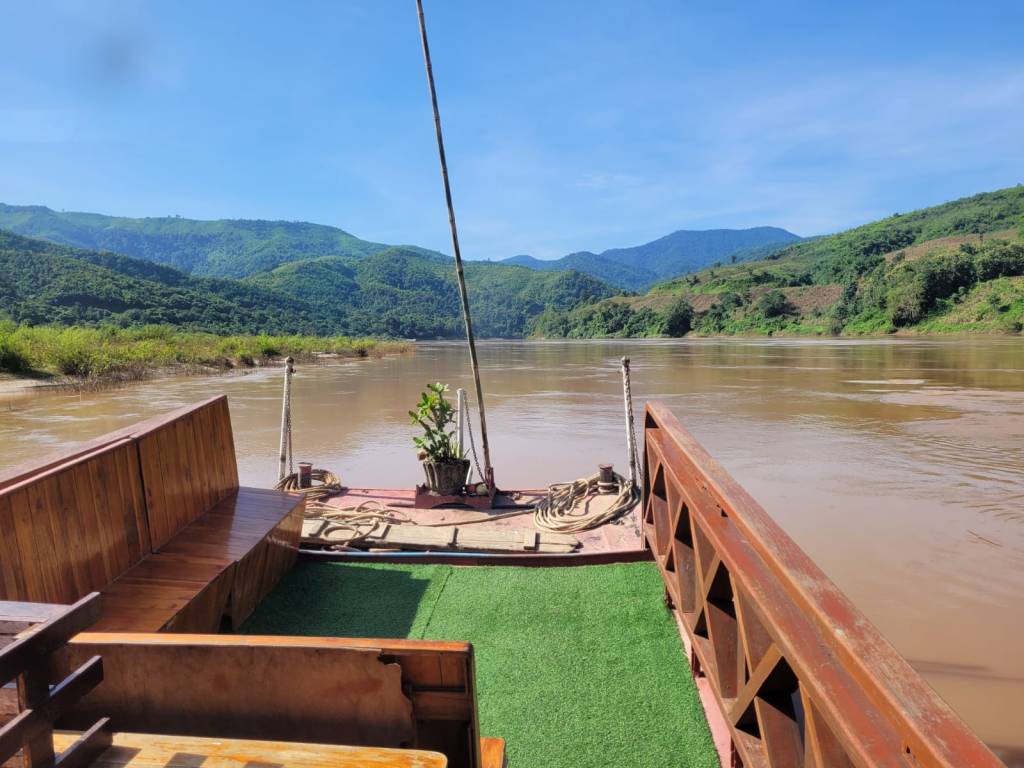
Having attempted, and failed to engage my fellow passengers in conversation, I turned my attention to the views. The Mekong here is nestled between high hills, leading to some dramatic landscapes.
Hard to photograph with a phone.
Some buildings dot the river banks, most were humble, which in Laos can be nothing more than a lean-to made from scrap materials. A number of bridges cross the Mekong, many half finished, no doubt stalled by sudden lack of funds, or interest as political forces waxed and waned. Judging by the vegetation growing around the stark concrete pylons, progress had been stalled for years.
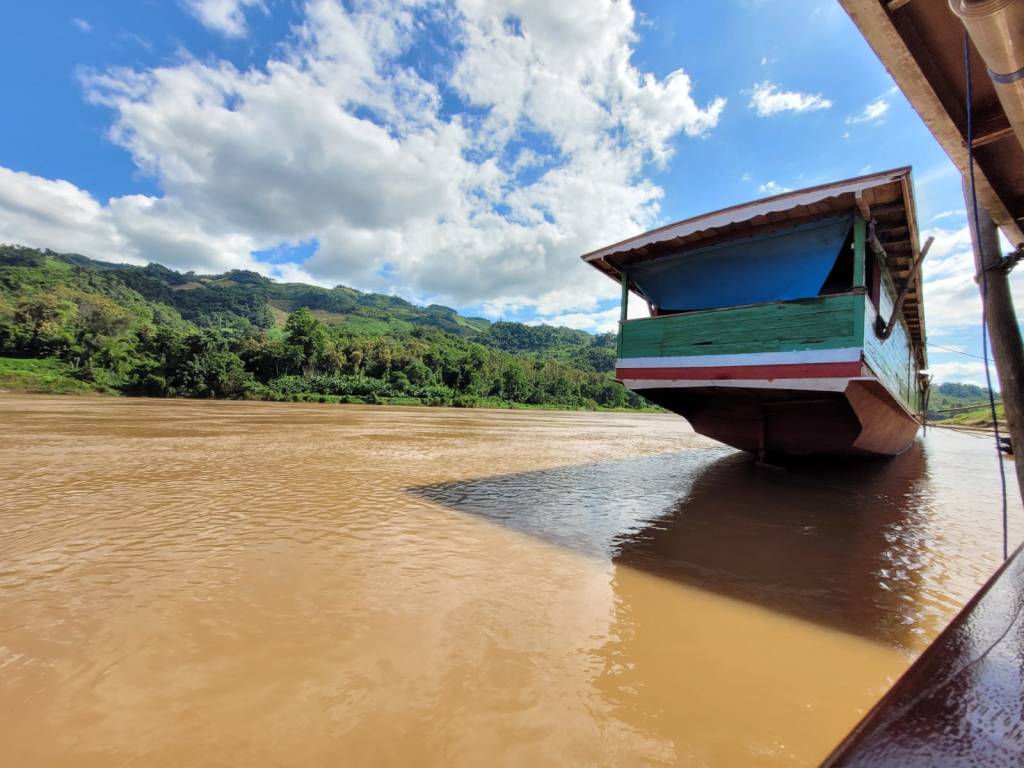
Can’t believe we were the slower slow boat.
After a few hours I got bored, and turned to my Kindle, and when cell-phone towers got close, tedious Youtube videos. At eleven o’clock I decided boats are like airports and its never too early for beer. After ten hours on the water, we arrived at Pekbeng. I had booked the night’s stay at the unimaginatively named Pekbeng Guesthouse, a two minute walk from the pier. I took great satisfaction in checking in while the Eurotrash was still trying to get their luggage and bodies into a truck. An hour later I was eating a curry dish while the family who owned the guesthouse watched a trashy TV show, the situation mired when half -way through the meal a cockroach scarpered over my table.
The next morning I woke early and walked to the pier, which was worth it for the light shining onto the river.
I want to see Mountains, Gandalf!
The second day was very similar to the first day, and this time I made sure I had my notebook with me to keep myself occupied. I landed in Huang Xai, walking the two kilometres along a faded promenade, much to the amusement of school children and dog walkers. My hotel room in Huang Xai was lovely, and featured a balcony helpfully overlooking an alleyway instead of the river. I stayed for one night, which was enough to book my onward trip into Thailand, and enjoy my last Larp dish, a few Big Beer Laos and a sundae to burn through the last of my Lao Kip.
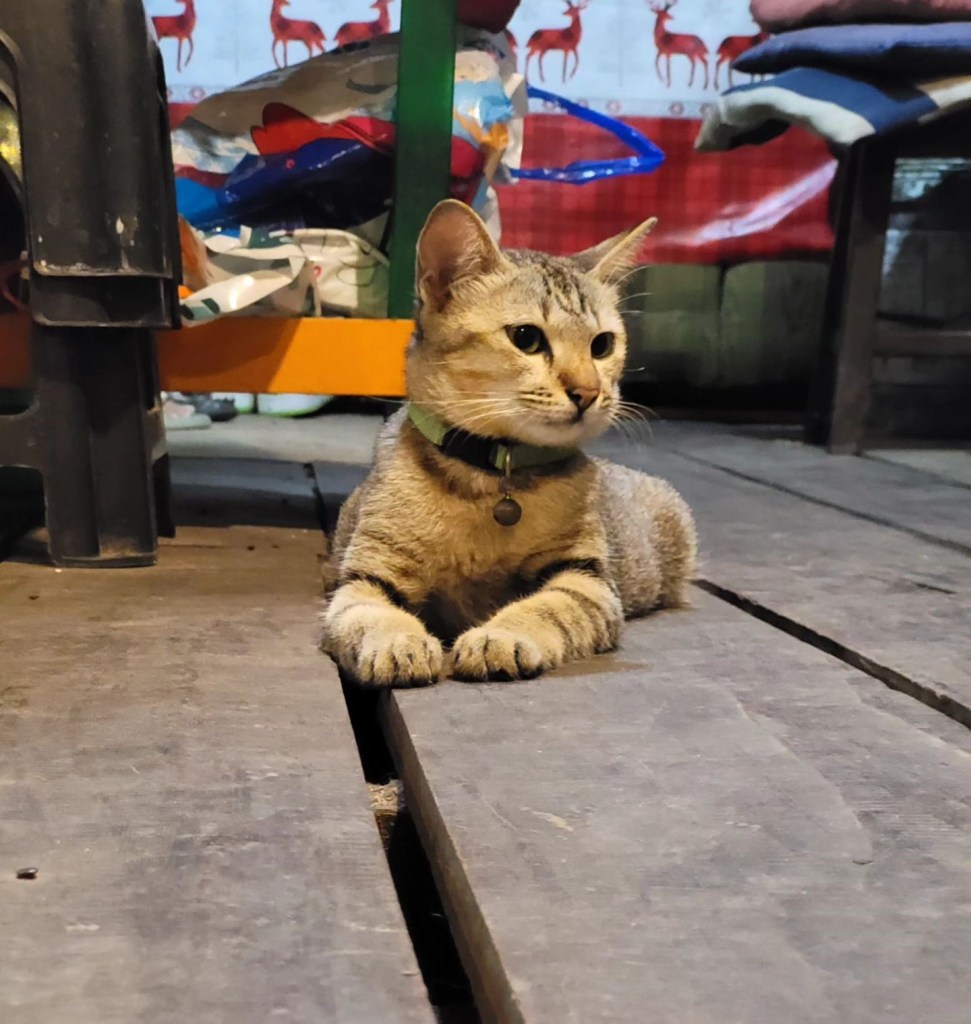
Also, Cafe Cat.
In the early morning light I walked to the hostel I was to meet my guide half an hour early, to discover my flawlessly polite guide was already waiting for me in his Landcruiser.
Apparently I was the only one who booked today so we set off. My guide drove us towards the Lao-Thai Friendship Bridge, where I was stamped out of Laos. A bus took me across the bridge, and at the Thai border my Australian passport granted me my first free entry into a country since Hong Kong. I was picked up at the other end by my previous guide’s Thai offsider, who was less useful, who managed to hit a stray dog on the way to Chang Rai. I stayed in Chang Rai just long enough to buy a local SIM card, get some coffee, and then on the bus, where I was seated next to a head-scarfed older lady who made it abundantly clear she didn’t want to sit next to me.







 Adrian's Got The Moose